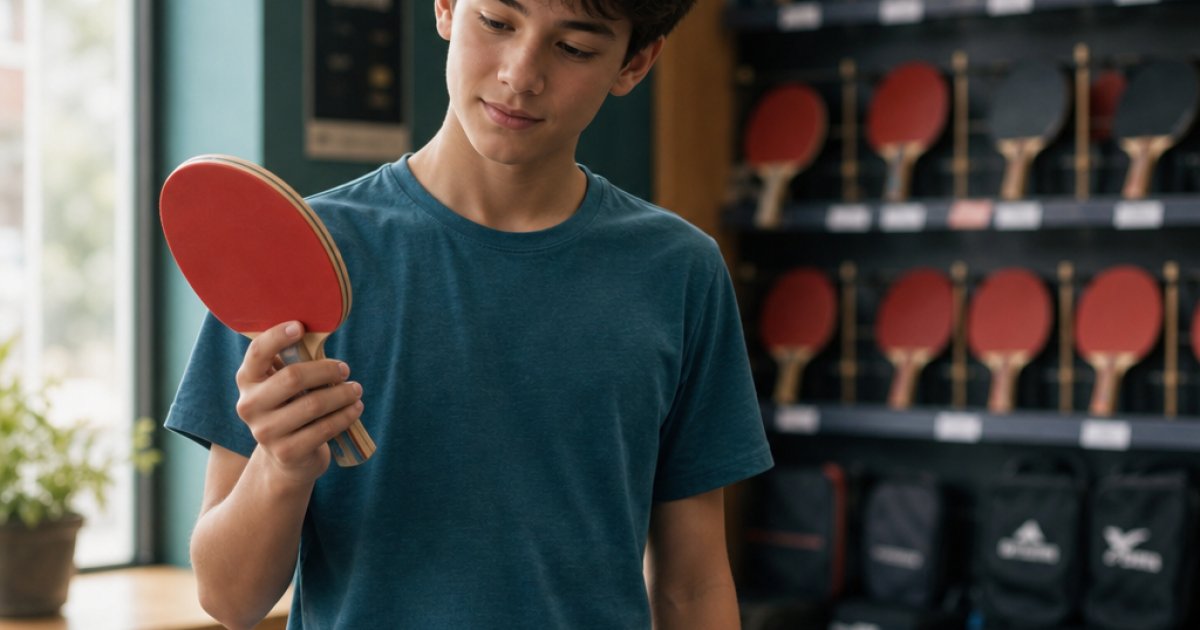
Rohan opened a table tennis retailer’s website the week before his office started a lunchtime league, looking for a paddle, and closed the tab twelve minutes later without buying anything, tab still sitting open in a browser he’d eventually just close in frustration. Blades sorted by speed rating, offensive, all-round, defensive, each with a numbered chart he didn’t understand.
Rubbers sorted by spin, speed, control, hardness, sponge thickness, some inverted, some pips-out, one whole section just for anti-spin he’d never even heard of before that afternoon. A separate page for balls sorted by star rating and material, as if a beginner would know the difference between one star and three just from looking at two identical-looking orange spheres.
He’d wanted to spend thirty dollars on a paddle before his first practice. He left with a headache and zero purchases, and the league started in six days.
None of that overwhelming complexity is wrong exactly, or even badly organized. It’s just aimed at players who already know what they’re choosing between. A beginner doesn’t need the whole catalog explained. They need the five or six decisions that actually matter, in order, and permission to ignore the rest until later.
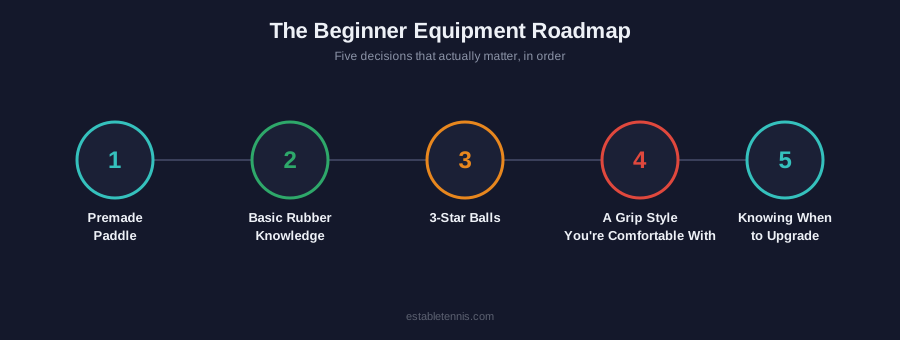
Table tennis equipment for beginners comes down to five decisions: a premade paddle rather than a custom blade-and-rubber build, a basic understanding of what rubber actually does, 3-star balls for anything beyond casual play, a grip style you’re comfortable with, and knowing when your gear has become the thing holding you back rather than your technique. Everything else on a retailer’s shelf can wait until you actually know what you’re optimizing for.
What Do You Actually Need to Start Playing?
Honestly, just three things, and nothing else is genuinely required to hit your very first ball: a paddle, a ball, and a table with a net, even a temporary one clipped onto a dining table. That’s genuinely the entire list for someone deciding whether they even like the sport. Everything covered in the rest of this post is about the decisions that start mattering once you know you’re staying, not the ones standing between you and your first rally. Worth a bookmark once you get there: the ITTF’s official equipment standards page lists which rubbers and gear are actually legal for rated play.
What’s the Single Biggest Mistake Beginners Make Buying Equipment?
Buying for the player they want to become instead of the player they actually are right now. A fast, unforgiving blade paired with tacky, high-spin rubber looks like the setup a serious, committed player should own, and it’s genuinely tempting to buy it on day one as a kind of down payment on the player you’re hoping to become within a year or two.
In practice, it does the opposite: a beginner’s stroke isn’t consistent enough yet to control equipment built for someone with years of repetition behind them, so every small technical error gets amplified instead of absorbed. The gear that actually helps a beginner improve fastest is almost always more forgiving than the gear that looks impressive on a spec sheet, which is a genuinely counterintuitive thing to accept when you’re excited about a new hobby and want to buy in fully.
Is More Expensive Equipment Actually Better for a Beginner?
No, and this is worth saying plainly since it runs against most consumer instincts. Price in table tennis equipment mostly buys speed, stiffness, and spin potential, none of which help a player whose stroke hasn’t developed the control to use them yet. A $200 blade in a beginner’s hands often performs worse than a well-matched $40 premade paddle, not because the expensive blade is poorly made, but because it’s solving a problem the beginner doesn’t have yet while creating one they do: inconsistency.
Money spent on equipment at this stage is much better directed toward simply playing more often, or toward coaching if it’s genuinely available and affordable, than toward chasing a spec sheet that a more advanced version of the same player, months or years from now, will actually be equipped to use.
Should a Beginner Buy a Premade Paddle or Build Their Own?
Premade, without much debate. A premade paddle, blade, and rubber already matched, tested, and mounted by the manufacturer, removes the exact decision paralysis that stopped Rohan cold in front of that catalog, and it’s genuinely the right, honest call at this stage of a player’s development rather than some kind of compromise to be upgraded away from as fast as possible.
Best ping pong paddle under $50 covers specific picks for a true first paddle, and once you’ve outgrown that tier, best rubber for beginner table tennis players covers the first real upgrade most players make before touching a custom blade-and-rubber build at all.
What’s the Difference Between a Blade and a Paddle?
A paddle, or racket, is the complete thing you hold, blade plus rubber plus handle. The blade is just the wood or composite core underneath the rubber, the part that determines the paddle’s base speed and feel before any rubber gets factored in.
Beginners genuinely don’t need to shop for a blade separately at all in those first months; that decision only becomes relevant once you’re actually building a custom combination from scratch, covered in full in how to choose a table tennis blade and, for players whose game leans toward control over raw power, table tennis blade for control players.
What Do You Need to Know About Rubber Before Buying?
Just enough to avoid an expensive, avoidable mistake, not the entire catalog a specialist retailer wants you to memorize before checkout. Rubber is the part that actually touches the ball on every single shot and determines most of your spin and speed potential, and it comes down to two specific numbers genuinely worth understanding early on: sponge thickness, which table tennis rubber thickness explained breaks down in full, and hardness, which affects how forgiving the rubber is on a slightly mistimed shot.
Rubber and sponge in table tennis covers the basic mechanics if you want the fuller picture, and before buying anything specific, the ITTF-approved rubber list for beginners is worth checking, since not everything sold online is legal for rated play, and finding that out after a purchase is a frustrating way to learn it.
Should a Beginner Buy Used Equipment to Save Money?
Rarely a good idea for the paddle itself, and it’s worth knowing why before a cheap secondhand listing looks like an easy win. Rubber degrades from age and use in ways that are hard to judge from a photo; a sheet that looks fine can have already lost most of its grip, which means a used paddle often performs like a much cheaper new one while costing nearly as much.
Balls, on the other hand, are perfectly fine to buy used or even accept as hand-me-downs from a clubmate clearing out old stock, since a ball’s quality doesn’t degrade the same way rubber’s does as long as it isn’t visibly cracked.
The general rule worth remembering: buy anything that touches the ball directly, meaning the rubber and by extension the whole assembled paddle, new, and don’t worry much about the rest: cases, bags, even a used net set, all of which hold up fine secondhand since none of them touch performance the way rubber does.
What Balls Should Beginners Actually Use?
Anything for pure casual hitting, but 3-star balls once you’re training with any real intent, since the star rating reflects genuine roundness and bounce consistency, not a marketing tier. Table tennis ball types explained covers the full breakdown, including the material and color differences that actually matter versus the ones that don’t. This is a cheap, easy decision to get right early on, unlike most of the rest of the decisions covered on this list, which makes it a good, low-stakes place to actually practice reading a spec sheet before the stakes get higher.
Does Grip Style Affect What Equipment You Should Buy?
Yes, more than most beginners realize before they’ve already settled on one out of habit rather than a genuine decision. Shakehand and penhold grips genuinely change what handle shape and even what rubber setup makes sense, and most equipment written online defaults to shakehand assumptions without saying so. Penhold vs shakehand grip covers the real differences, and it’s worth reading before you’ve bought several paddles built for the wrong grip out of habit rather than a real decision.
How Do You Know If Your Equipment Fits Your Playing Style?
The clearest, most honest sign is consistency, or the specific lack of it, once you’ve had a few weeks to actually settle into a piece of equipment. Equipment that fits produces roughly the same result every time you execute the same shot, which is exactly the kind of reliable feedback a beginner needs to actually learn from repetition.
Equipment that doesn’t fit produces a shot that works sometimes and sails long or dies into the net other times, with no clear pattern you can point to in your own technique. That inconsistency isn’t always a training problem. Sometimes it’s a sign the rubber is too fast for your current swing speed, or the blade too stiff for the control you’re trying to develop, and it’s worth ruling out equipment mismatch honestly before assuming every missed shot is purely a technique flaw.
This matters beyond the technical side too. Equipment that behaves unpredictably doesn’t just cost you points; it quietly erodes the confidence that comes from trusting your own hands, which is a real, documented input into how composed you stay under pressure. Getting the equipment fit right isn’t a separate concern from the mental side of the game. It’s one of the foundations underneath it.
What’s a Realistic Equipment Budget for a Beginner’s First Year?
Considerably less than the full catalog makes it look. A genuinely good premade paddle under $50, a tube of 3-star balls for around $20, and a rubber cleaner for under $10 covers a beginner’s real needs for the first several months of regular play, well under $100 total.
The next real spend usually comes when it’s genuinely time to step up to an intermediate paddle, typically landing somewhere in the $100 to $150 range, and that purchase is worth deliberately delaying until the signs covered above- real inconsistent results despite otherwise decent, developing technique- actually show up in your own matches rather than buying ahead of them because a clubmate just upgraded.
Accessories like a case, edge tape, and a proper bag can be added gradually as budget allows without holding back how quickly you actually improve, since none of them touch performance directly.
When Should You Upgrade From Beginner Gear?
When your own results stop tracking your technique, not on a fixed timeline. If your topspin is consistent but lacks pace, or you’re mishitting shots even when you read the spin correctly, your equipment has become the ceiling rather than your skill. Best table tennis paddle for intermediate players covers this exact transition in detail, including the specific signs worth checking honestly before spending money on a step up you might not need yet.
Does Any of This Change If You’re Buying for a Child?
The core advice stays the same: premade over custom, cheap over expensive, coaching over gear, but weight is worth checking specifically for a younger or smaller player. A standard adult paddle isn’t too heavy for most kids to swing safely, but a lighter option can make early sessions less fatiguing and easier to control while basic technique is still forming.
Skip junior-marketed novelty paddles with cartoon designs and undersized heads, though, since they tend to prioritize looking fun for a nine-year-old over actually playing like real equipment, and a genuinely interested child will outgrow the appeal of the design within a few sessions while the undersized paddle keeps holding their game back.
Should You Prioritize Equipment or Coaching as a Beginner?
Coaching, if you have to pick one and money is genuinely limited. A skilled coach, or even just a knowledgeable clubmate willing to give honest, specific feedback session after session, will improve your game faster in a single month than any equipment upgrade will manage on its own, since technique is the actual foundation everything else, including how well a given paddle genuinely performs in your particular hands, gets built on top of.
This isn’t an argument against decent equipment. It’s a prioritization call for a beginner with a limited budget: a cheap, well-matched paddle plus real coaching beats an expensive paddle with no guidance behind it almost every time, because the expensive paddle can’t teach you anything the coaching would have.
What About a Table? Do You Need to Buy One Right Away?
Not right away to start, since most beginners are playing at a club, a friend’s place, or somewhere else with a table already set up and waiting for them. Once you’re playing often enough that a home table makes sense, the best table tennis table for home use covers what actually matters for a table that lives in a garage or spare room rather than a permanent club setup: table top thickness and fold quality over raw size or brand name.
What Accessories Do You Actually Need on Day One?
Almost none of them on day one, and that’s genuinely fine, not a sign you’re doing this wrong or missing something everyone else already knows. A rubber cleaner is the one genuinely worth owning early, cheap and immediately useful for protecting a new paddle’s grip. Everything else- a case, edge tape, a dedicated bag- earns its place gradually as you play more often, covered fully in table tennis accessories every player needs.
Don’t let a six-item shopping list intimidate you out of just starting to play, which is exactly the trap Rohan fell into looking at a full catalog before he’d hit a single ball.
Frequently Asked Questions
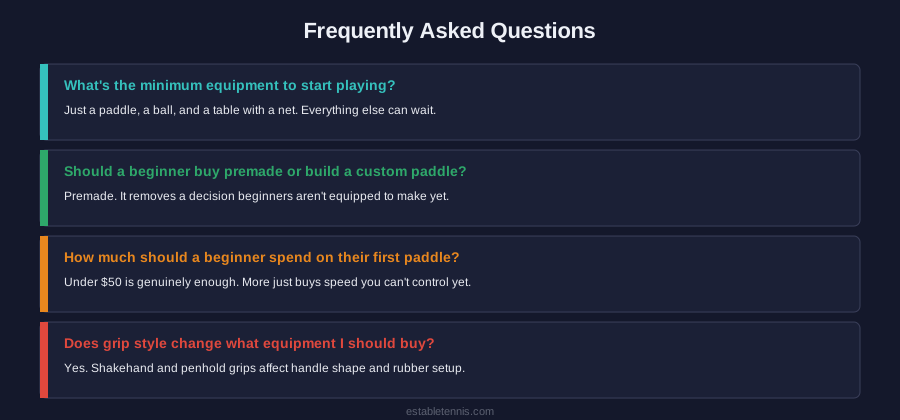
What’s the minimum equipment needed to start playing table tennis?
Just a paddle, a ball, and a table with a net. Everything else, blade choice, rubber specifics, accessories, only starts mattering once you know you’re sticking with the sport.
Should a beginner buy a premade paddle or build a custom one?
Premade. Building a custom blade-and-rubber combination requires knowledge a beginner hasn’t built yet, and a well-matched premade paddle removes that decision entirely.
How much should a beginner spend on their first paddle?
Under $50 is genuinely enough for a first real paddle. Spending more before you know your own playing style tends to buy speed and spin you can’t yet control.
Does grip style change what equipment I should buy?
Yes. Shakehand and penhold grips affect handle shape and rubber setup, and most equipment advice online defaults to shakehand assumptions without saying so.
Rohan went back to that same retailer’s site three days later, this time with a clear list of exactly five things to check rather than fifty, bought the cheapest genuinely decent paddle on the first page without reading a single blade speed chart, and played his first league match with it a week after that, nervous but equipped.
He upgraded eight months later, once he actually knew what he wanted upgraded and why, not because a spec sheet told him it was time. The catalog was still there the whole time he played on that first paddle, exactly as overwhelming as the day he closed the tab. He just stopped needing to read all of it before he was allowed to actually play.
Start simple, learn what the equipment is telling you, and upgrade only when your game asks for it. That order never fails a beginner.That’s really the heart of table tennis equipment for beginners, the whole point of thinking about table tennis equipment for beginners this way: skip the guesswork entirely, PingPath asks a few questions about how you play and returns a fitted recommendation instead of a full catalog to sort through.
Leave a Reply