
Kerrilee showed up to a Saturday tournament in Siparia with a paddle she’d cleaned the night before and a bag holding exactly one thing: the paddle itself, wrapped in a plastic grocery bag because that was the closest thing to protection she owned. No spare edge tape for the strip that had started peeling off her blade two weeks earlier and kept catching on the inside of her bag.
No cleaner for the film of dust that builds up on rubber between matches and quietly kills its grip long before anyone notices why their shots have started sliding off the sweet spot. No case, so the racket had ridden loose in her regular bag all morning, picking up lint and getting knocked against a water bottle every time she reached for something else.
She played fine, technically. She just spent half the day borrowing things from clubmates who’d packed properly, and losing a little composure every single time she had to ask.
Nobody talks about table tennis accessories every player needs, because a paddle and a good serve feel like the whole sport, the part that gets photographed and posted and celebrated. They’re not. They’re just the part that shows up in the score, and the score is only ever half the story of how the day actually went.
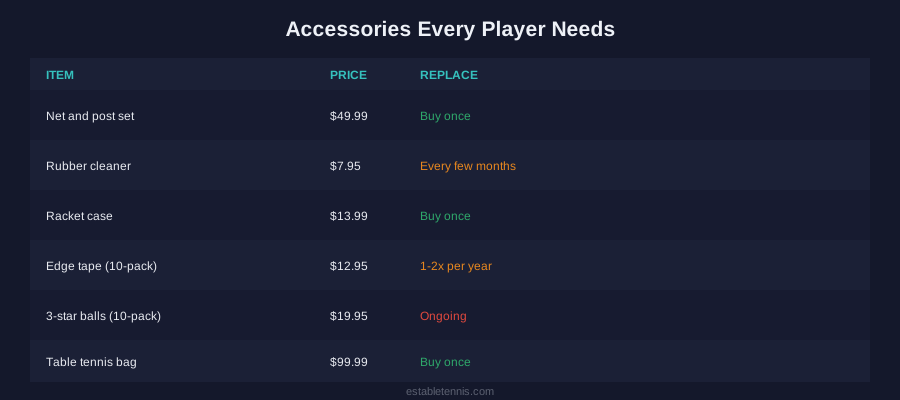
The table tennis accessories every player actually needs: a portable net and post set, a rubber cleaner, a proper racket case, edge tape, a tube of real competition balls, and a dedicated bag to carry it all in one piece. None of these touch your technique directly. All six quietly protect the equipment and consistency your technique actually depends on.
Why Do the Small Accessories Matter More Than They Seem?
Because most of them exist to protect the consistency of the equipment you already spent real money on, not to add anything flashy on top of it. A rubber sheet losing its grip to dust, an edge peeling loose mid-rally, a blade riding around loose in a bag full of other gear and shoes, all of these quietly degrade the exact consistent bounce and feel that a good paddle is supposed to give you in the first place, the same consistency this whole site keeps coming back to as the real foundation underneath both technique and composure. Kerrilee’s paddle wasn’t the problem that Saturday.
The gaps around it were, and gaps like that tend to compound over a long tournament day in ways a single missing item never would on its own.
There’s also a practical cost argument worth making plainly about table tennis accessories every player needs. A good paddle and rubber combination can run well over a hundred dollars, sometimes considerably more for a serious player. Every item on this list exists to protect that investment from damage, degradation, or simply not being where you need it when you need it, for a combined cost that rarely clears $200 for all six, spread out over years rather than paid at once.
The 6 Table Tennis Accessories Every Player Needs
1. A Portable Net and Post Set
The Butterfly AJ Net Set ($49.99) clips onto almost any flat table, which matters more than it sounds like once you’ve ever wanted to practice somewhere that isn’t your usual club or home table. A dining table cleared off after dinner, a ping-pong-sized folding table at a family gathering, a spare table sitting unused at a friend’s place- all of these become a real, legitimate practice surface the moment a decent net set comes out of your bag rather than staying at home.
Skip the flimsy version bundled free with some beginner paddle sets, the kind with a net that sags in the middle by the second week of use. A proper clamp-style set survives years of being packed and unpacked, and the good ones fold flat enough to slide into a side pocket of a bag without taking up real space.
2. A Rubber Cleaner
The DHS RP03 Rubber Cleaner ($7.95) is the cheapest item on this list and arguably does the most for how your equipment actually performs week to week. Dust, sweat, and general grime build up on a rubber sheet’s surface with every single session it sees real use, and that invisible film is what actually kills grip over time, not the rubber material itself wearing out the way most players assume when their shots start missing the mark.
A quick clean after each session, sponge and cleaner, thirty seconds, keeps a sheet performing close to new for considerably longer than a rubber left to collect dust between matches, and it’s the single cheapest habit on this entire list relative to how much it actually protects.
3. A Proper Racket Case
The GEWO Wave Racket Case ($13.99) is a small, cheap purchase that solves a real problem: a paddle riding loose in a general sports bag picks up lint, gets knocked against water bottles and shoes, and dries out rubber faster from exposure to open air and inconsistent temperature. A dedicated case keeps rubber sealed and the blade edges protected between sessions, which is exactly the thing Kerrilee’s loose racket was missing that Saturday, and a decent case costs less than a single rubber sheet while protecting every rubber sheet you’ll ever own after it.
4. Edge Tape
Yasaka edge tape ($12.95 for a pack of ten) protects the exposed wood edge of your blade from chips and cracks that happen from ordinary contact with the table, a chair, or the floor during a fumbled pickup. It’s a cheap, easy fix for a real problem, since a chipped blade edge isn’t just cosmetic; it can genuinely affect the blade’s structural integrity over time and eventually its balance. Ten rackets’ worth in one pack means you’re covered for years, not just one racket, and it’s easy to forget you own it until the exact moment a corner gets clipped against a table leg.
5. Real Competition Balls
A tube of DHS 3-Star D40+ balls ($19.95 for a pack of ten) is worth owning rather than relying on whatever the club or a training partner happens to have on hand. Practicing with mismatched, low-quality balls trains your hands on inconsistent bounce and flight, the exact opposite of the consistency this whole list is built around, and a pack of genuine 3-star competition balls is cheap enough that there’s little reason to train on anything less once you’re playing seriously.
Cheaper 1-star or unrated balls are fine for casual backyard hitting with family, no real harm there, but they flex and spin differently enough from real tournament balls that heavy, serious practice on them can quietly build habits that simply don’t transfer once a genuine match is on the line.
6. A Dedicated Table Tennis Bag
The Butterfly Raffines Tour Bag ($99.99) is the one genuine splurge on this list, and the case for it is simple: everything above needs somewhere to actually live, organized, protected, and ready to grab on the way out the door. A dedicated bag with a real racket compartment separate from balls, cleaner, and spare tape means you show up with everything you need instead of discovering a gap in the parking lot the way Kerrilee did.
It also does something less obvious: packing the same bag the same way before every session turns preparation itself into a small, repeatable routine, the kind of consistency that quietly pays off well before the first serve.
What About a Ball Machine or Robot: Does That Belong on This List?
Not really, and it’s worth explaining why a robot is left off a list about accessories every player needs. A ball machine is a genuinely useful training tool for solo practice, feeding a consistent stream of shots at a set spin and speed, but it’s a major purchase in its own category, often costing as much as or more than the table itself, and it solves a completely different problem than the six items above. Those six protect and organize the equipment you already own.
A robot is a training investment, worth considering once you’re practicing seriously and consistently enough to genuinely justify it, but it’s not something every recreational player needs the way a rubber cleaner or a proper case genuinely is, and buying one before the other six feels a bit like buying a car before you’ve learned to drive. Treat it as a separate decision entirely, made once your training volume actually calls for it.
Do These Small Items Actually Affect Your Mental Game Too?
More than most players expect, and it’s worth naming directly rather than treating this as purely a logistics question. Showing up under-prepared, borrowing a stranger’s cleaner between games, realizing mid-tournament that a rubber has gone flat and dusty, spending the walk to the table irritated instead of focused, quietly costs composure before a single point has been played. Kerrilee’s Saturday wasn’t lost on the scoreboard because of a missing net set.
It was chipped away all morning by a dozen small interruptions that a properly packed bag would have prevented entirely. Being genuinely ready, equipment-wise, removes one whole category of distraction that has nothing to do with skill and everything to do with walking up to the table already slightly rattled before the first point has even started.
It’s a small, unglamorous form of preparation, but it’s preparation all the same, and it costs nothing more than packing the bag properly the night before rather than the morning of.
Does Where You Store Your Equipment Between Sessions Matter?
Yes, more than most players think about until something goes wrong. Rubber degrades faster when it’s left somewhere hot, a car trunk in direct sun being the worst common offender, since heat accelerates the breakdown of the sponge and surface tackiness far quicker than normal use alone ever would. Humidity swings are almost as bad for a wooden blade, which is part of why the case matters as much as it does: a sealed case buffers against both problems better than a paddle left loose in a bag that spends half its life in a hot car between sessions.
If your equipment has ever felt noticeably worse after a long weekend of matches than it did going in, checking honestly where it actually sat between games is worth doing before assuming the gear itself has simply and prematurely worn out.
What’s Actually Optional Versus What You’ll Regret Skipping?
The net set is the most skippable of the six if you only ever play on tables that already have one permanently mounted, a home table, or a club that never breaks down its setup. Everything else earns its place for nearly every player. Rubber cleaner and edge tape are cheap enough that there’s genuinely no good reason to skip them, a combined cost under $25 protecting equipment that likely cost ten times that.
The case and the bag are the two items worth ranking by how often you actually travel with your gear: an occasional home player can get by without a dedicated bag longer than someone hauling a paddle to a club three times a week.
Does the Cheapest Version of Each Accessory Work Fine?
It depends on which item, and this is worth being specific about rather than treating all six the same. Rubber cleaner and edge tape are genuinely fine to buy at the cheap end, since the chemistry and adhesive across most brands does roughly the same job and the cost difference between a budget option and a premium one is small enough not to matter.
A net and post set is the opposite case entirely: the cheapest versions flex noticeably under a hard shot and clamp poorly to thicker tables, which actually changes how a rally plays out rather than just looking worse, so it’s worth spending toward the middle of the market rather than reaching for the absolute floor price on this one specific item. Balls sit in between.
A genuine 3-star competition ball from an established brand is worth the small premium over an unbranded pack, since inconsistent balls train inconsistent timing, but there’s no need to chase the most expensive tournament-grade option for regular practice.
Do You Need Different Accessories for Travel Versus Home Practice?
Mostly the same six, just packed with travel specifically in mind. If you’re regularly playing away from your own table, club, tournament, or a friend’s house, the net set moves from optional to genuinely useful, and the case stops being a nice-to-have and becomes the thing standing between your rubber and a bag full of shoes and water bottles for hours at a time.
A player who only ever plays at one fixed club table with a permanently mounted net can reasonably skip the net set entirely and get away with a genuinely lighter kit overall; no real loss there. The moment your paddle starts traveling regularly, whether that’s a weekly club night or a full tournament circuit, all six earn their place, and a proper bag stops being a splurge and starts being the one thing that keeps the other five actually organized, protected, and ready to go.
How Often Do You Actually Need to Replace Each of These?
Cleaner and edge tape are the two you’ll go through fastest of the six: cleaner every few months of genuinely regular use, tape whenever the current strip starts visibly peeling at a corner, which usually works out to once or twice a year for an active club player and less often for someone playing more casually.
A tube of balls doesn’t so much get replaced as consumed; cracked or lost balls happen naturally over a season and a fresh tube is a normal ongoing cost, not a one-time purchase. The net set, case, and bag are the true buy-once items on this list, built to last years unless something breaks outright or gets left behind somewhere, which makes them genuinely the easiest three of the six to simply add to your kit once and then stop thinking about entirely.
Frequently Asked Questions
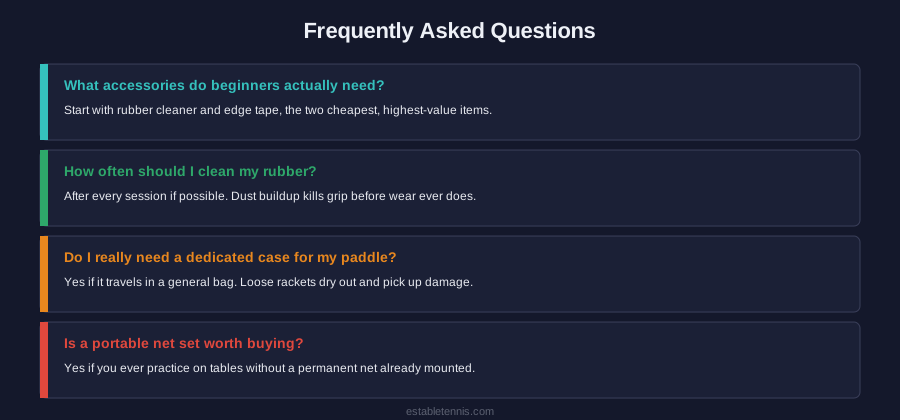
What table tennis accessories do beginners actually need?
Start with a rubber cleaner and edge tape, the two cheapest items that protect your paddle the most. A case and a tube of real competition balls are the next priorities as you play more regularly.
How often should I clean my rubber?
After every session if possible, or at minimum weekly for a regular player. Dust and grime buildup, not the rubber wearing out, is usually what kills grip first.
Do I really need a dedicated case for my paddle?
Yes if it travels in a general sports bag. A loose racket picks up lint, gets knocked around, and dries out faster from open-air exposure than one kept in a sealed case.
Is a portable net set worth buying?
Yes if you ever practice on tables without a permanent net, a dining table, a spare table at a gathering, or a club that breaks down its setup between sessions.
Kerrilee packed the next tournament properly. Cleaner, spare tape, the case, the balls, the whole kit organized in one bag by the door the night before instead of thrown together that morning. She still lost in the semifinal, to a player who’d simply been better that day. But she lost on her own terms that time, focused on the match itself from the first point, not because she spent the morning borrowing things from clubmates and apologizing for it between games.
None of this gear wins points on its own. What the right accessories buy you is consistency: rubber that grips like it did last month, a racket that survives the gym bag, balls that bounce true. Cheap insurance for every hour you have already invested at the table.
If you’re still figuring out which paddle and rubber to actually build the rest of this kit around, before spending a single dollar on any of the six items above, PingPath is the honest place to start.
Leave a Reply