
A father walked into the practice hall at the National Racquet Centre in St. Augustine holding a table tennis blade he’d bought his son online, the same model a professional uses on national television, still smelling of fresh varnish. The boy was maybe fourteen. He could serve fine, but every push after that flew long. Every block sailed two feet past the end line. His father stood behind the barrier with the look of a man who’d just spent good money on a problem.
That blade wasn’t broken. It was built for someone who no longer needs it to forgive mistakes, and the boy wasn’t that player yet. Almost nobody is. Almost every player who quits table tennis in their first year quits fighting equipment that was never built to help them, not fighting the sport itself.
Why Is Speed the Wrong First Question When Choosing a Table Tennis Blade?
Speed is the wrong first question because it removes your margin for error. A slower blade holds the ball longer, giving you more time to generate spin and recover from a mistimed shot. Most players shopping for a blade ask one question first: how fast is it? That’s backward. Speed is the last thing a developing player should chase, because speed removes your margin for error. A fast blade returns the ball to your opponent’s side almost the instant it touches the wood.
You get less time to feel the shot, less time to correct a bad angle, and less room to recover from contact that wasn’t quite clean. A control blade does the opposite. It holds the ball against the rubber a fraction of a second longer, a property equipment reviewers call dwell time. That extra sliver of contact time is where spin gets generated, where a rushed shot gets a second chance to land on the table instead of three feet past it.
Blade classifications run from defensive through all-round to offensive, and the International Table Tennis Federation requires that at least 85% of any legal blade’s thickness be natural wood. That’s exactly why a well-built wood blade still outperforms flashy carbon composites for anyone still building their strokes.
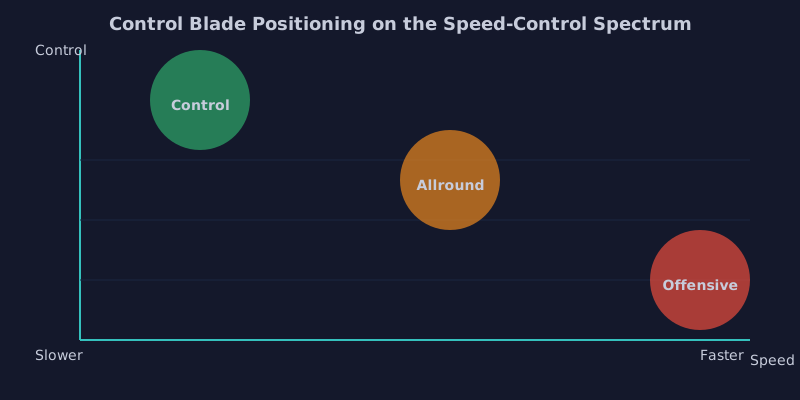
The trade is simple. Less speed buys you more time. More time buys you more control. And control, not raw pace, is what wins points at the level almost every recreational and developing player competes at. If you haven’t already read the full breakdown of blade fundamentals, how to choose a table tennis blade covers the four variables that matter most before you spend a cent.
What Actually Makes a Blade Forgiving?
Three things decide whether a blade behaves like a control blade or an offensive weapon: the number of plies, the wood species on the outer layer, and the overall stiffness of the construction. None of this is marketing language. It’s physics you can feel in your hand within the first ten shots.
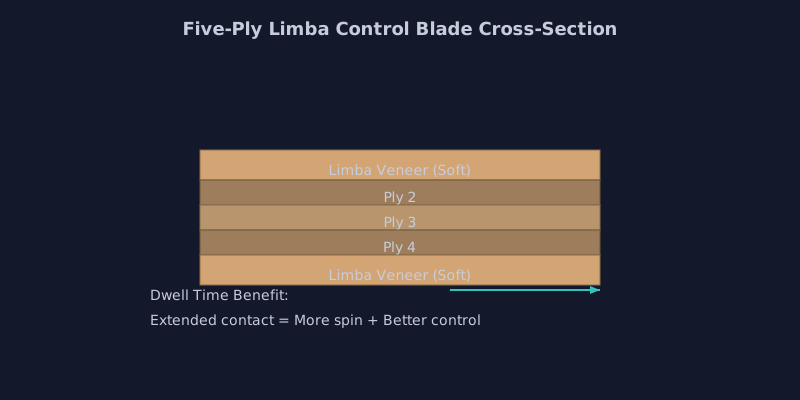
Five-ply all-wood construction is the classic control setup. Fewer layers means more natural flex, and flex is what gives a blade its soft, forgiving feel. Seven-ply blades and anything with a carbon or arylate layer trade that flex for stiffness, which sends the ball off faster but punishes mistimed contact far more harshly. A control blade is almost always five plies of solid wood, nothing else.
The outer veneer matters just as much. Limba wood, soft and light-colored, is the standard choice for a control blade because it lets the ball sink into the surface slightly before rebounding, extending dwell time and giving you a longer window to brush the ball for spin. Koto is harder and snappier, sending the ball off flatter and faster with less margin for a mistimed stroke. The wood species tells you more about how a blade will actually feel than any speed rating on the box.
Weight plays a smaller but real role too. A control blade in the 80 to 86 gram range swings quickly enough to keep your reaction time intact while still carrying enough mass to feel stable on a block. Anything heavier starts to fight your wrist on fast exchanges, which defeats the purpose of choosing control equipment.
Balance matters as much as raw weight. A blade with more mass toward the head generates extra pop on loops and smashes, but it also slows your recovery between shots and makes blocking feel heavier than it should. Control blades are almost always balanced closer to neutral or slightly handle-heavy, which is part of why they feel so quick to bring back into position after a defensive shot. You won’t find that detail on the packaging, so the only real way to check it is to hold the blade and feel where the weight sits before you glue on a rubber sheet.
What Are Four Control Blades Worth Your Money?
These four show up again and again in coaching recommendations for a reason. Each pairs a soft, flexible build with enough speed to finish a point when you’ve earned it. None of them will make you a better player by themselves, but none of them will fight you either. That’s the entire point of a control blade.
Stiga Allround Classic
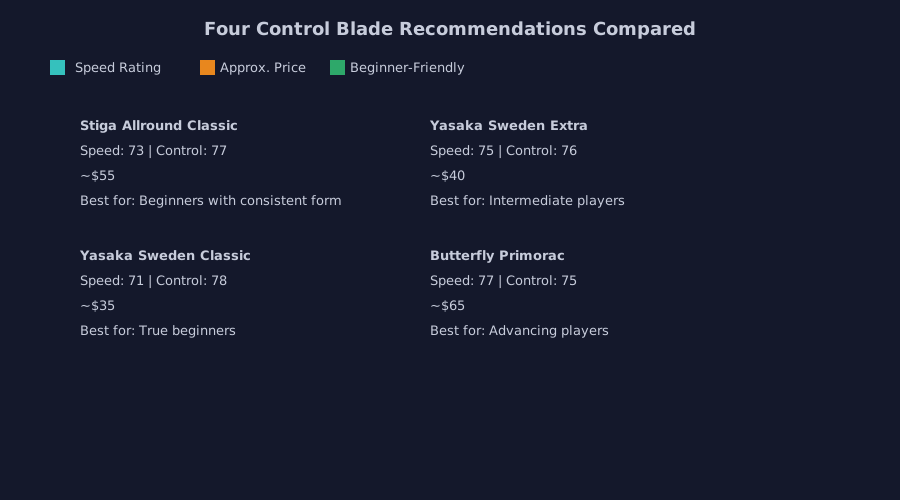
The Stiga Allround Classic has been a coaching staple for decades, and it earns that reputation honestly. Five-ply limba construction, a speed rating around 73 and a control rating around 77 on Stiga’s own scale, at roughly $55. Players consistently describe it as giving clear feedback on exactly where the ball hit the blade, which matters enormously when you’re still diagnosing your own technique.
It pairs best with medium-hard rubber on both sides. Pair it with something soft and slow and you’ll find yourself pushing shots into the net instead of over it.
Yasaka Sweden Extra
The Yasaka Sweden Extra sits a half-step faster than the Stiga, which makes it the right pick for a player who has a season or two under their belt and wants a bit more finishing power without giving up the control that built their game. Five-ply Swedish limba, excellent touch on short game, and enough stability on blocks that defenders and all-round players both find a home with it.
At around $40, it’s also one of the better value control blades on the market.
Yasaka Sweden Classic
Slower than its Extra sibling, the Yasaka Sweden Classic is the blade to hand a true beginner who has never held a racket with intention before. It’s forgiving on blocks and pushes to an almost comical degree, and coaches recommend it specifically for players still developing consistent contact. The trade-off is speed away from the table, so expect to outgrow it faster than the Extra if you’re improving quickly.
Butterfly Primorac
Technically rated OFF- rather than pure allround, the Butterfly Primorac is Butterfly’s best-selling shakehand blade for good reason. It sits at the fast end of what most people would still call a control blade, which makes it the pick for a player who has outgrown a Stiga Allround Classic but isn’t ready for a stiff carbon setup. African limba construction gives it noticeably more feel than most offensive blades, and it stays stable and predictable even away from the table.
How Does Handle Shape Change How Control Feels?
Blade handles come in three common shapes, and the choice isn’t just about comfort. It changes how much control you actually get out of the same piece of wood. Flared handles, wider at the base, are the most common and give you a firm, locked grip that suits players who generate power through a full arm swing.
Straight handles run the same width from top to bottom, letting you shift your hand position mid-rally more easily. That flexibility appeals to players who twiddle the racket between backhand and forehand rubber, or who prefer a looser, more adjustable grip.
Anatomic handles curve to match the shape of your hand and lock you into one grip position more rigidly than either of the other two. Beginners often gravitate toward anatomic handles because the shape seems to tell your hand where to go, but that same rigidity can make later grip adjustments harder as your technique matures. A flared handle on a control blade is the safest default if you’re still building your fundamentals, and it’s what most of the picks above ship with unless you ask otherwise.
When Should You Move Off a Control Blade?
Move off a control blade only once your technique has genuinely caught up to it, not because a professional’s blade looked impressive on video. A control blade isn’t a permanent home. It’s scaffolding. The honest signal that you’ve outgrown one has nothing to do with how long you’ve owned it and everything to do with what happens during a match.
If you find yourself using your full arm and shoulder just to generate enough pace to trouble an opponent, and your coach or a more experienced hitting partner confirms your technique has caught up to the wood, that’s the moment to consider a faster blade.
Resist the temptation to upgrade because a professional match made a carbon blade look impressive on video. Speed you haven’t earned yet just moves the same control problem from your blade to your rubber, then to your strokes, and you end up right back where that fourteen-year-old at the National Racquet Centre started. The upgrade path from a Stiga Allround Classic or Yasaka Sweden Extra usually runs toward something like a Butterfly Primorac before it ever touches a stiff carbon composite, and that middle step matters more than most players expect.
Common Questions About Control Blades
Is a Slower Blade Worse for Competitive Play?
Plenty of tournament-level players, particularly defenders and all-round attackers, compete successfully on blades most shops would classify as control-first. Speed matters far less than consistency once you’re past the recreational level. A blade you trust completely will win you more points than one that occasionally surprises you.
Does Fast Rubber Work Well on a Control Blade?
A firmer, faster rubber on a soft blade often produces a setup that’s genuinely playable at a higher level, because the wood is still absorbing enough of the pace to keep contact forgiving. Many intermediate players do exactly this to extend a control blade’s useful life. Just expect the overall feel to shift noticeably compared to running slower rubber on the same wood.
Do Wood Blades Wear Out the Way Rubber Does?
A well-cared-for control blade, kept dry and stored away from direct sunlight, will play the same in five years as it does on day one. Rubber sheets degrade with use and need replacing every six months to a year depending on how often you play. The blade underneath is close to permanent.
Is a Pre-Made Racket a Reasonable Starting Point?
A quality pre-made racket with a control-rated blade already assembled removes the guesswork of matching a blade to rubber on your first buy. Once you’ve played consistently for a few months and want more say over your equipment, moving to a custom control blade like the ones above is the natural next step.
How Do You Match Rubber to a Control Blade?
A control blade paired with the wrong rubber will still play like a cannon. Blade and rubber work as a system, not two separate buys, so the pairing matters more than either piece alone.
The rule that holds up across almost every setup: if your blade is already soft and forgiving, you have room to run a slightly firmer or faster rubber on top without losing control, because the wood absorbs some of that extra pace before it ever reaches your hand. Run a soft, slow rubber on that same setup and you’ll find yourself muscling every shot just to clear the net, which builds bad habits fast.
If you’re still working out which sheet belongs on your setup, the guide to the best rubber for beginner players walks through exactly which sheets pair cleanly with a control blade like the ones above.
Thickness matters too. A control blade with a 1.8 or 2.0mm sponge on both sides keeps the whole racket in the same forgiving territory. Jump to a 2.2mm max sponge on a slow blade and you’ve built a setup that fights itself, fast rubber sitting on top of wood that was never designed to handle that kind of catapult effect.
Why Does Trusting Your Blade Matter for Your Mental Game?
Equipment problems don’t stay equipment problems for long. A player who can’t trust their blade starts second-guessing their stroke on every shot, and that second-guessing has a name in sport psychology: explicit monitoring, the process of consciously breaking a well-learned movement into deliberate steps instead of letting it run automatically. Research on skill-focused attention under pressure shows this same breakdown happens across sports whenever an athlete starts consciously controlling a movement that should be running on autopilot.
A brutal blade doesn’t just cost you points on the table. It teaches your brain to flinch before contact, to steer the shot instead of trusting the stroke, and that flinch shows up in matches long after you’ve technically gotten used to the equipment. A control blade removes that pressure at the source. When the wood forgives a slightly late contact or a rushed angle, your attention stays on the point instead of on damage control, and automaticity, the quality that lets a trained skill run without conscious interference, has room to actually develop.
None of this requires expensive equipment to test for yourself. Pick up any control blade, close your eyes, and tap the sweet spot near the center of the head with a fingernail. It gives back a soft, slightly dull knock. A stiff offensive blade rings sharper, almost metallic. That small test tells you more about how the wood will actually behave under pressure than any spec sheet, and it takes ten seconds in a shop before you spend a dollar.
One more practical note worth knowing before you buy: sponge choice matters as much as the blade itself, and pairing a control blade with the wrong sponge hardness undoes most of what the wood is doing for you. A soft, forgiving blade paired with a rock-hard tournament sponge fights itself on every shot, since the sponge reintroduces exactly the harsh, unforgiving feel the wood was chosen to avoid. Stay in the 35 to 42 hardness range on either the ESN or DHS scale if you are running any of the four blades above, and the whole setup will feel like one coherent tool instead of two components arguing with each other.
That fourteen-year-old at the National Racquet Centre didn’t need a lesson on grip or footwork that afternoon. He needed a table tennis blade that matched where his game actually was, not where his father hoped it would be. Buy the blade that fits the player standing at the table right now, not the one you’re hoping to become in two years. The speed will still be there when you’ve earned it.
Run your setup through PingPath and get a blade and rubber pairing matched to your level before you spend another dollar guessing.
Leave a Reply