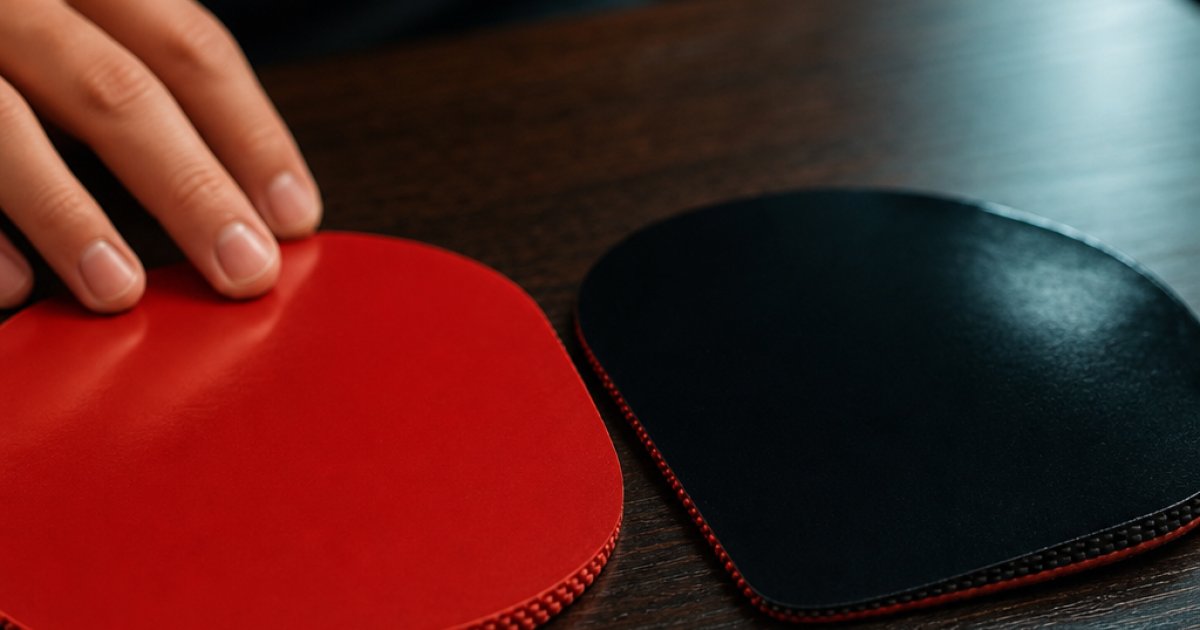
A man I used to see at a club in Bridgetown, a retired customs officer who took up the sport at fifty-one because his cardiologist told him to move more, spent three hundred dollars on a rubber before he had played a single tournament match. It was the same sheet a national team player used, sold to him by a shop clerk who had never seen him hit a ball.
He glued it on himself, badly, and for the next four months he could not keep a single loop on the table. Every ball he brushed sailed long. Every serve he tried to spin came back flat off his opponent’s paddle before he understood why. He blamed his technique, then his blade, then briefly considered blaming the table. It never occurred to him that the rubber built for a player who could generate his own power was actively punishing a beginner who couldn’t yet. That trap is exactly what a guide to the best rubber for beginner table tennis players exists to keep you out of.
He came back to the sport, eventually, on a thirty-five-dollar sheet of rubber a coach picked out for him in about ninety seconds. He is not a good player. He will never be a good player. But he keeps the ball on the table now, and he smiles when he does it, and that is the entire point of a beginner rubber that nobody in a pro shop bothers to explain.
The rubber you buy in your first year of table tennis is not about unlocking your ceiling. It’s about not getting in your own way while you find out where that ceiling is.
Most beginner equipment guides talk about spin ratings and speed numbers like they’re the whole story. They’re not. Here’s what actually separates a rubber that helps a new player from one that quietly sabotages them, and the best rubber for beginner table tennis players in five specific, proven picks worth putting your money on.
What Does a Beginner Rubber Actually Need to Do?
A beginner rubber’s job is forgiveness, not speed. It should let you feel the ball, tell you honestly when you mistimed a stroke, and give enough dwell time to learn to brush the ball. A rubber has one job for a new player, and it isn’t “make you fast.” It’s forgiveness. A beginner rubber needs to let you feel the ball, tell you honestly when you mistimed a stroke, and give you enough dwell time on contact that you can learn to brush the ball instead of just swatting it.
Fast, stiff, tournament-grade rubbers do the opposite. They amplify small technical errors into big ones. A slightly late contact point turns into a ball flying off the end of the table. A slightly closed racket angle turns into a shot that dives into the net. You end up compensating for the equipment instead of building the stroke, which is exactly backward from how skill should develop.
This is not a controversial idea inside the sport. It’s just one that pro shops rarely lead with, because the fast rubbers cost more and carry better margins. The ITTF maintains an official list of approved racket coverings, and plenty of the rubbers on that list are wrong for a first-year player even though they’re perfectly legal.
Rubber is also only half the system. A soft, forgiving rubber glued to a stiff, fast blade will still punish you, because the blade sets the speed ceiling before the rubber ever touches the ball. If you haven’t settled on a blade yet, it’s worth reading How to Choose a Table Tennis Blade alongside this guide, since the two decisions are meant to be made together, not in isolation.
What Three Variables Actually Matter When Choosing Rubber?
Three variables determine whether a rubber suits a beginner: sponge thickness, sponge hardness, and whether it is tacky or tensor. Ignore the marketing copy on the packaging. Three things determine whether a rubber suits a beginner: sponge thickness, sponge hardness, and whether the rubber is tacky or tensor. Get these three right and the brand name barely matters.
Sponge Thickness
Rubber sponges run from OX (no sponge at all) up to a maximum of around 2.2mm, and thickness controls how much spring is under the topsheet. Thinner sponges, in the 1.8 to 2.0mm range, give you more feel and more control because there’s less spring working against your timing.
Thicker sponges add power and forgiveness on deep, heavy shots, but they also make your own errors bigger and harder to read. For a beginner, 1.8 to 2.0mm is the range worth living in. Below that, the sponge bottoms out too easily and forces you into an over-angled, defensive stroke that builds bad habits early. I covered this in more depth in Table Tennis Rubber Thickness Explained, which is worth reading before you buy anything.
Sponge Hardness
Hardness is measured on two different, non-interchangeable scales depending on where the rubber is made, and manufacturers rarely make that clear on the box. Softer sponges (roughly ESN 35–42° or DHS 36°) give you more dwell time, more natural arc, and more room to make small timing mistakes without paying for them. Harder sponges reward a player who already has a repeatable, powerful stroke, which a beginner by definition does not have yet. Soft and forgiving beats hard and unforgiving every time in your first year.
Tacky vs. Tensor
Tacky rubbers, the classic Chinese style, grip the ball through stickiness and reward a player who can generate their own spin through a fast, whippy stroke. Tensor rubbers, the modern European and Japanese style, are grippy rather than sticky and build spin and speed into the sponge itself through a catapult effect, which means the rubber does more of the work for you. For a beginner still building a stroke from scratch, a soft tensor rubber is almost always the easier, more forgiving starting point. The full mechanical breakdown of how this works lives in Rubber and Sponge in Table Tennis.
What Are the 5 Best Rubbers for Beginner Table Tennis Players?
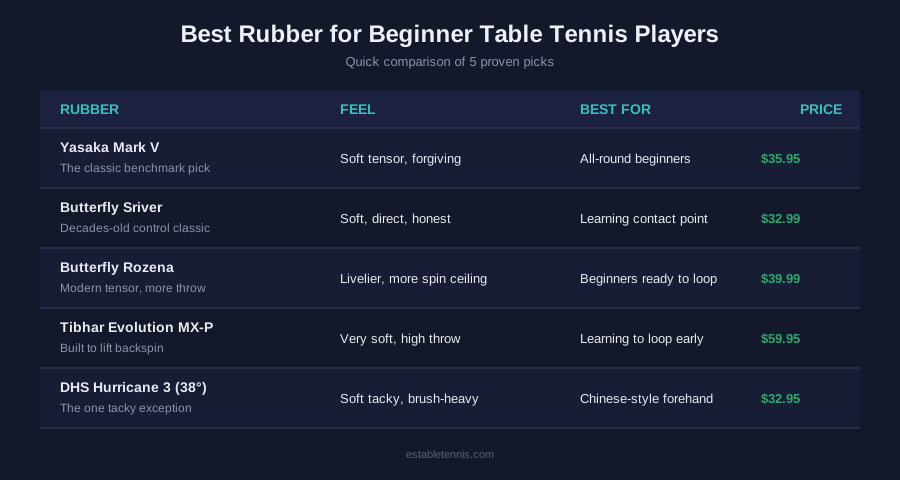
These five sheets cover every realistic starting point, from a first purchase under thirty dollars to a slightly more capable setup for a beginner who already knows they want to build a spin-first game. Every one of them is soft enough, thin enough, and forgiving enough to let you learn instead of fighting the equipment.
If you’re starting with a pre-made racket rather than a custom build, that’s a reasonable choice too, and none of it is wasted money. A quality pre-made bat that already pairs a stable blade with one of these rubber families will teach you exactly the same lessons as a custom setup. The upgrade to buying blade and rubber separately can wait until you actually know what you’re upgrading toward.
1. Yasaka Mark V: The Benchmark Nobody Regrets
Yasaka Mark V has been the default recommendation for new players for decades, and it has earned that reputation honestly rather than through nostalgia. It’s a medium-soft tensor rubber with a forgiving throw angle, meaning mistimed shots are more likely to land on the table than sail off the end of it. It won’t win you a national title. It will let you find out what your strokes actually look like without the rubber lying to you about it.
2. Butterfly Sriver: Old, Slow, and Still Right
Butterfly Sriver is one of the oldest rubbers still in production, and coaches keep recommending it for the same reason your grandmother’s cast iron pan is still in her kitchen: it does one thing extremely well and never pretends to do anything else. The feel is soft, direct, and honest. If you want a rubber that teaches you exactly where your contact point is, this is it.
3. Butterfly Rozena: A Modern Rubber That Doesn’t Punish You
Butterfly Rozena is a newer tensor sheet built for intermediate players, but its softer sponge options make it a reasonable step up for a beginner who has a few months of table time and wants a bit more spin ceiling without losing the forgiveness of a slower setup. It throws the ball a little higher than Sriver, which means backspin returns come off the table more reliably instead of dying in the net.
4. Tibhar Evolution MX-P: Built for the Beginner Who Wants to Loop
Tibhar Evolution MX-P uses an unusually soft sponge with a high throw angle, which makes it one of the easiest rubbers on the market for lifting backspin into a topspin loop, the single hardest stroke for a new player to learn. If your goal from week one is “I want to loop,” this is the sheet built for exactly that goal.
5. DHS Hurricane 3 (38°): For the Beginner Ready to Work
DHS Hurricane 3 in the 38° hardness is the one exception on this list to the “avoid tacky rubber as a beginner” rule, and it earns its place because the 38° version is genuinely soft by tacky-rubber standards. It’s the right pick for a beginner who has decided early that they want a heavy, brushing, Chinese-style forehand and is willing to put in the extra stroke discipline that tacky rubber demands. Everyone else on this list is an easier starting point.
How Much Should You Actually Spend on Beginner Rubber?
A beginner rubber should cost thirty to fifty dollars a sheet, enough for a real tensor or control rubber, not a toy and not a rubber built for someone years ahead of you. Every rubber on this list sits between thirty and sixty dollars, and that’s not an accident. A beginner setup should live in what most coaches call the entry tier: a controllable inverted rubber on a stable, mid-speed blade, for somewhere around thirty to fifty dollars a sheet. That price band buys you a genuine tensor or control rubber from a real manufacturer, not a toy off a supermarket shelf and not a rubber tuned for someone three years ahead of you.
Spending more doesn’t buy you a better beginner. It buys you a rubber built for someone who already generates their own spin and power, which is a problem you don’t have yet. Save the hundred-dollar-plus sheets for the day your coach tells you your technique has outgrown your equipment, not before. That day is usually further away than it feels.
How Do You Actually Put Rubber on a Blade?
Use water-based glue, apply thin even coats to both surfaces, let them dry until clear or matte, then press the rubber on starting from the handle and rolling outward. A great rubber choice still fails if it’s glued on badly, and this is where a lot of beginners quietly sabotage themselves without realizing the rubber was never the problem. Use a water-based glue, since VOC speed glues have been banned in competition since 2008 and aren’t worth the health risk or the hassle at home either way.
Apply one thin, even coat to the blade and one or two thin coats to the sponge side of the rubber, then let both sides dry until they turn from milky to clear or matte, usually fifteen to twenty minutes. Press the rubber down starting from the handle and rolling outward toward the tip, smoothing out air bubbles as you go, then trim the overhang with a sharp blade once it’s fully bonded.
A bubbled, unevenly glued rubber will behave inconsistently no matter how good the sheet is, and beginners who blame the rubber for a bad match are frequently blaming the wrong culprit. Give the glue job the same care you gave the buying decision.
What Mistakes Do Beginners Make Choosing Rubber?
The most common mistakes are buying the rubber a pro uses, chasing maximum sponge thickness, buying two mismatched rubbers, and starting with anti-spin or long pips rubber. The same handful of mistakes show up over and over, and every one of them is avoidable once you know to watch for it.
Buying the rubber a pro uses is the most expensive version of this mistake. Professional setups are tuned for players who can already generate their own power and spin; putting that rubber in a beginner’s hands just removes the forgiveness they still need. A national team player’s rubber assumes a fast, committed stroke is already there to activate it. Yours isn’t yet, and that’s fine. It’s supposed to take time.
Chasing maximum sponge thickness is the second most common error, because thicker always sounds better on a spec sheet even though it makes small technical flaws bigger and harder to diagnose. A thick sponge on an untrained stroke just means your mistakes travel further before you notice them.
Buying two different rubbers, one fast and one slow, “to be safe,” is the third mistake, and it usually means neither side gets broken in properly before the next equipment change. Starting with long pips or anti-spin rubber to “win more points early” is the fourth, and probably the most damaging long-term, because it lets you win matches without ever learning to generate or read spin, which are the two skills the rest of your table tennis life depends on.
The safest rule, especially in the first six months, is to stick with an ITTF-approved beginner rubber long enough to actually learn what your strokes feel like before changing anything.
Frequently Asked Questions
Do I need different rubber on my forehand and backhand as a beginner?
No. One consistent rubber on both sides, ideally something soft and forgiving like Yasaka Mark V or Butterfly Sriver, lets you learn one feel instead of two. Splitting your setup is a decision for once you have a settled style, not before.
How often should I replace a beginner rubber?
Most recreational players playing two to three hours a week should expect four to six months out of a sheet before the grip and spin noticeably drop off. Training more often shortens that window considerably.
Is tacky Chinese rubber good for beginners?
Usually not, with the one exception of a softer hardness like DHS Hurricane 3 at 38u00b0. Tacky rubber asks the player to generate all the spin and speed themselves, which is a lot to ask before your stroke is repeatable.
Does a more expensive rubber make me a better player?
No. Every rubber on this list costs under sixty dollars, and every one of them will outperform a two-hundred-dollar tournament rubber in a beginner’s hands, because forgiveness matters more than ceiling at this stage.
When Is It Actually Time to Change Your Rubber?
It’s time to change your rubber when a coach or experienced hitting partner tells you your stroke has outgrown your equipment, not on a fixed schedule. Resist the urge to change your rubber every few weeks looking for a magic fix. A new sheet needs time to become familiar, and swapping it constantly destroys the one advantage a beginner setup has, which is predictability. As a rough guide, stick with your first rubber for at least six months, ideally closer to a year, before you touch it again. That’s long enough for grip and spin to actually degrade with regular use, and long enough for your strokes to develop past what the rubber was chosen for in the first place.
The only real signal that it’s time to change is technical, not emotional. If your coach or a more experienced hitting partner tells you that your stroke has outgrown your equipment, upgrade the sponge thickness or hardness one small step at a time. Don’t jump from a control-first sheet straight to a tournament tensor because a video online made it look exciting. The upgrade path is supposed to be boring, and boring is what keeps you improving instead of starting over.
Table tennis has a way of humbling you quietly. It doesn’t announce your mistakes with a buzzer or a whistle; it just sends the ball into the net or off the end of the table, over and over, until you either quit or figure out why. The old customs officer in Bridgetown never became a good player, but he stopped blaming himself for a problem that was never his to fix. That’s what the right rubber gives you in your first year. Not a shortcut to skill. Just an honest floor to build it on.
Run your setup through PingPath to get a rubber and blade combination matched to your actual game before you spend another dollar guessing.
Leave a Reply