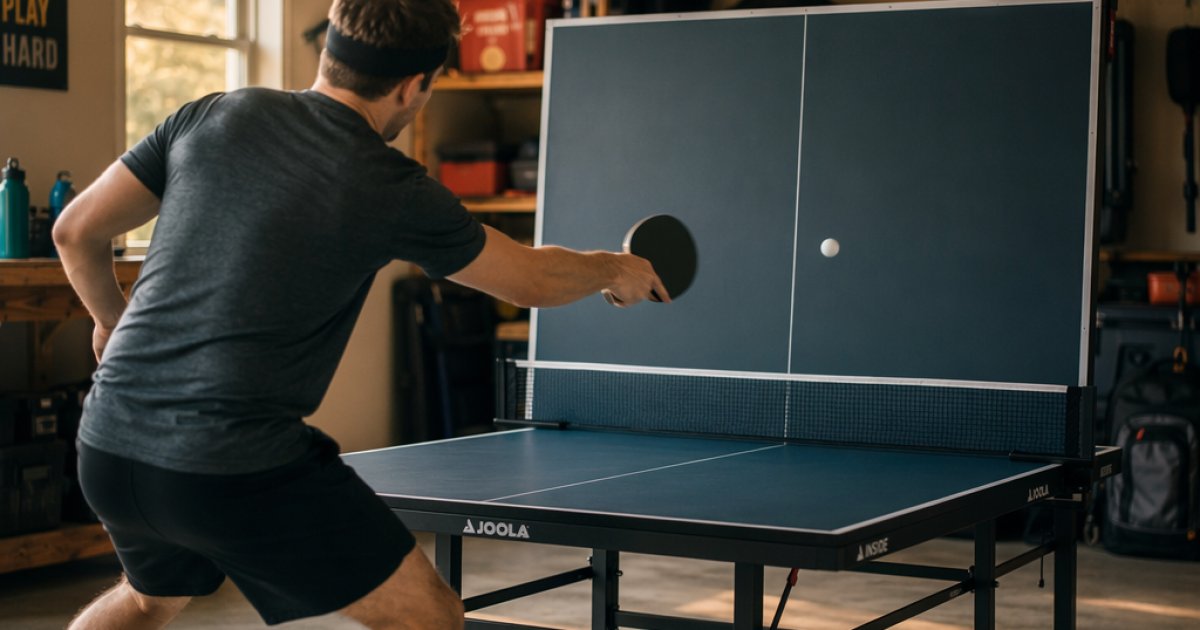
Devon bought the cheapest table he could find online for the garage in Curepe, a Christmas surprise for his two kids, boxed and assembled in an afternoon with the kind of pride that comes from finishing something before anyone else wakes up, coffee going cold on the workbench beside the instruction sheet. Three weeks later, the top had a visible warp near one corner, the kind that makes a dead ball skid instead of bounce, and by the second month, the fold hinges had loosened enough that setting it up for a quick game meant fifteen minutes of fighting with a leg that wouldn’t lock into place.
He hadn’t been cheap on purpose, and he’d read a few reviews before buying. He just hadn’t known there was a real, measurable difference between a table built to survive a living room for a decade and one built to survive a single warehouse clearance sale.
A home table has different priorities than a club or tournament table, and almost nobody explains what those priorities actually are before you’ve already spent the money.
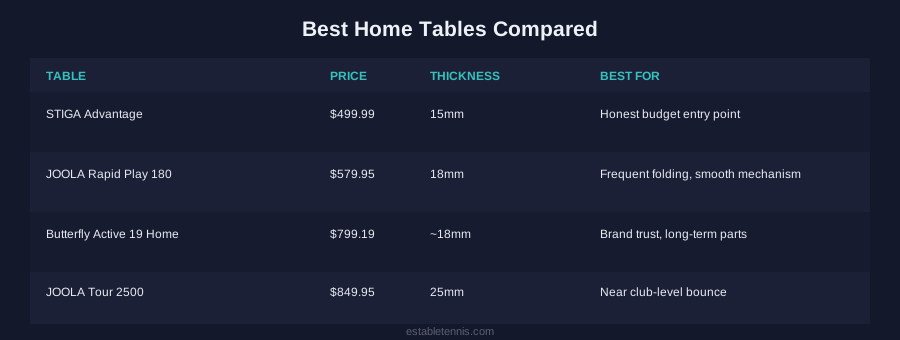
The best table tennis table for home use balances table top thickness (15mm minimum, 18-25mm for a genuinely consistent bounce), a reliable fold-and-playback mode for storage and solo practice, and sturdy locking wheels, over raw size or tournament branding. Four confirmed, currently available picks spanning budget to premium: the STIGA Advantage, the JOOLA Rapid Play 180, the Butterfly Active 19 Home Rollaway, and the JOOLA Tour 2500.
What Actually Matters for a Home Table That Doesn’t Matter for a Club Table?
A club table lives in one designated space, gets set up once by staff who know what they’re doing, and stays there for years under the ongoing care of people whose whole job is maintaining exactly this kind of equipment. A home table gets folded, rolled, bumped into a garage wall, and occasionally used as a laundry-folding surface between matches, so durability under repeated setup and teardown matters more than it does anywhere else.
This is also why a table’s official star rating, which mostly reflects tournament-level construction, matters less for a home buyer than three specific things: how thick the actual playing surface is, how reliably it folds without a fight, and whether the wheels lock securely enough that the table doesn’t drift mid-rally on a hard floor.
Why Does Table Top Thickness Matter So Much?
Because it’s the single biggest factor in whether a ball bounces the same way twice. A thin top, 12mm or less, common on the cheapest tables sold online and often the exact detail a listing photo never shows, flexes slightly on every single bounce, which means the same shot lands differently depending on exactly where on the surface it happens to hit.
That inconsistency is what actually happened to Devon’s table, not a manufacturing defect so much as a table built to a price point that never accounted for daily use. Anything at 15mm starts to feel genuinely consistent. 18mm and above, where the JOOLA Rapid Play 180 and the Tour 2500 both land, gets you close to what a club player would consider a real, trustworthy bounce, which matters more the more seriously anyone in the house is actually trying to improve.
The 4 Best Table Tennis Tables for Home Use
1. STIGA Advantage
The STIGA Advantage ($499.99) is the honest budget entry point: a 15mm top, a genuine fold-and-playback mode for solo practice, and a fifteen-year track record as one of the most reviewed home tables sold in the US. It won’t feel like a club table, and nobody buying at this price point should expect it to, but it clears the bar for consistent bounce that a sub-$300 table almost never does, which makes it the right call for a first real table rather than a second cheap replacement of the kind Devon ended up needing.
2. JOOLA Rapid Play 180
The JOOLA Rapid Play 180 ($579.95) steps up to an 18mm top with automatic folding legs and locking casters, both genuine quality-of-life upgrades if the table is going to be folded and moved regularly rather than left permanently set up.
This is the table for a family that genuinely plans to use the playback mode often, on weeknights and not just weekends, since JOOLA’s folding mechanism on this line is noticeably smoother in practice than most tables at a similar price point, which matters more over two years of regular use than it does in a single showroom test.
3. Butterfly Active 19 Home Rollaway
The Butterfly Active 19 Home Rollaway ($799.19) is built specifically for the home market by a manufacturer better known for tournament equipment, which shows in the build quality of the frame and casters even though the table top spec sits close to the Rapid Play 180.
Worth considering if brand trust and long-term parts availability matter more to you than shaving off the last hundred dollars, especially if there’s any real chance the table needs a replacement part years down the line, since an established manufacturer is far more likely to still stock those parts than a brand that only exists at the budget end of the market.
4. JOOLA Tour 2500
The JOOLA Tour 2500 ($849.95) is the pick if anyone in the house is playing seriously enough to want a bounce close to tournament conditions at home. A 25mm top is genuinely thick for a home table, closer to what a serious club uses than any other option on this list, and the difference in consistency versus the 15-18mm tables above is noticeable within the first few rallies, not just on a spec sheet you compare before buying.
It’s the pick worth the extra cost if anyone in the house is training toward actual competition rather than casual weekend games.
Why Isn’t There a Pick Under $499 on This List?
Because the tables that would fill that slot didn’t survive verification. A well-known budget option in this range showed as out of stock directly on the manufacturer’s own site while researching this post, and a common budget outdoor-style table was excluded on purpose since it’s built for weatherproofing rather than the consistent indoor bounce this guide is actually about.
Rather than recommend something unavailable or the wrong category just to fill a price tier, this list sticks to what’s genuinely buyable today. If a genuine sub-$499 option becomes available again, worth checking back, but a table you can’t actually purchase isn’t a real recommendation no matter how good the spec sheet used to look.
Does an Inconsistent Table Actually Hurt More Than Your Shots?
Yes, and it’s worth naming directly since it rarely comes up in a straightforward buying guide. Practicing on a table with a warped or overly thin top means the feedback you get from every stroke is unreliable; the same shot produces a different bounce depending on exactly where it lands, which makes it genuinely harder to build the kind of trustworthy mastery experience that real confidence is built on.
A player who’s spent months practicing on inconsistent home equipment often shows up to a club or tournament table and finds their timing is off in ways that have nothing to do with nerves and everything to do with retraining their eyes and hands to a surface that finally behaves the way it’s supposed to. If you’re serious about anyone in the house actually improving, the table’s consistency is doing real work toward that goal or quietly working against it.
Should You Buy Used Instead of New?
Sometimes, but check the top and the fold mechanism in person before committing, since both are exactly where a used table shows its age, and neither flaw is obvious from photos in an online listing. A used table that spent years stored outdoors, or even in a humid, poorly ventilated garage, can warp badly even if it started life as a genuinely good, well-reviewed model, which quietly defeats the entire purpose of paying more to step up from the kind of mistake Devon made the first time around.
If you can inspect a used table directly, run a hand across the surface feeling for any unevenness, and fold and unfold it a few times to check the hinges move smoothly, a good used mid-range table can be real value. Buying sight unseen from an online listing carries real risk that a new table, sold with a return window, doesn’t.
Does Weight and Portability Actually Matter for a Home Table?
More than the spec sheet suggests, especially if one person is usually the one setting it up and putting it away. Most home tables in this range weigh somewhere between 130 and 190 pounds fully assembled, real weight by any measure, and while the built-in wheels handle most of the actual rolling once it’s on flat ground, getting a folded table through a narrow doorway or up even a small step still takes real, sustained effort from whoever’s moving it.
If the table is going into a space with an awkward entry, a narrow hallway or a step down into a garage, it’s worth checking a table’s folded dimensions and wheel size specifically before ordering, since a table that’s difficult to maneuver into position tends to get moved less often, which quietly defeats the point of paying extra for a genuinely good playback mode in the first place.
Is a Fold-and-Playback Mode Actually Worth Paying For?
Yes, almost always, and it’s easy to underestimate before you own the table. Playback mode, where one half folds up vertically so a single player can practice alone against it, is the single feature that gets a home table used on a random Tuesday evening rather than sitting folded against a wall until the next time enough people are around for a real game.
All four tables above include it, but the quality of the folding mechanism itself varies more than most buyers expect. A stiff, awkward fold is a real deterrent to actually using the table regularly, which is exactly the kind of detail Devon’s cheap table got wrong long before the top ever warped.
Is a Conversion Top a Good Alternative to a Full Table?
Worth considering if you already own a pool table or a large dining table and space is genuinely tight, but go in with the right expectations. A conversion top sits on top of an existing table and turns it into a usable playing surface, and it solves the space problem more completely than any folding table can, since it stores flat against a wall in a fraction of the footprint.
What it doesn’t solve, no matter how good the reviews look, is the bounce quality question this entire post is built around. Most conversion tops use thinner material than a dedicated table to keep the weight manageable for one person to lift on and off, which means the consistent bounce this whole post is built around is harder to get from a conversion top than from any of the four dedicated tables above. Treat it as a genuine space-saving option, not a shortcut to the same playing quality at a lower price.
Do These Tables Come With a Net, or Do You Need to Buy One Separately?
All four tables above ship with a net and post set included, which is standard for a complete home table at this price range, so budget for the table price alone rather than assuming a separate purchase. The included net is usually fine for regular home play. If it wears out after a few years, or if you want a second net for a portable table or a spare for a second location, a standalone net and post set is a cheap, easy replacement rather than a reason to reconsider the whole table.
How Much Space Do You Actually Need?
A regulation table measures 9 feet by 5 feet, but comfortable, genuinely enjoyable play needs real room behind each end too, ideally 5 to 6 feet of clearance beyond the table on both sides for a full backswing and the footwork required to actually chase down a wide ball without hitting a wall.
A garage, basement, or rec room around 20 feet by 12 feet handles this comfortably without anyone clipping a paddle on a wall mid-swing. Smaller spaces still work, especially with a playback-mode table that only needs full clearance on one side while folded, but it’s genuinely worth measuring your actual room with a tape measure before ordering, rather than assuming a 9×5 table plus a vague sense of wiggle room will be enough once real, fast rallies actually start happening.
Should Kids Use a Full-Size Regulation Table?
Yes, in almost every case, and it’s a more common question than the tables themselves suggest. A shrunk-down or junior-sized table teaches footwork and spacing that doesn’t transfer to a real table later, which just means relearning positioning from scratch the first time a child plays anywhere else.
A full 9-by-5 table paired with a lighter, slower training ball and a slightly lowered net for younger players (most posts allow this small adjustment) is a far better long-term choice than a smaller, junior-marketed table a child will simply outgrow within a year or two of regular play. All four tables on this list are regulation size, which is worth treating as a feature rather than a drawback even for a household buying primarily for younger players.
Why Does This Post Only Cover Indoor Tables?
Because indoor and outdoor tables solve different problems and shouldn’t be cross-shopped. Outdoor tables use weatherproof composite tops instead of wood, which changes the bounce characteristics enough that a table built specifically for a backyard performs noticeably differently than any of the four indoor tables covered above, and buying an indoor wood-top table for regular outdoor use will warp it considerably faster than Devon’s original table ever warped sitting safely in a garage.
If the space in question is a patio or yard rather than a garage or spare room, that’s a genuinely different buying decision with different priorities than this post covers.
Frequently Asked Questions
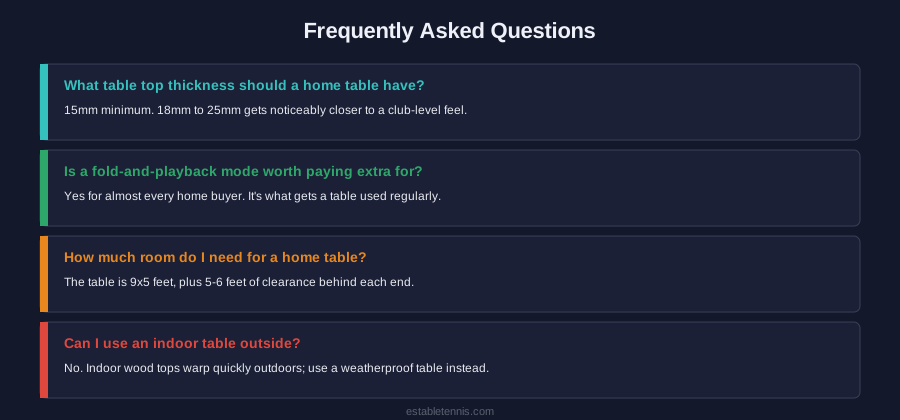
What table top thickness should a home table have?
15mm minimum for consistent bounce. 18mm to 25mm gets noticeably closer to a club-level feel, which matters more the more seriously anyone in the house plays.
Is a fold-and-playback mode worth paying extra for?
Yes for almost every home buyer. It’s the feature that gets a table used for solo practice on an ordinary evening rather than left folded against a wall.
How much room do I need for a home table tennis table?
The table itself is 9 by 5 feet, but comfortable play needs 5 to 6 feet of clearance behind each end. A room around 20 by 12 feet is comfortable.
Can I use an indoor table outside?
No. Indoor tables use wood tops that warp quickly in outdoor conditions. Outdoor use needs a weatherproof composite-top table built for it.
Devon’s second table, an 18mm fold-and-playback model, has been in that same Curepe garage for two years now. No warp near the corner, no fighting the hinges every time someone wants a quick game, and his kids use the playback side on their own most weekends without needing him to set anything up first or check the legs are locked before they start. He kept the first table’s box in the attic for a while, half out of embarrassment, half as a reminder to actually check specs before the next big purchase in that house.
Measure the room, be honest about how often the table will actually see play, and buy once. The right table for your home is the one still getting used in February, not the one that won the spec sheet.If you’d rather get matched to the right table for your space and how seriously your household actually plays, RallyRei will walk you through it in a couple of minutes.
Leave a Reply