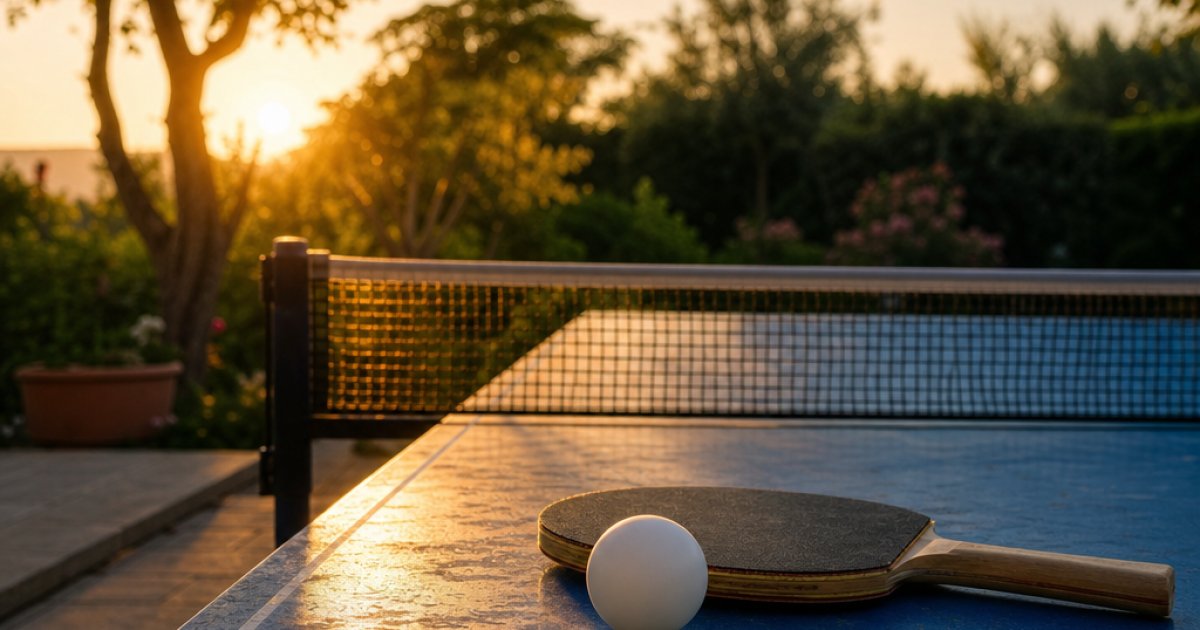
Table tennis is played by over 300 million people worldwide, making it one of the most popular sports on the planet. I remember the first time I heard that number and thought, “Okay, maybe it’s time I stopped playing on that rickety card table in the garage.” Getting a real outdoor ping pong table was one of the best backyard decisions I ever made.
But not all outdoor ping pong tables are built the same. I learned that the hard way when I bought a cheap one from a big-box store, left it outside through one rainy season, and came back to a warped, waterlogged mess. Total waste of money. I’m not going to let that happen to you.
In this guide, I’m breaking down everything you need to know about finding the best outdoor ping pong table for your space, your budget, and your skill level. We’re talking materials, brands, maintenance tips, must-have accessories, the whole thing. Whether you’re a weekend warrior looking to crush your neighbors or just want something fun for the family, I’ve got you covered.

What Makes the Best Outdoor Ping Pong Table?
So the first time I started seriously shopping for an outdoor ping pong table, I thought it was going to be simple: just grab a table, set it up, game on. Nope. There is so much more going on under the hood, and I wish someone had sat me down and explained it before I wasted a Saturday reading through confusing product descriptions. Let me save you the headache.
Material is everything when it comes to outdoor tables. You can’t just slap a regular indoor table tennis table outside and expect it to survive. The best outdoor ping pong tables are made with aluminum composite, resin, or other weatherproof materials that can handle rain, humidity, UV rays, and temperature swings. Indoor tables typically use wood-based surfaces, and wood and moisture are not friends. Look for tables specifically marketed as “all-weather” or “weatherproof,” and don’t just take the manufacturer’s word for it; check the reviews.
Now let’s talk table thickness, because this one trips a lot of people up. Thickness is measured in millimeters, and it directly affects the bounce. Indoor competition tables are usually 25mm thick. Outdoor tables tend to run between 4mm and 10mm because they use denser, harder materials that don’t need as much thickness to deliver a consistent bounce. A good outdoor table in the 6mm–8mm range honestly plays really well. Anything thinner than 4mm and you’re going to feel it; the ball just kind of dies on the surface, and it makes the game less fun.
The frame and leg system matter more than you’d think. Rust is the enemy. Look for powder-coated steel or aluminum frames with adjustable leveling feet, because no backyard is perfectly flat, and trying to play on an uneven table is maddening. Folding mechanisms should feel solid, not flimsy. If the legs wobble when you press on the corner of the table, that’s a red flag right there. I’ve played on tables where the leg just randomly collapsed mid-rally. Not fun. Not safe either.
Portability and storage are also big considerations. Some outdoor tables are meant to be left outside permanently; they’re heavy, durable, and built for it. Others fold up nicely and roll into a garage or shed. If you’re tight on space or live somewhere with serious winters, you probably want a folding rollaway model. The heavy-duty permanent ones are great if you have the space and the climate for it, but don’t paint yourself into a corner.
UV protection is one of those things people forget about until it’s too late. Direct sunlight over months and years will fade and warp even a decent table. The best outdoor tables have UV-inhibiting surface treatments baked into the design. It’s not glamorous, but neither is a table that looks like it’s been bleached by the sun after one summer.
What Are the Top 5 Best Outdoor Ping Pong Tables?
Okay, so this is the part everybody skips to first, and honestly, I get it. You want to know what to buy. I’ve had hands-on experience with a few of these and done deep research on the others, so here’s my honest breakdown of the five best outdoor ping pong tables you can buy right now.

1. Kettler Outdoor 15: Best Overall
If I had to pick one table and call it the gold standard for outdoor play, it’d be the Kettler Outdoor 15. This thing is built like a tank. The surface is a 10mm aluminum composite that delivers a surprisingly consistent bounce, almost comparable to a decent indoor table. The undercarriage is powder-coated steel, and the leg levelers are easy to adjust. I’ve seen these tables survive years of outdoor exposure with nothing more than a wipe-down now and then.
It’s on the pricier side, usually running between $2,200 and $3,700, but you are absolutely getting what you pay for. The folding mechanism is smooth, the wheels roll easily, and the playback mode (where you fold one side up to practice solo) works perfectly. If you’re serious about outdoor ping pong and you don’t want to replace your table every two or three years, this is the one to get. It’s the table I’d buy again in a heartbeat.

2. JOOLA Motion : Best Mid-Range Pick
JOOLA is a brand that serious table tennis players respect, and the JOOLA Motion earns that reputation outdoors. It features a 6mm aluminum surface with a weatherproof powder-coated frame. What I really like about this one is the robust locking system on the legs; they click into place and don’t budge. That might sound minor, but when you’re in the middle of a heated game and you don’t want the table shifting, it matters a lot.
Price-wise, this sits in the $700–$900 range, which puts it solidly in mid-tier territory. Great for families, casual players, and even intermediate-level players who want a reliable outdoor table without dropping Kettler money. The bounce isn’t quite as true as the Kettler 10, but it’s close enough that you won’t be complaining. Setup is also pretty easy; two people can have it assembled in under 30 minutes, which is a win.
3. Cornilleau 540M Crossover: Best for Serious Players
Cornilleau is a French brand that’s been making quality table tennis equipment for decades, and the 540M Crossover is their flagship outdoor model. It uses a 7mm resin surface that is legitimately impressive. Offering excellent value for money, the 540 ITTF table tennis table is enough to get you playing in the big league without going bankrupt. With its 22mm tabletop and its SKILTOP coating that guarantees optimal speed and transmission of spin, the 540 ITTF delivers a very high level of performance. Approved by the ITTF, this table is the best fit for table tennis clubs.
This table is designed with serious recreational and competitive players in mind. The bounce quality is exceptional for an outdoor table, and the frame is absolutely built to withstand the elements. It’s typically priced around $1,500–$2,500. One thing I’ll mention is that the legs are heavier than some competitors’, which makes moving it solo a bit of a workout. That weight is part of what makes it so stable during play. Everything is a trade-off.

4. Butterfly Easifold Indoor/Outdoor Rollaway: Best for Easy Storage
Not everyone has a huge backyard or a dedicated ping pong space. If you need a table that folds up cleanly and stows away easily, the Butterfly Easifold Indoor/Outdoor Rollaway is genuinely one of the best options out there. It folds into a compact upright position and rolls on casters, making it easy to wheel in and out of a garage.
The 5mm Melamine top provides a quality bounce and keeps the table lighter, making it easier to move around the yard. Butterfly is another legendary table tennis brand, so the quality control is there. The table retails for roughly $900–$1,300, making it one of the more affordable options from a premium brand. The ideal choice for those looking for an excellent table at an affordable price.
It requires minimal assembly time and has a 3-year warranty, providing countless hours of fun without the hassle. A perfectly level playing surface is guaranteed with height adjusters on each leg. The extra-strong top incorporates a special coating of DuPont paint which protects it from adverse weather conditions and is virtually unbreakable.

5. Stiga XTR Outdoor: Best Budget Pick
If you’re looking to get into outdoor ping pong without spending a ton of money, the Stiga XTR is where I’d point you. It’s a no-frills outdoor table with a 6mm weatherproof surface and an aluminum frame. It’s not going to blow you away with performance, but it’s durable, it folds up nicely, and it’ll survive being left outside through normal weather conditions reasonably well.
It typically runs in the $600–$800 range, which is honestly pretty competitive for what you get. The bounce isn’t as true as the higher-end options, and the ball can feel a little dead on cooler days, but for a family game or a casual backyard setup, it gets the job done. If your budget is tight, start here and upgrade later once you know you’re actually going to use it regularly. No shame in that at all.
What’s the Difference Between Outdoor and Indoor Ping Pong Tables?
This is a question I get asked a lot, usually right after someone has already made the mistake of buying an indoor table and putting it on their patio. I understand the appeal: indoor tables often have better playing surfaces and cost less for comparable performance. But they are fundamentally not built for outdoor conditions, and using one outside is going to shorten its lifespan dramatically.
The surface material is the biggest difference. Indoor tables use medium-density fiberboard (MDF), which gives that beautiful, consistent bounce competitive players love. But MDF absorbs moisture like a sponge. Leave an indoor table outside through one rainy weekend, and you’ll see the surface start to warp and bubble. After a full season? It’s basically garbage. Outdoor tables use aluminum composite, melamine resin, or synthetic materials that repel moisture and resist temperature changes. The bounce feels slightly different, usually a touch lower and faster, but it’s completely playable.
Frame construction is different too. Outdoor tables use heavier gauge steel or aluminum with protective coatings specifically designed to prevent rust and oxidation. Indoor table frames are often thinner steel that will rust quickly when exposed to moisture and humidity. That rusty frame isn’t just ugly; it’ll eventually compromise the structural integrity of the whole table.
Can you use an outdoor table indoors? You can. Outdoor tables are perfectly functional indoors; they’re just heavier, and their playing surface won’t quite match that of a quality indoor table. But if you want one table that can do both, an outdoor table is the more versatile option. The reverse using an indoor table outdoors- is really not a good idea unless you’re covering it religiously and only playing in perfect weather.
Price point differences are real too. For the same level of playing performance, outdoor tables generally cost more than indoor ones because weather-resistant materials and coatings increase manufacturing costs. Don’t let that discourage you though; there are excellent outdoor options at every budget level, as we covered above.
How Do You Choose the Right Outdoor Ping Pong Table for Your Space?
Picking the right table isn’t just about brand names and playing performance; it’s also about making sure the thing actually fits and works for your specific situation. I know someone who bought a massive, permanent outdoor table only to realize their patio was too small for proper gameplay. The table ended up being more of an expensive decoration. Don’t be that person.

Start by measuring your space. A regulation ping pong table is 9 feet long by 5 feet wide. But that’s just the table itself; you also need clearance around it for players to move and swing. Ideally, you want at least 5 feet of clearance on each end and 3 feet on each side. So your total play area should realistically be around 19 feet by 11 feet. If your space is smaller than that, you’ll either need to be okay with cramped play or look into smaller “mini” outdoor tables, which exist and are actually pretty fun for kids. If you want to be sure your table can fit your space, check out the size calculator here.
Think hard about your budget before you start shopping. I’d break outdoor tables into three tiers: entry-level ($500–$800), mid-range ($900–$1500), and premium ($1,500+). Entry-level tables are fine for casual use but may not hold up as long. Mid-range is probably the sweet spot for most families; you’re getting good durability and decent playability without overspending. Premium tables are for people who play regularly, take the game seriously, or just want something that’ll last a decade without issues.
Who is actually going to be using this table? If it’s mostly for kids and occasional family games, you don’t need to spend $1,500 on a Kettler. If you’re playing competitively with friends every weekend, that investment might absolutely be worth it. If it’s mostly for solo practice, make sure whatever table you get has a reliable playback mode. Be honest with yourself about your actual use case; it’ll save you money and frustration.
Storage matters, especially in climates with harsh winters. If you live somewhere that gets serious cold, snow, or ice, you’ll want a table that folds up and rolls into a garage or shed. Even the best outdoor tables can take a beating from extreme weather. A folding rollaway model gives you flexibility. If you’re in a mild climate, a permanent outdoor setup is totally fine; just make sure you cover it when it’s not in use.
How Do You Maintain and Protect an Outdoor Ping Pong Table?
Here’s something nobody talks about enough: maintaining your outdoor ping pong table. I used to think “it’s outdoor, it’ll handle itself,” and then I ended up with a surface full of dirt, bird droppings, and faded patches. Lesson learned. A little maintenance goes a long way in keeping your table playing well and looking good.
Cleaning the surface is step one. Use a mild soap and water solution with a soft cloth, never anything abrasive. Abrasive cleaners will scratch the surface and mess up the playing quality. I just keep a spray bottle with a little dish soap mixed in near the garage door. Quick wipe-down after a session, let it dry, done. Takes two minutes. If there’s stubborn grime or tree sap, a slightly damp sponge with a little white vinegar usually does the trick without damaging the surface.
Get a weatherproof table cover. This is non-negotiable. Even if you have a top-of-the-line outdoor table, a cover will extend its life by years. Look for covers made from heavy-duty polyester with UV protection; they’re not expensive, usually $30–$60, and they make a massive difference. Make sure the cover fits snugly so it doesn’t blow off in wind, and secure it with the elastic hem or tie-down straps if it has them.
Lubricating the hinges and locking mechanisms is something I do once a season with a little WD-40 or silicone spray. Those joints can rust and seize over time, especially in humid climates. A quick spray keeps everything folding and unfolding smoothly. If you wait until the hinge is already stuck to deal with it, you’re in for a bad time, and potentially a broken mechanism.
Winter storage is a bigger deal than people realize. If you can, roll the table into a garage or shed during the winter months. Even the most weatherproof tables can suffer from freeze-thaw cycles; water gets into tiny cracks, freezes, expands, and creates damage you won’t notice until spring. If you can’t store it indoors, at least invest in a thick weatherproof cover and consider elevating the legs slightly off concrete to prevent moisture wicking.
Dealing with surface issues: if your table starts showing fading or minor warping, that’s usually a sign it’s been exposed to too much sun or moisture. Light fading is mostly cosmetic and won’t affect play. But if the surface is noticeably warped, the bounce will become unpredictable, and the table becomes frustrating to play on. At that point, it’s probably time to evaluate whether a surface replacement or a new table makes more sense economically.
What Outdoor Ping Pong Table Accessories Do You Actually Need?
Okay, so you’ve got the table, now what? The right accessories can take your outdoor ping pong setup from “functional” to “genuinely great.” I’ve gone down the rabbit hole on this stuff, and I’ll tell you what’s actually worth buying versus what’s just marketing fluff.
Weatherproof paddles and balls are a must. This is one people skip and then regret. Standard indoor paddles use rubber that can crack or peel when exposed to outdoor temperatures. Outdoor-specific paddles use harder, more durable rubber that holds up in heat, cold, and humidity. Same goes for balls; outdoor balls are typically made with a slightly different plastic formulation that resists warping in heat. Brands like JOOLA, Stiga, and Butterfly all make outdoor-specific paddles and ball sets. Grab a few sets of balls while you’re at it, because they have a way of bouncing into bushes and disappearing forever.
A good net and post set makes a real difference. The net that comes with most tables, especially budget ones, is often the first thing to degrade. Outdoor nets are exposed to UV, wind, and moisture, and they’ll fade and stretch over time. Replacement net and post sets are usually $20–$40 and are a really easy upgrade. Look for nets with a clamp system that attaches securely to the table so it doesn’t shift during play.
Ball catchers or return nets are badly underrated, especially if you play solo a lot. They attach to the ends of the table and catch errant balls so you’re not constantly chasing them across the yard. For practicing serves especially, this saves you more chasing than anything else on this list. Some versions also double as dividers for playing in a more compact space.
A table tennis robot might sound over the top, but if you’re actually trying to improve your game, these things are fantastic. Entry-level robots start around $100–$150, and they’ll feed balls to you at consistent speeds and spins so you can practice specific shots. There are outdoor-compatible models, though you’ll want to make sure any robot you buy can handle the outdoor conditions of your space.
A storage cart for balls and paddles is one of those small things that just makes the whole experience better. Instead of hunting for paddles in the garage before every game, you have everything right there next to the table. Some outdoor tables have built-in storage, but most don’t, so a simple weatherproof storage box or dedicated ping pong cart is worth having.
FAQ’s About Outdoor Ping Pong Tables
What’s the Bottom Line on Choosing an Outdoor Ping Pong Table?
So there you have it, everything you need to know to find the best outdoor ping pong table for your backyard, budget, and skill level. And if the mental pressure of competition is costing you as much as your equipment, grab the free ESTableTennis ebook on staying calm under pressure. Whether you’re going all-in on a premium Kettler setup or starting with a budget-friendly Stiga, the key is knowing what you’re looking for before you buy. Material quality, frame durability, thickness, portability, and maintenance- those are your compass points.
I’ve made mistakes buying outdoor tables; I’ve gone too cheap, I’ve bought the wrong size for my space, and I’ve definitely neglected maintenance longer than I should have. Every one of those mistakes taught me something that I hope helps you skip straight to the good part: just having a blast out in the yard, playing a game that honestly never gets old.
The best table for you is the one that fits your specific life, your space, your budget, how seriously you play, and how much effort you’re willing to put into upkeep. There’s no single right answer, but with the information in this guide, you’ve got everything you need to make a smart choice.
Now go set it up, challenge someone you love to a game, and let me know in the comments which table you’re going with and what your backyard ping pong setup is like. I’d love to hear about it.
Leave a Reply