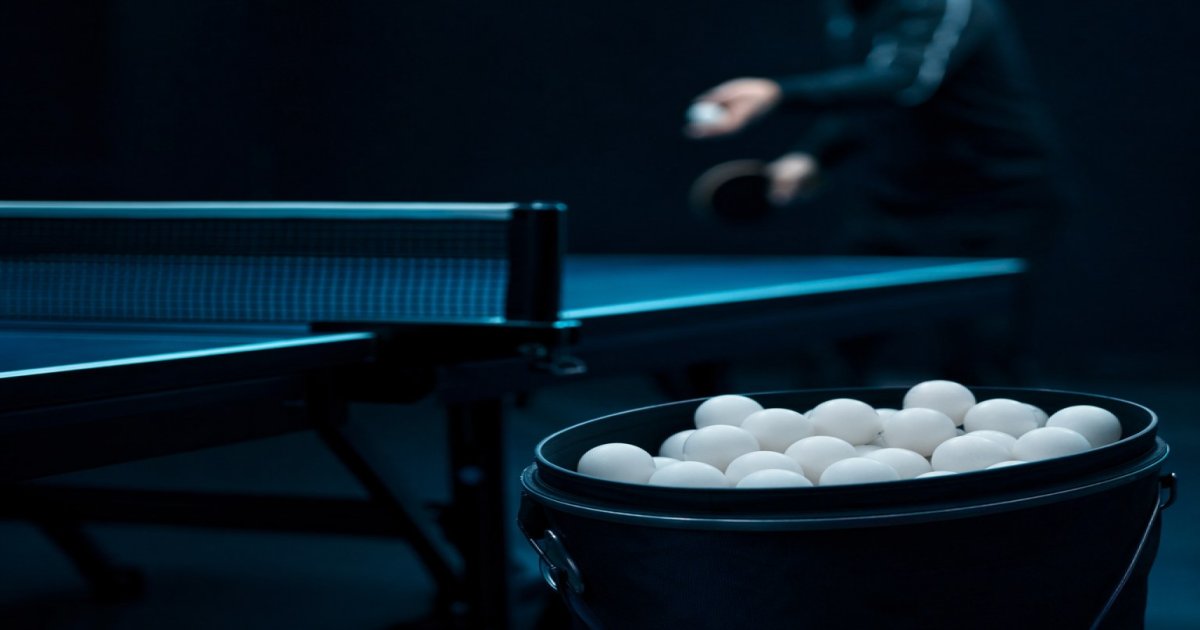
A coach in Chaguanas keeps a battered plastic bucket holding exactly two hundred balls, worn smooth at the handles from a decade of daily use, and treats it with more reverence than most players show their actual racket.
That bucket has quietly built more forehand loops, more footwork patterns, and more match-ready consistency than any single piece of equipment sold in a pro shop, precisely because of what it lets a coach do that a live opponent never can: feed the exact same ball, over and over, without a single wasted second retrieving it.
Multiball training uses a large supply of balls, fed continuously by a coach or partner using hand or racket feeds, so a player can repeat the same shot dozens of times in rapid succession without needing to return the ball or reset between attempts.
It builds technical consistency and footwork far faster than standard rally-based practice.
Multiball is the closest thing this sport has to a technical accelerant, compressing weeks of scattered rally repetitions into a single, tightly focused practice session.
How does multiball training actually work in practice?
A feeder, typically standing on the opposite side of the table, delivers a continuous stream of balls at a controlled pace and placement, using either a racket feed for more realistic spin and pace or a hand feed for simpler, more predictable delivery.
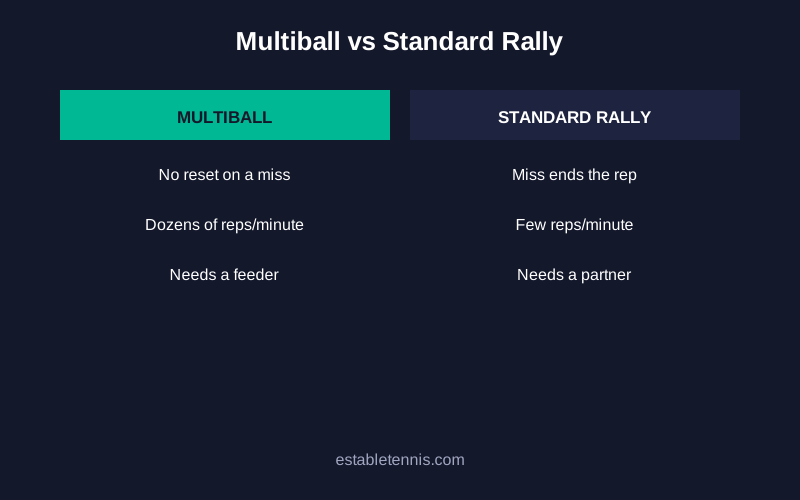
The player receiving the feed repeats the same shot or footwork pattern against each ball, building volume and consistency that a standard rally, interrupted by every miss or reset, simply can’t match in the same amount of time.
Why is multiball more efficient than standard two-player rallying for building technique?
Because a standard rally depends on both players successfully returning the ball to continue, meaning any mistake by either player interrupts the practice and requires a reset.
Multiball removes that dependency entirely: the feeder simply sends the next ball regardless of what happened to the previous one, letting a player accumulate dozens of repetitions of a specific shot in the time a standard rally might produce only a handful of clean attempts.
What’s the difference between a hand feed and a racket feed?
A hand feed, where the feeder tosses or drops the ball and lightly directs it with an open palm, produces simpler, more predictable placement and pace, ideal for genuine beginners still building basic contact and footwork patterns.
A racket feed, where the feeder actually strikes the ball with a racket, can replicate realistic spin, pace, and placement variation, making it better suited for intermediate and advanced players working on shots against genuine backspin or topspin rather than a completely neutral ball.
What skills does multiball training build most effectively?
Footwork patterns, covered in our guide on how to improve table tennis footwork, and stroke consistency for specific shots like the loop or smash, covered in our guides on generating topspin and the smash, both benefit enormously from the sheer repetition volume multiball allows.
Skills that depend more on reading an opponent’s varied, unpredictable shots, like serve return, benefit somewhat less, since multiball feeds are inherently more predictable than live match conditions.
Can multiball training be practiced without a coach?
Yes, with a training partner willing to feed rather than rally, though the quality of feed placement and consistency typically improves with more experienced feeders.
Some players also use ball-throwing machines as an alternative, offering highly consistent, programmable feeds without requiring a second person at all, though this sacrifices the adaptive, real-time feedback a human feeder can provide by adjusting placement based on what a player specifically needs to work on.
How should a session be structured to get the most out of multiball practice?
Starting with a single, clearly defined technical goal (forehand loop consistency, or a specific footwork pattern) rather than treating the session as unstructured, general practice.
Sessions that combine multiple goals without clear structure tend to produce shallower improvement across several skills rather than deep, lasting improvement in any single one, mirroring the same focused-practice principle covered throughout our guide on table tennis drills.
Does multiball training carry any downsides or limitations?
Its predictability, which makes it so effective for building raw technical consistency, is also its main limitation: skills built purely through multiball don’t automatically transfer to the read-and-react demands of live match play.
A player who only ever trains through multiball, without regularly testing those skills in genuine rally and match conditions, often finds a real gap between their multiball performance and their actual competitive results.
How often should a serious player incorporate multiball into their overall training routine?
Most competitive players benefit from multiball sessions several times a week, balanced against live rally practice and actual match play, rather than relying on any single training method exclusively.
The right balance shifts somewhat by skill level: beginners often benefit from a higher proportion of multiball to build foundational consistency, while advanced players typically shift more heavily toward live, match-realistic practice once their basic technical foundation is already solid.
How does multiball training help correct specific technical flaws?
The high repetition volume lets a coach observe the same shot attempted dozens of times in quick succession, making subtle, recurring technical patterns far easier to spot than they would be across a scattered, interrupted standard rally.
A flaw that might appear once every several points in normal play shows up repeatedly within a single multiball set, giving both coach and player much clearer, faster feedback on exactly what needs correcting.
What’s a good multiball drill specifically for building footwork alongside stroke technique?
A feeder alternates placement between two or three different table positions in a repeating pattern, forcing the receiving player to combine footwork movement with consistent stroke execution rather than practicing either skill in isolation.
This combined approach, once basic footwork and stroke patterns are individually solid, builds the integrated skill that live match play actually demands, bridging the gap between pure technical drilling and genuine competitive readiness.
How does feed speed and volume typically progress across a player’s development?
Beginner multiball sessions typically use slower, more predictable feeds with generous time between balls, allowing a player to focus entirely on correct technique without time pressure.
As a player advances, feed speed and volume both increase, gradually approaching the pace and unpredictability of genuine match conditions, ensuring the skill built through multiball actually holds up once time pressure and reduced predictability enter the equation.
Does multiball training offer specific value for building serve return skills, despite its inherent predictability?
Some, particularly for building the basic racket-angle adjustments needed against different spin types, covered in our guide on how to return serve, even though a feeder’s shots are inherently more predictable than an opponent’s actual serve.
This foundational work still has value, since it builds the basic mechanical adjustment skills a player then applies to the genuinely unpredictable spin reading that live serve return ultimately demands.
What’s the relationship between multiball training and building match-ready mental composure?
Multiball’s controlled, low-pressure environment builds technical consistency but doesn’t inherently build the mental composure needed under genuine competitive pressure, since there’s no real consequence attached to a missed shot in a feeding drill.
Some coaches deliberately introduce simulated pressure into multiball sessions (scoring specific sequences, or adding consequences for missed repetitions) specifically to bridge this gap between pure technical practice and the psychological demands of actual competition.
How does equipment choice interact with multiball training specifically?
Since multiball allows such high repetition volume, equipment mismatches that might only occasionally surface in normal rally play become much more apparent and consequential across dozens of rapid repetitions.
A player training extensively through multiball with poorly matched rubber or blade weight, covered in our guides on rubber selection and blade weight, may find technical improvement plateaus faster than expected, since equipment issues that only occasionally interfered in normal play now interfere on every single repetition of a multiball set.
How does a feeder actually learn to deliver a good, useful feed?
Feeding well is its own underrated skill, requiring consistent placement, appropriate pace, and the judgment to adjust based on what the receiving player is specifically working on.
A feeder who can’t reliably place the ball where a drill requires undermines the entire session’s value, regardless of how motivated the receiving player is, which is part of why experienced coaches often spend real time developing their own feeding consistency, treating it as a distinct skill worth practicing rather than an incidental side effect of coaching.
Does multiball training scale down effectively for very young or very new players?
Yes, and it’s often the preferred introduction method for young beginners specifically because it removes the frustration of chasing missed balls and resetting a rally repeatedly, which can be discouraging for a player still building basic hand-eye coordination.
A young beginner fed a steady stream of balls at an appropriate pace experiences far more successful contacts per minute than the same beginner attempting standard rally play, building early confidence and enjoyment alongside the technical foundation.
How does multiball help a player transition from understanding a shot conceptually to actually trusting it in play?
The sheer repetition volume multiball provides builds the kind of unconscious, automatic confidence that conceptual understanding alone never can: a player who has hit a hundred correct loops in a single multiball session develops a felt trust in that shot that reading about the correct technique, or even hitting it successfully once or twice in a normal rally, doesn’t produce nearly as reliably.
This gap between intellectual understanding and genuine trust is one multiball is specifically well-suited to closing.
What’s a realistic way to fit multiball training into a busy schedule without needing a dedicated coach every session?
Pairing with a training partner who takes turns feeding and receiving, splitting a session roughly in half between each role, lets both players benefit from focused multiball practice without requiring a paid coach’s time for every single session.
This kind of reciprocal arrangement, common at clubs where players train together regularly, makes high-quality, focused practice considerably more accessible than assuming multiball training always requires professional coaching.
How does video review combine effectively with multiball training?
Recording a multiball session and reviewing it afterward reveals patterns across many repetitions that would be difficult to consciously track in the moment during the session itself: a subtle, recurring technical flaw that appears on, say, one in every five repetitions becomes far more visible watching consecutive clips back to back than it would trying to notice it live while also focused on executing the next shot.
This combination of high-volume repetition and after-the-fact video analysis is one of the more powerful, underused technical improvement tools available to a dedicated player.
According to ITTF equipment regulations, training balls used in multiball sessions must still meet the same size and bounce standards as competitive balls, ensuring the technical patterns built in practice transfer directly to match conditions rather than being subtly distorted by non-standard training equipment.
That bucket in Chaguanas has outlived at least three of the coach’s own rackets, each one eventually retired for wear while the bucket itself just kept getting refilled, session after session, for a decade running.
Nobody keeps something that battered out of sentiment alone. They keep it because it still does exactly the one job it was built for, better than almost anything else in the building.
Volume alone doesn’t build skill: volume with a clear technical focus does, which is the entire difference between a productive multiball session and a player mindlessly hitting balls back across the table without any real intention behind each repetition.
Most clubs own a bucket like that one. Most players never actually ask to use it for anything more focused than a casual warm-up, which is exactly the gap between a club’s average player and its most improved one over any given season.
Ask a coach to run one focused multiball set next session, on whichever single shot currently frustrates you most. Twenty minutes of that kind of deliberate repetition will teach you more than an entire month of casual, unstructured rallying ever could.
Battered buckets rarely make it into a highlight reel either. What comes out of them, one fed ball at a time, is nearly everything worth actually filming a season later.
Ask any coach who’s run one properly and they’ll tell you the same thing without hesitation: the players willing to put in that unglamorous repetition are, without exception, the ones who eventually stop needing this article’s advice at all.
That’s the whole point of the bucket, really: not the balls themselves, but the discipline of actually using them the way they were meant to be used, session after session, long after the novelty wears off.
Grab a partner, grab a bucket if your club has one, and put twenty focused minutes into whatever shot has been quietly costing you points all season.
Simple as that.
The bucket doesn’t judge. It just keeps feeding, exactly as many times as you’re willing to ask it to.
Fill it up and start.
Quick Recap: Multiball Training in Table Tennis
Multiball training compresses weeks of scattered, interrupted rally repetitions into focused, high-volume practice sessions, building technical consistency and footwork faster than standard two-player rallying alone ever could.
That battered bucket of two hundred balls in Chaguanas has quietly built more genuine skill than any single piece of equipment sold in a pro shop, simply by removing the wasted seconds between attempts that a normal rally can’t avoid.
Frequently Asked Questions
What’s the main advantage of multiball training over normal rally practice?
What’s the difference between a hand feed and a racket feed?
Can multiball training be done without a coach?
Does multiball training have any real downsides?
How often should multiball be part of a training routine?
That coach still refuses to replace the bucket, cracked handle and all, insisting a new one wouldn’t feed quite the same. Nobody’s ever proven him wrong, and at this point, nobody’s especially eager to try.
Curious whether your current equipment could be quietly capping the technical improvement your multiball sessions are supposed to build? PingPath gives you a fitted recommendation in under three minutes.
Leave a Reply