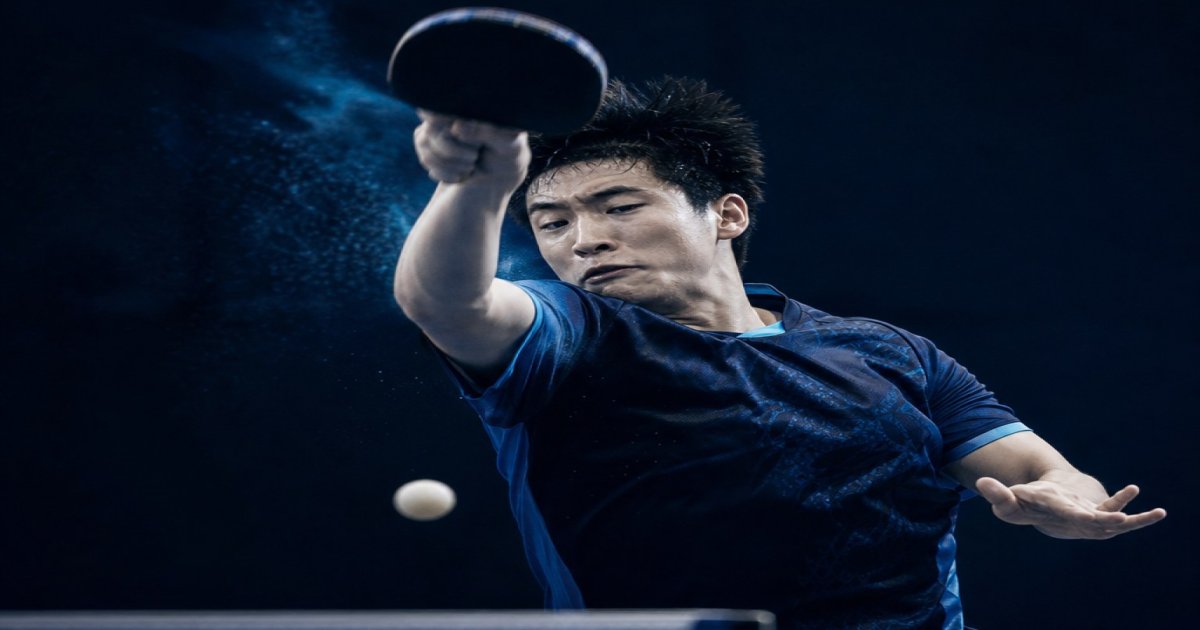
Every highlight reel in this sport is built almost entirely from smashes, and almost nothing about that reel reflects how the shot actually gets used at a competent level. Beginners see the smash and think it’s the point of the sport. Intermediate players eventually learn the smash is a reward for a point already won through patient setup, not a strategy for winning the point itself.
A smash is a flat, powerful shot hit against a high, slow, or weak ball, using a shorter backswing than a loop and prioritizing speed over spin. Contact should be at the peak of the ball’s bounce or slightly before, with a fast, direct swing through the ball rather than the brushing motion a topspin loop requires.
The smash rewards recognizing the right opportunity as much as it rewards raw execution, and misreading that opportunity is a far more common mistake than any technical flaw in the swing itself.
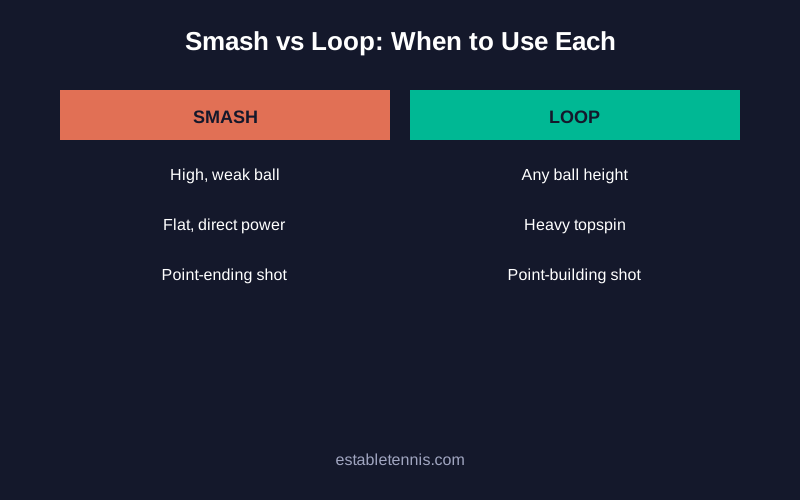
What makes a ball actually smashable, versus a ball that should be looped instead?
A truly smashable ball sits high above the net, typically the result of an opponent’s weak or defensive shot, and carries relatively little spin that would otherwise complicate a flat, direct swing. A ball still carrying heavy backspin, even if it’s sitting relatively high, is often a poor smash candidate, since a flat smash swing struggles against significant backspin in ways a properly angled loop wouldn’t.
How does smash technique differ from a topspin loop?
A smash uses a more direct, flatter swing path than a loop’s pronounced low-to-high brushing motion, prioritizing raw racket-head speed and flat power over spin generation. The backswing is typically shorter and more compact, since the ball’s already-favorable height and pace mean a smash doesn’t need the same setup a loop against backspin requires.
Why do beginners overuse the smash relative to how often it’s actually the right shot?
Because it’s the most visually satisfying, most immediately rewarding shot in the sport when it lands, and beginners haven’t yet developed the tactical patience to wait for a genuinely smashable ball rather than forcing the shot against an unsuitable one.
This overuse pattern is one of the most reliable markers of a still-developing player, and it usually resolves naturally as match experience teaches the costly lesson that a forced smash against a poor opportunity fails far more often than it succeeds.
What’s the biggest technical mistake players make when attempting a smash?
Overswinging, trying to add even more power to a shot that’s already fundamentally about timing and a clean, direct strike rather than maximum muscular effort. An overswung smash sacrifices control and consistency for marginal additional pace, and misses the table far more often than a compact, well-timed smash that trusts the ball’s own favorable height and pace to do most of the work.
How does footwork affect smash execution specifically?
Getting into position early enough to contact the ball at its ideal peak height, rather than reaching or lunging at the last moment, matters more for a smash than almost any other shot, since the shot’s entire value depends on hitting a specific, favorable contact point.
A smash attempted from a rushed, off-balance position loses most of the advantage the opportunity originally offered, regardless of how much raw arm speed a player generates.
Does the smash require different equipment than a looping game?
Not fundamentally, though a player whose game leans heavily toward smashing over looping may favor slightly stiffer, faster equipment that rewards flat power over spin generation, covered in our guides on carbon blades and rubber hardness.
Most competitive players still favor spin-friendly equipment as their primary setup, since the loop remains the more consistently useful shot across a full match, with the smash reserved for clearly favorable opportunities.
How should a player practice smashing effectively?
Multiball drills where a coach or partner deliberately feeds high, favorable balls let a player repeat the specific timing and contact pattern a smash requires without needing to first win the setup through an actual rally.
This isolated practice, covered in our guide on multiball training, builds the recognition and timing skills together rather than hoping both develop naturally through unpredictable match opportunities alone.
What’s the tactical cost of a missed smash, beyond just losing the point?
A missed smash tends to carry a disproportionate psychological cost relative to other missed shots, since it represents a squandered advantage the player had already worked to create through the preceding rally.
This can create hesitation on future smash opportunities, a specific kind of gun-shy pattern where a player starts declining genuinely good smash chances out of fear of repeating a recent miss, which is its own tactical problem worth recognizing and consciously working through.
How does the smash connect to the mental side of closing out a point?
A player’s willingness to actually commit to a smash, rather than playing a safer, more conservative shot against a clearly favorable ball, reflects real confidence and decisiveness under pressure.
Hesitation at the exact moment a smash opportunity arrives (second-guessing a clean, committed swing in favor of a tentative, half-hit shot) often produces a worse outcome than either a fully committed smash or a deliberately safer alternative would have, since the tentative middle ground sacrifices both power and control simultaneously.
What’s the difference between a forehand smash and a backhand smash?
A forehand smash generally allows more natural power through fuller hip and shoulder rotation, mirroring the broader mechanical advantages covered in our forehand guide.
A backhand smash, while less common and generally lower-ceiling in raw power, still follows the same core principles (flat contact, minimal spin, direct racket path) adapted to the more compact swing mechanics a backhand naturally allows.
Should a smash always be hit as hard as possible?
No, and this is a common misconception among developing players. Placement often matters more than maximum raw power, since a well-placed, moderately paced smash to an opponent’s weak side can be more effective and more consistent than an all-out, maximum-effort smash aimed vaguely at the largest open space.
Some of the most effective competitive smashes prioritize a specific target over pure speed, treating the shot as a precision weapon rather than simply the hardest possible hit.
How does an opponent’s return style change smash decision-making?
Against a defensive player who blocks and counters well, a smash aimed at an awkward transition zone (the body, or the exact spot between forehand and backhand) often produces better results than a smash aimed at open table space, since defensive players are specifically trained to track and return shots to obvious open areas.
Reading an opponent’s specific defensive tendencies, rather than applying the same smash placement against every opponent, is a mark of tactical maturity.
What’s a realistic timeline for developing reliable smash recognition and execution?
Basic smash execution against an obviously favorable, fed ball usually develops within the first few months of general practice.
Reliable recognition of genuinely smashable opportunities during live, unpredictable rallies (correctly distinguishing a smash-worthy ball from one that should be looped instead) typically takes considerably longer, often a year or more of match experience, since this recognition skill depends heavily on pattern exposure across many different rally situations rather than isolated technical drilling alone.
How does the smash fit into a broader offensive point construction?
The smash sits at the end of a sequence, not the beginning: a well-constructed offensive point typically uses serves, loops, and placement to force an opponent into a progressively weaker defensive position, with the smash arriving only once that setup has produced a genuinely favorable ball.
Players who try to skip the setup and force a smash early in a rally are essentially trying to collect the reward without doing the work that earns it, which is why patient point construction remains a more reliable path to winning than chasing early smash opportunities.
What role does anticipation play in smash timing?
A player who has correctly read the developing rally and anticipated that a weak return is likely coming can position and prepare for a smash before the ball even arrives, giving considerably more time to set up ideal footwork and timing than a player reacting purely in the moment the weak ball actually appears.
This anticipatory reading, built through match experience and pattern recognition, is part of why experienced players seem to smash with more apparent ease: they’ve often mentally prepared for the opportunity several shots in advance.
How does a smash differ tactically against singles versus doubles play?
In doubles, a smash needs to account for both opponents’ positioning and the reduced reaction time the format allows, often favoring placement toward whichever opponent is currently out of position or transitioning between shots.
The compressed pace of doubles rewards a smash that exploits immediate positional gaps over one aimed at generic open space, since both opponents are moving and covering different zones than a single opponent would in singles play.
Does smash technique need to adjust against an opponent using unconventional rubber?
Somewhat. A ball coming off pimples-out or long pips rubber, covered in our guides on inverted vs pimples-out rubber and long pips table tennis, can carry unpredictable, sometimes reversed spin characteristics even when it appears to sit high and favorable for a smash.
A player facing an unfamiliar rubber type should factor in some uncertainty about the ball’s actual spin behavior before committing to a full-power smash, since a mistimed read against disruptive rubber can turn an apparent opportunity into an unforced error.
What’s the psychological difference between smashing to close a point versus smashing under pressure at a critical score?
The mechanics don’t change, but the mental conditions do: a smash attempted at deuce or match point carries a different psychological weight than the same shot attempted early in a comfortable lead, and players who’ve only practiced smashing in relaxed conditions often find their execution breaks down specifically when the stakes rise.
Deliberately practicing smash execution under simulated pressure, not just in relaxed repetition drills, builds the composure needed to execute confidently when a match actually hangs on the shot.
How does a coach typically correct a player who overswings on smashes?
Often by deliberately slowing the entire drill down, having the player practice smashes at reduced effort and pace first, focusing purely on clean, centered contact before gradually reintroducing full speed.
This counterintuitive approach (slowing down to eventually speed up) works because it lets a player feel what correct, centered contact actually is before the added variable of maximum effort makes that feeling harder to isolate and recognize.
Is there a risk of relying too heavily on the smash as a primary weapon?
Yes. A player whose game leans excessively on smashing, at the expense of developing a genuinely reliable loop and consistent rally play, tends to struggle against opponents skilled enough to avoid feeding smashable balls in the first place.
The smash works best as an occasional, well-earned finishing shot within a broader, more versatile game, not as a primary strategy that opponents can simply learn to deny by refusing to offer the weak, high balls it depends on.
According to ITTF equipment regulations, racket and rubber specifications apply equally regardless of shot type, meaning the smash’s raw power comes entirely from technique and timing within those standardized limits, not from any equipment loophole a player might otherwise chase.
The highlight reel will keep showing the smash, forever, because it’s the moment a rally visibly ends. It will never show the eight quiet, patient shots that made the ending possible, which is exactly the part of the sport most worth actually studying if the goal is winning matches rather than just looking good in a ten-second clip.
A clean, patient point is boring television and a winning strategy in almost equal measure: the two facts sit uncomfortably next to each other, and only one of them actually matters once the score is what’s being decided.
Practice the setup as hard as the finish. The finish takes care of itself once the setup is actually solid, and almost nobody puts in the same hours on the boring, patient part that made the smash possible in the first place.
Every coach who’s ever slowed a student’s smash down to speed it back up again understands this trade instinctively, even if they’ve never once articulated it out loud. Fast comes later. Correct comes first, or it never really arrives at all.
Recognize the opportunity before you ever swing at it. That single skill, developed patiently over a full season of real matches, matters more than any adjustment you could make to the swing itself.
The wrong ball smashed hard still loses the point. The right ball, timed correctly, wins it without needing to be hit particularly hard at all.
That distinction takes longer to learn than the swing ever did, and it matters considerably more once it finally lands.
Simple as that.
Patient setup, clean finish. That’s the entire formula, no matter how flashy the last part looks on camera.
Earn the shot before you take it.
End of story.
Then let it fly.
Every time.
Worth the wait.
Quick Recap: Table Tennis Smash
A reliable table tennis smash depends on recognizing the right opportunity as much as executing clean technique: a flat, direct swing against a genuinely favorable ball, not a forced attempt at raw power against an unsuitable one. The highlight reel only ever shows the shot landing. It never shows the patient rally that earned the chance to hit it in the first place.
Frequently Asked Questions
What makes a ball a good candidate for a smash?
Why do beginners smash too often?
Should a smash always be hit at maximum power?
What’s the most common technical mistake with a smash?
How do I get better at recognizing smash opportunities?
Nobody remembers the eight patient shots that set up a winning smash. Everyone remembers the smash itself, which is exactly the illusion that convinces every beginner the shot is the whole sport, rather than its occasional, well-earned reward.
Want to build the tactical patience and mental composure that earns real smash opportunities? Check out the MentalEdge Course.
Leave a Reply