There’s a particular kind of quiet that settles over a table tennis hall when a long pips defender starts a match against a young attacking player who’s never faced one before.
Not the silence of a great rally, the silence of a crowd watching someone slowly realize the ball is doing something their brain has no filing system for. Long pips table tennis creates that scene at every level of the sport.
Everton has watched this exact scene play out at club nights in Chaguanas more times than he can count, and it never stops being a little bit funny, in the specific way that only genuine confusion can be.
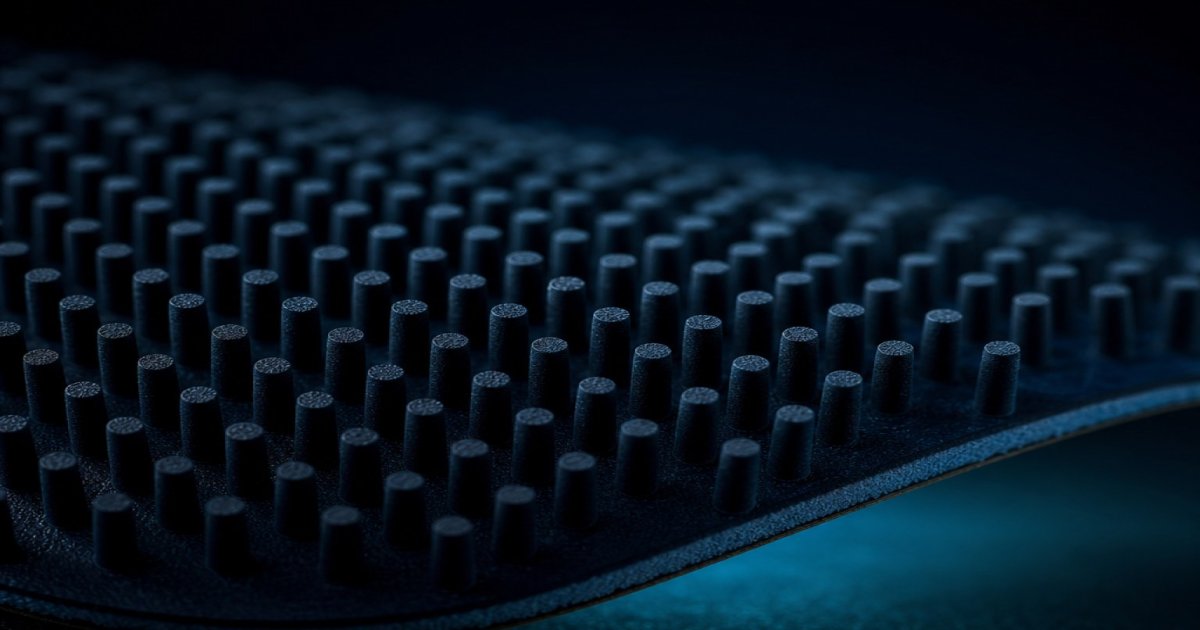
Long pips is a rubber type with unusually tall, thin pimples facing outward, designed to disrupt and reverse an opponent’s spin rather than generate spin of the user’s own.
It produces unpredictable, low-grip returns that scramble heavy topspin and backspin, making it a specialized defensive and disruption tool rather than an attacking rubber.
Long pips occupies a strange, slightly misunderstood corner of the equipment world: simultaneously one of the most tactically effective rubber types at the club level and one of the least understood by the attacking players who keep losing to it.
How does long pips differ from short pips and standard pimples-out rubber?
All three share outward-facing pimples rather than a smooth inverted surface, but the pimple height and flexibility increase substantially from short to long.
Short pips behave closer to inverted rubber, with only mild spin disruption. Long pips, with their taller, more flexible pimples, bend and flatten dramatically on contact, actively scrambling and sometimes reversing incoming spin rather than simply reducing it, the mechanism covered in general terms in our guide on inverted rubber vs pimples out.
Why does long pips reverse spin instead of just neutralizing it?
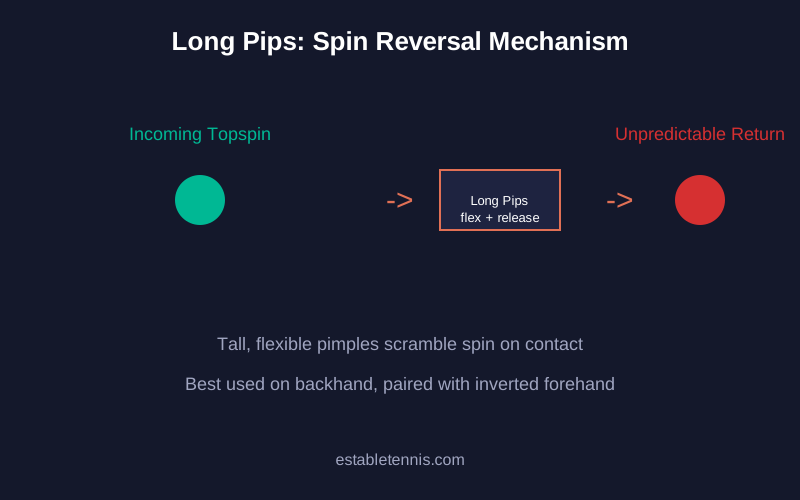
The tall, flexible pimples bend under the impact of incoming spin, then snap back as the ball leaves, imparting a rotation that’s influenced more by the pimple’s own flex-and-release mechanics than by the player’s swing.
Against heavy topspin, this flex-and-release action can produce a return with backspin-like characteristics, and against heavy backspin it can produce a return with unexpected topspin, the exact opposite of what an opponent’s instincts, trained entirely on inverted-rubber physics, expect to see.
Why do attacking players struggle so much against long pips specifically?
Because their entire spin-reading system, built through years of practice against inverted rubber, relies on a consistent relationship between an opponent’s swing and the resulting ball behavior.
Long pips breaks that relationship at its foundation, and the confusion compounds under match pressure: an attacking player who tries to read a long pips return the way they’d read an inverted-rubber return isn’t just slightly off, they’re often working from an inverted mental model of what’s actually happening to the ball.
What playing style actually suits long pips?
Long pips rewards patient, defensive, disruption-focused players far more than aggressive attackers.
Players who prefer extending rallies, absorbing and redirecting pace rather than generating their own, and who find satisfaction in forcing unforced errors rather than hitting clean winners tend to take naturally to long pips play.
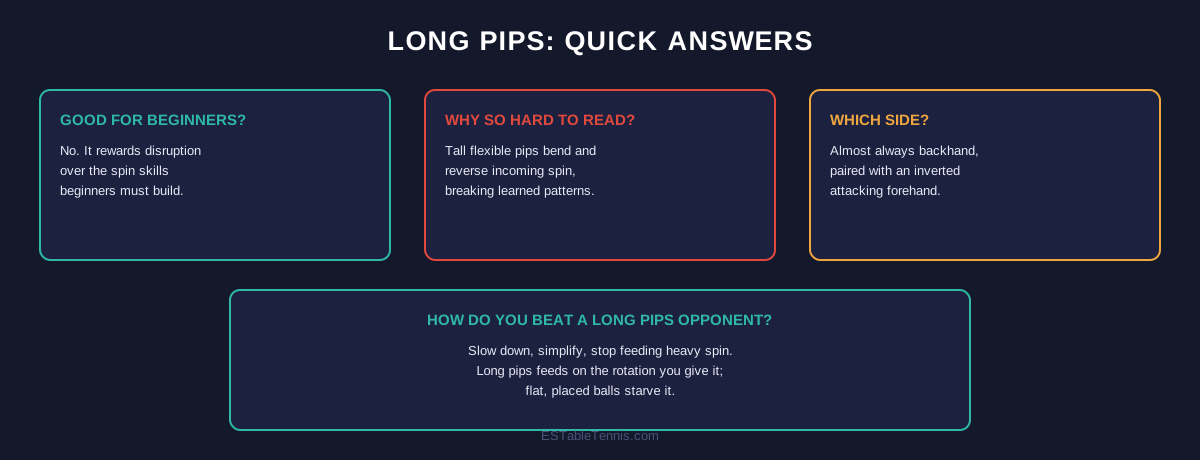
It is rarely, if ever, a sensible choice for a beginner still learning to generate their own spin and shot-making fundamentals.
Does long pips work better on the forehand or backhand?
The overwhelming majority of long pips setups place it on the backhand, paired with an inverted forehand for attacking shots when the opportunity arises.
This asymmetric setup lets a player disrupt and neutralize with the backhand while retaining a genuine attacking option on the forehand, a combination that requires separate, deliberate practice on each side, since the two rubbers behave by entirely different physical rules.
How do you actually beat a long pips opponent?
Slow down, simplify, and stop relying on heavy spin generation, since long pips specifically disrupts exactly that kind of shot.
Shorter, more controlled placement shots that don’t depend on predictable return behavior tend to outperform committed, full-power loops against a long pips opponent.
Patience matters more here than almost anywhere else in the sport: treating the first several points as pure information-gathering about how a specific opponent’s long pips actually behaves pays off far more than trying to force an immediate result.
Is long pips rubber harder to source and maintain than standard rubber?
Yes, on both counts. Long pips occupies a genuinely small niche of the overall rubber market, meaning fewer models and less local stock availability compared to mainstream inverted rubber.
The tall, thin pimples are also more delicate structurally than a flat inverted topsheet or even standard pimples-out rubber, tearing or bending permanently more easily under rough handling, which means long pips users typically need to handle and store their equipment with extra care.
Does long pips play differently depending on sponge thickness underneath it?
Yes, and this is a specialized enough variable that many long pips setups actually use no sponge at all, or a very thin sponge, since the disruptive effect depends heavily on the pimples themselves flexing freely rather than being cushioned by a thick, absorbing sponge layer underneath.
This is one of the more counterintuitive equipment choices in the sport: removing sponge, normally associated with reduced performance, actually enhances the specific disruptive effect long pips is chosen for.
Should an attacking player ever try long pips just to understand it better?
Genuinely, yes, and more attacking players should. Spending even a handful of practice sessions on the other side of a long pips racket (feeling firsthand how unpredictable its returns are) builds a concrete, felt understanding of why the style is so disruptive, which translates directly into a better read the next time an attacking player faces it in competition.
This mirrors the broader spin-reading principle from our guide on how to read spin in table tennis: exposure to unfamiliar styles builds skill that stays purely theoretical otherwise.
How does long pips compare to anti-spin rubber?
Both disrupt an opponent’s game, but through different mechanisms. Long pips actively reverses and scrambles spin through its tall, flexible pimple structure, giving the user some ability to influence the return’s character.
Anti-spin rubber, covered in depth in our companion guide on anti spin rubber, takes a different approach: an unusually slick, low-friction surface that minimizes grip almost entirely, producing a dead, low-spin return regardless of what the opponent sends.
Players sometimes confuse the two since both frustrate attacking opponents, but the underlying mechanics and the returns they produce are meaningfully different.
What’s the learning curve like for a player switching to long pips for the first time?
Steep, and often discouraging in the first few weeks.
A player switching to long pips has to unlearn years of inverted-rubber instincts about how their own shots will behave, since long pips responds to a player’s own swing in ways that feel just as unfamiliar as it does to an opponent facing it for the first time.
Most coaches recommend patience through this adjustment period, since the payoff (a genuinely disruptive weapon few opponents know how to handle) arrives only after the user themselves has built real comfort with the rubber’s quirks.
Does long pips require a different grip or stance?
Not fundamentally, though many long pips specialists develop subtle adjustments: a slightly more passive, blocking-oriented ready position rather than an aggressive attacking stance, reflecting the defensive, disruption-focused nature of the style.
These adjustments tend to emerge naturally as a player’s overall game shifts toward the patient, error-forcing approach that suits long pips, rather than being deliberately trained as a separate technical module.
Why do some players find long pips more satisfying to play than to face?
There’s a specific, quiet satisfaction long pips players describe in watching an attacking opponent’s well-constructed point unravel against a return that behaves nothing like they expected, a kind of tactical chess-match feeling that pure power-based attacking play doesn’t offer in the same way.
This isn’t universal, and plenty of players never take to the style regardless of how effective it might be, but for the players it does suit, the appeal runs deeper than just winning points.
How should a coach decide whether to introduce a player to long pips?
Rarely as an early beginner intervention: long pips works best layered onto a player who already has some foundational understanding of spin and shot construction, since the style’s effectiveness depends on understanding what it’s disrupting.
Coaches typically wait until a player shows natural tendencies toward patient, defensive play, extending rallies rather than finishing them quickly, before suggesting an experiment with long pips as a potential long-term style.
How does long pips affect serve strategy against it?
Serving against a long pips opponent requires rethinking spin choices entirely, since the reversal effect means a heavy topspin serve can come back with unexpected characteristics that a standard topspin serve against inverted rubber never would.
Many players find that simpler, lower-spin serves paired with strong placement actually perform better against long pips than their most aggressive spin serves, since there’s less spin for the pips to scramble into an unpredictable return in the first place.
Does long pips wear out differently than standard rubber?
Yes. The tall, thin pimples that define long pips are structurally more delicate than a flat inverted topsheet or even standard pimples-out rubber, and they can bend, flatten, or tear with less use than either of those alternatives withstand.
Long pips users typically need to inspect their rubber more frequently and may find themselves replacing it somewhat more often than an inverted-rubber player would, simply due to the more fragile physical structure the disruptive effect depends on.
What’s a common mistake attacking players make when first facing long pips?
Doubling down on power rather than adjusting strategy.
The instinctive response to a return that isn’t behaving as expected is often to hit harder, forcing the issue, but against long pips, this usually compounds the problem rather than solving it, since more spin and pace on the initial shot gives the pips more raw material to scramble into an even more unpredictable return.
The players who adjust fastest are the ones willing to simplify and slow down rather than escalate.
Is there a doubles-specific consideration for long pips players?
Doubles play compresses reaction time significantly, and long pips’ disruptive unpredictability can be even more effective in this faster-paced format, since partners have less time to communicate and adjust mid-point compared to singles play.
Some long pips specialists find doubles particularly rewarding for exactly this reason, though the format also demands faster individual adjustment since there’s less time to recover from a confusing exchange before the next shot arrives.
How does long pips fit into a broader defensive game plan?
Long pips is rarely a standalone strategy: it’s most effective as one tool within a broader defensive or all-round game that also includes solid footwork, patient point construction, and the ability to occasionally counter-attack when an opponent’s return leaves an opening.
Players who rely purely on the pips’ disruptive effect without building the surrounding tactical game tend to plateau against opponents who’ve faced long pips enough times to adjust, whereas players with a complete defensive toolkit continue to pose problems even against experienced opponents.
What’s the mental game like for a long pips player facing skepticism about their style?
Long pips players sometimes face a specific kind of dismissiveness from attacking-style opponents and even some coaches, framed as an easier or less skillful path to winning compared to “real” attacking table tennis.
This framing misunderstands what long pips actually demands: exceptional touch, precise racket control, and the tactical patience to construct points over many shots rather than finish them quickly.
Long pips players who internalize outside skepticism about their legitimate, demanding style often see their confidence and results suffer for reasons that have nothing to do with their actual game.
Should a player commit fully to long pips or keep it as a secondary weapon?
This depends heavily on natural temperament rather than a fixed rule. Some players build their entire competitive identity around long pips defense, becoming genuine specialists.
Others use it more selectively: an inverted forehand as the primary attacking weapon, long pips on the backhand purely as a disruption tool rather than a full defensive identity.
Both approaches are legitimate, and the right balance tends to emerge from actual match experience rather than being decided upfront.
Quick Recap: Long Pips Table Tennis
Long pips table tennis works by breaking the fundamental assumption every inverted-rubber player relies on: that an opponent’s swing predicts the ball’s behavior.
Once that assumption fails, confusion does most of the disruptive work on its own, which is exactly why long pips remains one of the most consistently effective styles at club level, regardless of how many players dismiss it as a lesser path to winning.
According to ITTF equipment regulations, all pip-based rubber including long pips must meet approved pimple density and height standards, ensuring the disruptive effect stays within regulated limits rather than becoming an unregulated arms race of increasingly extreme pimple designs.
Silence in a table tennis hall usually means something interesting just happened. Long pips has been producing that particular silence for decades, and it never seems to get old.
Respect it before you’re forced to. That lesson tends to arrive one way or another eventually.
Nobody who’s actually faced it walks away calling it easy.
Ask around any club and you’ll hear the same story with different names attached.
Frequently Asked Questions
Is long pips rubber good for beginners?
Why is long pips so hard to read?
Should long pips go on the forehand or backhand?
How do you beat a long pips opponent?
Is long pips legal in competitive table tennis?
Everton has never once seen an attacking player walk away from a first loss to long pips without a slightly bewildered look, somewhere between respect and disbelief.
The good ones come back the following week and ask how it actually works. The best ones borrow a long pips racket themselves, just to feel what their own opponent had been feeling the whole time.
Curious whether a disruption style like long pips actually fits your natural game? PingPath maps your playing style to a specific setup recommendation in under three minutes.
Leave a Reply