
How do you read spin in table tennis?
Reading spin is treated like a mysterious talent some players simply have. It isn’t. It’s a skill built from a small number of visual cues, practiced deliberately, until the read happens faster than conscious thought, the same way a driver stops consciously processing brake lights and just reacts.
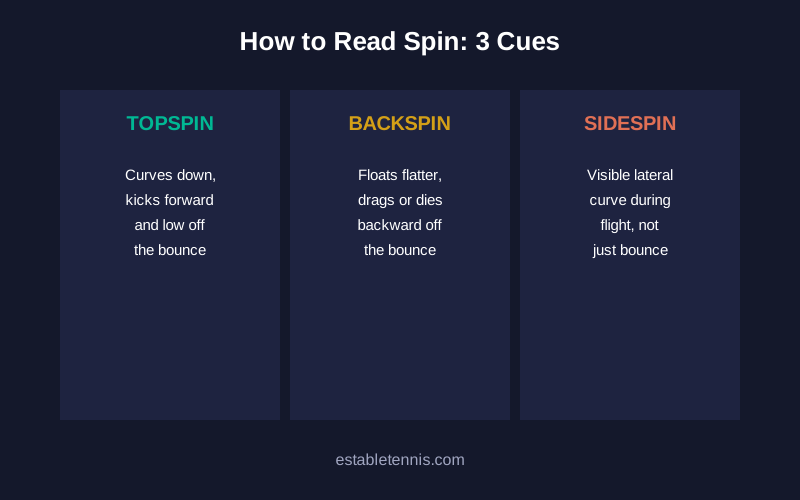
Watch the ball’s flight path and bounce, not the opponent’s racket. Topspin curves down and kicks forward off the bounce; backspin floats flatter and dies or drags backward off the bounce; sidespin curves laterally in flight. The racket angle at contact and the follow-through direction give secondary clues, but the ball itself never lies.
What actually creates spin on the ball?
What does topspin actually look like coming at you?
A topspin ball tends to travel on a slightly curved, dipping arc, and on the bounce it kicks forward and low, accelerating rather than slowing down. If you’re used to reading a flatter shot, a heavy topspin ball will seem to arrive faster than expected after the bounce, which is the single most common reason beginners mistime their return: they’re set up for the ball’s pre-bounce trajectory, not its actual post-bounce behavior. Underestimate a floating, harmless-looking ball and the net will remind you, immediately and without mercy, exactly how much spin was actually on it.What does backspin look like, and why is it so often misread?
Backspin balls tend to float flatter through the air and, critically, slow down or even drag backward slightly off the bounce rather than kicking forward. Beginners misread backspin constantly because the ball often looks slower and less threatening in flight, tempting an aggressive swing, and an aggressive swing into heavy backspin sends the ball straight into the net, since the backspin fights against the very motion needed to lift it over. Two axes of rotation at once is genuinely difficult to read cleanly, and even experienced players will tell you, honestly, that heavy sidespin serves remain among the few shots in this sport that still occasionally catch them flat-footed.How can you tell sidespin apart from top or backspin?
Sidespin is visible primarily through lateral curve in the ball’s flight path rather than a change in bounce height or speed: the ball will visibly bend left or right as it crosses the table. It’s most commonly combined with topspin or backspin rather than existing in pure form, which is why serves with heavy sidespin components are some of the hardest returns in the sport: the player has to read two spin axes simultaneously.What should you actually watch during an opponent’s swing?
The racket angle at the moment of contact and the direction of the follow-through are the two most reliable pre-contact cues. A racket that’s closed (angled down toward the table) at contact, with a low-to-high follow-through, is generating topspin. An open racket (angled up) with a high-to-low follow-through is generating backspin. These cues are useful, but they’re secondary: disguised serves are specifically designed to make the swing look like one thing while the actual racket-to-ball contact does another, which is why relying purely on the swing read gets good players fooled by good servers. The ball tells the truth even when the swing is lying, which is the single most useful sentence a developing player can carry onto the table.Why does the ball itself matter more than the swing?
Because the ball’s actual flight and bounce reflect the real spin imparted, regardless of how deceptive the swing looked. A player who trains themselves to track the ball’s trajectory and bounce behavior (rather than trying to out-read a disguised swing) becomes far harder to fool with serve disguise, because they’re reacting to physical reality instead of a visual trick designed to mislead them. Nothing about that trust arrives quickly, and nothing about it arrives for free. It’s built the same slow way every real skill in this sport gets built: one repetition at a time, mostly unremarkable, until suddenly it isn’t.How does spin reading connect to the mental side of the game?
A misread spin doesn’t just cost a single point: it creates hesitation on the next few shots, because the player starts second-guessing reads that were previously automatic. This is the same threat-state response covered across our mental game content: uncertainty about a specific technical input (spin) bleeds into general match confidence if it isn’t isolated and addressed directly through deliberate reading practice, rather than left to compound silently across a match. None of that is glamorous work. It’s a hundred small, boring repetitions of the same call-and-return drill, done often enough that the eye starts doing the job before the conscious mind gets involved at all.What’s a practical drill to improve spin reading?
Have a partner or coach feed a mix of heavy topspin, heavy backspin, and no-spin (“knuckle”) balls in random order, without announcing which is coming, and call out the spin type before returning each one. The goal isn’t the return itself: it’s building the split-second visual read as a separate, isolated skill, disconnected from the pressure of also having to execute a good shot.How does equipment change what spin actually looks like coming at you?
Every rubber type produces slightly different visual and behavioral signatures for the same underlying spin, which means a spin-reading skill built entirely against one rubber type has real gaps against another. Inverted rubber produces the most “textbook” spin behavior (predictable arcs, predictable bounce kicks), while pimples-out and long-pips rubber, covered in depth in our guide on inverted rubber vs pimples out, actively scrambles those textbook patterns. A player who has only ever trained their spin-reading eye against inverted opponents will find their read temporarily unreliable the first time they face a genuinely different rubber type, not because their skill regressed, but because the visual language changed underneath them. Contact is contact, no matter how convincingly the body around it tries to tell a different story.Why do disguised serves work even against experienced players?
Because disguise specifically targets the secondary cues (racket angle, swing direction) that even experienced players rely on more than they’d like to admit, layering a visually deceptive swing motion over an actual contact point that produces something different from what the motion suggests. A server disguising backspin as topspin isn’t lying about their swing exactly: they’re making the swing look convincing while making very specific, subtle contact adjustments at the actual moment of racket-to-ball contact, which is the one moment that can’t be faked no matter how good the surrounding disguise is.What’s the difference between reading a serve and reading a rally shot?
Serves are, by design, the single hardest shot in the sport to read, because the server has complete control over racket angle, contact point, and timing with zero pressure from an incoming ball to react to: maximum room for disguise. Rally shots are read under a completely different set of constraints: the hitter is reacting to your shot, working within a tighter time window, and generally has less capacity to layer in deliberate disguise on top of executing the actual return. This is why most players’ spin-reading confidence during open rallies significantly outpaces their confidence reading serves, and why serve-return practice specifically deserves separate, dedicated attention rather than assuming rally-reading skill transfers directly.How does no-spin (“knuckle”) serve fit into this whole picture?
A knuckle or no-spin serve is deceptive for the opposite reason a heavy-spin serve is: rather than disguising one spin type as another, it disguises the mere presence of spin at all, using a swing motion that looks like it should produce rotation while contact is engineered to impart almost none. Players calibrated to expect some spin on every serve often over-adjust against a knuckle ball, applying correction for spin that was never actually there, which sends the return into the net or off the end just as reliably as a genuine misread of heavy spin would.Does watching high-level match footage actually help train spin reading?
Yes, and it’s a specific, deliberate way to build the skill outside of actual playing time. Watching professional matches with an eye specifically trained on the server’s contact point and the ball’s subsequent flight and bounce (rather than just watching the outcome of the point) builds pattern recognition even without physically hitting a single ball. This kind of visual study is underused by developing players who assume spin reading can only improve through live practice, when in fact a slowed-down replay of a disguised serve, watched several times, often reveals contact cues that are genuinely invisible at full match speed.What role does anticipation play versus pure reaction?
The best spin-readers aren’t reacting faster than everyone else: they’re anticipating earlier, using contextual information beyond the swing itself: the score, the opponent’s pattern over the last several points, their typical go-to serve under pressure. This layer of pattern recognition, built from paying attention to an opponent across an entire match rather than treating each serve as an isolated event, meaningfully reduces how much pure visual reading a player needs to do in the moment, because part of the read has already happened before the ball is even struck.How long does it realistically take to trust your own spin reads under match pressure?
Longer than most players expect, and the timeline isn’t linear: confidence built in relaxed practice often evaporates the first few times it’s tested in a genuinely pressured match situation, since the threat state pressure creates narrows attention and can pull focus back toward the swing (an unreliable cue) rather than the ball flight (a reliable one). Most players need dozens of competitive matches, not just practice sessions, before spin reading holds up reliably under real pressure, because pressure specifically attacks the newest, least automatic skills first, and a developing spin read is exactly that kind of skill until it’s been proven under stress many times over.What’s the connection between spin reading and general match confidence?
A misread serve doesn’t stay contained to a single point: it tends to seed doubt that spreads into the next several points, since the player starts second-guessing reads that were, moments earlier, feeling automatic. This pattern is worth naming explicitly, because it’s easy to misdiagnose as a broader confidence problem rather than the specific, isolated technical gap it actually is. Treating a spin-reading slump as a general crisis of confidence leads to vague, unfocused fixes; treating it as a specific skill that needs isolated practice, the way it’s framed throughout this guide, leads to an actual resolution.Should beginners worry about spin reading at all, or focus purely on their own strokes first?
Some exposure early is valuable, but it shouldn’t dominate a true beginner’s practice time. In the earliest stages, a player’s own stroke consistency is the higher-leverage skill to build, since even a well-read spin is useless if the resulting swing can’t reliably execute a response. Spin reading becomes a genuinely high-leverage focus once basic stroke mechanics are consistent enough that misreads, rather than mechanical errors, are the primary source of missed shots, usually somewhere in the intermediate stage of development, not the very first weeks on the table.How do doubles matches change the spin-reading equation?
Doubles introduces an additional layer of complexity, since players alternate shots and must read spin off a partner’s return as well as an opponent’s serve, often with less time to reset positioning and focus between contacts. The faster pace and reduced reaction window in doubles rewards players who’ve built spin reading to the point of near-automatic reflex, since there’s rarely enough time in a doubles rally to consciously process a read the way a slower singles rally might allow. The groan that fills a hall after a well-disguised serve isn’t embarrassment, not really: it’s recognition. Every player in that room has been exactly there before, and every player in that room knows the specific, small satisfaction of the day that same serve stops working on them entirely.Quick Recap: How To Read Spin In Table Tennis
Getting how to read spin in table tennis right comes down to matching the equipment to where you actually are, not where marketing copy wants you to be. Revisit this whenever your game changes enough that the current setup starts feeling wrong.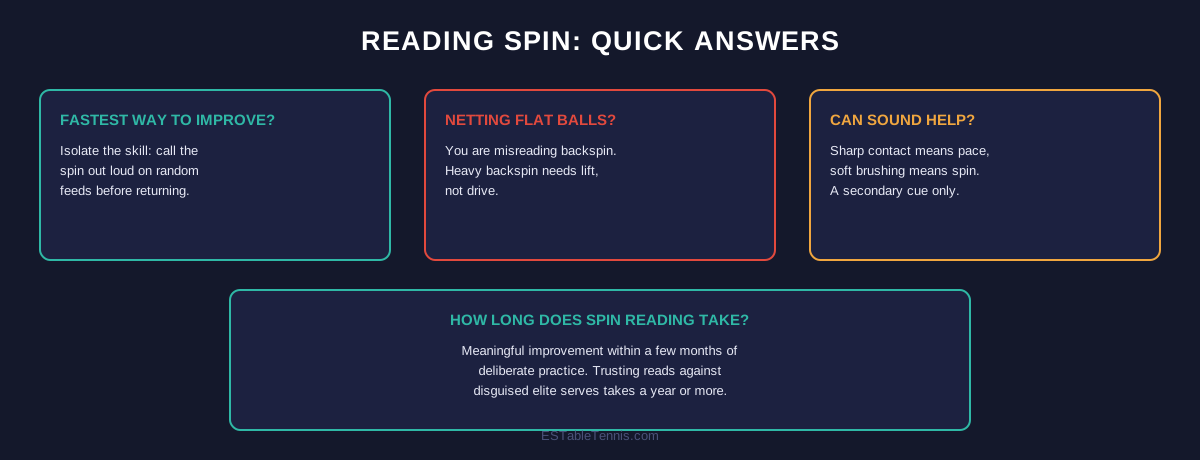
Frequently Asked Questions
According to the ITTF equipment regulations, all racket coverings must meet specific approval standards before use in sanctioned competition.What’s the fastest way to improve at reading spin?
Deliberately isolate the skill: have a partner feed random spin types and practice calling out the spin before returning, separate from worrying about shot execution. This builds the read as its own reflex.
Why do I keep netting balls I thought had no spin?
You’re likely misreading backspin, which often looks flatter and less threatening in flight than it actually is. Heavy backspin needs to be lifted, not driven, or it drags straight into the net.
Does equipment affect how easy an opponent’s spin is to read?
Yes. Pimples-out and long-pips rubber alter or reverse spin in ways that break the normal visual patterns, which is why they’re often described as confusing to play against. See our guide on inverted rubber vs pimples out for the full mechanism.
Can you read spin from the sound of contact?
Somewhat. A sharper, flatter contact sound often indicates less spin and more direct pace, while a softer, brushing sound suggests heavier spin generation, though this is a secondary cue best combined with visual tracking, not relied on alone.
How long does it take to get good at reading spin?
Most players see meaningful improvement within a few months of deliberate practice, though full confidence against disguised, high-level serves typically takes a year or more of consistent competitive exposure.
Leave a Reply