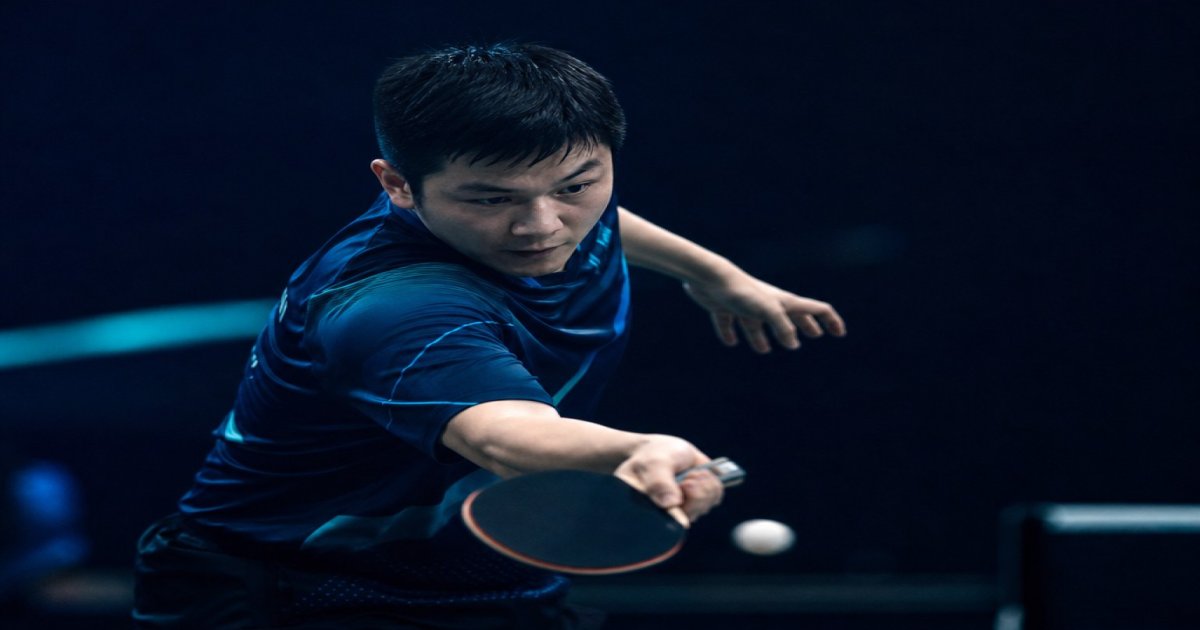
How do you return serve in table tennis?
Returning serve is the single most information-dependent shot in the sport, decided as much by accurate reading in the split second before contact as by any swing mechanics applied afterward.
Read the server’s contact point and the ball’s actual flight and bounce to identify spin type before committing to a return.
Match your racket angle to the incoming spin (closed against topspin, open against backspin), and prioritize a controlled, well-placed return over an aggressive one until the spin is correctly identified.

What’s the first thing to look at when reading an incoming serve?
How does racket angle need to adjust for a backspin serve versus a topspin serve?
Against backspin, the racket needs a more open angle to lift the ball over the net rather than driving it into the net, since backspin’s downward drag actively resists a flat or closed-angle return. Against topspin, a more closed racket angle is needed to counteract the ball’s forward, downward-kicking bounce, or the return will sail long past the table.What’s the safest return option when spin reading is uncertain?
A controlled push or block that prioritizes simply getting the ball back over the net with reasonable placement, rather than attempting an aggressive attacking return against spin that hasn’t been confidently identified. This conservative approach costs some offensive opportunity but avoids the far more costly outcome of an aggressive return executed against badly misread spin.How does placement factor into an effective serve return, beyond just spin reading?
A technically correct return that lands in an easily attackable spot for the server gives back much of the advantage a good read initially secured. Aiming the return toward the server’s playing elbow, or deep to a corner, denies an easy follow-up attack even when the return itself isn’t particularly aggressive or powerful.Why do short serves specifically create return difficulty beyond just spin confusion?
A short serve, landing close to the net, forces a returning player to move forward and often reach across the table, physically restricting the range of motion available for a full, powerful return. This is part of why the flick, covered in our guide on table tennis flick, exists specifically as a compact, wrist-driven answer to exactly this restricted-space problem.How does an opponent’s serve pattern across a match affect return strategy?
Paying attention to which serves an opponent favors, and how they’ve varied serve selection across the current match, builds a predictive advantage beyond just reading each individual serve in isolation. A player who notices an opponent repeatedly returning to a specific short backspin serve after a long serve was returned aggressively is picking up a real, exploitable pattern rather than treating each serve as a completely independent, unpredictable event.What role does footwork play in effective serve return?
Getting into a balanced, ready position before the serve even happens, rather than reacting purely after the ball is struck, gives considerably more time to read spin and execute a controlled response. A player caught flat-footed or out of position has to compress spin reading, decision-making, and execution into an impossibly short window, which is why consistent, disciplined ready-position footwork matters as much as the technical return mechanics themselves.How does equipment affect serve return quality?
Rubber grip affects how much control a player has when adjusting racket angle against varied incoming spin: low-grip rubber can make fine control adjustments feel less precise, covered in our guide on choosing rubber for beginners. A player whose serve returns feel consistently unreliable should rule out an equipment mismatch before assuming the issue is purely a reading or technique problem.How does mental composure affect serve return quality specifically?
Serve return happens at the very start of every single point, meaning any accumulated tension or anxiety from a previous point carries directly into the next return attempt, more than it would for a shot occurring mid-rally. A player who’s just lost a tense point often rushes their next return, reading spin less carefully and reacting rather than deliberately processing the available information, which creates a compounding pattern where early match tension directly degrades return quality on subsequent points.What’s the difference between returning a serve defensively versus returning it aggressively?
A defensive return prioritizes safety and consistency, typically a controlled push or block that simply keeps the point alive without taking meaningful offensive risk. An aggressive return, often a loop or a flick against a short ball, actively tries to seize control of the point immediately rather than waiting for a later opportunity. The right choice depends on how confidently the spin was read, the server’s known patterns, and the specific match situation: there’s no universally correct answer between the two approaches.How does practicing serve return differ from practicing serves themselves?
Serve return practice requires a partner or coach who can vary serve types unpredictably, since the entire skill being built is reading and reacting rather than executing a known, self-controlled motion. This makes serve return practice inherently more dependent on having a capable practice partner than serve practice, which a player can meaningfully improve on largely alone through isolated repetition.Does return strategy change against an opponent using disruptive rubber types?
Significantly. A serve struck off pimples-out or long pips rubber, covered in our guides on inverted vs pimples-out rubber and long pips table tennis, can produce ball behavior that doesn’t match what the server’s swing visually suggested, breaking the normal read-the-swing pattern most players rely on against standard inverted rubber. Facing this kind of opponent for the first time often requires temporarily shifting focus away from the swing entirely and toward the ball’s actual observed flight and bounce.How important is it to vary your own return patterns to avoid becoming predictable?
Genuinely important at any level above complete beginner. A player who always returns a specific serve type the same way, to the same location, gives an observant opponent free information to exploit on subsequent points. Deliberately varying return placement and shot selection, even against the same serve, denies an opponent the easy pattern-reading advantage that comes from facing a predictable returner.What’s a good way to build return confidence against serves you haven’t faced before?
Treat the first several points against an unfamiliar server as deliberate information-gathering rather than expecting immediate mastery: accept a slightly higher error rate early in a match against a new opponent’s serve style, using those points to build an accurate read rather than forcing confident, aggressive returns before the necessary information has actually been gathered. Players who accept this early learning cost usually settle into much stronger return patterns by the middle of a match than those who try to force early aggression against genuinely unfamiliar serves.How does return quality connect to overall match psychology and confidence?
A player who consistently struggles with serve returns often develops a specific kind of dread heading into their opponent’s service games, since every point starts with a moment of genuine uncertainty rather than a shot they trust. This dread itself degrades return quality further, creating exactly the kind of self-reinforcing negative cycle covered throughout the mental-equipment crossover thesis running through this entire site: a technical gap becomes a psychological one, which then makes the technical gap harder to close.What’s the relationship between return quality and a player’s overall competitive ceiling?
Considerably more direct than most developing players realize. Since every single point in a match begins with either a serve or a return, a genuine weakness in reading and returning serves places a hard ceiling on competitive potential regardless of how strong a player’s rally shots become, since strong rally play never gets the chance to matter if the return itself repeatedly loses the point before a rally even develops. This is why serious coaches treat return development as equally important to serve development, despite return practice receiving noticeably less attention in most casual training routines.How does a returning player’s stance differ from a serving player’s stance?
A returner typically stays slightly further back and lower than a server, ready to move in either direction depending on serve placement, whereas a server has the luxury of a stable, self-initiated starting position since they control exactly when and how the point begins. This asymmetry means return-ready footwork has to account for genuine uncertainty about where the ball is going, which is why disciplined, balanced ready positioning matters even more for a returner than for the player initiating the point.What’s a common mistake players make when trying to improve their serve return?
Focusing exclusively on technical swing adjustments while neglecting the reading process that determines whether that swing gets applied correctly in the first place. A technically excellent return swing applied against a misread serve still fails, which is why serve return improvement should start with deliberate reading practice (correctly identifying spin type before worrying about swing refinement) rather than assuming better mechanics alone will solve an underlying reading gap.Does return strategy change in doubles compared to singles?
Yes, since doubles serves must be delivered diagonally and returned within a more constrained set of legal zones, and the compressed pace of alternating shots leaves less time to process a read before committing to a response. Doubles returners often default to safer, more controlled returns more frequently than singles players would in a comparable situation, simply because the format’s faster pace reduces the available decision-making window.How does a player’s own serve style affect how well they read opponents’ serves?
Players who’ve spent real time developing their own varied, disguised serves often become noticeably better at reading opponents’ serves too, since understanding how to disguise spin from the serving side builds an intuitive sense for what to look for when trying to see through an opponent’s disguise. This connection, between serve development and return development, is one of the more underappreciated reasons dedicated serve practice pays off beyond just the serving side of the point.What’s the value of studying an opponent’s serve before a match, if that’s possible?
Watching prior match footage or simply observing an opponent’s warm-up serves before a match begins gives a genuine head start on pattern recognition that would otherwise take several live points to build during the actual match. Competitive players at higher levels routinely study opponents’ tendencies in advance specifically for this reason: the return-reading process is faster and more accurate when it isn’t starting completely cold against a genuinely unfamiliar server.How does the psychological weight of an important point affect return execution?
Return execution under pressure often reveals whether a player’s reading process is genuinely automatic or still requires conscious effort: a still-developing reading skill tends to break down specifically under pressure, reverting to guesswork exactly when accurate reading matters most. This is part of why serve return, like the serve itself, benefits from deliberate practice under simulated pressure rather than only relaxed, low-stakes repetition.What separates a good serve returner from a great one, once the basics are solid?
A great returner doesn’t just read spin accurately: they use return placement itself as an offensive tool, denying the server easy follow-up opportunities regardless of how well the server executed the original serve. This shifts serve return from a purely reactive skill into a genuinely proactive one, where the returner is actively fighting for control of the point from the very first shot rather than simply surviving the server’s opening advantage. According to ITTF equipment regulations, serve rules including toss height and obstruction exist specifically to keep the reading process fair, ensuring a returner always has the visual information they need to attempt an accurate read, even if using that information well remains entirely up to the player. Eleven straight points is a brutal way to learn a lesson that a single honest conversation with a coach could have delivered far earlier. Most players need the brutal version at least once before the honest version actually sticks. Read first. Swing second. Almost every return mistake in this sport happens because a player did those two steps in the wrong order. Say it out loud if you have to, the way he finally did. Sometimes naming the guessing is the only way to actually stop doing it. Simple as that. End of story. Now go watch the next serve properly.Quick Recap: How to Return Serve
Learning how to return serve is less about a single mechanical fix and more about building an honest, disciplined reading process (contact point, swing path, ball flight, bounce behavior) before ever committing to a swing. The player in San Fernando lost eleven straight points guessing. The moment he admitted the guessing out loud was the moment he actually started reading instead.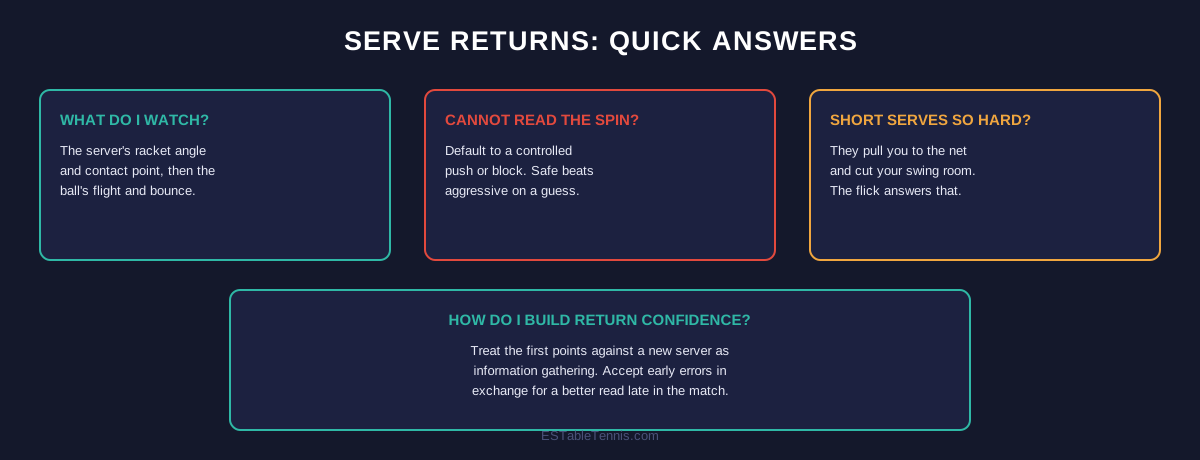
Frequently Asked Questions
What’s the most important thing to watch when returning a serve?
The server’s racket angle and contact point, which are the most reliable indicators of spin type, combined with the ball’s actual flight and bounce to confirm the read.
What should I do if I can’t read the incoming spin confidently?
Default to a controlled, safe push or block rather than an aggressive attacking return, since a conservative return against uncertain spin beats an aggressive one against misread spin.
Why do short serves create extra return difficulty?
They restrict a returning player’s range of motion by forcing forward movement close to the net, which is why compact shots like the flick exist specifically to answer that constraint.
Does equipment affect serve return quality?
Yes. Rubber grip affects how precisely a player can make fine racket-angle adjustments against varied incoming spin during a return.
How do you build confidence returning an opponent’s serve for the first time?
Treat the first several points as information-gathering rather than expecting immediate mastery, accepting a slightly higher early error rate in exchange for a more accurate read later in the match.
Leave a Reply