What are the best table tennis drills for improvement?
Drilling has an image problem in casual table tennis culture (seen as tedious compared to the immediate satisfaction of a real match) despite being the single most efficient path to genuine, lasting improvement available to any player.
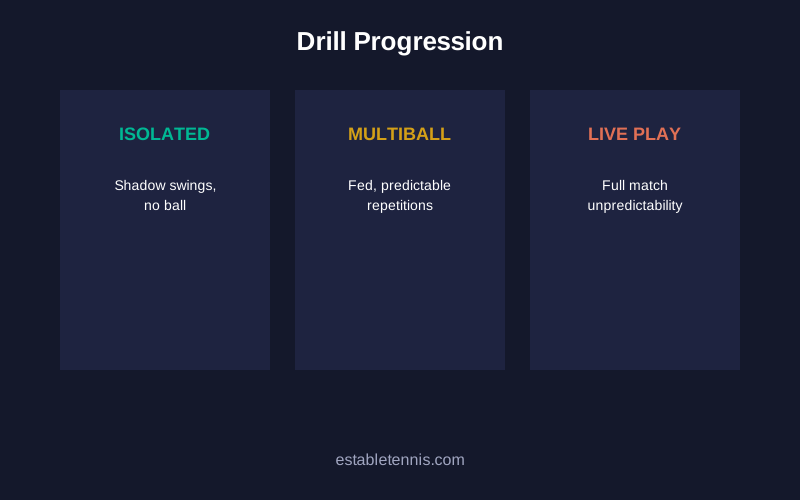
Effective drills isolate one specific skill (footwork, spin generation, serve return) through repetitive, predictable practice rather than unstructured match play. Multiball feeding drills, shadow swings, and consistency rallies focused on a single shot type build reliable technique faster than general, unfocused practice sessions ever do.
Why does drilling improve skills faster than just playing more matches?
What’s the difference between a multiball drill and a standard two-player drill?
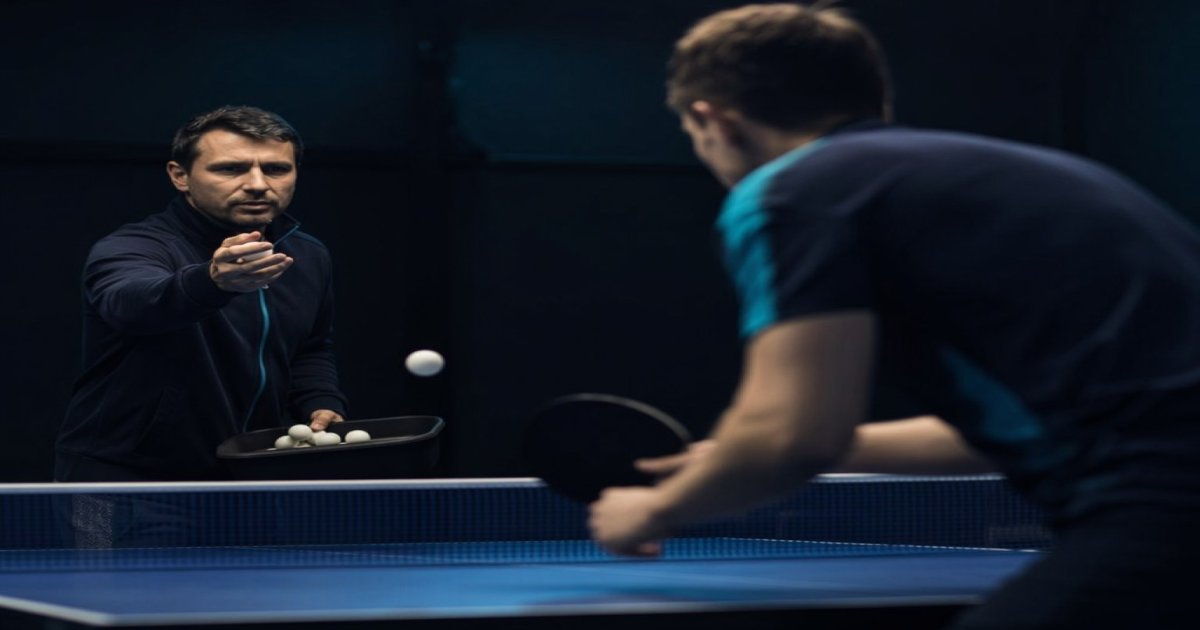
A multiball drill uses a bucket of balls and a feeder, typically a coach, delivering a rapid, continuous stream of shots without needing to wait for the ball to be returned each time. A standard two-player drill relies on both players returning the ball consistently to a specific pattern, which requires more cooperation and consistency from both participants but doesn’t need a dedicated feeder or bucket of balls, covered in more depth in our guide on multiball training.What’s a good foundational drill for a genuine beginner?
A simple forehand-to-forehand consistency rally, where both players hit moderate-pace forehand shots to the same general area, focused purely on sustaining a long rally rather than winning individual points. This unglamorous drill builds basic contact consistency and footwork before a player is ready for more complex, varied practice patterns.How should an intermediate player structure a focused practice session?
Around a single, specific goal rather than trying to improve everything simultaneously: a session dedicated purely to backhand consistency, or purely to serve-and-third-ball attack patterns, produces more measurable improvement than an unfocused session that touches on five different skills without deeply practicing any of them. This mirrors the same principle covered throughout our shot-specific guides: narrow, deliberate practice beats broad, unfocused practice.What’s a common mistake players make when drilling?
Drilling at match intensity from the start, rather than beginning at a reduced pace to isolate correct technique before gradually increasing speed and difficulty. Rushing to full-speed drilling before the underlying technical pattern is solid tends to reinforce whatever flawed habit already exists, rather than actually correcting it, which is why coaches often deliberately slow drills down even for more advanced players working on a specific technical adjustment.How important is drill variety versus drill repetition?
Repetition on a single, well-chosen drill typically outperforms constant variety for building a specific skill, since meaningful technical improvement requires enough repetitions to actually groove a new movement pattern. That said, some variety across a broader training week (different drills targeting different shots and skills on different days) prevents staleness and builds a more complete, well-rounded game over time.Does drilling alone, without a partner, offer real value?
Yes, particularly for footwork patterns, shadow swings, and serve practice, all of which can be meaningfully improved through solo practice against a wall or through unaccompanied technical repetition. Solo drilling can’t replace the value of practicing against a live, reactive partner for reading and returning genuinely varied shots, but it remains a legitimate and often underused tool for players without consistent access to a training partner or coach.How does drilling connect to actual match performance improvement?
The real test of any drill is whether the isolated skill it builds actually transfers into live match situations, which requires periodically testing drilled skills in genuine, unpredictable match play rather than drilling in isolation indefinitely. A player who only ever drills, never testing those skills under real match pressure, often finds the transfer isn’t as automatic as they assumed: drilling and match play both matter, and neither fully substitutes for the other.What’s a good drill progression for building an aggressive forehand loop?
Start with shadow swings focused purely on the low-to-high swing path, then move to multiball drills against fed backspin, gradually increasing feed pace and reducing predictability, before finally testing the shot in live, cooperative rally practice with a partner. This progression, moving from isolated mechanics to increasingly realistic conditions, mirrors the broader topspin development covered in our guide on how to generate more topspin.How should drilling frequency and session length be structured for meaningful improvement?
Shorter, more frequent, highly focused sessions generally outperform occasional long, unfocused ones for building specific technical skills: three thirty-minute sessions each week, each targeting a single clear goal, typically produce better results than one exhausting two-hour session that tries to cover everything at once. Focused intensity and consistency matter more than total accumulated hours alone.What’s the value of drilling with a coach versus drilling with a peer training partner?
A coach can provide immediate technical feedback and precisely control feed placement and pace to target a specific weakness, which a peer partner of similar skill level often can’t replicate as reliably. Peer drilling still offers real value, particularly for building consistency and match-realistic timing against a genuinely reactive opponent, but it serves a different purpose than the more surgical, feedback-driven practice a skilled coach provides.How does drilling for serve development differ from drilling for stroke technique?
Serve drilling, covered in our guide on how to serve in table tennis, often works well as solo practice, since a player controls the entire serve motion without needing a partner’s cooperation or reaction. Stroke technique drilling for shots like the loop or smash typically benefits more from a feeder or live partner, since these shots depend on responding to an incoming ball rather than a self-initiated motion.What’s a common sign that a drill has stopped producing meaningful improvement?
When a player can execute the drilled pattern correctly and consistently without any conscious effort or attention, that’s usually the signal to either increase difficulty, introduce more variability, or move on to a new focus area entirely. Continuing to drill a skill well past the point of genuine challenge produces diminishing returns, and recognizing this transition point is part of structuring an efficient, well-paced training program rather than drilling out of habit alone.Does drilling need to be physically exhausting to be effective?
No, and this is a common misconception. The value of a drill comes from precise repetition and technical focus, not from physical exhaustion, which can actually degrade the quality of repetitions as fatigue sets in and technique starts to break down. Shorter, focused, high-quality repetitions generally produce better technical improvement than longer sessions where fatigue causes the later repetitions to reinforce increasingly sloppy technique.How should a player choose which drill to prioritize among many possible options?
Start with whatever shot or skill is currently the biggest limiting factor in actual match performance, rather than drilling whatever feels most enjoyable or already comes naturally. A player whose backhand consistently loses points should prioritize backhand drilling over further refining an already-strong forehand, even though the forehand practice might feel more immediately rewarding; the biggest performance gains come from addressing genuine weaknesses, not from polishing existing strengths further.What’s the role of mental focus during repetitive drilling, and how does it differ from match focus?
Drilling focus tends to be more internally directed (attention on the specific mechanics of a swing or footwork pattern), while match focus is more externally directed toward reading and reacting to an opponent. Some players struggle to transition between these two focus modes, drilling with excellent internal technical attention but losing that same precision once match conditions demand external, reactive attention instead. Recognizing this distinction helps explain why some players drill beautifully but underperform in matches, and vice versa.How does drilling for doubles differ from drilling for singles?
Doubles-specific drilling needs to account for positioning and alternating shots with a partner, which requires practice with that specific partner rather than generic solo or single-opponent drilling. Many players who compete in both formats maintain separate drilling routines (singles-focused footwork and shot consistency, plus doubles-specific positioning and communication drills with their regular partner), recognizing that skill transfer between the two formats is real but incomplete.Does the order in which drills are practiced within a single session matter?
Generally, yes. Many coaches recommend starting a session with lower-intensity, technical drills (shadow swings, footwork patterns) before progressing to higher-intensity multiball or live rally drills, allowing the body and mind to warm up progressively rather than jumping straight into demanding, high-speed practice. This structured progression also reduces injury risk compared to launching directly into intense drilling without adequate physical preparation.How can a player without regular access to a coach still build an effective drilling routine?
Video resources, structured drill sequences found through reputable table tennis coaching content, and consistent practice with a training partner of similar dedication can meaningfully substitute for regular coaching, particularly for building foundational consistency drills that don’t require highly specific, individualized feedback. A self-motivated player without coaching access can still make real progress through disciplined, consistent solo and partner drilling, though periodic coaching input, even occasional rather than regular, helps catch and correct technical issues that self-assessment alone tends to miss.What’s the relationship between drilling and building match-specific tactical patterns, not just raw technique?
Some drills specifically simulate common tactical situations: serve-and-attack sequences, or a defensive player practicing extended rally patterns against simulated aggressive shots, rather than purely isolating a single stroke’s mechanics. This kind of tactical drilling bridges the gap between pure technical practice and genuine match application, building not just the physical skill but the decision-making patterns that go with using that skill correctly in a live competitive situation.How does drilling intensity need to change as a player advances from beginner to advanced levels?
Beginner drilling typically emphasizes slow, controlled repetition to establish correct basic patterns. Intermediate drilling introduces increasing speed and some unpredictability to test whether those patterns hold up under more realistic conditions. Advanced drilling often incorporates simulated match pressure and highly randomized feeds, since advanced players’ technical foundations are typically solid enough that the remaining improvement comes from performance under increasingly unpredictable, high-pressure conditions rather than basic mechanical correction.Is there a risk of over-drilling a single skill at the expense of overall game development?
Yes, particularly for players who enjoy a specific drill and gravitate toward repeating it well past the point of diminishing returns, while neglecting other necessary skills. A genuinely well-rounded training program deliberately rotates focus across multiple skill areas over time (footwork, serve, return, forehand, backhand) rather than allowing personal preference to concentrate all practice time on whichever single drill happens to feel most satisfying. According to ITTF equipment regulations, competitive equipment standards stay fixed regardless of training method, meaning the improvement drilling produces comes entirely from the player’s own developed skill rather than any variable equipment advantage, a reassuring fact for anyone wondering whether their progress is real or borrowed. Every drill covered here shares the same underlying trade: patience now, in exchange for a shot that eventually stops requiring any conscious thought at all. That trade rarely feels worth it in the middle of a repetitive multiball session. It almost always feels worth it the first time that same shot lands cleanly in a real match without a second thought. Repetition has an unglamorous reputation entirely because it’s the least exciting-looking thing a player can do with their practice time, and the most reliable one, in almost equal measure. Neither fact ever seems to convince anyone until their own results start proving it themselves. Pick one weak shot. Drill it more times than feels reasonable. Come back to this article in three months and see if the coin-flip feeling is still there. It usually won’t be. Three months of unglamorous, repeated work is a small price against however many years you’ll spend still playing this sport afterward. Nobody regrets the drilling once the shot finally arrives on command. Start with whatever weakness bothers you most right now. That’s always the right place to begin. Simple as that. Every serious player’s improvement story sounds boring until you’re the one living it. That’s exactly how you’ll know it’s actually working. Nobody films the boring part. Everybody benefits from having actually done it. End of story. Book the table time this week, not next month. Momentum fades fast once you let it. Book it today instead. Worth it. Truly. Go now. Really. The club’s most improved player from last year didn’t wait for permission or perfect conditions. They just booked the table and started repeating the one shot that embarrassed them most.What actually causes unforced errors?
Unforced errors come from three separate places, and treating them as one problem is why “just concentrate harder” never works. The first is technical: the stroke itself is unreliable under repetition, and the fix is drilling, plainly and without shortcuts. The second is tactical: the stroke is fine, but you picked the wrong shot for the situation, a loop when a block was called for, and no amount of extra repetition fixes a decision. That needs practice built around choices, not contact. The third cause is the one players almost never check: equipment. When your rubber or blade produces more speed or spin than you can control, the margin for error disappears before you’ve even swung. The ball is already past what your hands can manage, and the miss looks identical to the other two kinds, which is exactly why it gets misdiagnosed so often. Here is the line worth remembering: an error caused by a setup you cannot control is not a concentration failure, and no amount of mental toughness or extra drilling will fix it. You can be locked in, calm, perfectly present, and still miss, because the equipment set the outcome before the point began. Working out which of the three you actually have, technical, tactical, or equipment, is the real first step, well before anyone reaches for concentration tips that were never going to touch the problem. And if the equipment is the culprit, it’s worth knowing that most rubber recommendations online are matched to a player who isn’t you.Quick Recap: Table Tennis Drills
Effective table tennis drills isolate one specific skill and repeat it under controlled, predictable conditions, building technical consistency far faster than the same repetitions scattered across unpredictable match play. The most improved player at any club rarely got there through talent or new equipment: they got there through a specific, often tedious drill, repeated more times than felt necessary, until the shot stopped feeling like a coin flip.Frequently Asked Questions
Why is drilling more effective than just playing more matches?
Matches introduce constant variability that makes isolating and correcting a single technical element difficult. Drills strip away that variability, building consistency faster through repeated, predictable conditions.
What’s a good first drill for a genuine beginner?
A simple forehand-to-forehand consistency rally, focused purely on sustaining a long rally at moderate pace rather than winning individual points.
Should drills always be practiced at full match speed?
No. Starting at reduced pace to isolate correct technique, then gradually increasing speed, produces better results than rushing to full intensity before the underlying pattern is solid.
Is solo drilling without a partner actually useful?
Yes, particularly for footwork, shadow swings, and serve practice, all of which can be meaningfully improved through unaccompanied repetition.
How long should a focused drilling session last?
Shorter, more frequent sessions targeting a single clear goal generally outperform occasional long, unfocused sessions that try to cover everything at once.
Leave a Reply