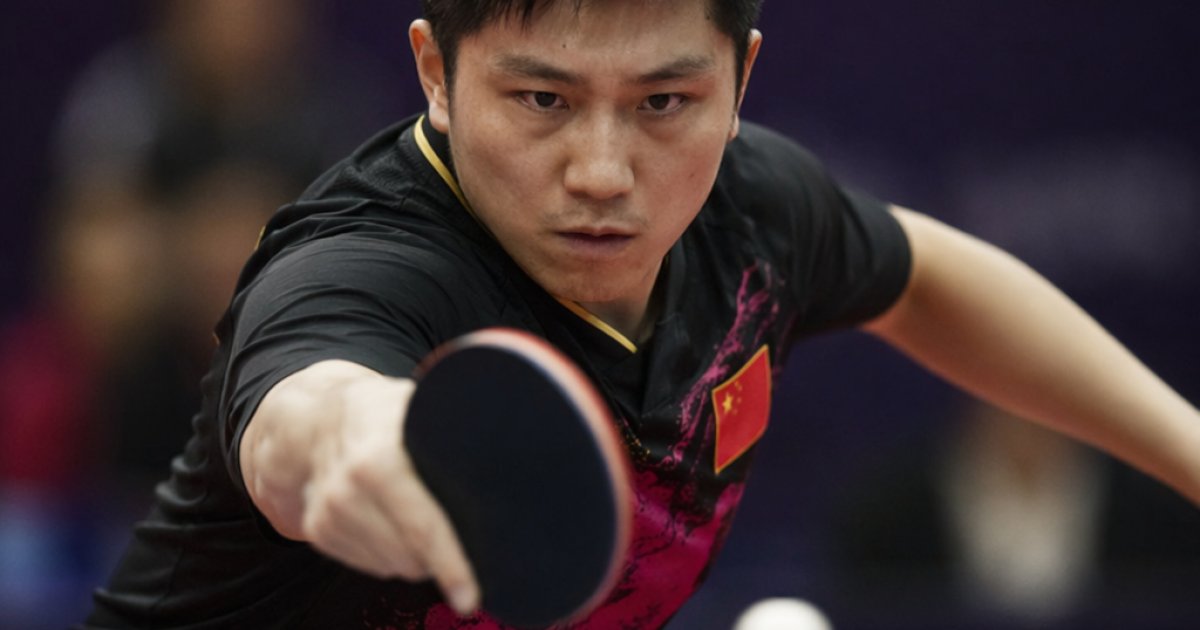
Watch a club session for twenty minutes and you can usually spot the player whose concentration is somewhere else entirely: eyes on the door every time it opens, chatting between every single point, playing a shot that would be fine at 3-3 and disastrous at 9-9 because his attention never actually arrived at 9-9 in the first place. The player who stays glued to the ball is not gifted with a rare attention span. He has simply run this cycle enough times that it stopped requiring conscious effort at all.
Concentration in table tennis is not a personality trait some players have and others don’t. A trained one. It is a skill, and like every other skill in this sport, it is trainable.
He is not lacking discipline. He is running on whatever attention shows up unmanaged, which is a genuinely different thing from choosing to focus and then losing the fight. Most players in his position have never been shown a specific, repeatable tool, so they conclude the problem is personality (“I’ve just always had a short attention span”) rather than a trainable gap in technique.
Table tennis concentration improves fastest by narrowing your attention to one external cue per shot (the ball, not your own technique), using a fixed refocus routine between points, and training your focus under deliberately distracting conditions so match-day distractions stop feeling novel.
Why Does Your Focus Actually Drift During a Match?
Your focus drifts because attention is a limited resource, and anything that is not the current point, the score, the crowd, your last mistake, competes with the ball for the same narrow bandwidth, usually winning more often than it should.
This is not a discipline failure. It is how attention works for every human being, and pretending you should simply “concentrate harder” through willpower alone ignores that concentration is a skill with a specific mechanism, not a mood you summon by trying.
This is worth saying plainly because a lot of coaching advice treats concentration as a matter of wanting it enough. Wanting to focus and having a specific mechanism for doing it are not the same thing, and confusing the two leaves players blaming their character for what is actually a missing skill.
Should You Focus on Your Technique or the Ball?
Focus on the ball and what you want to do to it, not on your own body mechanics, since a large body of research on attentional focus, including a 2021 systematic review and meta-analysis by Gabriele Wulf, consistently finds that an external focus (the intended effect of the movement) produces better performance than an internal focus (your own body parts).
This matters more under pressure, not less. When a point matters, the instinct is to consciously monitor your own stroke, your wrist angle, your footwork, and that monitoring is exactly what breaks a trained movement that normally runs on autopilot. Keeping your attention external, on the ball’s spin, its arc, where you want it to land, lets the trained movement execute without your conscious mind getting in its way.
Are There Different Ways Concentration Actually Fails?
Concentration fails in two opposite directions: broad, scattered attention that lets in everything (the crowd, the score, your opponent’s reaction), and overly narrow attention that tunnels so hard on one thing, usually your own anxiety about missing, that you stop reading the actual play in front of you.
Most players assume only the first failure exists, the scattered, distracted version. The second is just as common and less talked about. A player fixated on not missing a specific shot can narrow so hard on that single fear that they stop tracking the actual ball flight and spin in front of them, which is its own way of not paying attention to the point, just aimed inward instead of outward.
A concrete version of the cycle: as you walk to the table to receive serve, attention is broad, reading your opponent’s stance, the score, the general shape of the moment. The instant the ball leaves their hand, attention narrows hard onto the ball’s spin and trajectory, nothing else.
The point ends, and attention broadens again immediately, taking in the result, resetting body language, preparing the next serve. Broad, then narrow, then broad again, repeated hundreds of times a match. Getting stuck in either mode, narrow for the whole match or broad the whole match, is the actual failure, not any single lapse.
The fix for both is the same external cue discussed above. Broad, scattered attention narrows back down onto the ball. Overly narrow, fear-based tunnel vision also redirects back onto the ball’s actual spin and trajectory, rather than the internal fear about the outcome.
What’s a Realistic Focus Cue to Use Between Points?
Use a short, fixed physical and mental routine between points, since concentration is not something you hold constantly for an entire match; it is something you deliberately re-establish, point by point, using the same repeatable trigger every time.
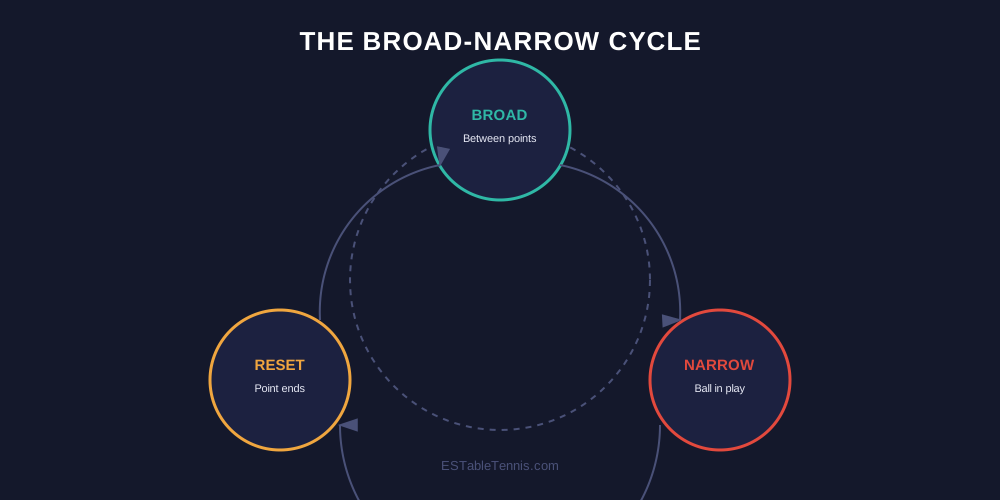
Nobody concentrates at full intensity for an entire match, and trying to is a fast route to mental fatigue well before the final game. Elite players narrow their attention sharply in the few seconds around each point, then let it broaden and relax between points, a rhythm covered in more tactical depth in ping pong pre-serve routine mental. The skill is not permanent intensity. It is reliably narrowing back down, point after point, on command.
What Do You Do When You Catch Your Mind Wandering Mid-Rally?
Notice it without judgment and redirect to your external cue immediately, since a rally moves too fast for a full reset routine, and the only real-time tool available mid-point is a fast, practiced redirect rather than a considered response.
This happens to everyone, including players who look completely locked in from the stands. The difference is speed of recovery, not immunity from the wandering in the first place. A player who notices the drift in half a second and redirects to “watch the ball” loses almost nothing. A player who spends two full seconds annoyed at themselves for drifting has now compounded one lapse into a longer one.
Practicing this redirect in low-stakes rallies is what makes it fast enough to survive a real rally’s pace. Deliberately let your mind wander in a casual practice point, notice it, and snap back to your cue. The goal is not preventing the wander. It is shrinking the recovery time until it is fast enough not to cost you the point.
Recovery speed is trainable in exactly the same way a stroke is: with deliberate, low-stakes repetitions rather than hoping it improves on its own during matches that actually matter. Nobody starts fast at this. It gets fast because it gets practiced.
How Do You Train Concentration So It Holds Up Under Real Distraction?
Train it by deliberately practicing under distracting conditions, not by hoping a quiet, focused practice environment somehow prepares you for a loud, chaotic tournament hall.
Most club practice happens in a fairly controlled environment: familiar partner, familiar table, no real crowd. A tournament is the opposite: unfamiliar hall, adjacent matches finishing loudly, spectators, a schedule running late. If the first time your focus meets real distraction is in a match that matters, you are testing an untrained skill under the worst possible conditions.
Build distraction into practice on purpose: play with music on, invite a couple of clubmates to talk nearby, practice a key drill right after a hard physical set so you are hitting while genuinely tired. None of this needs to be extreme. It needs to be different enough from silent, comfortable practice that your focus gets a chance to fail safely and rebuild, rather than failing for the first time when it actually counts.
How Long Can You Actually Hold Full Concentration?
Realistically, somewhere between three and ten seconds of genuinely sharp, external focus per point, which is actually all a single point requires if your between-point routine handles the recovery in between.
Players who exhaust themselves mentally by the third game are often trying to hold intense focus continuously for the entire match, including the walk between points, the time-out, the change of ends, instead of allowing it to genuinely relax in those gaps. Full intensity is expensive.
It is only worth spending in the few seconds a point actually requires, which means deliberately letting go of it everywhere else, not out of laziness, but because that is what makes it available again for the next point. Full match intensity rarely needs to be held for whole minutes at a time. It needs to be summoned, briefly and completely, dozens of times in a row, then released.
Does Solo Practice or Multiball Build Concentration Differently Than Real Matches?
Yes. Multiball and solo drilling build the physical habit of external focus in a low-stakes, repetitive environment, while match play is what actually tests whether that focus holds up when a point has real consequences attached to it.
Both matter, and neither replaces the other. Multiball lets you groove the external-cue habit hundreds of times in a single session, more repetitions than any match could offer. But multiball has no scoreboard and no consequence for a miss, so it cannot train the specific skill of holding that same focus once something is actually riding on the shot. Use multiball to build the habit.
Use scored practice games and real matches to stress-test whether it survives contact with a result that matters. Multiball builds the reflex. Match play tests whether the reflex survives contact with something you actually care about losing.
Does Equipment Affect How Easy It Is to Concentrate?
Yes, in a specific way: uncertainty about your equipment adds a second thing to think about mid-point, and concentration research is clear that dividing attention between two things, the shot and a nagging equipment doubt, degrades performance on both.
A player who trusts their rubber completely spends their limited attention entirely on the ball. A stroke groomed for the wrong shot creates the same fixation problem, more of your attention spent managing an equipment mismatch and less spent reading the actual rally in front of you.
A player who is quietly unsure whether their equipment is helping or hurting them is running a second, background process during every single point, and that background process is stealing bandwidth from the one job concentration actually has. A cluttered, doubted mind and a cluttered, doubted setup end up costing you the exact same thing: room in your head that the next shot needed.
Does Fitness Level Affect Concentration Late in a Match?
Yes, directly. Physical fatigue reduces the mental resources available for concentration, which is why unforced errors tend to cluster in the fifth game of a long match even in players whose technique has not actually changed.
This is not purely a mental problem with a purely mental fix. A player who is undertrained physically for best-of-seven matches will feel their focus fraying in the fourth and fifth games no matter how good their between-points routine is, because the underlying resource, physical energy, is genuinely depleted.
If your matches regularly go long and your focus reliably collapses late, part of the fix belongs in your physical conditioning, not only in your mental training.
This also explains a common complaint from otherwise fit players: “my legs feel fine, but I can’t think straight in the fifth.” Mental fatigue and physical fatigue draw from an overlapping pool, and a conditioning program built only around footwork and stamina, without accounting for the mental cost of a long match, leaves a gap that shows up exactly where this player is describing it.
Can Watching Video of Yourself Help Concentration?
Yes, specifically for spotting when and where your attention actually drifted, since it is far easier to notice a lapse in footage than to remember it accurately from inside the match itself.
Watch for the moments right before a careless error: did you glance at the crowd, react visibly to the previous point, rush the serve without your usual routine? These small tells are usually invisible to the player in the moment and obvious on video a day later. Reviewing even one set of footage a month, specifically looking for these attention lapses rather than technique, tends to surface a pattern most players did not know they had.
A useful habit: before you even review the footage for technique, watch it once purely for attention lapses, with the sound down and the score hidden if you can manage it. Stripping away the outcome makes the small, telling moments- the glance, the flinch, the rushed serve- easier to spot for what they actually are, rather than getting read backward through the lens of whether the point was won or lost.
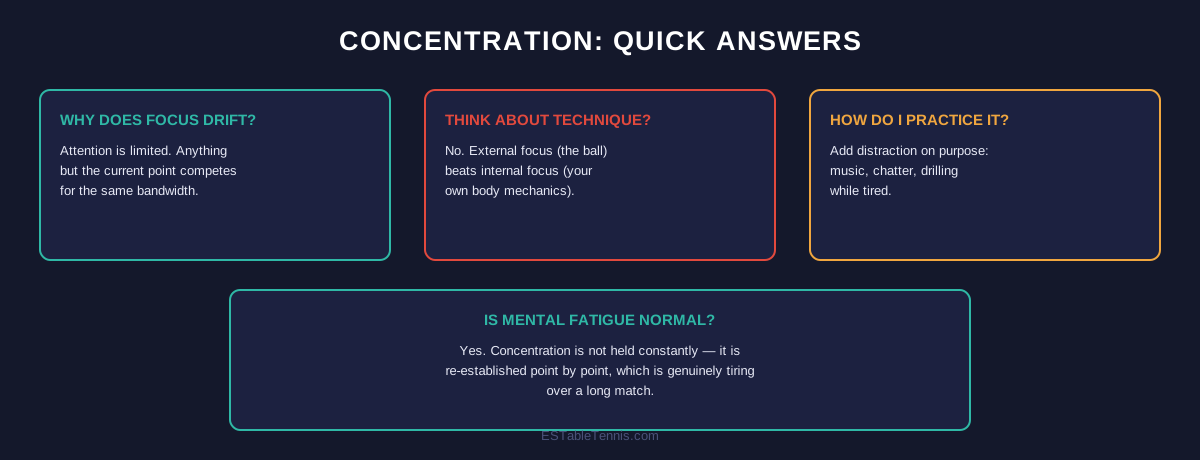
Frequently Asked Questions
Why do I lose focus even in matches I care about winning?
Attention is a limited resource, and anything competing with the current point (the score, the crowd, a past mistake) draws on that same limited resource. Caring about the outcome does not automatically protect your focus; it requires a trained, repeatable routine.
Should I think about my technique during a rally?
No. Research on attentional focus consistently shows an external focus (the ball, its spin, where you want it to go) produces better performance than an internal focus on your own body mechanics, especially under pressure.
How do I practice concentration specifically?
Add deliberate distraction to practice: music, nearby chatter, drilling while tired. Training focus only in quiet, comfortable conditions leaves it untested against the real distractions of a tournament.
Is it normal to feel mentally tired after a long match?
Yes. Concentration is not held at constant intensity; it is repeatedly re-established point by point, and that repeated effort is genuinely tiring, especially in matches that go the distance.
None of this requires becoming a different kind of player, calmer, more serious, less social between games. The clubmate glancing at the door between points can keep doing that between games entirely guilt-free. The only thing that needs to change is what happens in the three to ten seconds the actual point is being played, which is a far smaller ask than “be more focused” ever sounded like.
What Should You Try in Your Next Practice Session?
Pick one external cue, spin, contact point, target, and use it on every single shot for one full practice session. Then add distraction on purpose in your next one. Concentration built in silence rarely survives a loud hall. Concentration built with the radio on tends to travel well. Same routine, quieter room, gentler stakes, but the mechanism you are training is identical to the one you will need three months from now in a hall you have never played in.
For the full mental system this fits into, see how to stop choking in table tennis. And for a structured path through the whole mental game, download the free ebook, How to Remain Calm When It’s Crunch Time.
Leave a Reply