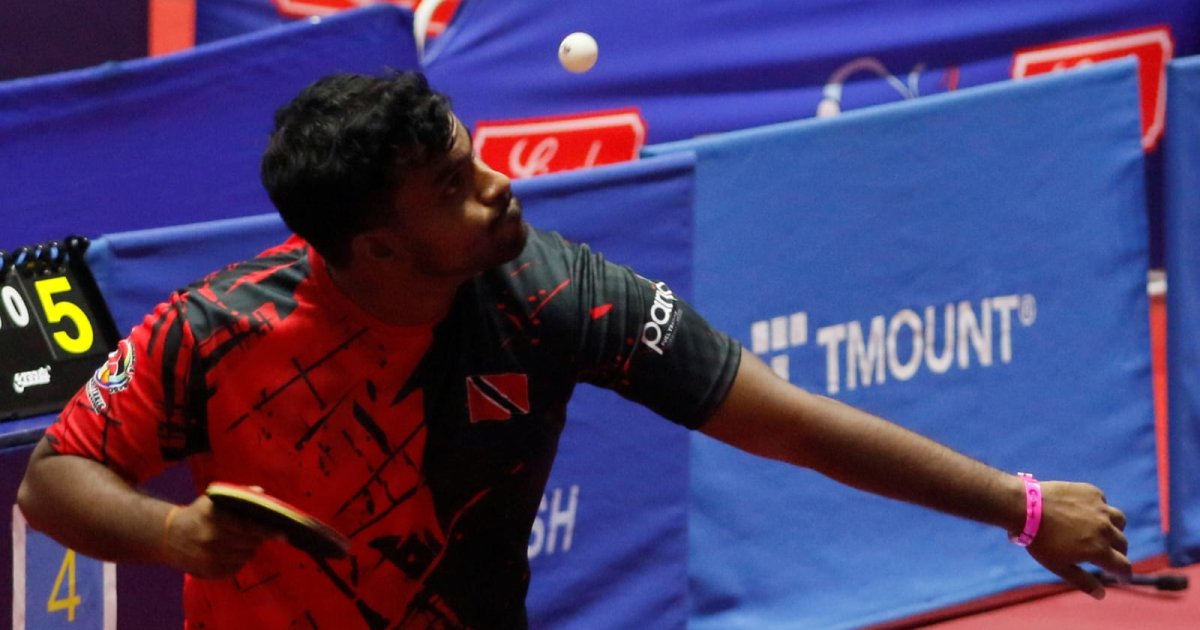
There was a player I coached in a junior national trial. Fourteen years old, technically one of the better kids in his age group. Shakehand grip, decent topspin forehand, passable backhand. He had beaten his first two opponents without much difficulty, and now he was in the semifinal against a boy from the south who was, by any objective measure, the lesser player.
He lost 3-0. Not even close. Afterward, I asked him what he was thinking between points. He looked at me like I had asked him what language the table was speaking. He said he was not thinking of anything, which is, of course, the exact problem. Between every point, his mind was an open window in a hurricane, and everything that wanted to come through it did.
A ping pong pre-serve routine mental strategy is not about superstition. It is not about bouncing the ball a specific number of times because your favorite professional does it. It is about giving your brain a job to do in the four seconds between the end of one point and the start of the next. Because if you do not give it a job, it will find one. And the job it finds will rarely help you.
Why Is the Gap Between Points the Most Dangerous Moment in a Match?
Players don’t collapse during rallies. They collapse in the two to four seconds after a point ends, when full attention lifts and every held-back thought rushes in. I have watched hundreds of matches at every level, from club nights in a rented gymnasium to national-level tournaments where the venue smells of new carpet and old pressure. The pattern is the same everywhere. Players do not collapse during rallies. They collapse in the two to four seconds after a point ends.
The rally itself demands full attention. Your nervous system is occupied. Eye on the ball, body in position, feet moving. There is no room for doubt when the ball is in motion.
The moment the point ends, that occupation lifts. And into that sudden silence, every thought your brain has been holding back rushes in. The score. The last error. The mistake three points ago that you are still angry about. Your opponent’s smirk. The fact that your parents are watching. The awareness that if you lose this game, you are 0-2 down and probably out.
Sports psychologists call this the inter-point period, and research published by the American Psychological Association consistently identifies it as the window where competitive anxiety has its greatest impact on performance. Your heart rate, cortisol levels, and cognitive load all spike in these few seconds. If you have no protocol for managing that spike, you are essentially walking into the next point already compromised.
What a Pre-Serve Routine Actually Does to Your Brain
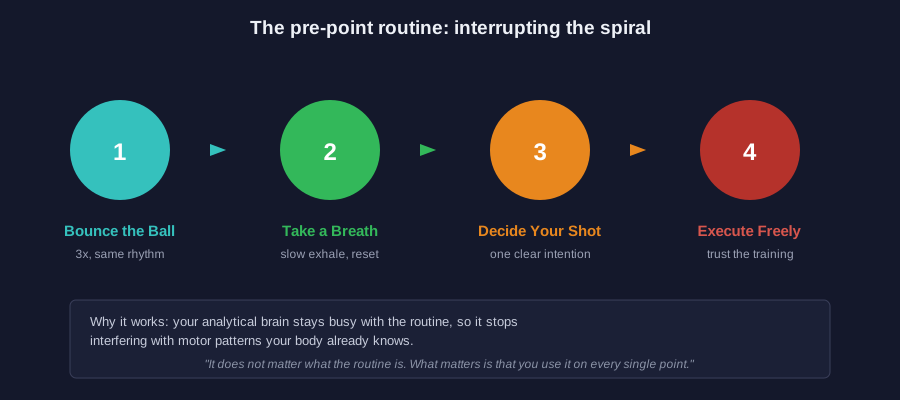
The term routine understates what is happening physiologically. What you are really doing is triggering a state shift. Specifically, you are trying to move from reactive mode, where your amygdala is running the show and your prefrontal cortex is offline, back to executive mode, where you can actually make good decisions and execute trained movements.
Your autonomic nervous system has two settings that matter here. Sympathetic activation is the fight-or-flight response: fast heart rate, shallow breathing, tunnel vision, muscles tense, and working memory narrowed. Parasympathetic activation is the rest-and-recover state: slower heart rate, deeper breathing, broader attention, muscles relaxed, working memory open.
At 9-9 in the fifth, your sympathetic system is running hard. That is not entirely bad. Some arousal improves performance. The Yerkes-Dodson law, which every serious sports coach should understand, describes this as an inverted U: performance climbs as arousal increases, peaks at an optimal level, then crashes when arousal gets too high.
The problem most competitive players have is that by the late stages of a tight match, their arousal has passed its peak. They are not energized. They are flooded. And a pre-serve routine is the fastest tool available for bringing that arousal back down a level before the next point.
What Is the 7-Step Pre-Serve Routine Mental Framework?
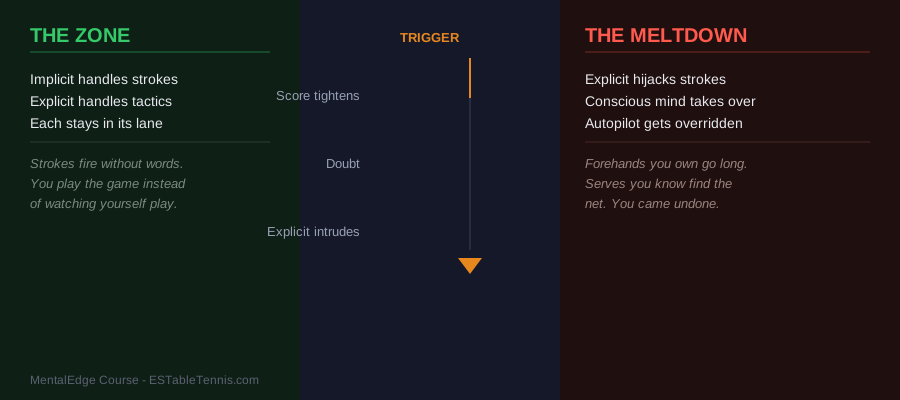
What follows is not one universal routine you must copy exactly. It is a framework of seven components, each addressing a specific piece of the mental state problem. Some players need all seven. Some need five. The point is to build something deliberate and repeatable, not to borrow someone else’s habits wholesale.
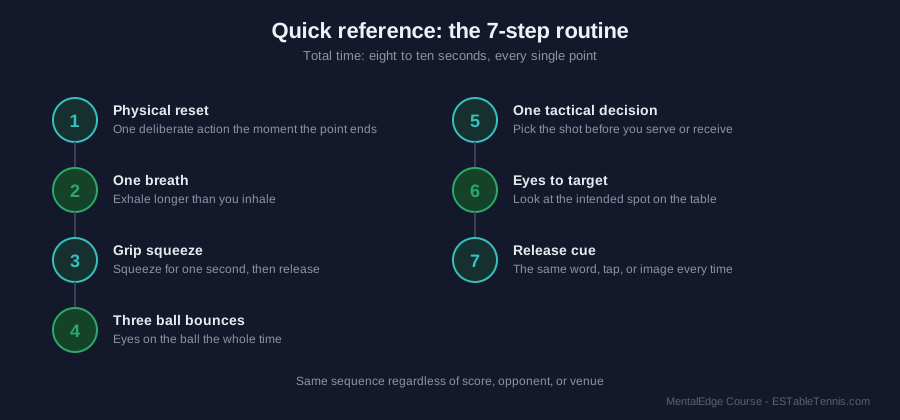
Step 1: The Physical Reset (Immediate, 1 Second)
The moment a point ends, do something physical and deliberate. Not reactive. Not a fist pump if you won, not a head drop if you lost. Something chosen.
A lot of players I work with use a single step back from the table. Others tap the edge of the table once. Others turn and look at the back wall for one second. The content does not matter much. What matters is that it is the same action every time, and it is yours. That consistency is what makes it a signal to your nervous system that a transition is happening.
Think of it as closing a tab. The previous point is a tab you are closing. The physical reset is the click.
Step 2: The Breath (2-3 Seconds)
Take one slow breath. Not two. Not a breathing exercise. One breath, and make the exhale longer than the inhale.
The physiological reason this works is that your exhale activates the vagus nerve, which is the main highway of your parasympathetic nervous system. A longer exhale than inhale signals to your body that it is safe to slow down. A four-count inhale and a six-count exhale is the pattern I recommend, because it fits neatly into the inter-point window without looking strange to an opponent watching you.
This single step alone, done consistently, has measurable effects on heart rate variability, which is one of the cleaner markers of nervous system readiness that sports science has given us. The ITTF does not regulate what you do between points, but physiology does. Use the breath.
Step 3: The Grip Check (1 Second)
Under pressure, your grip tightens. Always. This is not a character flaw. It is a biological response. Muscles brace when the brain perceives a threat.
The problem with a tight grip is not just that your shots suffer, though they do, as I covered in the post on how to grip a ping pong paddle correctly. The problem is what a tight grip communicates back to your brain. Tension in the periphery feeds anxiety at the center. Your body is talking to your brain as much as your brain is talking to your body.
During your pre-serve routine, squeeze your paddle deliberately for one second, then release to your natural resting grip. The deliberate squeeze followed by release activates proprioceptive awareness and often drops grip tension lower than it was before you squeezed. You are using the nervous system’s own reset mechanism.
Step 4: Bounce the Ball (2-3 Times)
This is where most players place their routine, and where most players stop, which is why it does not work for them. Bouncing the ball a few times before serving is almost universal in table tennis. The difference between doing it habitually and doing it as part of a genuine mental routine is intention.
Each bounce is a focus anchor. Your eyes track the ball. Your body stays still. The rhythmic motion is slightly hypnotic, which is exactly what you want. You are occupying the attentional parts of your brain with a simple, non-threatening task so that the catastrophizing parts have less bandwidth.
Three bounces are common. Some players use two. The number is less important than the consistency and the deliberate attention you bring to it.
Step 5: The Tactical Decision (1-2 Seconds)
Before you serve, decide what you are doing. Not broadly. Not just trying to play well. Specifically. Short backspin to the forehand, watch for the flick. Or fast topspin to the elbow, followed by a forehand.
Research in sport psychology consistently shows that players who enter each point with a specific intention, even a simple one, perform more consistently than players who react to the situation without a plan. The act of making a micro-decision moves cognitive function back into the prefrontal cortex, which is exactly where you want it before executing trained movement patterns.
This step is also where the mental and equipment dimensions connect. If you are not confident in your serve variation because your rubber is inconsistent or worn out, you cannot make a clean tactical decision here. Uncertainty about equipment creates decision paralysis at exactly this moment. Which is one reason why competitive players who say their mental game is falling apart often discover, on closer examination, that their equipment choices are eroding their confidence from underneath.
Step 6: The Gaze (1 Second)
Look at the table, not at your opponent. Specifically, look at where you intend to place your serve. This sounds small. It is not.
Where your eyes go before a movement, your nervous system follows. Athletes in almost every precision sport have been studied on this. Pre-movement gaze toward the intended target improves both accuracy and execution speed. You are pre-loading the motor program before it runs.
Looking at your opponent at this moment, by contrast, triggers a social threat response. You read their body language, their expression, their positioning. Your brain starts modeling their likely response instead of committing cleanly to your own action. That split attention is the enemy of confident execution.
Step 7: The Release Cue (Immediate)
The final element is a personal internal cue that signals the transition from preparation to action. Some players use the words: go, now, clear. Some use a physical cue: a foot tap, a small exhale, a nod. Some use an image: the ball landing exactly where they intend.
The specific cue matters less than having one and using it every time. Its function is to terminate the preparation state and initiate the execution state. Without it, preparation bleeds into hesitation. The rally starts, but your mental machinery is still in setup mode.
Every high-level athlete in every precision sport uses some version of this mechanism. It is not mysticism. It is applied neuroscience with a very simple interface.
How Long Should a Pre-Serve Routine Take?
The full routine takes about eight to ten seconds, which fits inside the roughly ten-second window the rules allow between points. The full routine I have described runs about eight to ten seconds if you do every step. In practice, the rules of table tennis give you roughly ten seconds between points before you are expected to serve. That is a tight window, and you should not exceed it.
The ITTF regulations allow brief delays between points, but consistent slow play can earn a warning. More practically, a routine longer than ten seconds tends to defeat its own purpose. The goal is a quick reset, not an extended meditation session. If your routine has expanded to fifteen seconds, you are probably overthinking it, which is the precise problem the routine is supposed to solve.
For players just starting to build a routine, I recommend beginning with steps 2, 3, and 5 only. Breath, grip check, tactical decision. These three, done deliberately, will produce a noticeable improvement in inter-point composure. Once they become automatic, add the others.
How Should Your Routine Change When You’re Receiving, Not Serving?
As a receiver you can’t control the timing or bounce the ball, so run a compressed version instead: physical cue, breath, grip check, and a tactical guess about the incoming serve. The serving routine solves one-half of the inter-point problem. The receiving side is harder because you do not control the timing.
When your opponent is about to serve, you have roughly the same ten-second window, but you cannot fill it by bouncing the ball. What you can do is run a compressed version of your reset: physical cue, breath, grip check, tactical decision about where you expect to return.
The tactical decision as a receiver is a loser. You are reading your opponent’s position and making a probabilistic guess about the likely serve. Short serve likely, I will be ready to push or flick. That is enough. You are not trying to solve the point before it starts. You are just giving your brain a task that keeps it out of the catastrophizing loop.
The players who have the most trouble with receiving, in my experience, are the ones whose minds go completely blank while waiting. They describe feeling passive, reactive, and behind. A pre-receive protocol does not eliminate that feeling, but it reduces it significantly. The brain works better when it has a job.
What Mistakes Do Players Make With Pre-Serve Routines?
After watching players attempt to build these routines over many years, I have noticed a consistent set of errors.
Performing the Routine Without Believing in It
A routine executed as theater does nothing. If you are bouncing the ball three times while internally screaming at yourself about the last error, you have the motions without the mechanism. The routine works by directing attention. If your attention is somewhere else, you are just bouncing a ball.
The fix is to commit to one specific element of the routine with full attention, even if the rest is going through the motions. Usually, the breath is the best anchor for this, because it is the most physiologically direct.
Abandoning the Routine When the Score Is Close
This is the most common failure mode. Players use their routine comfortably when the score is even. The moment it reaches 8-8 in the fifth, the routine disappears. They rush to the next point, which is the worst possible response to a high-pressure moment.
If you find yourself trying to come back from a deficit, the pre-serve routine is one of your primary tools for staying in the match mentally, a point I covered in the post on how to come back from losing a big lead in table tennis. Abandoning it when you need it most is the equivalent of dropping your fire extinguisher because there is a fire.
Using Someone Else’s Routine
I have seen players copy the exact pre-serve routine of Ma Long or Fan Zhendong in extraordinary detail. Same number of bounces, same paddle tap, same ball toss height. It almost never translates, because the routine works through personal conditioning, not through the magic properties of specific movements.
The elite player’s routine is a deeply conditioned neural anchor built over thousands of repetitions. Copying the surface behavior without the years of conditioning is like wearing a surgeon’s coat and expecting to perform surgery. The cue only works if your nervous system has been trained to respond to it.
Varying the Routine Based on Outcomes
Some players add an extra step when they lose a point, trying to compensate mentally for the error. They bounce the ball four times instead of three, or hold their breath longer. This is superstitious thinking, and it undermines the entire function of the routine.
The routine must be the same regardless of the previous point. That consistency is what makes it a reliable reset. The moment you start adjusting it based on outcomes, you have turned it back into reactive behavior, which is exactly what it was designed to replace.
How Does Equipment Affect Your Pre-Serve Routine?
Equipment you don’t fully trust undermines every step of the routine. You can’t make a clean tactical decision, you grip tighter without knowing why, and the release cue has nothing conditioned to release into. There is a version of this conversation that ignores equipment entirely, and it is less honest than it should be.
Your pre-serve routine includes a deliberate grip check. It includes a tactical decision about your serve. It depends on confidence in your execution. All three of those elements are compromised by equipment that you do not fully trust.
A player using rubbers that behave inconsistently cannot make a clean tactical decision in step five. They know from experience that the same motion does not produce the same result every time. A player whose rubber is too slow for their style will grip tighter in step three without understanding why. A player who borrowed a paddle for the tournament does not have the conditioned relationship with the equipment that makes the release cue in step seven actually release anything.
I am not saying the right rubber wins matches by itself. I am saying that equipment mismatches introduce a background noise into every pre-serve routine that prevents the routine from working at full effectiveness. The mental game and the equipment game are not separate categories. They are the same conversation. If you want help finding equipment that matches your style and stops creating that background noise, the PingPath tool gives you personalized rubber recommendations based on how you actually play.
How Do You Train a Pre-Serve Routine Into Your Body?
Run the routine on every single point in practice, without exception. About three weeks of deliberate use is enough to notice it working under mild pressure, and eight to twelve weeks for full conditioning. A pre-serve routine is not something you can implement cold in a tournament. It must be trained, specifically and deliberately, in practice sessions before it becomes available under pressure.
The way to train it is simple, though it requires a discipline that most players do not bring to practice. Every single point you play in training, even in casual drills, you run the routine before serving. Without exception. If you are playing multiball and the feeder is waiting, you still take your breath, check your grip, and make your tactical decision. The routine has to become so automatic that skipping it feels wrong.
This is harder than it sounds because practice has a relaxed rhythm that discourages deliberate inter-point behavior. But this is also why so many players use a great routine in practice and abandon it in matches. They trained for the shots in practice. They never trained the mental routine in practice. So when the tournament arrives, the shots are ready, and the routine is not.
In my experience, about three weeks of consistent deliberate use in training is enough to start noticing the routine functioning under mild match pressure. Full conditioning, where the routine is reliable under high-stakes pressure, takes closer to eight to twelve weeks. That timeline is not a discouragement. It is just the honest answer about how long behavioral conditioning actually takes.
The research on this is consistent across sports. A study published in the Journal of Sport and Exercise Psychology found that pre-performance routines significantly improved consistency in fine motor sports when practiced deliberately rather than habitually. The distinction matters: deliberate practice means you are consciously running the routine and noticing each step. Habitual practice means you are going through the motions. Only the deliberate version builds the neural conditioning you need under pressure.
What’s a Quick Reference for the 7-Step Routine?
For easy recall during practice or before a match, here is the full sequence:
Every coach knows that the player who wins tight matches is not always the most technically gifted one in the draw. It is usually the one who manages the space between points better than everyone else. That space is where this routine lives. That space is also, it turns out, where most matches are actually decided.
If you want to go deeper on the mental side of your game, the MentalEdge Course covers pre-serve routines alongside the full range of competition psychology tools I use with competitive players. You can also start with the free ebook, How to Remain Calm When It’s Crunch Time and Win More Matches, which gives you the core framework before you commit to the full course.
Frequently Asked Questions
What should I do between points in table tennis?
Run the same short, deliberate routine every time: a physical reset, one slow breath with a longer exhale than inhale, a grip check, and a specific tactical decision for the next point.
How long should my pre-serve routine be?
About eight to ten seconds. Longer than ten starts working against you, since ITTF rules expect play to continue without excessive delay.
Why do I forget my routine when the score gets close?
Pressure makes players rush instead of slow down, which is the opposite of what the nervous system needs. The routine is most valuable exactly when it feels hardest to keep using it.
Can I just copy a professional player’s pre-serve routine?
Not effectively. An elite player’s routine works because of years of conditioning behind it, not the specific movements themselves. Copying the surface behavior without the conditioning doesn’t trigger the same response.
How long does it take to build a reliable pre-serve routine?
Around three weeks of deliberate practice before it starts holding up under mild match pressure, and eight to twelve weeks before it is reliable under real competitive stakes.
Leave a Reply