How do you improve table tennis footwork?
Footwork is the least visible skill in the sport to an untrained eye, and one of the most decisive to a trained one: nearly every technical stroke flaw a coach diagnoses eventually traces back to a player arriving at the ball late or off-balance, rather than the swing itself being fundamentally broken.
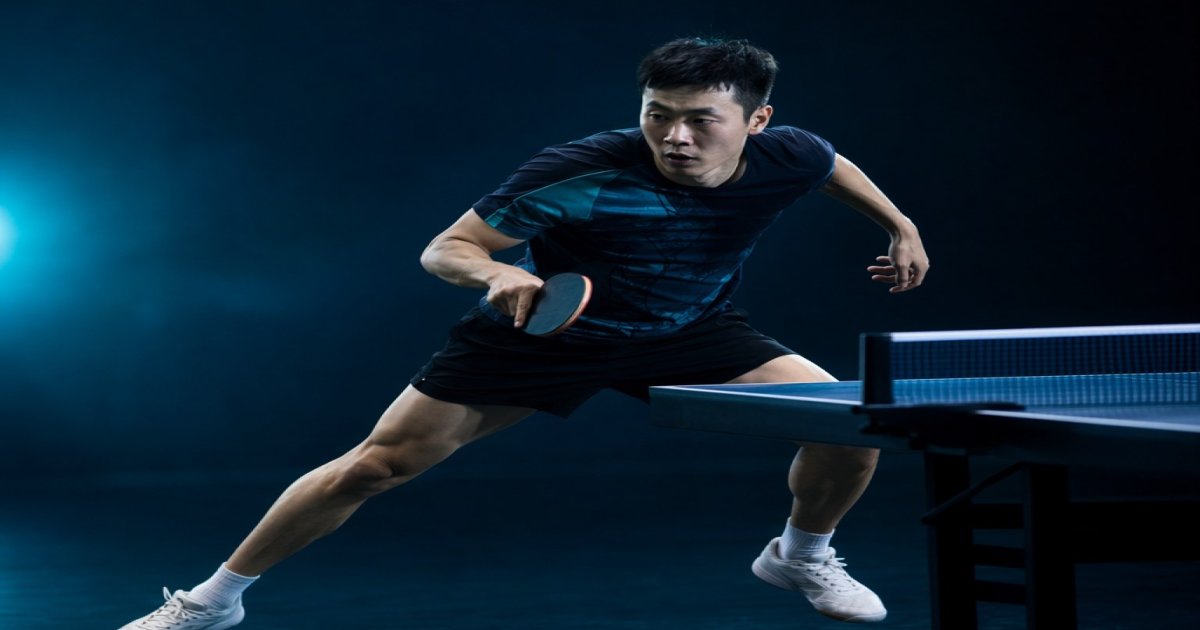
Use small, quick adjustment steps rather than large lunges, stay on the balls of your feet in a ready position, and move to get balanced and set before swinging rather than reaching for the ball mid-stroke. The side step and the crossover step are the two fundamental movement patterns worth drilling specifically and repeatedly.
Why does footwork matter more than most players initially assume?
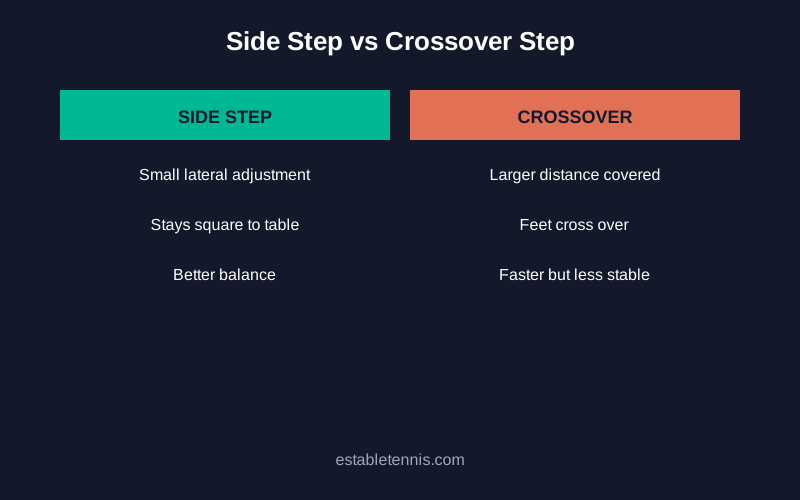
What’s the difference between a side step and a crossover step?
A side step is a small, lateral adjustment used for shorter distances, keeping the body relatively square to the table throughout the movement. A crossover step, used for covering larger distances quickly, involves one foot crossing in front of or behind the other, sacrificing some balance for speed and reach. Knowing when to use each, rather than always defaulting to one pattern, is part of genuine footwork mastery.Why do beginners instinctively favor large, lunging steps over small, controlled ones?
Because a large step feels more decisive and covers ground faster in the moment, even though it sacrifices balance and recovery speed for the shot that follows. Small, quick adjustment steps keep a player’s weight centered and ready to move immediately after the current shot, while a large lunge often leaves a player recovering their balance well after the ball has already been struck, limiting their readiness for whatever comes next.How does the ready position affect the quality of footwork before a shot even begins?
A stable, balanced ready position (knees slightly bent, weight on the balls of the feet, not flat-footed) is the starting point every effective footwork pattern builds from. A player who returns to a poor, flat-footed ready position between shots undermines even technically correct footwork patterns, since there’s no stable launching point to move from quickly when the next ball arrives.What’s a good drill specifically for building footwork speed and consistency?
Multiball footwork drills, where a coach or partner feeds balls to alternating wide positions, force repeated practice of the side step and crossover step patterns without the added complexity of also managing stroke mechanics against unpredictable rally conditions. This isolated repetition, covered in more depth in our guide on multiball training, builds footwork as its own dedicated skill rather than hoping it improves as an incidental byproduct of general match play.How does fatigue affect footwork quality during a long match?
Footwork is often the first thing to deteriorate as physical fatigue accumulates across a long match, since it demands continuous, repeated explosive movement in a way that stroke mechanics alone don’t require to the same degree. A player whose footwork noticeably slows in the third or fourth game of a demanding match, even if their swing mechanics remain technically sound, is experiencing a specific, common form of match fatigue that targeted conditioning can meaningfully address.Does footwork technique differ between offensive and defensive playing styles?
Yes. An offensive player’s footwork often emphasizes explosive, forward-committed movement to close distance and attack, while a defensive player’s footwork prioritizes lateral coverage and controlled recovery, since their game depends more on retrieving and redirecting an opponent’s shots than initiating aggressive attacks themselves.How does mental focus affect footwork, separate from pure physical conditioning?
Footwork often breaks down under pressure before stroke technique does, since anticipation and early movement depend on a calm, focused read of the developing point: anxiety and rushed thinking tend to produce late, reactive footwork rather than the early, anticipatory movement good footwork actually requires. This mental component is frequently overlooked in favor of treating footwork purely as a physical, conditioning-based skill.How does footwork connect to a player’s confidence in specific shots?
A player who consistently arrives late or off-balance for a particular shot type (say, a wide forehand) often develops a specific hesitation around that shot that looks like a technical or mental weakness but actually traces back entirely to footwork. Fixing the underlying footwork gap frequently resolves what appeared to be a stroke or confidence problem, since the player was never actually failing to execute the shot correctly; they simply never arrived in position to execute it properly in the first place.What’s the role of anticipation in effective footwork, beyond pure physical speed?
Reading an opponent’s shot early (their backswing, contact point, and body positioning) gives a player a meaningful head start on footwork before the ball has even crossed the net. This anticipatory reading, built through match experience and pattern recognition, often matters more than raw physical speed, since a slower player who anticipates well frequently outpositions a faster player who’s purely reacting after the fact.How does court coverage differ between singles and doubles footwork?
In singles, a player covers the entire table alone, requiring footwork patterns that account for the full width of possible shot placement. In doubles, footwork must also account for a partner’s positioning and the alternating shot requirement, often demanding faster, more compact adjustments within a smaller effective coverage zone, since both players share responsibility for the table rather than one player covering it entirely alone.Does equipment weight affect footwork speed and recovery?
Indirectly, yes, mirroring the broader equipment-fit thesis covered in our guide on table tennis blade weight. A heavier racket setup can slightly slow a player’s overall movement rhythm, since more time and effort goes into decelerating and redirecting the racket between shots, which indirectly affects how quickly a player can reset their footwork for the next ball.What’s a common footwork mistake even experienced players make?
Standing too upright between shots rather than maintaining a consistently low, ready stance throughout a rally. Fatigue and lapses in focus both contribute to this drift toward an upright, flat-footed position, and even experienced players benefit from periodic conscious reminders to reset and maintain a lower, more athletic ready stance rather than assuming good footwork habits are permanent once initially learned.How should footwork training be structured for a genuine beginner versus an intermediate player?
Beginners typically benefit from isolated, slow-paced footwork drills without the added complexity of full stroke execution, building the basic movement patterns first. Intermediate players benefit more from combined drills that integrate footwork with actual stroke technique under increasingly realistic, varied conditions, since their basic movement patterns are usually already established and need testing under more genuine match-like pressure instead.How does footwork training connect to injury prevention?
Poor footwork, particularly excessive reliance on large lunges and awkward, off-balance recoveries, places repetitive strain on the knees and ankles in ways that efficient, controlled footwork patterns avoid. Players who develop chronic knee or ankle discomfort from regular play often trace the underlying cause back to footwork habits rather than the sport itself being inherently hard on those joints: the same repetitive motion, executed with better technique, considerably reduces cumulative physical strain over a playing career.What’s the relationship between footwork and a player’s overall court awareness?
Good footwork isn’t purely reactive to the ball currently in play: it includes a broader spatial awareness of the entire table and the player’s own position relative to it, which lets a player make small positional corrections between points and even within a rally that purely reactive footwork misses. This awareness develops gradually through match experience, and it’s part of why footwork continues improving well into a player’s advanced years of competition, long after the basic step patterns themselves were first learned.How does footwork interact with serve and return specifically?
A server has the luxury of initiating footwork from a completely stable, self-chosen position, while a returner must establish readiness before knowing exactly where the serve will land, covered in more depth in our guide on how to return serve. This asymmetry means return-specific footwork discipline (staying balanced and ready rather than guessing and pre-committing to a direction) deserves deliberate practice attention separate from footwork developed purely through rally-based drilling.Does footwork ability decline with age, and how should older players adjust their training?
Reaction speed and explosive movement generally decline somewhat with age, but anticipation and positional efficiency (arriving early through better reading rather than raw speed) can genuinely improve well into later years of competitive play, partially offsetting the physical decline. Older players often benefit from shifting footwork training emphasis toward anticipatory reading and positional efficiency rather than pure speed and explosiveness, adapting their training focus to their actual physical profile rather than continuing to chase the same training approach that suited them a decade earlier.What’s a realistic timeline for meaningfully improving footwork through dedicated practice?
Basic pattern correction, such as replacing large lunges with smaller controlled steps, can show visible improvement within a few weeks of focused, deliberate practice. Genuinely fluid, automatic footwork that holds up under full match pressure typically takes considerably longer, often six months to a year of consistent, dedicated drilling, since footwork patterns need to become unconscious and automatic rather than something a player is still actively thinking about mid-rally.How does watching your own footwork on video reveal problems that feel invisible during actual play?
Similar to stroke technique, footwork habits often feel correct in the moment despite looking noticeably different on video review: a player who believes they’re taking small, controlled steps may discover through footage that they’re actually lunging far more than they realized. This gap between felt experience and observed reality is one of the most common reasons footwork problems persist for years without correction, since the player genuinely isn’t aware anything is wrong until an outside perspective, whether a coach or a camera, reveals it.Should footwork drills be practiced with or without an opponent present?
Both serve a purpose at different stages. Solo shadow footwork, practicing movement patterns without a ball or opponent, builds the raw movement pattern in isolation. Multiball drills with a feeder add the complexity of reacting to an actual incoming ball. Live match play adds the final layer of genuine unpredictability and pressure. Skipping any one of these stages, particularly jumping straight from isolated shadow practice to live match play, often leaves gaps that only surface under real competitive conditions. According to ITTF equipment regulations, table and court dimensions are precisely standardized, meaning footwork demands stay consistent from a local club night in Point Fortin to an Olympic final: the movement patterns that work at one level transfer directly to the next, unlike some sports where playing surface variation changes the underlying skill demands entirely. An elastic band around the ankles is a strange, almost comedic teaching tool, and it worked precisely because it removed the option of compensating with a large, familiar lunge. Sometimes the fastest way to fix a year-old habit isn’t more explanation: it’s simply making the wrong option physically unavailable until the right one becomes automatic instead. Most players never get their footwork examined this closely, because it’s the least glamorous part of the sport to work on and the easiest to assume is already fine. It rarely is, and the gap between assuming and actually checking is exactly where a season of frustrated plateau usually lives. Small steps look unimpressive next to a big, committed lunge. They also happen to be the difference between arriving balanced and arriving late, which is a trade every serious player eventually learns to make without needing convincing twice. Balance first. Speed second. Almost every effective footwork correction in this sport follows that same simple order. Film yourself if you can. What you feel yourself doing and what the camera actually shows are, more often than not, two different stories entirely. A year-old habit rarely announces itself. It just quietly caps a game that could otherwise be a full level higher. Check yours before you assume it’s fine. It probably isn’t, and that’s a completely normal, fixable thing to discover. Simple as that. Small steps, taken consistently, quietly outperform every big lunge you’ve ever been tempted to take instead. End of story. Now go tape your own feet loosely together and feel how differently the ball starts arriving. Or just skip the elastic band and focus on small steps deliberately instead. Either way works. Worth the effort, every time.Quick Recap: How to Improve Table Tennis Footwork
Improving table tennis footwork comes down to small, controlled steps over large lunges, a stable ready position between shots, and the anticipatory reading that gets a player moving before the ball even arrives. The elastic band around that player’s feet in Point Fortin looked absurd from the outside. It fixed, in a single session, what a full year of stroke-focused coaching had never once correctly diagnosed.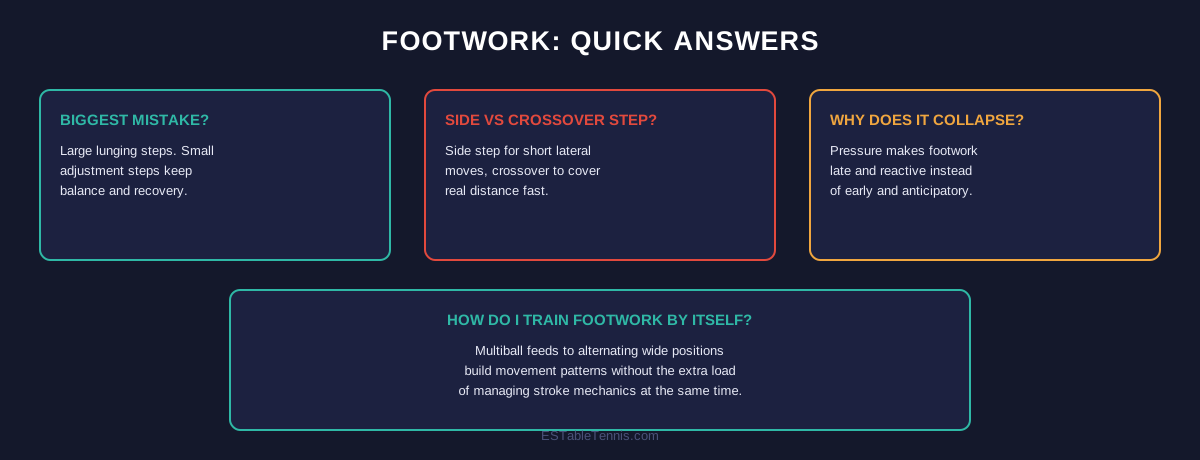
Frequently Asked Questions
What’s the biggest footwork mistake beginners make?
Favoring large, lunging steps over small, controlled adjustment steps, which sacrifices balance and recovery speed for the shot that follows.
What’s the difference between a side step and a crossover step?
A side step is a small lateral adjustment for shorter distances; a crossover step covers larger distances quickly by crossing one foot in front of or behind the other.
Why does footwork often break down under match pressure?
Anxiety and rushed thinking tend to produce late, reactive footwork rather than the early, anticipatory movement good footwork actually requires.
Does footwork matter more than stroke technique?
They’re inseparable. A technically correct stroke executed from a rushed, unbalanced position still produces an inconsistent result, since footwork is the foundation stroke mechanics depend on.
How can I practice footwork specifically, separate from stroke technique?
Multiball drills feeding balls to alternating wide positions build footwork patterns in isolation, without the added complexity of managing stroke mechanics simultaneously.
Leave a Reply