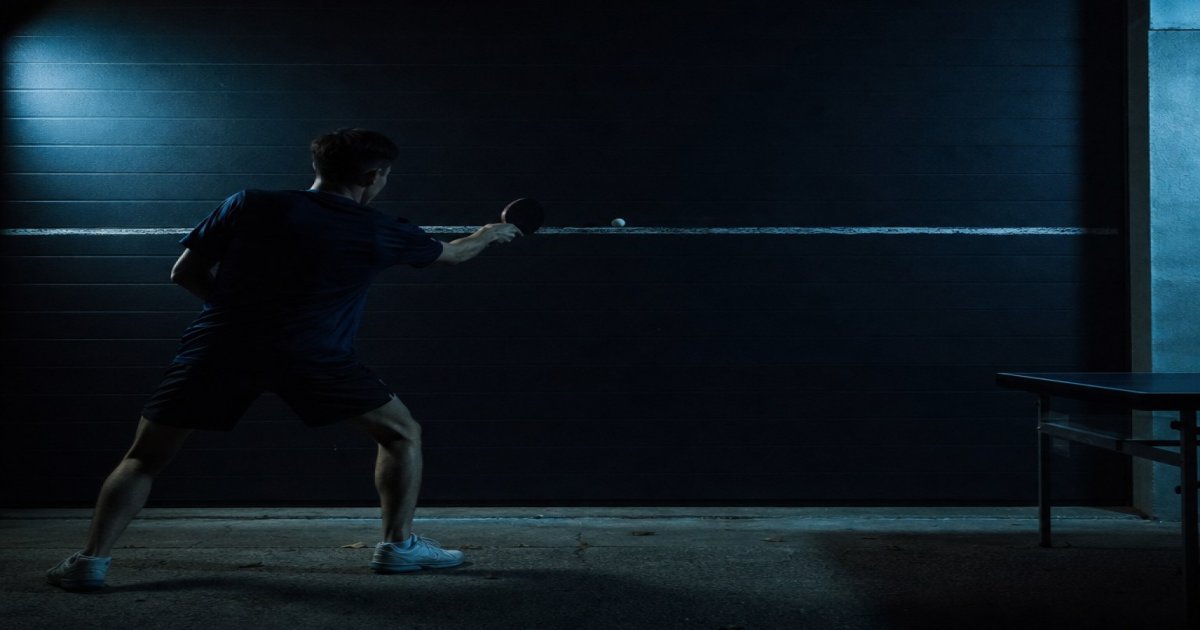
Everton spent his first full year in the sport without a single regular training partner, practicing against a wall in a garage in Diego Martin with a chalk line marking net height, and told nobody at his club for months, half-embarrassed that his forehand had been built entirely in isolation. That year taught him more about how to practice table tennis alone than any guide he ever found afterward.
It held up fine against real opponents. Better than fine, actually: the wall never once let him get away with a lazy shot the way a forgiving practice partner sometimes does.
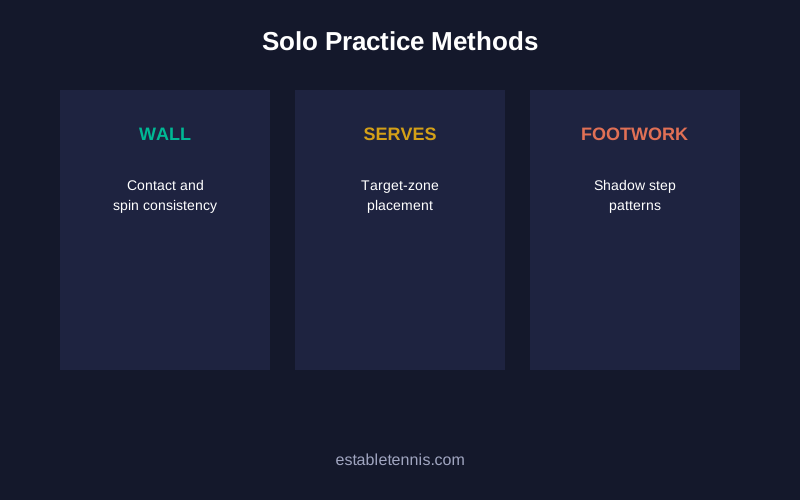
Wall practice, shadow swings, serve drilling, and footwork patterns can all be practiced solo effectively.
A wall returns every shot at a consistent pace, letting you focus purely on contact, spin, and placement without needing a partner, while serves and footwork require no ball-return dependency at all.
Solo practice gets treated as a poor substitute for real training, when in reality it builds specific skills a live partner sometimes can’t isolate nearly as cleanly.
How does wall practice actually work as a training method?
A flat wall returns the ball at a consistent, predictable pace and angle, letting a player repeat the same stroke pattern dozens of times without needing a partner to feed or return anything.
This consistency is genuinely valuable for building contact consistency and basic spin generation, covered in our guide on how to spin in table tennis, since the wall never varies its return the way a live opponent inevitably does.
What’s the best way to practice serves without a partner?
Serve practice, covered in our guide on how to serve in table tennis, is inherently solo-friendly, since a server controls the entire motion without needing a partner’s cooperation or reaction.
Setting up target zones on the table and serving repeatedly into them builds placement precision that translates directly into match play.
Can footwork genuinely improve through solo practice?
Yes, significantly. Shadow footwork drills, covered in our guide on how to improve table tennis footwork, practice the side step and crossover step patterns without needing a ball or partner at all, building the movement patterns that every stroke eventually depends on.
What are the actual limitations of solo practice compared to training with a partner?
Solo practice can’t replicate genuinely varied, unpredictable spin and placement the way a live opponent does, meaning spin-reading skills, covered in our guide on how to read spin in table tennis, develop more slowly through solo work alone.
Solo practice builds the raw mechanical foundation; live practice tests and refines it against real variability.
How much of a beginner’s early training can realistically happen solo?
A meaningful portion, particularly in the first few months: basic contact consistency against a wall, shadow footwork, and serve practice can all develop real foundational skill before a beginner even needs regular partner access.
This solo foundation makes early partner sessions considerably more productive once they do become available.
What equipment considerations matter for effective solo practice?
A forgiving, moderate racket, covered in our guide on table tennis equipment for beginners, matters just as much in solo practice as it does in partner training, since the same equipment-fit principles apply regardless of who or what is on the other side of the exchange.
How does mental focus differ between solo and partner practice?
Solo practice demands a specific kind of self-directed discipline, since there’s no partner’s presence or feedback providing external accountability for staying focused through repetitive drilling.
Players who practice alone effectively tend to develop strong internal discipline and self-assessment skills that carry over into how they handle pressure during actual competitive matches.
What’s a realistic solo practice routine for a dedicated player without regular partner access?
A rotation combining wall practice for stroke consistency, dedicated serve drilling into target zones, and shadow footwork patterns, ideally structured around the same focused, single-skill-per-session principle covered in our guide on table tennis drills.
This solo routine, sustained consistently, builds genuine, transferable skill even without a training partner in sight.
Why did solo practice actually work better than expected, in hindsight?
Because a wall offers zero forgiveness and zero variability: it returns exactly what you give it, at the exact pace and angle your own contact produced, with no partner’s own inconsistency masking a developing flaw.
Everton’s forehand, built entirely in that garage, had nowhere to hide a lazy contact point the way it might have against a similarly inconsistent beginner partner.
What’s the biggest mental hurdle players face when practicing entirely alone?
The absence of external accountability and feedback, which some players experience as isolating or even slightly embarrassing, the way Everton did for months before finally mentioning his garage sessions to anyone at his club.
Overcoming that self-consciousness, treating solo practice as a legitimate training method rather than something to hide, is often the real barrier rather than any technical limitation of the method itself.
How does solo practice actually compare once a player finally does get partner access?
Often surprisingly well, precisely because the fundamental consistency built through solo repetition transfers cleanly into partner drills and match play once real variability enters the picture.
Players who’ve built a solid solo foundation frequently progress faster once partner training begins, since the basic mechanical patterns don’t need to be built from scratch under the added pressure of a live opponent.
How does equipment maintenance fit into a solo practice routine, since there’s no partner to notice a mismatch?
Solo practice actually makes equipment awareness more important, not less, since there’s no partner’s feedback or shared observation to catch a developing issue, a player training entirely alone needs to be more deliberately attentive to whether their own rubber grip and blade feel are still supporting the shots they’re building, covered across our equipment guides on this site.
What’s a realistic weekly solo practice schedule for someone without consistent partner access?
Two or three dedicated sessions, each focused on a single element (one day purely on wall-based stroke consistency, one day on serve placement into target zones, one day on shadow footwork) mirrors the same focused, single-skill principle that makes partner-based drilling effective, adapted entirely to what’s achievable without another person present.
According to the ITTF equipment regulations, the same approved equipment standards apply whether a player trains alone against a wall or in a full competitive hall, meaning nothing about solo practice requires any different gear consideration than any other kind of training session.
That chalk line on the garage wall is still there, worn faint now, marking a net height Everton hasn’t needed to check in years.
He still walks past it sometimes and remembers exactly how uncertain that first solo year felt, and exactly how little that uncertainty ended up mattering once real matches started.
A wall never asks whether you feel ready for it. It just returns the ball, exactly as you sent it, and lets you decide what to do with that information yourself.
Find your own wall, garage or otherwise, and give it a full year before deciding it wasn’t enough.
Most players who eventually get good at this sport have some version of that year hidden in their history, whether they ever mention it to anyone at their club or not.
Nothing about it needs to stay hidden. It’s simply how a real foundation gets built when nobody else happens to be around yet.
Solo practice was never the compromise it feels like in the moment. Give it long enough and it becomes the foundation everything else quietly gets built on.
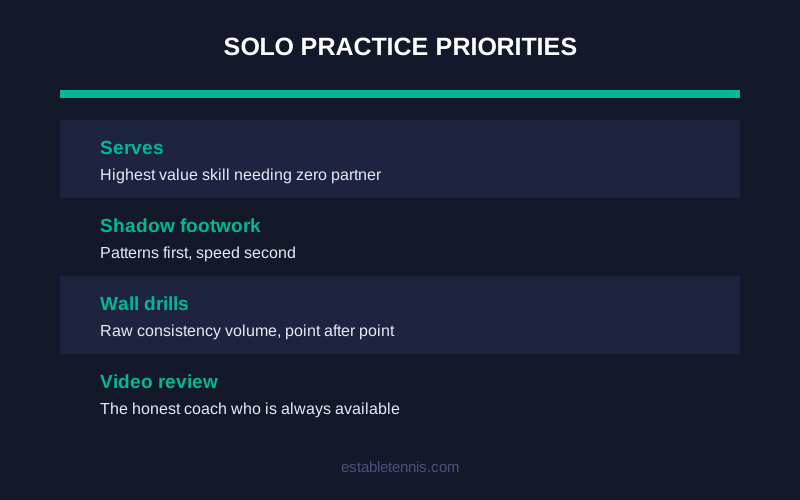
Quick Recap: How to Practice Table Tennis Alone
Solo practice (wall drills, serve repetition, shadow footwork) builds genuine, transferable skill that holds up once real partner training and match play eventually arrive.
Everton’s garage forehand, built alone against a chalk-lined wall for a full year, never once felt like a compromise once real opponents started facing it.
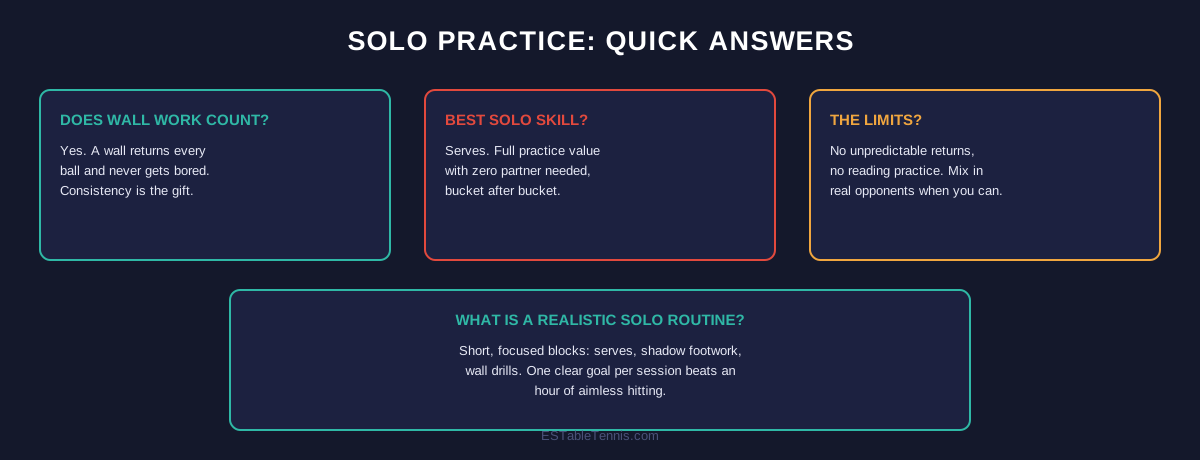
Frequently Asked Questions
Can you actually get better at table tennis without a training partner?
What’s the best solo drill for a genuine beginner?
Does solo practice have real limitations compared to partner training?
Should I be embarrassed about practicing alone?
He finally told his club about the garage sessions almost a year in, half-expecting to be laughed at. Nobody laughed. A few of them, quietly, started asking where they could find a wall of their own.
Want a free foundation to build your mental game alongside your solo technical practice? Download the free ebook on staying calm and winning more matches.
Leave a Reply