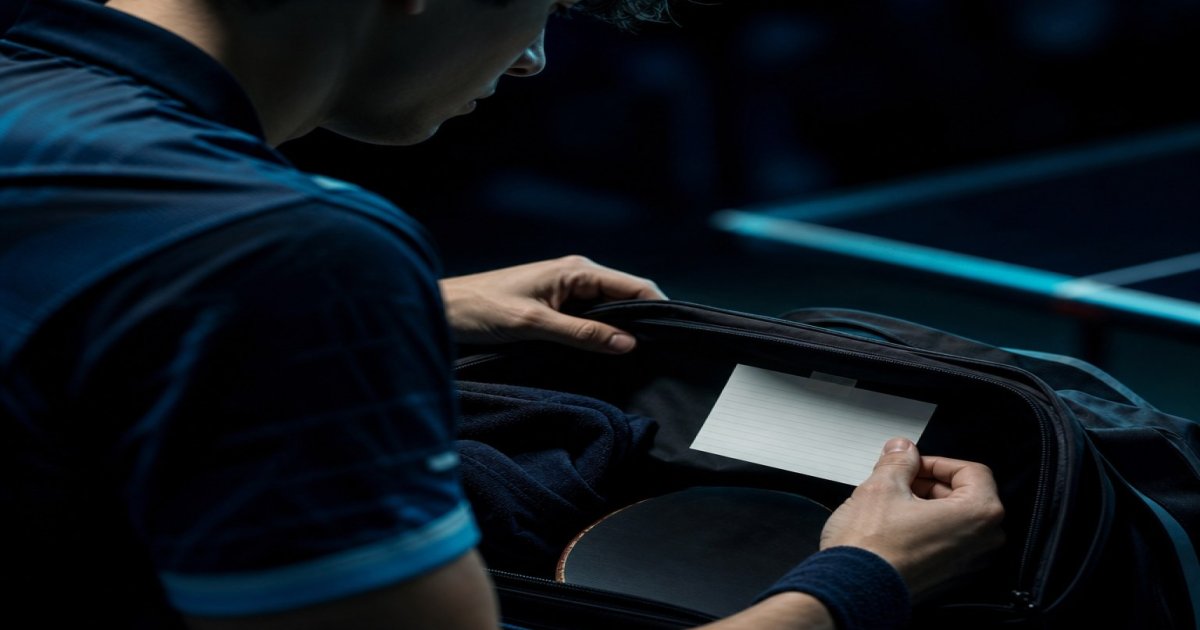
A regional-level player in Chaguanas kept a single index card taped inside his equipment bag for eleven years, listing exactly four things he checked before every serious match: footwork rhythm, first-ball aggression, breathing between points, and whether his rubber still gripped the way it should. That index card is the shortest honest answer to how to get better at ping pong ever written. Nothing about that list changed as he moved up through the ratings. What changed was how completely he trusted it.
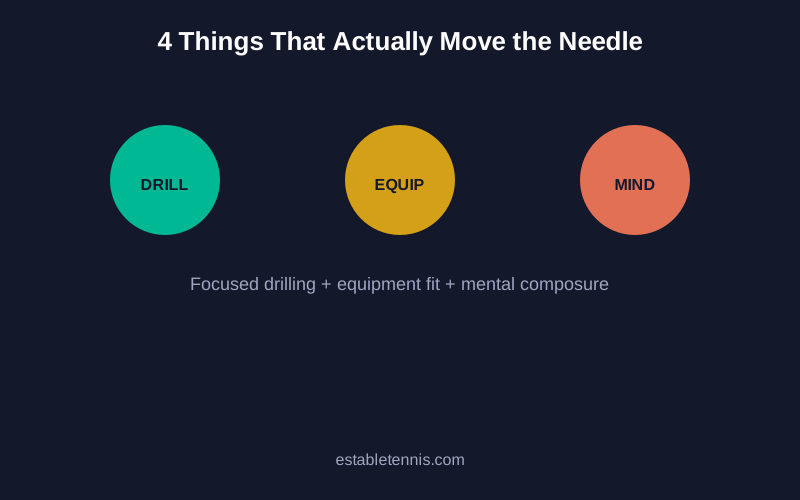
Improvement comes from structured, focused drilling on specific weaknesses rather than unstructured match play alone, combined with equipment properly matched to your developing style and deliberate attention to the mental composure that determines whether technique actually holds up under real pressure.
Getting better at this sport is rarely a single breakthrough moment. It’s an accumulation of small, correct decisions repeated often enough that they stop feeling like decisions at all.
What’s the most efficient way to structure improvement-focused practice?
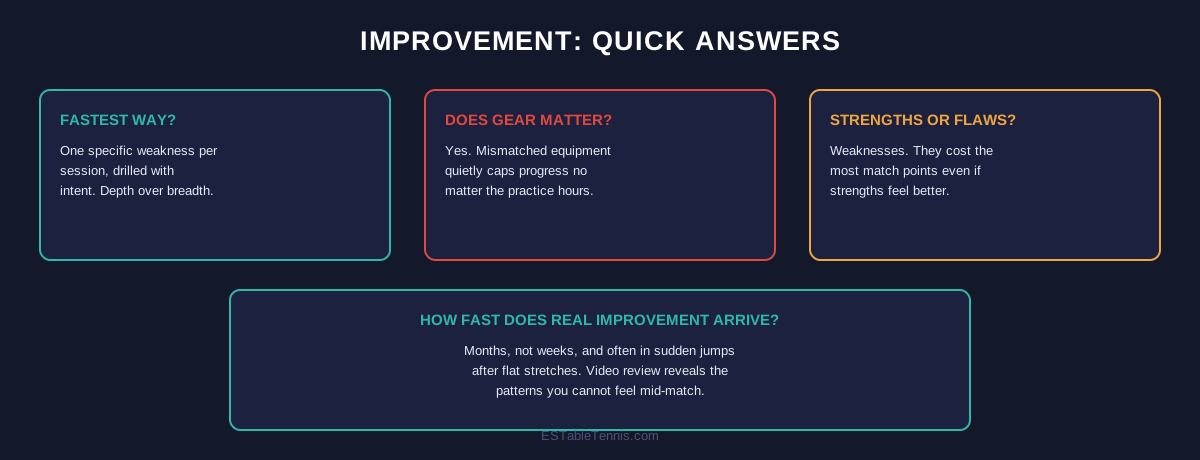
Around a single, specific weakness per session rather than trying to improve everything simultaneously, covered in depth in our guide on table tennis drills. A session dedicated purely to backhand consistency produces more measurable improvement than an unfocused session touching five different skills without deeply practicing any of them.
Does equipment actually matter for improvement, or is it purely about technique?
Both matter, and they’re more entangled than most players assume. A blade or rubber mismatched to a player’s actual swing speed and style, covered across our equipment guides, can quietly cap technical progress regardless of how much a player drills, since the equipment is actively working against corrections a coach is trying to build.
How important is spin development specifically for getting better?
Enormously: spin generation, covered in our guide on how to spin in table tennis, separates intermediate players from advanced ones more clearly than almost any other single mechanical factor. Players who plateau often haven’t fundamentally failed at technique; they’ve simply never dedicated isolated practice time to spin generation as its own skill.
What’s the role of multiball training in breaking through a plateau?
Multiball, covered in our guide on multiball training, compresses weeks of scattered repetitions into focused, high-volume sessions, which is often exactly what’s needed to break a plateau that unstructured practice alone hasn’t resolved. A player stuck at the same level for months often benefits more from a few dedicated multiball sessions than from continuing the same general practice routine indefinitely.
How does mental composure factor into actually getting better, not just playing well in practice?
Considerably more than most players account for. Technique that looks solid in relaxed practice frequently breaks down under real competitive pressure, and building genuine composure (covered across our mental game content) is what lets technical improvement actually transfer into match results rather than staying confined to a practice hall.
Why do some players improve faster than others with similar practice hours?
Quality and focus of practice matter more than raw hours logged. A player who drills with a clear, specific goal each session, honestly assesses what’s actually limiting their game, and periodically seeks outside coaching input tends to improve faster than a player who practices the same volume of hours without that same deliberate structure and honest self-assessment.
How does footwork improvement connect to overall skill development?
More directly than most players realize: footwork, covered in our guide on how to improve table tennis footwork, is the foundation every stroke depends on. A player whose technique seems to have plateaued often finds real, immediate improvement simply by addressing footwork gaps that were quietly undermining otherwise sound stroke mechanics.
What’s a realistic expectation for how quickly meaningful improvement happens?
Slower and less linear than most players hope, with genuine, lasting improvement typically measured in months rather than weeks, and often arriving in sudden jumps after long stretches that feel like no progress at all. Players who expect steady, predictable weekly improvement often quit right before a breakthrough that patience alone would have delivered.
How should a player decide what to work on first when multiple weaknesses exist?
Prioritize whatever’s currently costing the most points in actual matches, rather than whatever feels most enjoyable to practice. A player whose backhand consistently loses points should prioritize that over further refining an already-strong forehand, even though forehand practice might feel more immediately rewarding. The biggest gains come from addressing genuine weaknesses, not polishing existing strengths.
Does watching your own match footage actually help improvement?
Significantly, and it’s an underused tool among club-level players. Video review reveals patterns invisible in the moment (a recurring footwork gap, a contact point that drifts under pressure) that would be nearly impossible to consciously track while also focused on executing the next shot. Reviewing footage after a match, specifically looking for one recurring pattern rather than trying to critique everything at once, produces more useful, actionable insight.
How does serve development specifically accelerate overall improvement?
Every point in the sport begins with a serve, covered in our guide on how to serve in table tennis, meaning genuine serve mastery affects a larger share of total points than almost any other single shot. Players who neglect serve development in favor of rally shots are leaving free, controllable points on the table that a dedicated serve practice routine could capture instead.
What’s the value of playing against a wider variety of opponents?
Considerable, beyond what a single regular training partner provides. Facing different playing styles (pimples-out defenders, aggressive loopers, patient blockers) exposes gaps in a player’s game that repeated practice against the same one or two partners never would. Deliberately seeking varied competition, even informally, builds a broader, more adaptable skill set.
How does equipment reassessment fit into an improvement plan for an intermediate player?
Periodically, once real match feedback reveals what a developing style actually needs, not constantly, and not based purely on marketing or what a favorite professional uses. An intermediate player whose game has genuinely evolved toward more aggressive looping might benefit from revisiting blade weight, covered in our guide on table tennis blade weight, but this reassessment should follow real feedback rather than preceding it.
What’s a common trap players fall into when trying to improve quickly?
Chasing variety and new techniques constantly rather than committing to deep, repeated practice on a smaller set of fundamentals. Constantly switching focus between different drills and shots, always chasing the next new technique, produces shallower improvement than sustained, patient repetition on a narrower set of skills until they’re genuinely reliable.
How does a player know when they’ve genuinely plateaued versus just having a rough stretch?
A genuine plateau shows up as consistent, unchanging performance across many sessions and matches over an extended period, typically a month or more, rather than a single bad week that resolves on its own. Distinguishing between the two matters, since a true plateau usually calls for a deliberate change in practice approach, while a temporary rough patch often resolves simply by continuing the same solid routine without overreacting to short-term variance.
What’s the value of setting specific, measurable improvement goals rather than vague ones?
Specific goals (sustaining a rally of a given length, executing a particular serve consistently, winning a set percentage of points against a specific opponent) give practice sessions clear direction and honest feedback on whether improvement is actually happening. Vague goals like “get better overall” are nearly impossible to evaluate objectively and tend to produce unfocused practice that drifts without clear direction from session to session.
How does cross-training or general athletic conditioning contribute to table tennis improvement specifically?
Genuine footwork speed and match endurance depend partly on general physical conditioning beyond pure table tennis-specific practice: basic cardiovascular fitness and lower-body strength support the repetitive, explosive movement demands of extended matches and training sessions. Players who neglect general conditioning entirely sometimes find their technical improvement limited less by skill and more by simple physical fatigue during longer, more demanding sessions.
Does playing more matches automatically lead to improvement, or does match volume alone not guarantee progress?
Match volume alone doesn’t guarantee improvement without some accompanying reflection and adjustment: a player who plays constantly but never analyzes what’s actually happening in those matches, never identifies recurring patterns of loss, tends to plateau despite significant playing time. Deliberate reflection after matches, even briefly, turns raw playing volume into genuine, targeted improvement rather than simply repeating the same patterns indefinitely.
How important is finding a coach or mentor for meaningful, faster improvement?
Considerably valuable, though not strictly required for all improvement. A coach provides outside perspective on technical and tactical patterns a player often can’t see in themselves, accelerating the diagnostic process that self-directed practice alone handles more slowly and less reliably.
Players without regular coaching access can still improve meaningfully through disciplined self-directed practice, but periodic coaching input, even occasional, tends to catch blind spots faster than self-assessment alone.
What’s the relationship between confidence and actual skill improvement?
More intertwined than most players assume: genuine confidence, built through real, verified competence rather than false bravado, lets a player commit fully to shots and tactical decisions rather than hesitating at critical moments. Technical improvement without corresponding confidence often fails to translate into match results, since hesitation undermines even well-drilled technique under real pressure.
How does a player balance working on multiple skills simultaneously without diluting focus too much?
Most effective improvement plans rotate focus across a small number of priority areas over weeks or months, rather than trying to improve everything at once or fixating on a single skill indefinitely to the exclusion of everything else. A reasonable rotation might dedicate two to three weeks primarily to serve development, then shift primary focus to footwork, while maintaining baseline practice on already-established skills throughout.
Does improvement plateau permanently at some point, or can dedicated players keep improving indefinitely?
Meaningful improvement remains genuinely available to dedicated players well beyond what most assume is a natural ceiling, though the specific areas of improvement shift over time: early improvement often comes from basic technical consistency, while later improvement increasingly comes from tactical sophistication, mental composure under pressure, and fine technical refinement rather than large, obvious mechanical changes.
According to the ITTF equipment regulations, competitive standards stay identical at every level, meaning genuine improvement always transfers cleanly regardless of where a player currently sits: there’s no separate rulebook a player graduates into as they get better, just the same fixed target their skill keeps closing in on.
That index card never mentioned talent once, in eleven years. It listed exactly the same four checkable, controllable things every single time, because talent was never actually one of the variables that mattered.
Most players who plateau are looking for a missing technique, a secret drill, a piece of equipment that finally unlocks the next level. Rarely is any single one of those the actual answer. More often it’s simply a returned commitment to the boring fundamentals that got sidelined once the early excitement of the sport wore off.
Write your own version of that index card. Four things, no more, checked honestly before every serious session. It won’t feel like much at first. Eleven years later, it might be the only thing that ever mattered.
The improvement most players chase looks like a single dramatic breakthrough in their imagination. In reality it almost always looks like the same boring checklist, run honestly, for longer than felt reasonable to keep running it.
That’s rarely the answer anyone wants to hear when they’re stuck. It’s almost always the correct one anyway.
Four things, checked honestly, beat forty things chased half-heartedly, every single time this actually gets tested against real results on a real scoreboard.
Write yours down tonight. Tape it wherever you’ll actually see it before your next session, not somewhere it’ll quietly get forgotten within a week.
Eleven years is a long time to trust four simple lines on an index card. It’s also, by every honest account from every player who’s actually tried it, roughly how long it takes for a good checklist to stop needing to be read at all.
No shortcuts here, whatever the rest of the internet promises. Just the checklist, run for longer than you’d like.
Simple as that.
Talent gets all the credit in this sport and does almost none of the actual work. Consistency does the work, quietly, checklist in hand, session after session nobody bothers to film.
Believe that before you believe any promise of a shortcut, and the rest of this guide will make considerably more sense.
Nothing about it is glamorous. Everything about it works.
Test it yourself before deciding otherwise.
The scoreboard doesn’t care how the improvement happened, only that it did.
Neither should you, in the end.
Results talk. Everything else, eventually, goes quiet.
Let your own results do the same, eventually, once the checklist becomes second nature.
End of story.
Write it down. Tape it up. Check it before your next session.
Simple as that, really.
Every serious improvement story you’ll ever hear from this sport sounds exactly this unremarkable up close.
Yours will be too, and that’s exactly how you’ll know it’s real.
Go write the card.
Tape it up tonight.
Check it before the next session, then every session after that.
Eleven years from now, you might not need to read it either.
That’s the goal.
Quick Recap: How to Get Better at Ping Pong
Getting better at ping pong comes down to focused, honest practice on genuine weaknesses, equipment that supports rather than fights your developing technique, and the mental composure that lets practiced skill actually survive real competitive pressure. That index card in Chaguanas never needed updating for eleven years, because the four things on it were never about complexity: they were about consistency.
Frequently Asked Questions
What’s the fastest way to improve at ping pong?
Does equipment actually affect improvement speed?
How long does meaningful improvement typically take?
Should I focus on my weaknesses or strengths when practicing?
Does watching my own match footage actually help?
He retired that index card eventually, not because it stopped working, but because by then he’d stopped needing to read it at all. The four things on it had simply become how he played.
Curious whether your current equipment is helping or quietly capping your progress? PingPath gives you a fitted recommendation in under three minutes.
Leave a Reply