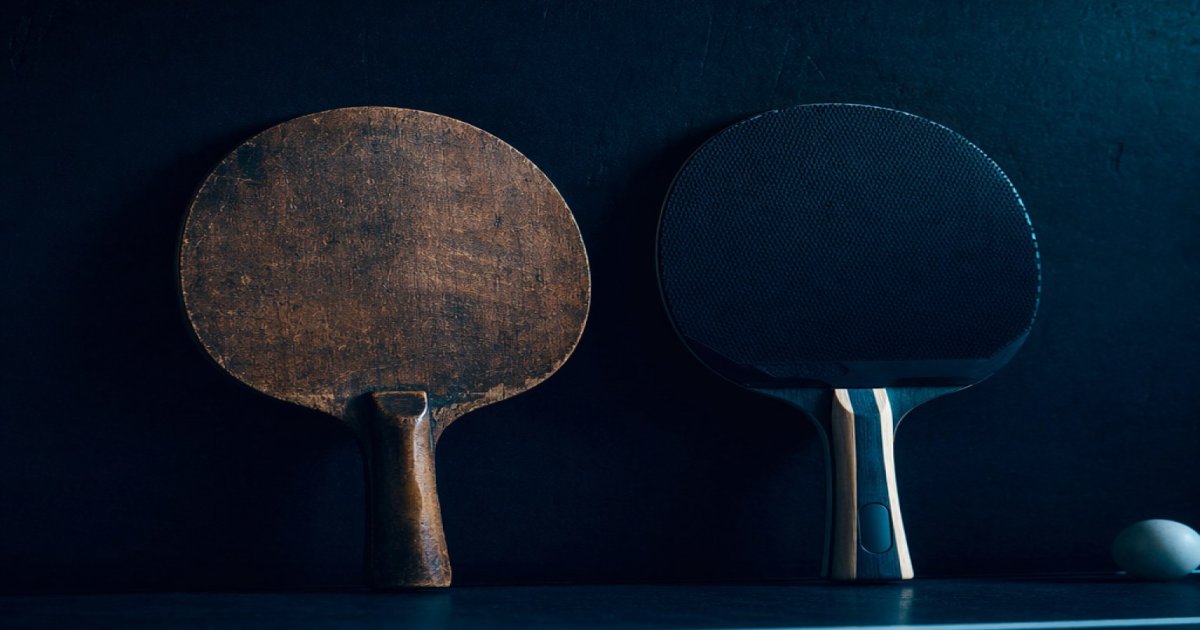
A father in San Fernando once corrected his son mid-sentence at a family gathering, insisting the boy call it “table tennis” rather than “ping pong” in front of relatives, with the particular seriousness of a man defending something that actually mattered. That small standoff is the table tennis vs ping pong question in miniature, and it has a real answer. Nobody at that table could have explained why the distinction existed, only that it apparently did, passed down as an unexamined rule of respectability rather than an actual fact about the sport.
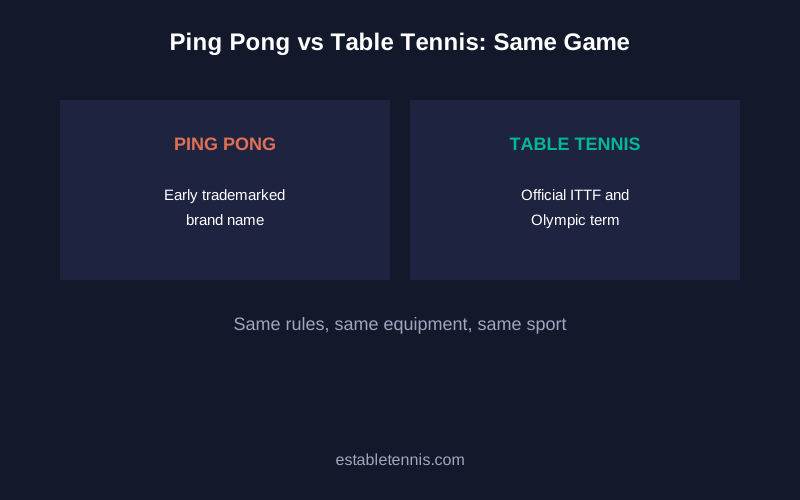
Functionally, nothing when played to official rules. “Ping pong” was an early trademarked name for the game, while “table tennis” became the standard term as the sport developed into its modern competitive form. Casual play sometimes uses looser rules under the “ping pong” label, but the underlying game is identical.
This is one of the most persistent minor misconceptions in the sport, and it survives largely because nobody ever bothers to trace the actual history behind the two names.
Where did the name “ping pong” actually come from?
“Ping Pong” was trademarked in the early 20th century by a games manufacturer selling table tennis equipment sets, turning what was originally a generic parlor game into a branded product name. The trademark meant other manufacturers selling similar equipment needed a different, non-trademarked name for their products, which is part of why “table tennis” gained traction as the more neutral, unbranded term.
Why did “table tennis” become the standard term for the competitive sport?
As the sport organized into formal governing bodies and competitive structures, “table tennis” became the official term used in rulebooks, tournaments, and international competition, partly to avoid the brand association tied to “ping pong” and partly because it more directly describes the sport’s relationship to tennis, its clearer athletic parent.
Do casual and competitive players actually mean different things by the two terms?
Sometimes, informally. “Ping pong” often carries a casual, recreational connotation (a backyard or basement game played without strict rule enforcement), while “table tennis” tends to signal a more serious, competitive framing. This is a cultural association rather than an actual rules distinction, since both terms describe the identical underlying game when played to the same standard.
Does equipment differ between what’s marketed as “ping pong” versus “table tennis” gear?
Sometimes, in practice, though not by any actual regulation. Products marketed toward casual, recreational buyers sometimes use “ping pong” branding and include lower-quality, non-tournament-grade equipment, while products marketed toward serious competitive players more often use “table tennis” branding and meet full ITTF approval standards. This is a marketing pattern, not a rule distinguishing the two terms themselves.
Is one term more internationally recognized than the other?
“Table tennis” is the internationally standard term used by the sport’s global governing body and in Olympic competition, making it the more universally recognized term in formal and international contexts. “Ping pong” remains widely used colloquially, particularly in casual American English, but carries less formal recognition in international competitive contexts.
Why do some serious players feel strongly about correcting “ping pong” to “table tennis”?
Often because “ping pong” carries an informal, less serious connotation that feels dismissive of the genuine athletic skill and competitive rigor the sport demands at higher levels. This correction, like the one from the father in San Fernando, is less about factual accuracy (both terms are technically correct) and more about signaling that the sport deserves to be taken seriously rather than dismissed as a casual pastime.
Does this naming distinction actually matter for a beginner just starting out?
Not really, beyond simple awareness. A beginner calling the sport “ping pong” is describing the exact same game as one calling it “table tennis,” covered in our foundational guide on how to play table tennis. The naming distinction is a piece of historical trivia and a mild cultural signal, not a meaningful difference in rules, equipment, or how the sport is actually played.
How should a new player think about which term to use themselves?
Whichever term feels natural in context (“ping pong” in casual conversation, “table tennis” in more formal or competitive settings) without treating either choice as a meaningful statement about seriousness or skill. The sport itself doesn’t care which name a player uses, and neither should anyone else, despite how strongly some players feel about the distinction.
How does regional and generational usage of the two terms actually vary?
In the United States, “ping pong” remains the dominant casual term across most generations, while “table tennis” is reserved almost exclusively for competitive or organized contexts. In parts of Europe and Asia, where the sport enjoys much higher competitive visibility and cultural status, “table tennis” tends to dominate even in casual conversation, reflecting the sport’s different cultural positioning in those regions compared to its more recreational American reputation.
Does the ITTF, the sport’s global governing body, ever use the term “ping pong” officially?
No. The International Table Tennis Federation uses “table tennis” exclusively in all official communications, rules, and branding, reflecting the term’s status as the internationally recognized standard. This consistent official usage is part of why “table tennis” carries more formal, competitive weight than “ping pong” in any context connected to organized, sanctioned play.
How did the trademark history of “ping pong” actually play out over time?
The original trademark changed hands and weakened in enforceability over subsequent decades, eventually becoming a generic term in common usage even though “table tennis” had already established itself as the sport’s formal name by the time strict trademark enforcement faded. This is a common pattern in trademark history: a brand name becoming so widely used it effectively becomes generic, similar to how “escalator” or “aspirin” started as specific brand names before entering common usage.
Does this naming distinction show up in how the sport is taught or marketed to new players?
Somewhat. Programs and products aimed at introducing children or casual families to the sport often use “ping pong” branding specifically because it feels more approachable and less intimidating than the more formal “table tennis” label. Programs aimed at developing serious competitive players almost universally use “table tennis” branding, reflecting the more serious developmental framing those programs want to project.
Is there a risk of sounding pretentious by insisting on “table tennis” in casual conversation?
Genuinely, yes, and this is worth naming directly. Correcting someone’s casual use of “ping pong” in an informal setting, the way that father did at a family gathering, often reads as unnecessary gatekeeping rather than a meaningful clarification, since both terms describe the same game correctly. Reserving the correction for genuinely formal or competitive contexts, rather than applying it reflexively in casual conversation, avoids this trap.
What’s the practical takeaway for someone just entering the sport who hears both terms used interchangeably?
Don’t overthink it. Both terms are correct, describe the identical game, and the choice between them is a matter of context and personal preference rather than accuracy. Focus energy on learning the actual sport, covered across every guide on this site, rather than worrying about which name carries more legitimacy in a given room.
How does the media and entertainment industry’s use of “ping pong” affect the sport’s public perception?
Films, television, and casual media coverage overwhelmingly use “ping pong” even when depicting serious competitive play, reinforcing the term’s dominant position in general public consciousness regardless of the sport’s actual competitive standing.
This media pattern is part of why many casual observers remain unaware of just how physically demanding and tactically sophisticated the sport becomes at higher competitive levels, since the more casual-sounding name shapes public expectations before anyone ever watches actual competitive play.
Does the sport’s Olympic status affect which term gets used in that specific context?
Universally “table tennis” in Olympic contexts, since the International Olympic Committee, like the ITTF, uses the sport’s formal name exclusively in official programming, commentary, and branding. This consistent formal usage in the sport’s highest-visibility competitive showcase reinforces “table tennis” as the term associated with serious, elite-level competition, even as “ping pong” continues dominating casual usage everywhere else.
How do table tennis equipment manufacturers themselves navigate this naming split in their marketing?
Most major manufacturers serving competitive players use “table tennis” exclusively in their premium, tournament-grade product lines, while sometimes using “ping pong” branding for entry-level, recreational product lines aimed at casual buyers unfamiliar with the sport’s competitive side.
This dual branding strategy lets manufacturers address both markets without confusing casual buyers with overly technical, competition-focused language, or undermining serious players’ perception of premium equipment with overly casual branding.
Is there an equivalent naming confusion in other racket or paddle sports?
Some, though less pronounced than in table tennis specifically. Padel and pickleball, both younger sports experiencing rapid growth, have avoided this particular naming split since they emerged with a single, consistent name from the start rather than inheriting competing historical terms the way table tennis did through its trademark history.
Table tennis’s situation is somewhat unusual in having two widely used, historically rooted names for the identical sport.
How should a coach or club handle this naming question when working with total beginners?
Most experienced coaches don’t bother correcting a beginner’s use of either term at all, recognizing that the naming distinction has zero bearing on actual skill development or rule understanding. Energy spent correcting terminology is energy not spent on actual coaching, and most coaches who’ve been in the sport long enough have made peace with both terms coexisting without needing resolution.
What does this naming history reveal about how sports terminology evolves more broadly?
It’s a useful case study in how commercial trademark history and formal governing-body standardization can produce two competing names for the same underlying activity, with neither one ever fully displacing the other over more than a century of coexistence.
Most sports settle on a single dominant name relatively quickly; table tennis’s persistent dual naming is a genuine outlier, driven by the specific historical accident of an early trademark followed by a later, competing formal standardization effort.
Does international travel and competition create any actual confusion between the two terms?
Rarely in practice, since “table tennis” functions as the universal formal term recognized at every international competitive venue regardless of a traveling player’s home country or native language.
Any confusion tends to happen only in casual, informal conversation across cultures where “ping pong” carries different levels of recognition: dominant in American casual speech, less commonly used casually in regions where “table tennis” already dominates everyday usage too.
According to the ITTF equipment regulations, every piece of officially approved equipment is certified under the “table tennis” name regardless of what a specific retail product happens to be marketed as, meaning the formal regulatory reality of the sport has already settled this question even where casual usage hasn’t.
The son at that family gathering wasn’t actually wrong to say “ping pong.” Neither was his father, insisting otherwise. Both of them were simply standing on different sides of a naming split that’s outlasted every single person who’s ever argued about it, and shows no particular sign of resolving anytime soon.
Language rarely settles arguments this cleanly, and a hundred years of coexisting names is proof enough that this particular one was never really about facts to begin with. It was about which version of the sport each person wanted to signal belonging to.
Call it whichever you like at your next family gathering. The ball won’t know the difference, and neither, honestly, should anyone sitting at that table.
A hundred years from now, both names will probably still be sitting there, side by side, still not settling anything.
Fine by everyone who actually just wants to play.
The trademark that started all this expired decades ago in most meaningful legal senses, and yet the cultural split it created has proven considerably more durable than the paperwork ever was.
That’s the actual story here, more than any question of which term is correct: a corporate marketing decision from a century ago still quietly shapes how people talk about a sport neither the original trademark holder nor anyone at that family gathering could have predicted would still be played this widely today.
Neither name owns the sport. The players do, whichever word happens to be on their lips when they pick up a racket and start.
Somewhere a governing body will keep insisting on one name in its official documents while an entire country keeps calling it something else at every kitchen table, basement, and backyard gathering, and both versions of the sport will keep thriving anyway, largely indifferent to which label wins.
That indifference, more than any rulebook entry, is probably the healthiest way to actually settle this.
Simple as that.
Whichever word you use, pick up the racket and start.
That’s the only part that ever actually mattered.
End of story.
Nobody at that table needed to win the argument. They just needed to keep playing.
Most of them, eventually, did just that.
Worth remembering the next time an argument like this one threatens to matter more than the actual game does.
The ball never once cared about any of this.
Maybe that’s the actual lesson worth taking from a hundred years of two names arguing over one game.
Play on.
Call it whatever gets you back to the table.
Simple as that, once again.
Grab a racket and see for yourself.
Quick Recap: Table Tennis vs Ping Pong
Table tennis vs ping pong isn’t really a comparison of two different things: it’s the same sport wearing two different names, one shaped by early trademark history and the other by the sport’s later formal, competitive development. The father in San Fernando was defending a distinction that, on closer inspection, never actually needed defending in the first place.
Frequently Asked Questions
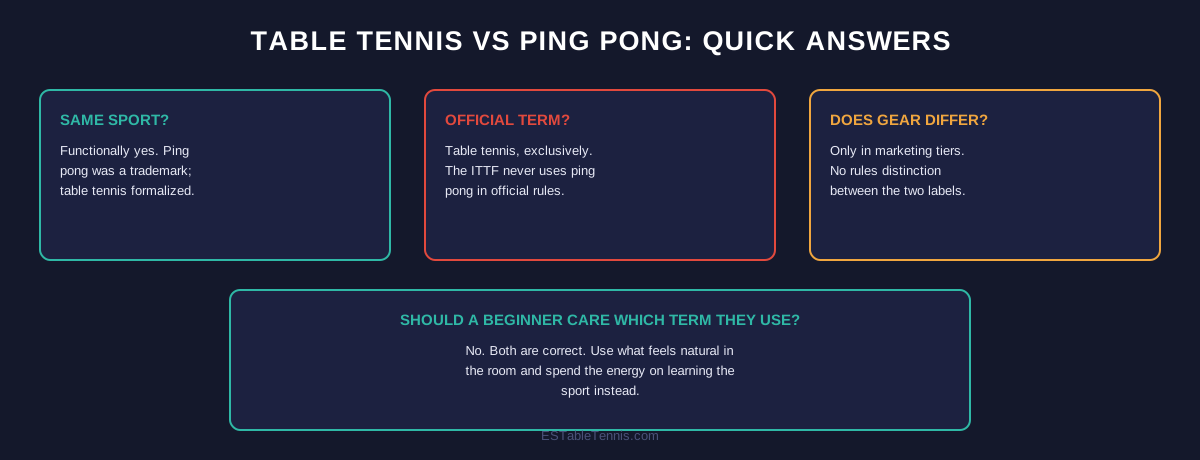
Is table tennis actually different from ping pong?
Why do some people insist on saying “table tennis” instead of “ping pong”?
Which term does the official governing body use?
Does equipment differ between “ping pong” and “table tennis” branded products?
Should I worry about which term I use as a beginner?
His son still calls it ping pong at family gatherings, quietly, when his father isn’t in the room. Both of them, if pressed, would eventually admit neither term was ever actually wrong.
Want a free foundation to build genuine skill, whichever name you call it? Download the free ebook on staying calm and winning more matches.
Leave a Reply