
Every big-box sporting goods store in the country sells the same basic four-paddle set, shrink-wrapped next to a folding net, priced to move and built to be forgotten within a month. Ping pong paddles for beginners are sold on exactly that forgetfulness.
Thousands of families buy that exact set every year believing they’ve bought a hobby.
Most of them have actually bought a single afternoon, and the difference between those two outcomes usually comes down to one paddle decision nobody explained to them at the register.
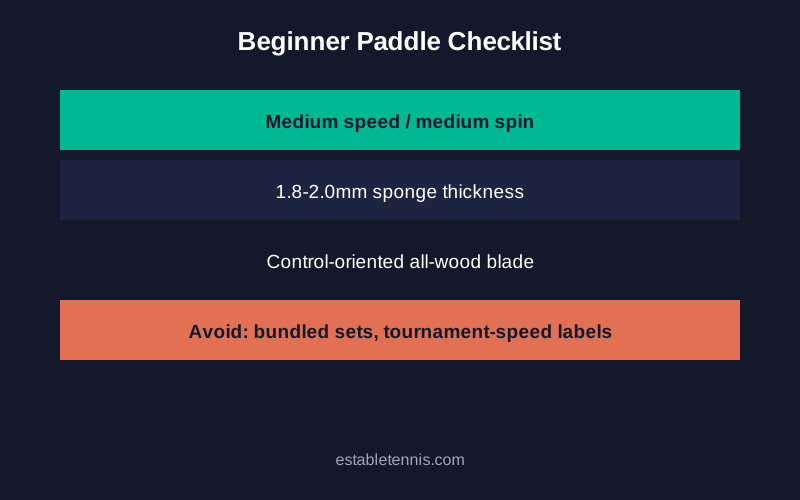
A moderate, forgiving premade paddle with medium-speed, medium-spin rubber and a control-oriented all-wood blade, rather than the ultra-cheap sets bundled with folding nets, or the fast, offensive-rated paddles marketed toward advanced players.
Fit matters more than price at the extremes of either direction.
Paddle selection is where most beginners either build genuine momentum or quietly talk themselves out of a sport they never actually got a fair chance to try.
Why do the cheap bundled paddle sets actually hurt beginners?
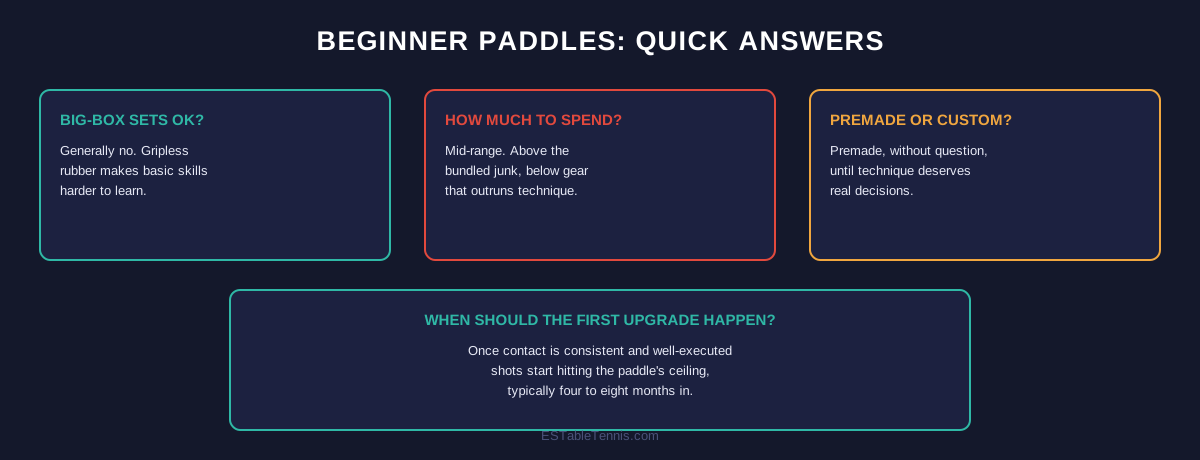
The paddles in most bundled sets use low-quality rubber with minimal grip and inconsistent sponge, which makes basic contact and spin generation, covered in our guide on how to spin in table tennis, considerably harder to learn than it needs to be.
A beginner struggling with a genuinely bad paddle often blames their own ability rather than the equipment, which is exactly backwards.
What specs should a beginner actually look for in a paddle?
Medium speed and spin ratings, sponge thickness in the 1.8 to 2.0mm range, and a control-oriented all-wood blade, covered in our detailed guide on choosing rubber for beginners.
These specs prioritize forgiveness and feedback over raw speed, which is exactly what a developing player needs most in the first several months.
Should a beginner buy a premade paddle or build a custom setup?
Premade, without question, covered in depth in our guide on premade vs custom table tennis rackets.
A premade paddle removes an entire layer of decisions a true beginner isn’t equipped to make well, letting early practice time focus entirely on technique rather than equipment experimentation.
How much should a beginner actually spend on their first paddle?
Enough to avoid the lowest-tier bundled sets, but not so much that the paddle’s speed rating outpaces a beginner’s actual technique.
A reasonable mid-range paddle, priced meaningfully above the cheapest bundled options but well below advanced tournament-grade equipment, typically hits the right balance of quality and forgiveness for a genuine beginner.
Does paddle weight matter for a beginner’s first purchase?
Yes, covered in our guide on table tennis blade weight. A mid-range weight, typically 82 to 88 grams for the bare blade, gives enough natural power to feel encouraging without demanding fast recovery skills a beginner hasn’t built yet.
What’s the biggest mistake parents make buying a paddle for a child beginner?
Buying based on a professional player’s endorsement or a flashy design rather than the actual forgiving specs a young beginner needs.
A paddle marketed with a famous player’s name attached is almost never built for a beginner’s skill level, regardless of how appealing that association feels at the point of purchase.
How do you know if a paddle is actually holding a beginner back?
If contact feels wildly unpredictable (some shots landing safely, others flying long on what felt like an identical swing), that unpredictability often points to equipment amplifying small natural variance rather than a purely technical problem.
A more forgiving paddle should make a beginner’s actual skill level visible, not hide it behind equipment-driven noise.
When should a beginner consider upgrading from their first paddle?
Once contact consistency feels genuinely solid and the current paddle’s speed ceiling starts limiting well-executed shots rather than covering for inconsistency, typically somewhere between four and eight months into regular training for a dedicated beginner training a few times weekly.
How does the affiliate and review ecosystem affect what beginner paddles get recommended online?
Most “best beginner paddle” lists are optimized for affiliate commission and search ranking rather than genuine fit, covered in depth in our piece on why most rubber recommendations online are wrong.
A ranked list built for a general audience was never going to match your specific swing speed, temperament, and physical strength the way a genuinely personalized recommendation would.
What’s the difference between a paddle marketed for “beginners” versus one marketed as “intermediate”?
Marketing labels are inconsistent across brands and often unreliable as a genuine skill-level guide: some “beginner” paddles are appropriately forgiving, while others carry surprisingly fast, unforgiving rubber despite the label.
Reading the actual speed and spin ratings printed on the product itself, rather than trusting the marketing category alone, gives a more reliable read on genuine beginner-friendliness.
Does paddle color or cosmetic design matter at all functionally?
No, covered in more depth in our guide on red rubber vs black rubber. Beyond the legal requirement of one red and one black rubber side, cosmetic design has zero bearing on performance, and beginners should never let visual appeal outweigh the actual specs when comparing paddle options.
Should a beginner buy one paddle or consider owning a backup?
One paddle is sufficient for the first several months, and a backup becomes worth considering only once a player has enough experience to know their preferred specs well enough to duplicate them confidently.
Buying a second paddle too early, before genuinely understanding personal preferences, often just means owning two pieces of equally uninformed guesswork.
How does buying a paddle for a child differ from buying one for an adult beginner?
The same forgiving-spec principles apply regardless of age, though paddle weight sometimes warrants extra attention for younger players whose forearm strength hasn’t fully developed: a slightly lighter paddle within the beginner-appropriate range can help a young player avoid the compensating swing habits that a too-heavy paddle sometimes encourages.
What’s a practical way to actually test a paddle before committing to a purchase?
Where possible, borrowing or demoing paddles at a local club before buying gives a far more reliable sense of fit than reading specs alone, since the felt experience of contact and control doesn’t always match what a spec sheet suggests.
Where demoing isn’t practical, prioritizing a specific, forgiving spec range over any single influencer or store recommendation remains the safer default.
How does sponge hardness factor into a beginner paddle purchase specifically?
Softer sponge, in the 35 to 42 hardness range covered in our guide on table tennis rubber hardness explained, gives more dwell time and forgiveness for a developing swing than firmer sponge, which demands faster racket-head speed to compress properly and reward a player’s effort.
Most bundled beginner paddles skip this detail entirely, leaving buyers with no way to evaluate hardness without independently researching the rubber model used.
What’s the actual cost difference between a genuinely good beginner paddle and a bad one?
Often surprisingly small: a well-specified, forgiving beginner paddle from a reputable manufacturer frequently costs only modestly more than a bundled big-box set, meaning the price difference rarely justifies buying equipment that actively works against a developing swing.
The real cost of a bad paddle isn’t the few dollars saved upfront; it’s the months of frustration and misdiagnosed technique problems that follow.
Does a beginner need different paddles for singles versus doubles play?
No. The same forgiving, moderate paddle specs suit both formats equally well at the beginner stage, since the fundamental skills a beginner is building (contact consistency, basic spin, footwork) apply identically regardless of format.
Format-specific equipment preferences, if they develop at all, tend to emerge much later, once a player has enough experience to have genuine format-specific tactical preferences.
How should a beginner think about paddle grip style when making their first purchase?
Shakehand grip paddles are generally the easier, more common starting point for most beginners, offering a more natural forehand-backhand transition than penhold grip paddles typically allow.
A true beginner without a strong existing preference should default to shakehand unless a coach or experienced mentor specifically recommends penhold based on individual hand size or comfort.
What’s a red flag on a paddle’s packaging that should make a beginner reconsider?
Marketing language emphasizing “tournament speed,” “professional grade,” or similarly aggressive framing, which almost always signals a paddle built for players well beyond the beginner stage.
These labels are designed to appeal to ambition and aspiration rather than to actually communicate what specs a true beginner needs, and they’re worth treating with real skepticism regardless of how appealing the framing sounds.
Does buying a slightly more expensive paddle guarantee a better beginner experience?
Not automatically. Price correlates loosely with build quality and consistency, but a more expensive paddle built for advanced, offensive play can still be a poor beginner fit despite the higher price tag.
Matching actual specs to a beginner’s developmental stage matters more than simply spending more, and a moderately priced, well-specified paddle will consistently outperform an expensive, poorly matched one for a genuine beginner.
How does a beginner reconcile wanting to “look serious” with actually choosing forgiving equipment?
This tension is real and worth naming directly: a beginner sometimes feels self-conscious buying what looks like “starter” equipment rather than something that visually signals ambition or seriousness.
The honest answer is that genuine seriousness about improvement is better demonstrated through consistent practice on appropriately forgiving gear than through an impressive-looking paddle that actively works against the very consistency a serious player should be building.
According to the ITTF equipment regulations, every legally sold paddle, from the cheapest bundled set to the most expensive tournament-grade model, must meet the same baseline approval standards, which means the difference between a good beginner paddle and a bad one was never actually about legality or minimum quality. It was always about fit.
Most families walking out of a big-box store with that shrink-wrapped set have no reason to know any of this.
Nobody at the register mentions sponge hardness or dwell time, because the sale doesn’t depend on the paddle actually working for the buyer six months later.
A closet full of abandoned equipment says less about how many people secretly dislike this sport and more about how few of them were ever given a genuinely fair chance to enjoy it, one badly matched paddle at a time.
Spend the extra research minutes before the purchase, not the frustrated months after it. The paddle sitting in that closet was never the real problem: the guesswork behind buying it was.
Specs printed in tiny text on the back of a package rarely feel like they matter at the moment of purchase, standing in a store aisle with a child tugging at your sleeve, eager to just get home and start playing.
That impatience is understandable. It’s also exactly the moment worth slowing down for, since the five extra minutes spent actually reading those numbers is the entire difference between a paddle that builds a lasting hobby and one that quietly gets blamed for a season of frustration nobody ever traced back to its actual source.
Nobody buys a paddle expecting it to be the reason a hobby fails. Almost nobody, either, ever finds out that it was, since the paddle rarely gets blamed for the outcome it quietly caused.
Break that pattern for your own household. Read the actual rubber and sponge specs before checkout, ask a club member for a demo if one’s available nearby, and treat the five minutes of research as part of the purchase itself rather than an optional extra step most buyers skip entirely.
The paddle your family eventually keeps for years, rather than abandoning by autumn, was never going to be found in the cheapest shrink-wrapped set on the shelf.
It was always going to be the one somebody actually bothered to check the numbers on first.
Check the numbers first. Everything else about a lasting hobby follows from that one small habit, repeated at the exact moment most buyers are least inclined to slow down and do it.
That closet full of abandoned equipment could have been a lifelong hobby instead, for the cost of five minutes and a bit of patience at the checkout counter.
Nobody will ever get that specific afternoon back, but every future purchase is still entirely within your control, starting with the very next one.
Make it count this time.
Simple as that.
A good paddle is cheap insurance against a whole season of misdirected frustration.
Buy it right the first time.
End of story.
Your first paddle doesn’t need to be expensive. It just needs to actually be built for the hands holding it, rather than for whoever the marketing department imagined buying it instead.
That distinction is the entire difference between a closet and a lifelong hobby.
Choose accordingly.
Every family standing in that store aisle deserves to know this before checkout, not after a season of quiet, misdiagnosed frustration.
Now they do.
Pass it on to the next family standing in that same aisle.
Small favor, big difference, exactly the kind worth passing along freely.
Worth remembering next time you’re the one standing there, sleeve being tugged, register waiting.
Slow down for five minutes. It’s worth every second.
Truly, every second.
Really.
Take the extra five minutes. Read the numbers on the back of the box before you ever get to the register.
Simple as that.
Quick Recap: Ping Pong Paddles for Beginners
A good beginner paddle prioritizes forgiveness over speed, moderate specs over flashy marketing, and genuine fit over price or brand association.
Those shrink-wrapped four-packs at the big-box store aren’t wrong because they’re cheap: they’re wrong because almost nothing about them was built with an actual beginner’s developing swing in mind.
Frequently Asked Questions
Are the cheap paddle sets from big-box stores actually bad for beginners?
How much should a beginner spend on their first paddle?
Should a beginner build a custom paddle or buy premade?
Does paddle color affect performance?
When should a beginner upgrade their first paddle?
That shrink-wrapped set still gets bought by the thousands every year, and most of them still end up in a closet by autumn. The paddle was never really the hobby’s problem. It just never got a fair chance to be part of the solution either.
Want a paddle recommendation actually matched to your game instead of a store shelf? PingPath gives you a fitted setup in under three minutes.
Leave a Reply