The sports hall behind the St. James Community Centre smelled the same every Saturday: floor wax, old rubber, and the particular staleness of a room that had hosted too many grudge matches. Marcus played there from the age of fourteen, on a Stiga premade that had seen better days. He was reliable. He won more than he lost. And one evening a man named Derek, who had played for a club in Port of Spain in the eighties and had opinions about everything, told him a Butterfly Viscaria with Tenergy 05 on both sides would take his game to the next level.
Marcus bought the setup two weeks later. The Viscaria was fast. Genuinely, unforgivingly fast. And Marcus spent the next three months blaming his backhand for results that were actually the equipment’s fault. He eventually switched back to a premade. He called it the most expensive lesson he ever learned that he didn’t need to learn.
Premade vs custom table tennis racket: which should you use?
A premade racket is a blade and rubber assembled by the manufacturer and sold as a single unit. A custom racket means choosing a bare blade and bonding your own rubber sheets to it separately. For players still developing a consistent style, premade is the right choice: the upgrade to custom only pays off when you already know exactly what your game needs.
What is a premade table tennis racket?
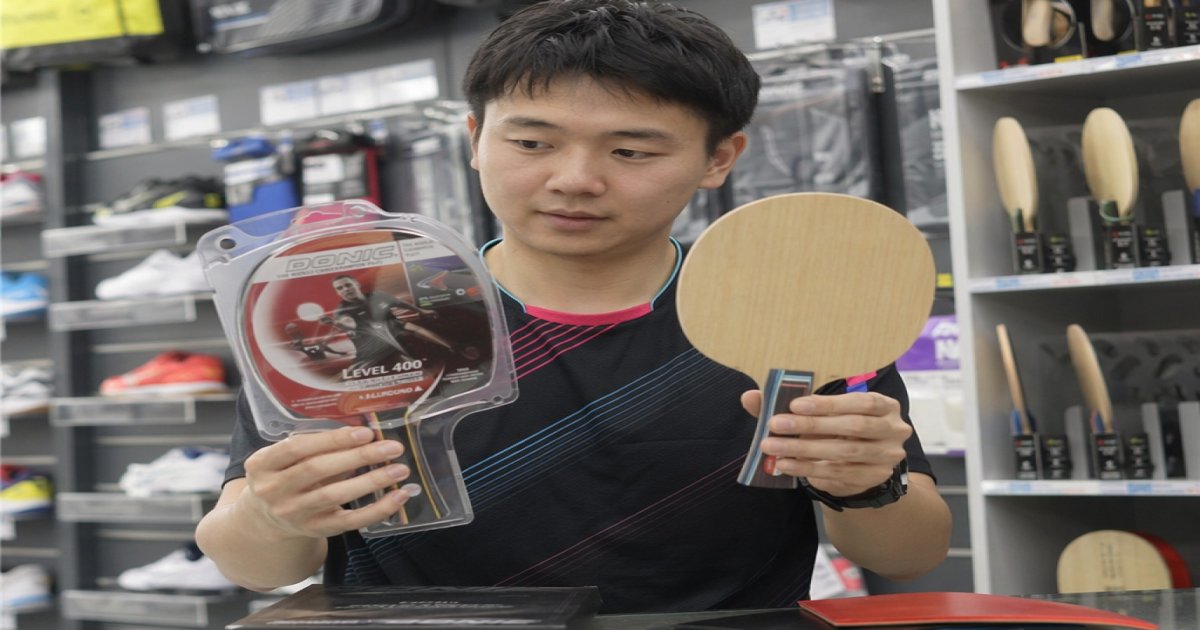
A premade racket, sometimes called a ready-to-play or RTP racket, comes with a blade and rubber already glued together at the factory. You open the box and play. The rubber on each side is chosen by the manufacturer to suit the intended level and playing style, and the whole unit is priced as a complete product.
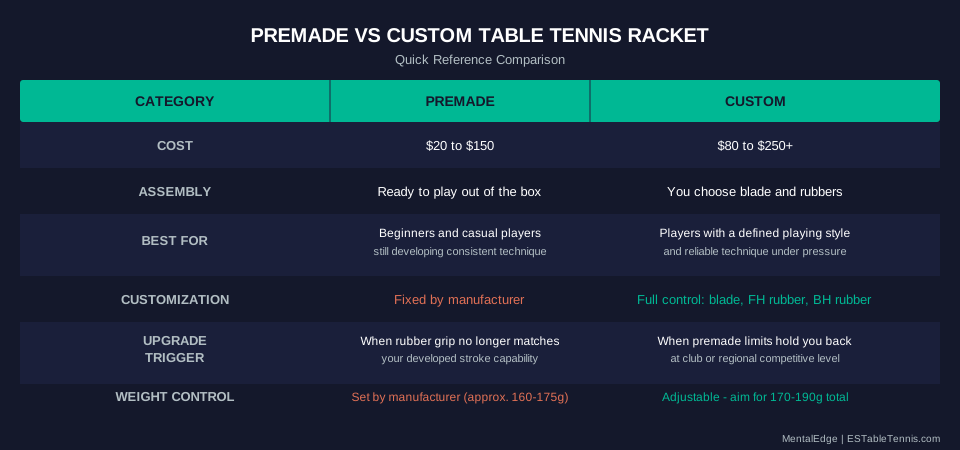
Most premade rackets in the $20 to $150 range follow this model. The Butterfly Bty 802 FL is a genuine intermediate-level premade: Butterfly assembles it with Addoy rubber on both sides, a controlled wood blade, and prices it around $110. The Stiga Pro Carbon+ Cybershape sits at the higher end of the premade range, with carbon layers in the blade and rubber matched to that stiffer frame.
The premade market stretches from $8 hardbats with no sponge all the way up to $150+ units that seriously compete with entry-level custom setups. What they all share is that the manufacturer has already made the component decisions for you. Whether that is a benefit or a limitation depends entirely on where you are in your development as a player.
What does a custom racket actually give you that a premade doesn’t?
A custom racket involves three separate decisions: which bare blade, which rubber for the forehand, and which rubber for the backhand. Each of those decisions has a real impact on what the racket feels like and how your game develops.
The blade determines the overall speed, vibration, and feel. A five-ply all-wood blade like the Stiga Offensive Classic is slower and gives more dwell time: the ball stays on the rubber a fraction longer, giving you more control over direction and spin. A carbon-layer blade is significantly faster, with a more catapult-like feel that rewards confident, full-swing strokes. Getting this decision wrong by going too fast too early is one of the most common ways developing players stall their improvement.
The rubbers determine spin potential, speed, grip, and how the ball responds to your opponent’s spin. You might choose a grippy, spinny rubber like Yasaka Mark V for your forehand and a softer, more controlled rubber like Butterfly Sriver for your backhand. Or you might choose the same rubber on both sides. The point is that you choose, based on what your game actually needs.
This is the advantage a custom setup offers: precision matching between the equipment and the player. A premade manufacturer chooses components that will suit a hypothetical average player at a given level. A custom setup can be built for your actual style, your actual strengths, and your actual weaknesses.
The catch is that knowing what your game needs requires time, experience, and self-honesty that most beginners simply don’t have yet. A beginner who builds a custom setup is usually spending extra money to introduce variables they aren’t yet equipped to understand.
Who should stick with a premade racket?
The short answer: anyone who isn’t sure whether they need to upgrade.
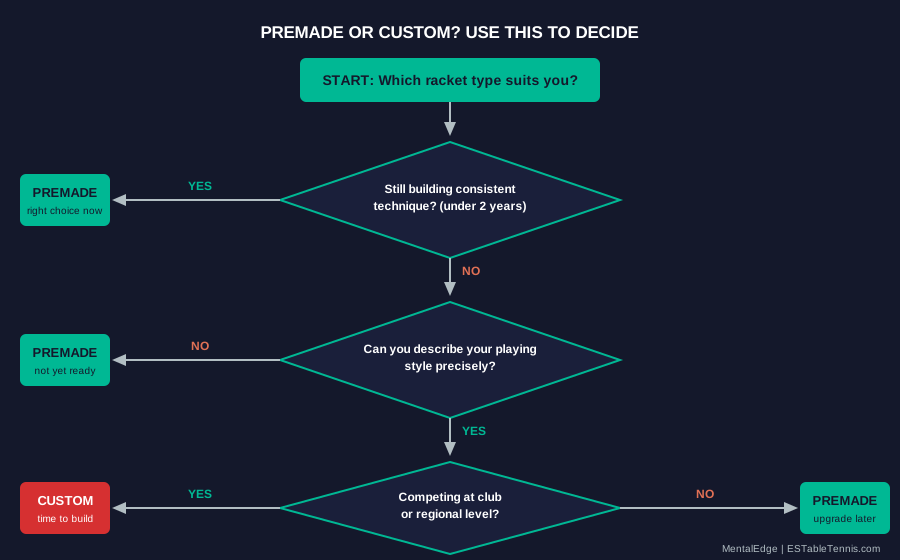
If you have been playing less than two years and haven’t yet developed a consistent forehand loop, you should be using a premade racket. The reason is not that premade rackets are inferior: it is that your technique is still adapting, and a premade gives you stable, predictable feedback during that process. A blade that is too fast or rubbers that are too grippy will amplify every technical inconsistency, making it harder to tell which errors are habits and which are equipment.
Players who play casually, once or twice a week with no competitive intentions, should also stay on premade. The marginal improvement a custom setup offers doesn’t justify its cost or complexity if you are not invested enough in the sport to notice the difference. Equipment precision matters to people who play precisely.
There is a related trap worth naming: buying an expensive custom setup as a substitute for practice. It happens more than most players will admit. The upgrade feels like progress, and sometimes it is, but often it is a response to frustration that would be better addressed with deliberate practice than new equipment.
There is also a category of player who sits in the middle: someone with two or three years of consistent practice, a clear sense of their dominant wing, and a genuine curiosity about what a better rubber would give them.
For this player, a partial upgrade can be the right call. Keep the premade blade and replace just one rubber sheet: forehand first, since that is typically the dominant stroke in attacking play. This costs $30 to $50 and lets you test the difference without committing to a full custom setup. If the feedback is better, you can build from there. If it is not, you have lost very little and learned something specific about your game.
If you are not sure which premade suits your current level, PingPath gives you a custom recommendation in under three minutes based on your playing style and goals.
When does it make sense to switch to a custom setup?
There are specific signals that tell you a premade is genuinely holding you back. These are not feelings of dissatisfaction. They are technical realities.
You have outgrown the rubber’s grip. Most premade rubbers are medium-low grip, matched to developing players who benefit from extra forgiveness. When your loop mechanics are consistent enough that you are generating your own spin reliably, high-grip rubber will give you more control over placement and trajectory.
Your premade rubber can no longer give you what your stroke is now capable of using. The ITTF equipment regulations provide the technical baseline for rubber specifications, including the approved thickness range that defines what counts as competition-legal rubber in any official event.
Your playing style has become specific. If you know you are an attacking player who loops everything, a fast carbon blade makes sense. If you know you are a defensive player who relies on placement and consistency, a slower all-wood blade with controlled rubbers is the right fit. The key word is know. If you can describe your style with precision (the specific patterns you rely on, the shots you avoid, where you generate most of your points), you have reached the point where customization pays off.
You have hit a premade’s ceiling. Better premade rackets are genuinely capable up to a certain level of play. But above a certain point of competitive seriousness (local league play, regional tournaments), you will start to notice the limits. The rubber doesn’t respond the way you expect on certain strokes.
The blade feels slightly wrong in ways you can’t fix. These are not imagined complaints; they are real technical limits built into the manufacturing compromise.
The mental signal. This one is subtler, but important: if you find yourself blaming your technique for errors that feel wrong (errors that happen inconsistently, on shots you can normally play), there is a real possibility the equipment is producing unreliable results.
Mismatched equipment creates unpredictable feedback, and unpredictable feedback is the enemy of confidence. If your game feels mentally unstable in ways your practice doesn’t justify, the racket is worth examining before the technique is.
How do you build a custom racket that fits your game?
The process has three decisions, and the order matters.
Start with playing style, not budget. Before you look at any products, establish what your game actually looks like. Do you attack or defend? Do you play close to the table or mid-distance? Is your forehand your dominant weapon or your backhand? Do you rely on spin or placement? These answers determine the type of blade and rubber you need. No amount of product research is useful until you can answer them honestly.
Choose the blade second. The blade is the foundation. A slower all-wood blade gives more control and suits players still developing consistency. Carbon-layer blades increase speed significantly and belong in the hands of players whose technique is already reliable under pressure. The Butterfly Timo Boll ALC is a popular carbon choice for attacking players transitioning from an all-wood setup: faster, but not uncontrollably so.
What does a custom setup actually cost, itemized?
Most guides quote a total price without showing the parts. Here is what a custom setup costs broken down by component at the intermediate level:
| Component | Entry level | Intermediate | Advanced |
|---|---|---|---|
| Blade (bare) | $20–$40 | $40–$80 | $80–$180 |
| Forehand rubber | $15–$30 | $30–$60 | $60–$90 |
| Backhand rubber | $15–$30 | $30–$60 | $60–$90 |
| Glue + accessories | $8–$12 | $10–$15 | $10–$15 |
| Total | $58–$112 | $110–$215 | $210–$375 |
The intermediate column is where most upgrading players land. Note that rubber replacement every three to six months adds roughly $60–$120 per year on top of the initial build cost, a recurring expense premade players don’t have to budget for separately.
Choose rubbers last. Once you have a blade, choose rubbers that complement it. A fast carbon blade paired with thick, hard rubber is a genuinely difficult setup to control: it punishes every technical imprecision. A slower all-wood blade with grippy, medium-hard rubber is far more forgiving. The most common mistake is choosing rubbers independently of the blade, then discovering the combined setup is too fast, too slow, or too heavy.
Weight matters more than most beginners expect. A full custom setup (blade plus two rubber sheets) typically runs 170–200 grams. A setup over 190 grams will tire your wrist and shoulder in long matches. Before committing to a rubber, check the blade weight and confirm the rubber sheets won’t push the total over your threshold.
One practical approach is to build one side of the racket at a time. Start with your dominant-wing rubber, the side you use for your strongest shot. Get comfortable with it for a month or two before adding a high-performance rubber on the opposite wing. Changing both sides at once makes it harder to isolate which change is producing which result, and you end up back where you started: unable to tell whether the feedback is technique or equipment.
The rubber replacement cycle is another factor most guides skip. Inverted rubber loses grip and speed over time, typically after 50 to 80 hours of play, depending on how aggressively you clean it. A custom setup is a long-term investment, which means you need to budget for rubber replacement roughly every three to six months if you are a consistent player. Premade rackets sidestep this decision entirely, but the trade-off is that you have no control over the replacement options when the rubber eventually dies.
For a full breakdown of how rubber types interact with your playing style, the best rubber for beginner table tennis players guide covers the key differences between grip levels, sponge hardness, and speed categories. And if you want to understand the full equipment picture before committing to any specific component, the table tennis equipment for beginners pillar post maps out every decision in order.
If you know your playing style but don’t know which specific setup matches it, PingPath gives you a specific recommendation without the guesswork.
How does your racket choice affect your mental game?
More than most players want to believe.
Confidence requires feedback. When you play the same shot repeatedly and get consistent results, you build an expectation, and that expectation is the foundation of confidence under pressure. Mismatched equipment removes that consistency. The same stroke produces different results depending on how hard you swing, where you make contact, and how much spin your opponent has generated. The feedback becomes unreliable, and unreliable feedback cannot build real confidence.
This is why choosing equipment that is too advanced too early is a mental problem, not just a technical one. Marcus didn’t lose confidence in his backhand because his backhand was broken. He lost confidence because his racket was giving him results he couldn’t predict. The equipment was noisy, and he was trying to find signal in noise.
The mental edge in table tennis is downstream of equipment fit. Players who develop genuine confidence under pressure almost always do it on equipment that suits their level: equipment that rewards the strokes they can actually play, not the strokes they are planning to learn. If your game feels mentally unstable in matches in ways your practice sessions don’t explain, the equipment deserves a serious look before the mental techniques do.
The connection between gear and psychology is the thing most equipment guides don’t mention, but it is the reason choosing the right racket matters beyond just the technical numbers on a spec sheet.
If the mental side of your game is the part that keeps breaking down, MentalEdge is built for exactly that.
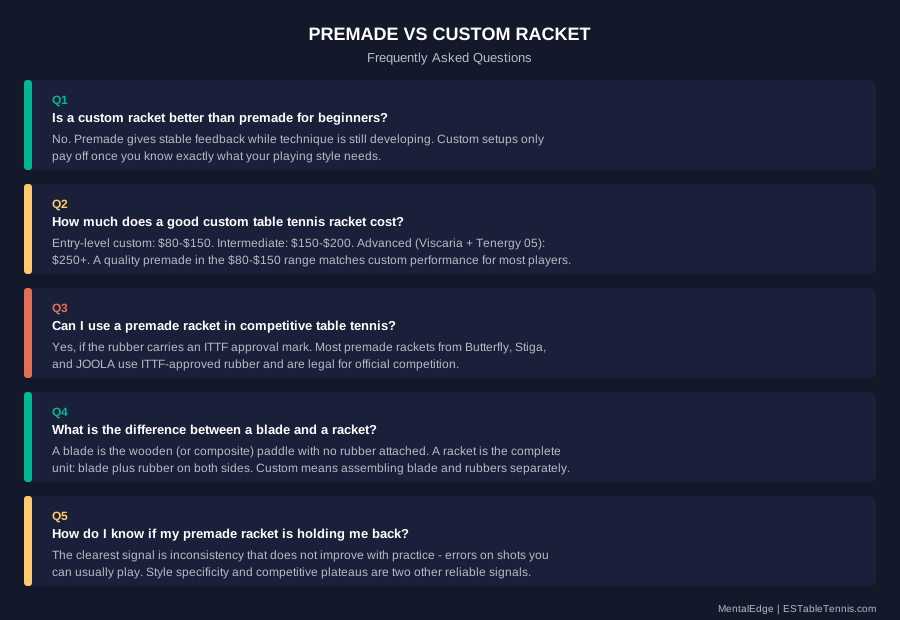
Is a custom racket better than premade for beginners?
How much does a good custom table tennis racket cost?
Can I use a premade racket in competitive table tennis?
What is the difference between a blade and a racket?
How do I know if my premade racket is holding me back?
Equipment doesn’t give you confidence. It removes the excuses that were already eating it.
Leave a Reply