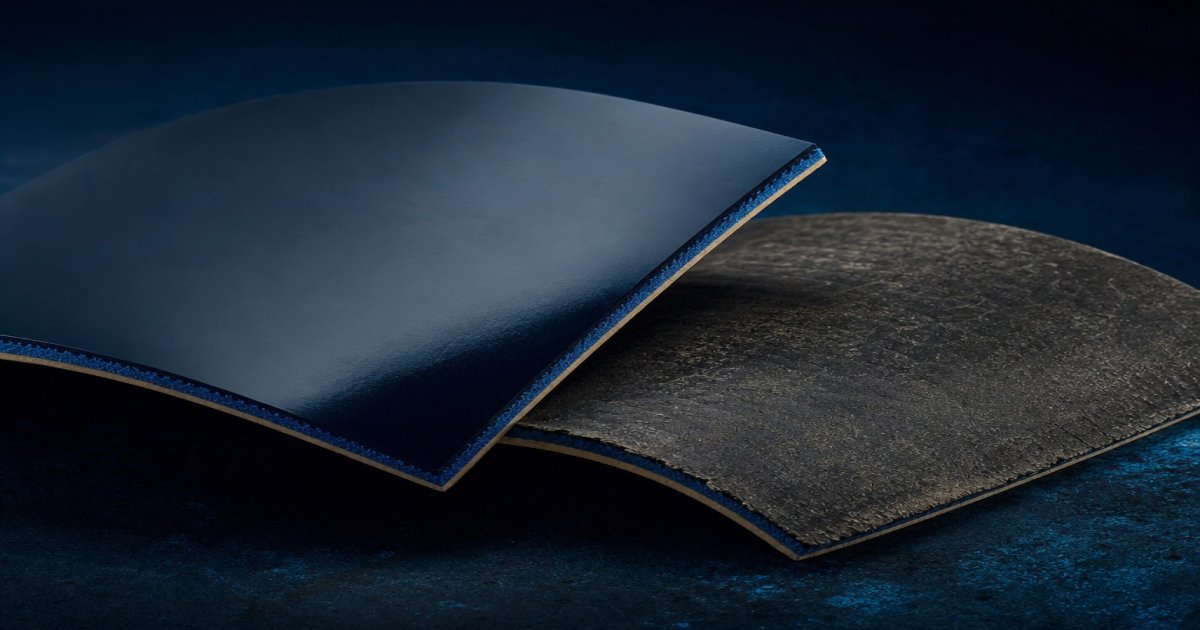
A club regular in Arima played on the same rubber for two years, insisted it still had “plenty left,” and lost a match he should have won to an opponent half his experience level, on a night when every loop he tried floated three inches long.
He blamed the wind from an open hall door. His rubber, by that point, had the tack of a worn car tire and the responsiveness of a phone book, and he genuinely had no idea, because nobody had ever told him rubber has an expiration date measured in performance, not just visible wear.
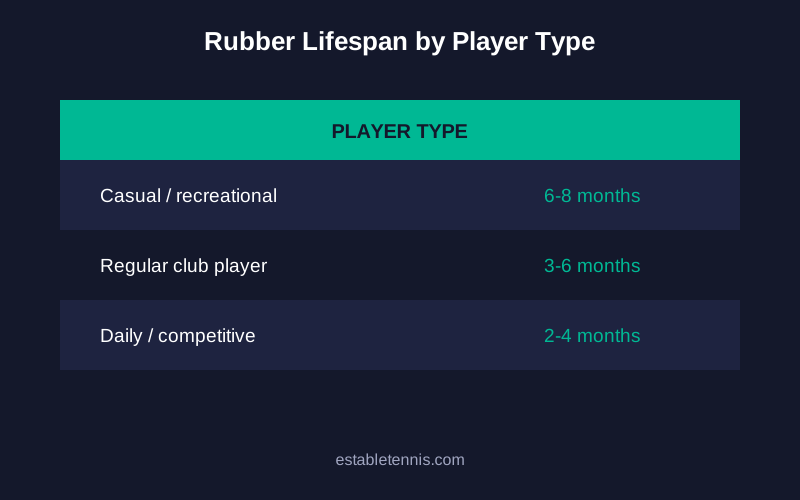
Most table tennis rubber performs at its best for 3 to 6 months of regular play, and starts noticeably declining in grip and responsiveness by 6 to 12 months, depending on frequency of use, storage conditions, and maintenance.
Casual players may stretch this longer; competitive players training daily often replace rubber every 2 to 4 months.
Rubber doesn’t fail the way most equipment fails: it doesn’t break, tear, or stop working outright. It fades, slowly enough that a player who plays on it constantly rarely notices the decline until someone hands them a fresh sheet and the difference feels like cheating.
He blamed the open door. It was never the wind. It was two years of small, invisible losses finally adding up to one very visible one.
What actually wears out in table tennis rubber?
Two things degrade independently: the topsheet’s tackiness, which physically wears smooth from repeated ball contact and loses the microscopic grip texture that generates spin, and the sponge’s elasticity, which loses its snap-back responsiveness over time from repeated compression and from oxidation, even when the racket isn’t being played on.
Both declines are gradual and largely invisible to a casual glance.
Frequency you can control easily. Storage you can control almost as easily. The actual rubber compound underneath both, once it starts to go, you can’t control at all: only replace.
What factors speed up or slow down rubber lifespan?
Playing frequency is the obvious one: daily training wears rubber faster than twice-a-week club play. But storage and maintenance matter just as much: rubber protected with sheets, stored in a stable, cool environment, and cleaned regularly (see our guides on protecting and cleaning table tennis rubber) can last meaningfully longer than identical rubber left unprotected, even under similar play frequency.
Rubber hardness and thickness also play a role: softer sponges tend to show compression fatigue slightly sooner than firmer ones.
A dull, matte topsheet is the visual equivalent of a tired handshake: technically still functional, quietly telling you it’s past its best.
What are the actual signs rubber needs replacing?
A topsheet that looks dull or matte rather than slightly glossy, edges that have started lifting or show fraying, and (the most reliable test) a noticeable, persistent drop in spin generation and “grip feel” that a proper cleaning doesn’t restore.
If loops that used to kick hard now float flat, and the rubber is otherwise clean, that’s degraded elasticity and tack, not a technique problem.
This test costs nothing and takes five minutes, which makes it one of the cheapest diagnostic tools available to any player questioning their own form.
How do you tell the difference between dirty rubber and worn-out rubber?
Clean it first, thoroughly, using the method in our cleaning guide, then test it. If grip and responsiveness return to something close to what you remember, it was dirt and oil buildup, not genuine wear.
If a thorough cleaning makes little to no difference, the rubber compound itself has degraded and no amount of maintenance will bring back what’s actually lost.
An unopened rubber sheet is never truly frozen in time: it’s simply aging more slowly than one already mounted and in use.
Does rubber degrade even if it’s never played on?
Yes, slowly, through simple air exposure and oxidation, which is why an unused rubber sheet sitting in a drawer for a year still won’t perform quite like it did the day it was manufactured, even with zero playing hours on it.
This is a strong argument against stockpiling rubber far in advance; buy closer to when you’ll actually mount and use it.
A demanding, high-grip offensive rubber under an intense training schedule is essentially living a harder life than a control-oriented sheet under a relaxed one, and it wears accordingly.
How does rubber lifespan compare between a beginner setup and a competitive setup?
A beginner’s control-oriented rubber, played less intensely and with more forgiving contact, often shows a slower decline than a competitive player’s high-grip, offensive rubber under heavy daily topspin and aggressive contact.
This isn’t a reason for beginners to ignore replacement timelines (see our guide on choosing rubber for beginners), but it does mean the 3 to 6 month window skews toward the shorter end for competitive players and the longer end for recreational ones.
Nobody puts “my equipment is quietly failing” on their list of suspects first, which is exactly why it’s worth putting there deliberately.
What’s the cost of playing on rubber past its actual lifespan?
The same problem covered throughout this maintenance series: a gradual equipment decline that gets misattributed to a technique or confidence problem.
A player whose loop has quietly flattened over months of rubber degradation experiences that as their shot getting worse, not their gear getting older, and starts second-guessing exactly the parts of their game that were never actually the problem.
Neither habit extends life forever, but both buy real, measurable time, often the difference between four replacements a year and two.
Is there a way to extend rubber lifespan without sacrificing performance?
Consistent cleaning and protective storage are the two highest-leverage habits, covered in depth in the companion guides linked above.
Neither extends lifespan indefinitely (rubber will still degrade eventually), but both meaningfully push the replacement timeline later without any tradeoff in performance while the rubber is still in use.
How does rubber lifespan compare across different rubber types?
Inverted rubber, the most common type, follows the standard 3-to-6-month window discussed throughout this guide. Pimples-out and long-pips rubber, covered in our companion piece on inverted rubber vs pimples out, often shows a slightly different wear pattern: individual pimples can wear down, flatten, or tear at a different rate than a flat inverted topsheet degrades, and damage to even a small number of pimples can disproportionately affect the rubber’s spin-disrupting function well before the overall sheet would otherwise be considered worn out.
Anti-spin variants, being even more delicate in their surface construction, often need replacing sooner than standard pimples-out rubber under comparable use.
What’s the relationship between rubber lifespan and blade lifespan?
Blades last dramatically longer than rubber: a well-maintained blade can serve a player for several years or more, while rubber cycles through multiple replacements over that same period.
This asymmetry is worth understanding because it shapes how equipment budgets should actually be planned: the blade is a rare, larger purchase, while rubber is a recurring, smaller cost that needs to be budgeted for regularly rather than treated as a one-time expense alongside the initial racket purchase.
Does keeping a backup rubber sheet on hand make sense?
For competitive players, yes: having a second, already-broken-in rubber sheet ready to mount reduces the risk of being caught with degraded equipment right before an important match, since replacement and adjustment to new rubber both take a little time.
For recreational players training casually, a backup is less essential, though it removes the temptation to keep playing on clearly degraded rubber simply because replacing it feels like an inconvenient errand rather than something with a ready solution already on hand.
How do you budget realistically for ongoing rubber replacement costs?
Treat rubber as a recurring line item rather than a one-time purchase, calculated against your actual playing frequency and the lifespan window covered above.
A player training twice weekly, replacing rubber roughly every five months, is looking at two to three replacements a year, a predictable, budgetable cost once it’s framed this way, rather than a surprise expense that always seems to arrive at an inconvenient time because nobody planned for its recurring nature.
What’s the best way to track when a rubber was actually mounted, to avoid guessing later?
A simple habit (writing the mount date directly on a small piece of tape stuck inside the racket case, or logging it in a phone note) removes the guesswork that leads most players to seriously misjudge how long their current rubber has actually been in service.
Memory is unreliable here specifically because rubber degrades so gradually; without an actual date logged, most players significantly underestimate how many months have passed since their last replacement.
Why do club players so often underestimate how old their rubber actually is?
Because rubber degradation happens on a timescale that outpaces human memory for gradual change, the same reason people rarely notice their own hair growing but immediately spot it on someone they haven’t seen in a month.
A player asked to guess how long their current rubber has been mounted will typically underestimate by several months, since the day-to-day experience of playing on slowly degrading rubber never presents a clear before-and-after moment the way a sudden equipment failure would.
Does the specific rubber compound affect how gracefully it ages?
Yes, somewhat. Some rubber compounds are engineered specifically for durability, accepting a slight tradeoff in peak performance for a longer effective lifespan. These are often marketed toward recreational or budget-conscious players who prioritize value over squeezing out the absolute highest performance ceiling.
Tournament-grade rubbers, by contrast, are often tuned toward maximum performance at the cost of a shorter peak window, reflecting the reality that competitive players replace rubber more frequently anyway and are willing to trade longevity for performance at its freshest.
What’s the relationship between rubber age and injury risk?
An indirect but real connection exists. Degraded rubber with reduced grip and responsiveness can subtly change a player’s swing mechanics as they unconsciously compensate, swinging harder to generate the spin the rubber used to provide easily, or adjusting timing to account for unpredictable bounce.
These compensating adjustments, repeated over enough sessions, can contribute to the kind of overuse strain that shows up in wrists, elbows, and shoulders over time, making rubber replacement a minor but real factor in a player’s broader physical health on top of its more obvious performance implications.
How does rubber age interact with a player’s confidence heading into a big match?
Equipment uncertainty right before a significant match is a specific, avoidable source of unnecessary pressure.
A player who isn’t sure whether their rubber’s recent inconsistency is a genuine performance issue or simply advanced age carries that doubt onto the table, adding a layer of equipment anxiety on top of whatever competitive pressure the match itself already brings.
Resolving that uncertainty well in advance (replacing rubber with enough lead time to adjust to the new feel before it matters) removes an entirely preventable source of pre-match doubt.
What’s the ideal timing for replacing rubber ahead of a tournament?
Two to three weeks before a significant competition, not the week of. This gives enough time to adjust to the new rubber’s feel, work through the brief adjustment period covered in our guide on choosing rubber for beginners, and identify any issues while there’s still time to address them, rather than discovering an unexpected fit problem with the new rubber days before a match when there’s no time left to react.
Everton has watched this exact pattern play out enough times across enough players to stop being surprised by it: a mysterious dip in form, weeks of frustrated technical tinkering, and finally a fresh sheet of rubber that reveals the entire problem was never in the player’s hands at all.
The lesson generalizes cleanly: before assuming a slump is mental or technical, rule out the boring, physical explanation first. It’s rarely the more interesting answer, but it’s very often the correct one.
None of it matters much unless someone actually checks. That’s the whole difference between finding out early and finding out during a match you should have won.
Price is a poor proxy for lifespan, and treating it as one leads plenty of players to overspend on a rubber that will still need replacing on the same rough schedule as a cheaper, well-maintained alternative.
Loops that used to kick are the canary in this particular mine, and they’re worth listening to before the rest of the game starts feeling like it’s slipping too.
A rubber’s clock starts the moment it leaves the factory, not the moment it finally gets pressed onto a blade, which is worth remembering the next time a bulk discount looks tempting.
The confidence never actually left the room. It was just sitting under a rubber sheet that had quietly stopped doing its job weeks earlier.
Two to three weeks of lead time is a small ask against the cost of discovering a fresh, unfamiliar rubber’s quirks for the first time in the middle of a match that actually matters.
A logged date on a piece of tape costs nothing and settles an argument with your own memory that memory was always going to lose.
The maintenance series ends here, but the habits it covers (gluing, cleaning, protecting, and finally replacing) never really stop repeating across a full playing career.
Check the tape on your own case tonight, if you have one. If you don’t, that’s the actual first step, before anything else on this list.
Quick Recap: How Long Does Table Tennis Rubber Last
Getting how long does table tennis rubber last right comes down to matching the equipment to where you actually are, not where marketing copy wants you to be.
Revisit this whenever your game changes enough that the current setup starts feeling wrong.
Frequently Asked Questions
According to the ITTF equipment regulations, all racket coverings must meet specific approval standards before use in sanctioned competition.
How often should a regular club player replace their rubber?
Can worn rubber be restored instead of replaced?
Does unused rubber in storage still degrade over time?
What’s the clearest sign my rubber needs replacing?
Does more expensive rubber last longer than cheaper rubber?
The regular in Arima replaced his rubber the week after that loss, half out of curiosity and half out of spite, and the first loop he hit on the new sheet kicked so hard off the bounce it caught him off guard, not because he’d gotten better overnight, but because he’d finally remembered what his own shot was actually supposed to feel like.
Not sure if it’s time to replace your rubber or just clean it? PingPath helps you build a fitted setup and maintenance plan in under three minutes.
Leave a Reply