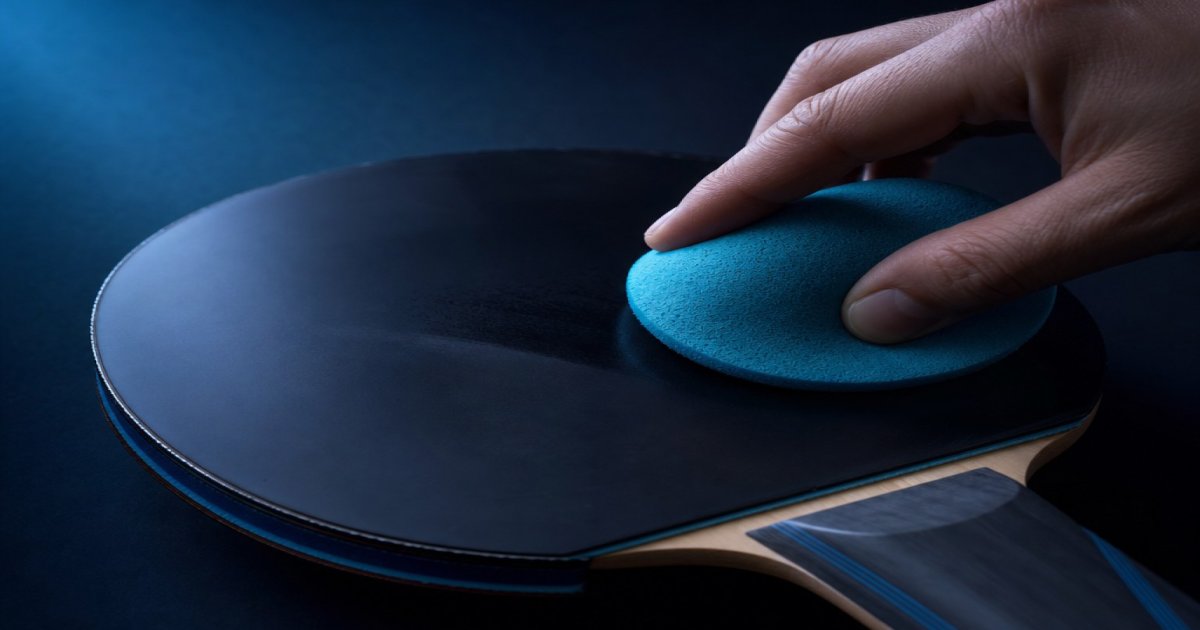
A junior player in Chaguanas once blamed three consecutive tournament losses on a sudden, mysterious collapse in her loop game, the same shot that had carried her through the regional qualifiers a month earlier, gone flat and lifeless overnight. Nobody had ever taught her how to clean table tennis rubber, and it nearly cost her a season.
Her coach didn’t touch her technique at all. He wiped her rubber down with a damp sponge before the next match, and the loop came back within the first game.
The grip hadn’t disappeared from her arm. It had disappeared from a rubber surface caked in a month of dust, finger oil, and dead skin she’d never once thought to clean.
Use a dedicated rubber cleaner spray or a mix of mild soap and water on a soft sponge, wipe gently in circular motions, then dry immediately with a clean cloth.
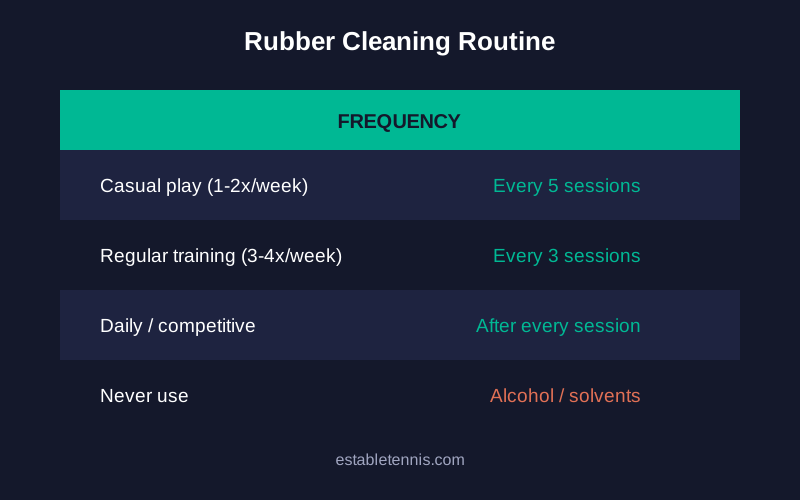
Clean after every few sessions to remove dust and skin oil that build up on the tacky surface and reduce grip over time.
Grip loss from dirty rubber is one of the most common, most invisible equipment failures in the sport, because it happens gradually enough that most players blame their technique long before they think to blame a surface they can’t see losing its tack in real time.
Grip loss never announces itself with a single dramatic moment: it arrives quietly, one session at a time, until a coach with a damp sponge reminds you what the shot was supposed to feel like all along.
Why does table tennis rubber even need cleaning?
The topsheet of inverted rubber relies on microscopic tackiness to grip the ball and generate spin through friction. Dust, airborne debris, and oils from your own fingers during handling settle into that tacky surface over time, filling in the texture that creates grip.
The rubber isn’t wearing out in these cases: it’s simply covered, the same way a dusty windshield doesn’t stop working, it just stops letting light through until someone wipes it.
The stroke never actually left. It was buried under a fine layer of dust the whole time, waiting for someone to notice.
What’s the actual difference dirty rubber makes on court?
A grimy rubber surface loses a meaningful percentage of its spin-generating friction, which shows up specifically on shots that depend on grip: loops and heavy topspin serves flatten out, and the crisp “bite” a player is used to feeling on contact goes soft and vague.
Because the loss is gradual, most players experience it as their technique quietly declining rather than their equipment quietly failing, which sends them hunting for a stroke fix to a problem that lives entirely on the surface of their racket.
Frequency, not intensity, is the actual protective factor here: a light wipe done often beats a deep scrub attempted rarely, every single time.
How often should rubber actually be cleaned?
Roughly every three to five sessions for a regularly playing club member, though anyone training daily should clean more frequently: a light wipe-down after every session takes under a minute and prevents buildup from ever reaching the point where it noticeably affects grip.
Players who only clean rubber when it visibly looks dirty are usually cleaning it well after performance has already started to suffer.
Gentle, deliberate, circular motions: never a hard scrub, never a rush to finish, because the surface being cleaned is the same one asked to grip a ball a thousand times a session.
What’s the correct cleaning method?
A dedicated table tennis rubber cleaner, sold as a spray or gel specifically formulated for this surface, is the safest and most effective option: apply a small amount to a soft sponge (not directly onto the rubber), wipe gently in circular motions across the entire surface, then dry immediately with a clean, lint-free cloth.
Mild soap and water on a soft sponge works as a lower-cost alternative, provided the rubber is thoroughly dried afterward, since trapped moisture degrades the sponge underneath over time.
What restores a stroke isn’t always more repetitions. Sometimes it’s just a clean surface, wiped down properly for the first time in weeks.
What should you never use to clean rubber?
Avoid alcohol-based cleaners, solvents, or any household cleaning product not specifically designed for table tennis rubber: these can dry out or chemically degrade the rubber compound, accelerating the exact grip loss you’re trying to prevent.
Also avoid abrasive scrubbing pads or anything beyond a soft sponge, since the topsheet texture that creates grip is delicate and easily damaged by rough handling.
A cheap protective sheet is one of the highest-value purchases a developing player can make, precisely because it prevents a problem before it ever costs a single point.
Does a rubber protective sheet actually help keep it clean?
Yes, significantly. A thin protective film applied over the rubber between sessions blocks dust and airborne debris from settling into the surface in the first place, meaning less frequent deep cleaning is needed and the rubber’s tack is preserved longer overall.
This is worth pairing with a proper cleaning routine rather than relying on either alone, covered in more detail in our guide on how to protect table tennis rubber.
Cleaning removes what’s already accumulated. It can’t undo compound-level wear, and knowing that distinction saves a wasted purchase or a wasted cleaning session chasing a fix that was never available.
Can cleaning restore rubber that’s genuinely worn out?
No, and this distinction matters. Cleaning removes surface contamination (dust, oils, debris), but it cannot reverse actual physical wear to the rubber compound itself, which degrades gradually with heavy use regardless of how well it’s maintained.
If a thorough cleaning doesn’t restore the grip and responsiveness you remember, the rubber has likely reached genuine end-of-life; see our guide on how long table tennis rubber lasts for how to tell the difference.
Thirty seconds, most nights, is genuinely all it costs: less time than it takes to zip the racket case shut and walk out the door.
What’s the fastest habit to build around cleaning?
Wipe the rubber down with a slightly damp cloth immediately after every session, before packing the racket away, and apply a protective sheet before storage.
This thirty-second habit prevents the vast majority of grip-robbing buildup from ever accumulating, turning a maintenance chore into a non-event rather than an occasional deep-clean emergency before a big match.
How does cleaning frequency differ between inverted and pimples rubber?
Pimples-out and long-pips rubber, covered in our guide on inverted rubber vs pimples out, tend to accumulate dust and debris in the small gaps between individual pimples even faster than a flat inverted topsheet, since the textured surface has more physical crevices for particles to settle into.
Players using pimples or long-pips rubber often benefit from slightly more frequent cleaning than the standard three-to-five-session guideline, particularly for long-pips setups where the exaggerated texture is central to the rubber’s spin-disrupting function and any buildup interferes with that mechanism directly.
Does the cleaning method differ for different sponge thicknesses?
The cleaning process itself doesn’t change meaningfully with sponge thickness: what changes is how carefully moisture needs to be managed afterward.
Thicker sponge holds more residual moisture if a cleaning session runs damp rather than lightly moist, and that trapped moisture takes longer to fully evaporate, during which the sponge is more vulnerable to degradation.
Thinner sponge dries faster and tolerates a slightly more liberal cleaning approach, though the general principle (clean lightly, dry immediately and thoroughly) applies across every thickness.
Can over-cleaning actually damage rubber?
Yes, if done too aggressively or too frequently with the wrong products. Excessive scrubbing, even with a soft sponge, can gradually wear down the delicate topsheet texture that creates grip in the first place, and cleaning far more often than needed with any liquid, even a gentle one, introduces more moisture cycling than the rubber compound benefits from.
The goal is removing contamination efficiently, not treating cleaning as an activity that can never be overdone: following the recommended three-to-five-session interval, rather than cleaning after every single point of contact, strikes the right balance.
What’s the connection between cleaning habits and confidence on specific shots?
This mirrors a pattern that runs through nearly every equipment maintenance topic on this site: a gradual physical decline in equipment performance gets experienced by the player as a decline in their own skill, specifically on shots that depend most heavily on the degraded quality.
For grip loss from dirty rubber, that’s almost always the loop and heavy topspin shots first, since those depend most directly on surface friction.
A player who notices their loop specifically declining, while other shots feel unchanged, should treat that pattern as a strong signal to check the rubber’s cleanliness before assuming a technical breakdown.
Is there a difference between cleaning rubber for casual play versus before a tournament?
The underlying method is identical, but the timing discipline matters more before competition.
A pre-tournament cleaning, done a day or two ahead rather than the morning of, ensures the rubber is fully dry and settled by match time, rather than rushed and potentially still slightly damp from a last-minute wipe-down.
Building a habit of cleaning on a regular schedule, rather than only remembering right before a big match, removes this timing pressure entirely and ensures the rubber is always match-ready without a scramble.
What should you do if cleaning reveals actual physical damage to the rubber?
If cleaning uncovers tears, significant pimple damage on a pimples-out sheet, or visible separation from the sponge underneath, that’s beyond what any cleaning routine can address: it’s a replacement situation, not a maintenance one.
Catching this early, during a routine cleaning session rather than mid-match, is one of the underrated benefits of a consistent cleaning habit: it forces regular, close inspection of the rubber’s actual physical condition, surfacing problems before they become a mid-match surprise.
How does climate affect how often rubber needs cleaning?
Humid, dusty, or high-pollen environments accelerate buildup noticeably compared to a clean, climate-controlled indoor hall, meaning players training in less controlled conditions may need to clean closer to every two to three sessions rather than the standard three-to-five guideline.
Outdoor or semi-outdoor playing environments, less common but not unheard of for casual play, accumulate contamination even faster and warrant checking the rubber’s surface condition after essentially every session rather than relying on a fixed interval.
Does storing rubber with a protective sheet reduce how often it needs active cleaning?
Significantly, yes. A protective sheet applied consistently between sessions blocks the majority of airborne dust and debris from ever reaching the tacky surface in the first place, which means less contamination accumulates between cleaning sessions and each cleaning has less work to do.
Pairing a protective sheet habit with regular cleaning, covered together in our guide on protecting table tennis rubber, produces meaningfully better results than either habit alone: the sheet reduces how dirty the rubber gets, and the cleaning handles what does accumulate despite that protection.
What’s a good habit for players who share equipment or borrow rackets?
Cleaning before, not just after, use is worth adding to the routine whenever a racket has been sitting unused for an extended period or has passed through multiple hands: club rental rackets, a friend’s spare setup, equipment that’s been in storage.
Dust accumulates on unused rubber even without active play, purely from sitting exposed to air, and a quick cleaning before the first session on unfamiliar or long-stored equipment ensures you’re evaluating the rubber’s actual grip rather than a layer of settled dust masking it.
How do you know if your cleaning cloth or sponge itself is contributing to the problem?
A cleaning sponge or cloth reused repeatedly without being washed itself can start redistributing old debris rather than fully removing it, effectively undermining the point of cleaning.
Using a dedicated, clean sponge specifically reserved for rubber cleaning, washed or replaced periodically, avoids this quiet failure mode where a player believes they’re maintaining their rubber properly while an increasingly dirty cleaning tool works against that effort.
Is there a way to test grip quality quickly without a formal cleaning session?
A simple touch test (running a clean, dry finger lightly across the rubber’s surface and noting whether it grips slightly or slides smoothly) gives a rough, immediate sense of current tack level without needing to fully clean the rubber first.
This isn’t a substitute for the deeper periodic cleaning covered throughout this guide, but it’s a useful thirty-second check before a match or practice session, letting a player know in advance whether their equipment is likely to perform as expected or whether a proper cleaning is overdue before stepping onto the table.
None of this is dramatic advice, and that’s exactly the point. The players who never lose a loop game to a dirty rubber aren’t doing anything clever: they’re just doing something small and unglamorous, consistently, before it ever has the chance to become a problem loud enough to notice.
She never doubted her technique again after that day, and to her credit, she never went back to skipping the wipe-down either.
Small habits compound quietly, in either direction. That’s as true of a dusty rubber sheet as it is of anything else worth taking care of over a long career on the table.
Wipe it down tonight. Your loop will thank you tomorrow.
Simple habits, kept simply, are the ones that actually survive a busy season.
Quick Recap: How To Clean Table Tennis Rubber
Getting how to clean table tennis rubber right comes down to matching the equipment to where you actually are, not where marketing copy wants you to be.
Revisit this whenever your game changes enough that the current setup starts feeling wrong.
Frequently Asked Questions
According to the ITTF equipment regulations, all racket coverings must meet specific approval standards before use in sanctioned competition.
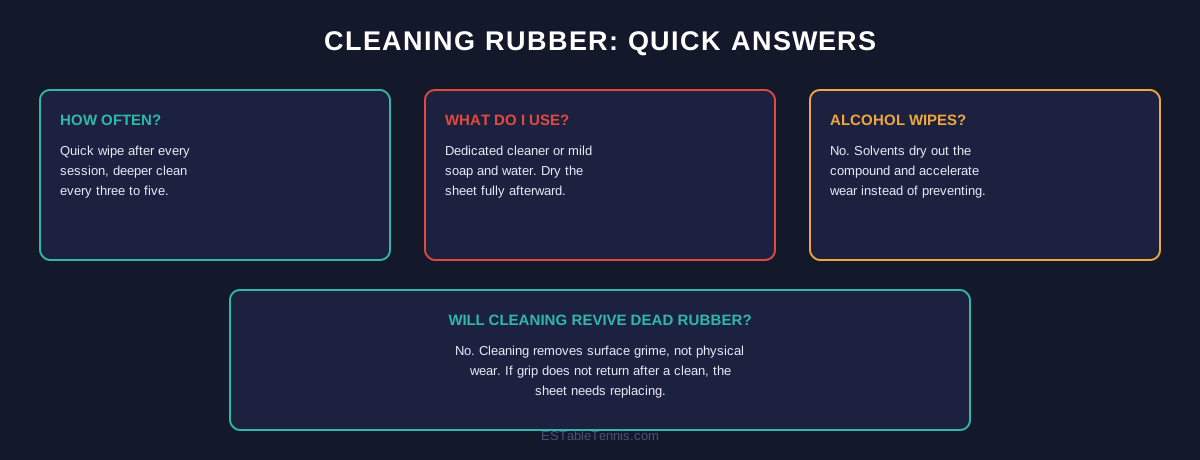
How often should I clean my table tennis rubber?
Can I use water alone to clean rubber?
Does dirty rubber actually reduce spin?
Is it safe to use alcohol wipes on table tennis rubber?
Will cleaning restore old, worn-out rubber?
The junior player in Chaguanas won her next tournament, loop game fully restored, and started carrying a small rubber cleaner spray in her bag from that point forward, not out of discipline, exactly, but out of the specific, hard-won paranoia of a player who once lost three matches to a problem that a damp sponge would have solved in under a minute.
Want a full equipment maintenance routine matched to how often you actually play? PingPath gives you a fitted setup and care plan in under three minutes.
Leave a Reply