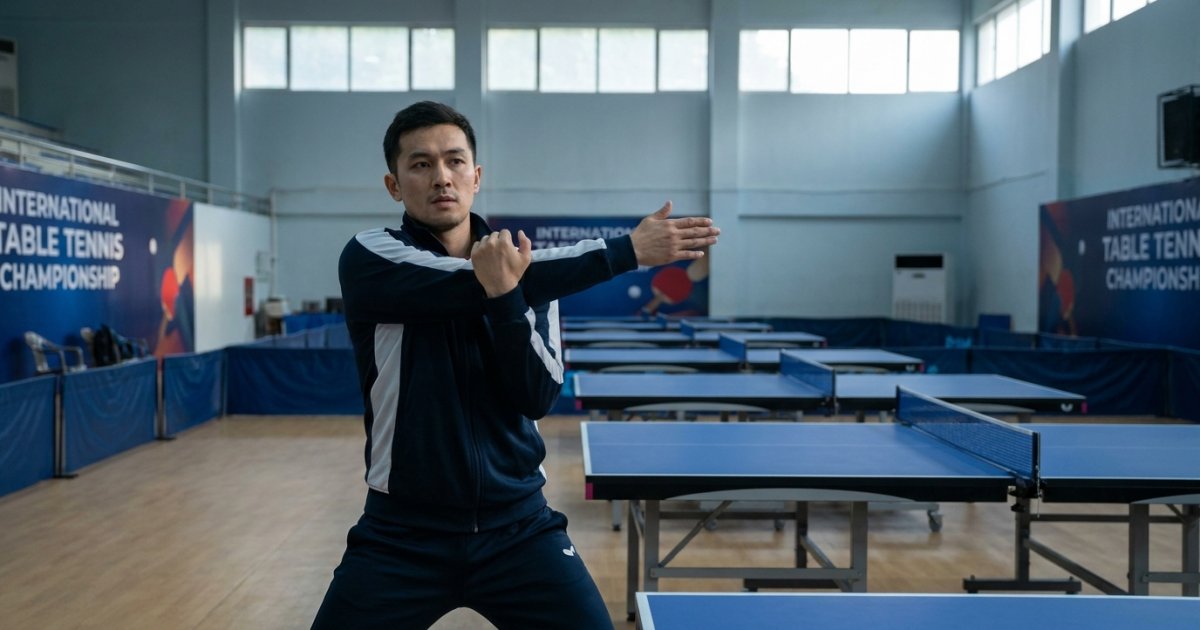
There is a specific kind of chaos that happens in the first hour of a table tennis tournament. Forty players trying to warm up on six tables. A draw that gets delayed twenty minutes. Someone’s bag zipper breaks and their spare rubber ends up on the floor. I have run tournaments out of a converted hotel conference room in Couva where the “warm-up area” was two tables pushed against a wall, and players had eleven minutes each before their first match got called.
Most players show up to that chaos with no plan and just hit until someone tells them to stop. Then they wonder why their first match of the day always feels like their worst one.
A warm-up is not a formality you rush through so you can start the real thing. It is the first part of the match, and if you treat it that way, everything after it goes better.
I have run enough of these events to say with confidence that the schedule you were handed at registration is a rough draft, not a contract. Draws get reshuffled when a walkover happens. Matches run long. A generator trips and the lights go out for ten minutes. None of that is a reason to abandon your warm-up plan. It is the exact reason you need one that survives contact with a room that is not going to cooperate with you.
A table tennis warm-up before a tournament should raise your body temperature with light movement, activate the muscles you are about to load, mobilize your shoulders and wrists, progressively increase hitting intensity until you are playing at close to match speed, and include a short mental routine (breathing plus a visualization rep) so you arrive at the table physically and mentally ready at the same time.
What Should a Table Tennis Warm-Up Before a Tournament Actually Include?
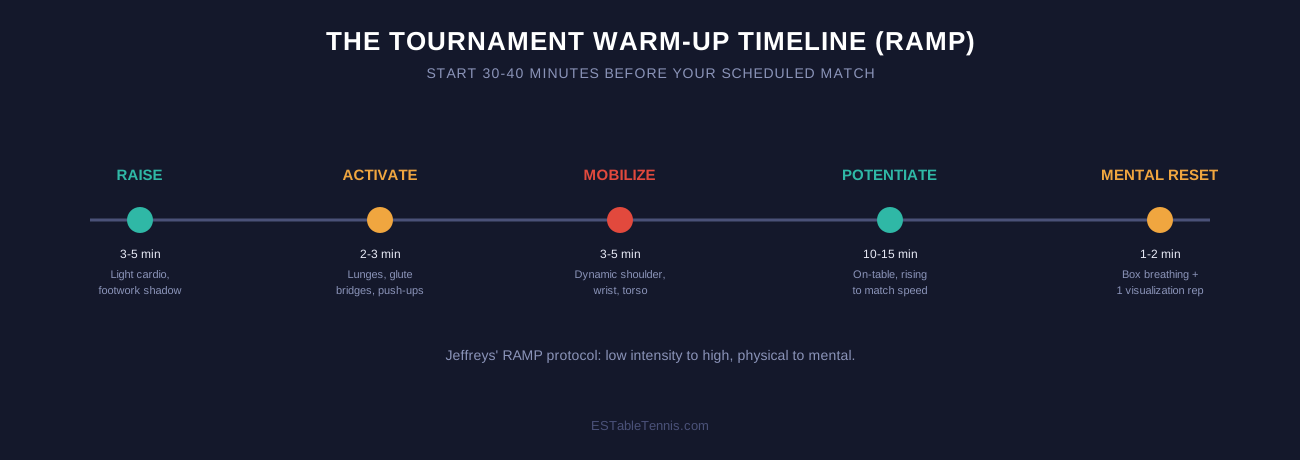
A proper warm-up follows a simple sequence: raise your body temperature, activate the muscles you are about to use, mobilize the specific joints you use most, then potentiate, meaning you gradually push the intensity of your hitting up toward match pace. Strength and conditioning coach Ian Jeffreys developed this as the RAMP protocol, and it works precisely because it moves in one direction, low intensity to high, rather than jumping straight into hard topspin rallies with a cold body.
Skipping straight to hard hitting because a table finally opened up, which happens constantly at crowded tournaments, is how players strain a shoulder in the first game of the day or spend their first match still finding their timing instead of competing with it.
This matters more in table tennis than in a lot of other sports, because so much of the game depends on fine motor control and precise timing rather than raw power. A cold shoulder can still swing a punch or kick a ball with reasonable accuracy. A cold shoulder producing your first loop of the day rarely lands where you meant it to, and that first miss, entirely explainable by physiology, often gets misread by the player as a bad sign for the whole match rather than what it actually is: a body that has not finished waking up yet.
How Long Before Your Match Should You Start Warming Up?
Start your physical warm-up 30 to 40 minutes before your scheduled match time, and build in slack for delays, because tournament schedules rarely run exactly on time.
If your draw says 10:00 AM, that is not when you start warming up. That is when you should already be finishing. Arrive with enough margin that a twenty-minute delay, which is closer to normal than rare, does not force you to either warm up twice or sit cold for half an hour waiting to be called. If you do get delayed after a full warm-up, a short top-up- five minutes of shadow strokes and a few serves, right before you are called keeps you from going in cold.
What’s the Physical Warm-Up Sequence, Step by Step?
Run the sequence in this order, and do not skip ahead to hard hitting because a table opened up early.
Raise (3 to 5 minutes). Light cardio and footwork shadow patterns without a ball. Side-to-side shuffles, split steps, a light jog if you have the space. The goal is simply to raise your heart rate and body temperature before you ask any joint to do real work.
Activate (2 to 3 minutes). Bodyweight movements that switch on the muscles you are about to load: lunges, glute bridges, a few controlled push-ups. This wakes up the muscle groups your footwork and strokes depend on, so the raise phase does not just pass straight into hitting with dormant glutes and hips.
Mobilize (3 to 5 minutes). Dynamic shoulder circles, wrist rotations, and torso twists: the joints that take the most repeated load in a match. Keep this dynamic, meaning movement-based, rather than long static holds, which are better saved for after you play, not before.
Potentiate (10 to 15 minutes, on the table). Start with soft, high-percentage rallies at half pace. Move to your forehand and backhand loops at increasing speed. Add serve practice, several of your main serves at full intensity, since the serve is the one shot in the match you will need at full pace from your very first point. Finish with a few short, sharp exchanges that resemble actual rally speed, not a gentle cooperative rally.
None of these four phases needs special equipment or a coach standing over you. A resistance band for the shoulder work helps but is not required. What matters is the order: low intensity before high intensity, and the consistency of running the same sequence every single time you compete, so your body recognizes the pattern as much as your mind does.
How Do You Warm Up Your Mental State, Not Just Your Body?
Warm up your mental state by pairing physical warm-up with a short breathing sequence and one specific visualization rep, so your arousal is regulated, and your first few points are already familiar before you play them.
Somewhere between your on-table hitting and being called to your match, take sixty seconds for box breathing: four counts in, four counts hold, four counts out, four counts hold, for three or four cycles. This settles your arousal into a useful range instead of letting pre-match nerves climb unchecked while you wait.
Then run one short visualization rep, your first serve of the match landing exactly where you want it, in full sensory detail, in the actual hall you are standing in. This is the same PETTLEP-based rehearsal covered in table tennis visualization techniques, compressed to a single rep because a crowded tournament warm-up area rarely gives you five uninterrupted minutes for the full version.
If you already run a pre-serve routine between points, this is the same idea scaled up to the start of the match: a fixed, repeatable sequence that tells your nervous system the real thing is starting now, not five minutes from now, not whenever you feel ready.
How Do You Re-Warm Up Between Matches Later in the Day?
Between matches, scale your warm-up to the gap you actually have. A short 15 to 20 minute gap needs a compressed version. A two-hour gap between rounds needs almost the full sequence again, because your body cools back down and your focus drifts in that time regardless of how warmed up you were three hours earlier.
For a short gap: skip the raise phase (your body is often still warm from the last match), run a quick mobilize pass on your shoulder and wrist, and go straight to five minutes of on-table hitting focused on your serve and a few fast exchanges. This is not the moment for a long cooperative rally with whoever is free.
For a longer gap, treat it close to a full warm-up again, including the raise phase, because a body that has fully cooled and a mind that has drifted onto other matches, food, or scrolling a phone in the corner both need the complete sequence, not the shortcut version. This is also the moment to eat something light and easy to digest if your next match is more than ninety minutes out, and to avoid heavy food if it is closer than that.
The mental routine, breathing plus one visualization rep, stays the same regardless of the gap length. That part should feel identical whether it is your first match of the day or your fifth, since consistency in that specific piece is what makes it function as a reliable trigger rather than a novelty.
What If You’re Warming Up After a Long Travel Day?
If you traveled to the tournament, drove several hours, or flew in the day before, extend the raise phase and be honest with yourself about reduced sharpness rather than trying to compensate with harder hitting.
Travel fatigue shows up as stiffness first, so give the raise phase an extra two or three minutes and pay closer attention to your lower back and hips during mobilization, areas that tighten up specifically from sitting for long stretches in a car or on a plane. Do not try to prove you are fine by hitting harder or longer than usual. Warm up to your actual state that day, not the state you wish you were in, and adjust your first-match expectations accordingly rather than being surprised when the legs feel a step slow early on.
What Should You Avoid in Your Pre-Match Warm-Up?
Avoid three specific mistakes: overhitting until you are tired before the match starts, trying to fix or change your technique on the day, and warming up against a practice partner whose style has nothing in common with your actual opponent.
Overhitting is the most common. Nervous players sometimes hit harder and longer than they need to, mistaking activity for readiness. Fifteen focused minutes beats forty scattered ones, and arriving at your match with fresh legs matters more than arriving having proven something to whoever was watching you warm up.
Trying new technique on the day is the second trap. If your coach mentioned a grip adjustment last week, tournament morning is not when you test it live. Warm up with what you already trust.
The third is subtler. If your opponent is a heavy chopper and your warm-up partner is an aggressive looper, your hands adapt to the wrong rhythm right before you need the opposite one. When you know your opponent’s style in advance, spend at least a few minutes of your on-table time simulating it, even if that means asking a teammate with a similar style for five minutes rather than staying with whoever you started with.
There is an equipment angle worth naming here too. Warm up with the exact racket and rubber you plan to compete with, not a club loaner or a spare you have not hit with in weeks. Confirming your glue and grip feel right happens during the warm-up, not during the first game, when a rubber that feels slightly off becomes one more thing pulling your attention away from the point in front of you.
Carry a spare, glued and ready, in your bag regardless of how confident you feel in your main setup. Warm-up areas are exactly where a dropped bat cracks a blade or a rubber edge lifts, and discovering that thirty seconds before your match is called is a worse time to solve it than the calm five minutes you have while waiting for a table.
Frequently Asked Questions
How long should a table tennis warm-up be before a tournament match?
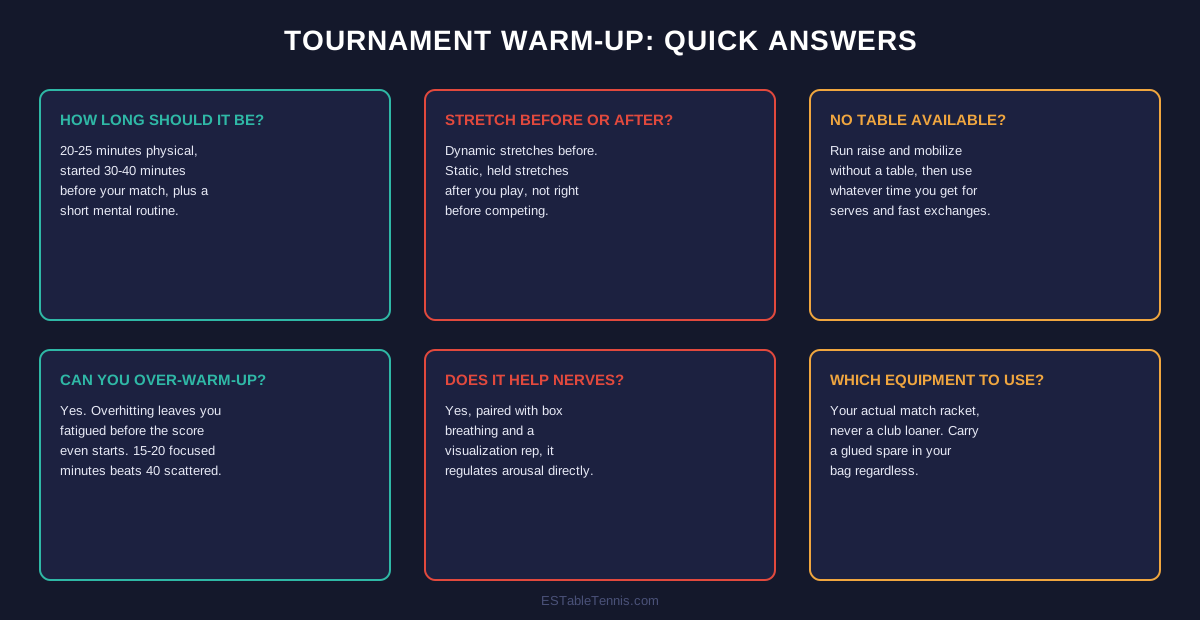
Around 20 to 25 minutes of physical warm-up (raise, activate, mobilize, potentiate), started 30 to 40 minutes before your scheduled match time to allow for tournament delays, plus a short 1 to 2 minute mental routine right before you are called.
Should I stretch before or after my match?
Dynamic stretching (movement-based, like arm circles and lunges) belongs in the warm-up. Static stretching (long, held stretches) is better saved for after you play, since holding a deep stretch on cold muscles right before competing can temporarily reduce power output.
What if there are no tables free to warm up on before my match?
Run your raise and mobilize phases without a table, shadow footwork and dynamic stretching take no table at all, then take whatever short window you get on a table to focus entirely on your serve and a few fast exchanges rather than long cooperative rallies.
Can I warm up too much before a match?
Yes. Overhitting before your match starts leaves you fatigued and mentally spent before the score even begins. Fifteen to twenty focused minutes covering all three warm-up phases beats forty scattered minutes of hitting.
Does warming up actually help with nerves, or just the body?
Both. A structured warm-up gives you something concrete to focus on instead of your nerves, and pairing it with box breathing and a short visualization rep directly regulates the arousal that would otherwise build unmanaged while you wait to be called.
How Should Junior or First-Time Tournament Players Adjust This Routine?
Younger or first-time tournament players should shorten the potentiate phase and spend more time proportionally on serve confidence than on hard topspin rallies, since a first tournament is more often lost to nerves and unfamiliarity than to a lack of physical readiness.
A junior player’s attention span for a structured warm-up is also genuinely shorter, and pushing a strict 20-minute sequence on a ten-year-old often backfires into fidgeting and rushed effort. Keep the raise and mobilize phases playful, footwork games rather than drills, and compress the on-table portion to serves and short, encouraging rallies rather than a full progression to match-speed hitting.
The mental piece matters more here, not less. A first tournament is often the first time a young player has felt real pre-competition nerves at all, so naming the sensation for what it is- your body getting ready, not a sign something is wrong- does more for a first-timer than another physical rep would.
What Should You Actually Do With This Before Your Next Tournament?
Write your own sequence down before your next event. Not a mental note. An actual list: raise for five minutes, mobilize for five, on-table potentiation for fifteen, breathing, and one visualization rep right before you are called. Bring it with you. Reference it in the chaos of a crowded warm-up area instead of trying to remember it from scratch while forty other players are all fighting for the same six tables.
Print your sequence, or save it as a note on your phone, and treat it the same way you would treat your equipment bag: something you check before you leave the house, not something you trust yourself to remember correctly at 7 AM on the morning of an event you have been anxious about for a week.
The players who look calm and ready in their first match of the day are rarely the ones who feel nothing beforehand. They are the ones who showed up with a plan for the hour that most players waste. Simple, boring, and repeated the same way every single time it matters. Not because the room stops being chaotic. Because you stop needing it to be calm before you can be.
For more on building the mental side of your preparation, download the free ebook, How to Remain Calm When It’s Crunch Time, which walks through the full pre-match system this warm-up routine is designed to plug into.
Leave a Reply