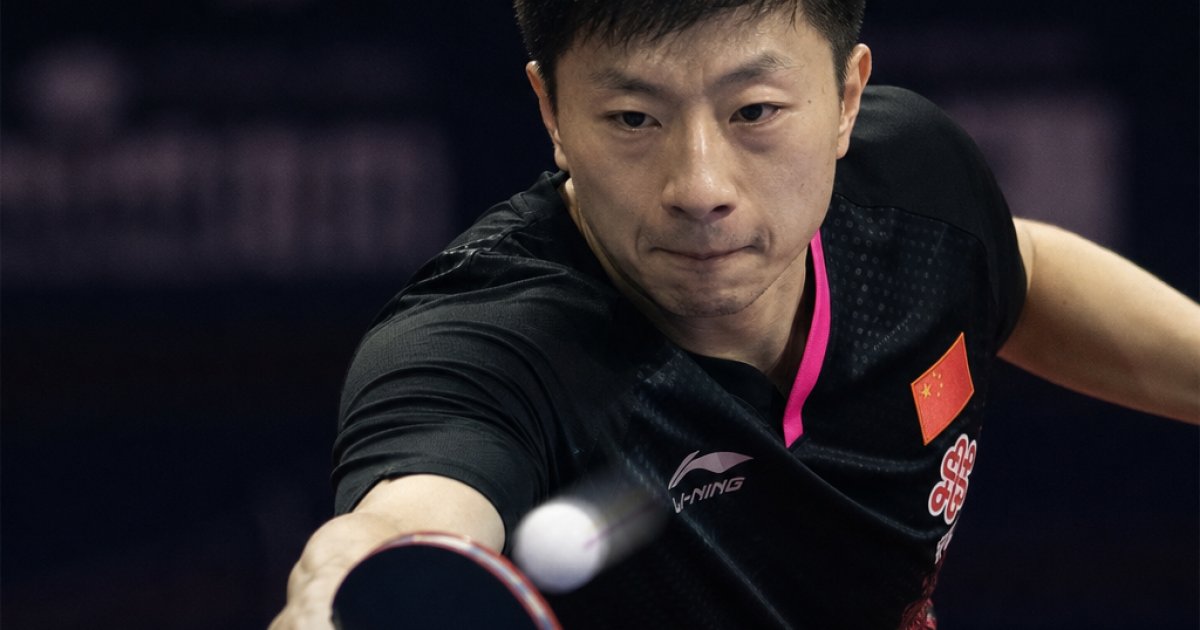
A good looper does not just hit the ball hard. They hit it with enough topspin that the ball dips into the table exactly when you expect it to keep sailing, and by the time you have adjusted to the dip, the next one is already on its way. Blocking a strong loop feels like trying to catch something that keeps changing its mind mid-flight. Same table. Same net. A completely different problem to solve.
Most players lose to a good looper by treating every ball the same way: block it back and hope. That is a survival plan, not a strategy, and survival plans lose to good loopers eventually. They just lose more slowly than a player with no plan at all.
To beat a looper in table tennis, close your racket angle and shorten your block so heavy topspin does not fly off the end of the table, mix in counter-attacks and pushes rather than blocking every single ball, and deny the setup entirely when you can by serving short and low so the loop never gets a clean ball to work with in the first place.
Why Is a Heavy Looper Such a Different Problem Than Other Attacking Styles?
A heavy looper is a different problem because their power comes from spin more than pure pace, and spin is invisible in a way raw speed is not, which means your usual timing cues, the ones that work fine against a flat hitter, quietly stop being reliable. Speed rewards a fast reaction. Spin rewards a correct read, made before the ball ever gets close.
Against a flat, hard hitter, the ball generally does what your eyes predict once you have judged its speed. Against a heavy topspin loop, the ball’s actual behavior on the bounce, how much it kicks forward and dips, depends on spin your eyes cannot directly see, only infer from the racket’s brushing motion at contact.
Players who have only trained against flat hitting genuinely struggle here, not because they lack skill, but because the specific cue set this style requires is different from the one they have practiced.
What Does a Topspin Loop Actually Do, and Why Is It Hard to Block?
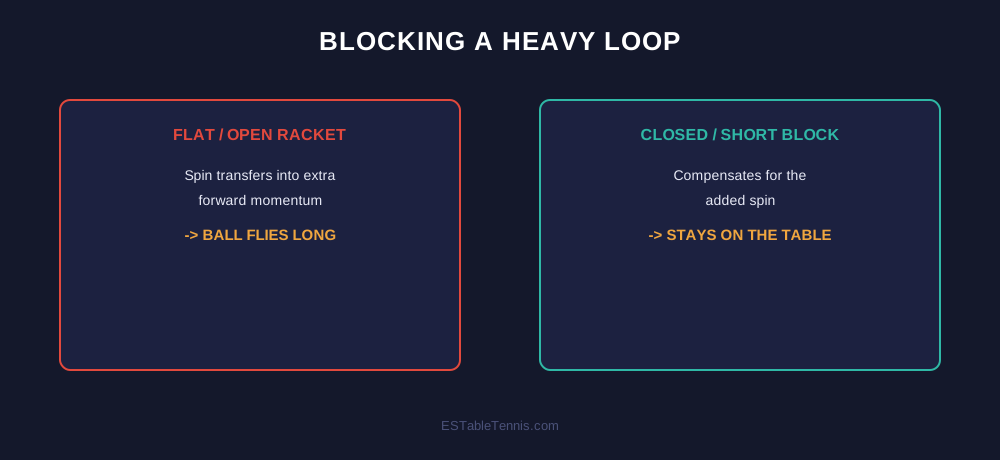
Heavy topspin creates a downward force through the same Magnus effect that makes a backspin push float, just running the opposite direction, and this is exactly why a flat, open racket block sends the ball flying long off the end of the table.
When a heavily topspun ball hits an open or flat racket face, that spin transfers into extra forward momentum on the way off your racket, not just off the table. A block that would work fine against a flat, spin-neutral shot sends a heavy loop sailing long, because the block itself did not account for the spin doing additional work on top of the ball’s raw speed.
This single mechanical fact explains most of the “I blocked it perfectly, and it still went long” frustration players describe against strong loopers. Not because you failed to block it. Because the block itself was never going to be enough against that much added spin.
How Do You Block a Loop Without It Flying Off the Table?
Close your racket angle slightly and shorten the block into a small, controlled tap rather than a full swing, since the extra spin needs a more closed surface to redirect it down onto the table instead of off the end of it.
The instinct against a hard, fast ball is often to swing back with equal force, which is exactly backwards against heavy topspin. A short, quiet block, contact close to the table, racket angle closed down to compensate for the spin, absorbs the pace rather than adding your own force to a ball that already has plenty.
Practice this specifically against a partner or coach feeding heavy loops, since the feel of “less swing, more angle” only becomes intuitive through repetition against the real spin, not through understanding the concept alone.
How Do You Counter-Attack a Loop Instead of Just Surviving It?
Counter-loop by taking the ball early, right after the bounce, and matching your own topspin against theirs rather than trying to out-power a shot that is already faster and heavier than your baseline stroke.
A pure block-only strategy against a strong looper is a losing war of attrition, since eventually one block goes slightly wrong and the point is lost. Mixing in a counter-loop, especially on a slightly weaker or shorter loop rather than their very best one, changes the exchange from pure defense into a genuine contest.
This requires taking the ball earlier than feels comfortable at first, on the rise rather than at the peak of its bounce, since waiting for a more familiar contact point gives the spin more time to do its work against you. Waiting for the ball to arrive is exactly what the spin is counting on.
How Do You Read Which Loop Is Coming Before It Arrives?
Watch the backswing size and the racket’s brushing angle through contact, since a bigger backswing generally signals a more committed, heavier loop, while a shorter, quicker swing usually means a faster, flatter one with comparatively less spin to compensate for.
This connects directly to the broader skill covered in how to read your opponent in table tennis: the backswing is visible well before contact, and it is one of the more reliable pre-contact cues specifically because generating real spin requires a genuinely different body motion than generating raw pace. A looper cannot fully disguise the difference between their heaviest spin shot and a flatter, faster one, since the two require noticeably different swing paths to produce.
Should You Change Your Grip or Stance to Handle Heavy Loops Better?
Stay slightly further from the table than your default rally distance, and keep your racket a touch more closed at rest, since both adjustments give you a fraction more time and a safer default angle against a style that specifically punishes being caught too close and too open.
This is a small positional shift, not a technical overhaul. Standing even half a step back gives you slightly more time to read the incoming spin before you must commit to your block or counter, and a marginally closed ready position means your default reaction, if you are rushed and cannot fully adjust, errs toward keeping the ball on the table rather than sending it long. Neither change fixes the underlying problem alone, but both make the specific mistakes this style punishes less likely by default.
How Do You Deny a Looper the Setup They Need in the First Place?
Serve short and low more often, since a looper’s biggest weapon depends on a ball with enough length and height to load their swing, and a well-placed short serve removes that opportunity before the rally even develops.
A looper facing a short, low serve has to generate their own power from a much more compact, controlled position, which is a genuinely different and often less comfortable shot for a player whose whole game is built around a full loading swing.
This is a similar principle to the serve strategy in how to deal with a pusher in table tennis, adapted to the opposite problem: instead of denying rhythm, you are specifically denying the physical setup a big shot requires.
What’s the Mental Side of Facing a Player Who Loops Everything?
Expect the first few loops to feel uncomfortable and resist the urge to panic into wilder, more desperate blocks, since the specific discomfort of facing heavy topspin fades with a few points of real exposure, the same way any unfamiliar pace does.
Players who have not faced a genuinely strong looper recently often describe the first few points as feeling rushed even when their actual reaction time was fine, purely because the sensation is unfamiliar.
This is a specific version of the explicit-monitoring problem covered in how to stop choking in table tennis: the discomfort itself is not a sign anything is going wrong technically, and treating it as a crisis rather than an adjustment period produces the exact rushed, over-corrected blocks that actually do go wrong. Two points, one made from spin and one from nerves, and only one of them shows up on the scoreboard as anything other than a lost rally.
How Does This Change in Doubles?
Communicate positioning early, since a heavy loop from either opponent can pull the receiving player wide, and the partner needs to already be adjusting coverage rather than reacting only after the ball has been played.
Doubles against a strong looping pair rewards the team that recovers court position fastest after a big loop, more than the team that blocks any single shot most cleanly. A short conversation before the match about who covers which zone when a loop pulls a player out of position is worth more than any individual technical adjustment, since the actual points lost in doubles against loopers are frequently about spacing, not the block itself.
Especially when the spacing failure keeps repeating game after game while everyone blames the block instead.
Does Your Own Rubber Matter Against a Heavy Looper?
Yes, significantly, since blocking and countering heavy topspin consistently requires a rubber and sponge combination that can absorb and control spin rather than amplify it, and the wrong setup makes even a technically correct block harder to execute.
A very lively, fast rubber built for your own attacking game can genuinely make blocking a heavy loop harder, since it returns more of the incoming spin and speed rather than absorbing it the way a more control-oriented surface does.
If you notice your blocks specifically flying long against strong loopers more than your overall skill level would predict, that is worth checking against your actual rubber rather than assuming it is purely a technique gap. PingPath’s quiz factors in exactly this kind of matchup when it recommends a setup. A rubber built to blunt spin, not just to hit back harder.
Is There a Difference Between a Forehand Looper and a Two-Wing Looper?
Yes, and the difference matters tactically. A forehand-dominant looper usually has one clear weaker wing you can target to avoid feeding their best shot repeatedly, while a genuine two-wing looper removes that simpler option and forces you to rely more heavily on denying the setup altogether rather than picking a safe side.
Against a forehand-dominant looper, directing play to their backhand, even if it costs you some of your own preferred patterns, avoids repeatedly feeding the one shot most likely to end the point against you. Against a true two-wing looper, this option mostly disappears, which is exactly why the short-serve, deny-the-setup approach becomes proportionally more important.
You cannot out-target a player who loops equally well from both sides. You can still deny both sides the length they need. A small target moving a lot less often loses points than a wide-open one moving a little.
Should Beginners Try to Counter-Loop, or Focus Purely on Blocking?
Beginners without a developed loop of their own should focus on the closed-angle block and short serves first, and add counter-looping only once that foundation is genuinely solid, since attempting to counter-loop before the basic block is reliable tends to produce worse results in both.
The block is the more foundational skill here, and it is also the one that keeps you competitive in a rally while you develop the more advanced counter-attacking option. Trying to skip straight to counter-looping without a reliable block first often means neither shot is dependable under real pressure, since both require different, only partially overlapping technical skills.
A useful practice structure for this: spend the first half of a session purely blocking heavy loops fed by a partner or coach, focused entirely on the closed angle and short contact, with no attempt to counter-attack at all. Only in the second half, once the block feels genuinely reliable, introduce counter-looping on a portion of the feeds. Building the two skills in strict sequence, rather than mixing them from day one, tends to produce a more dependable version of both.
Frequently Asked Questions
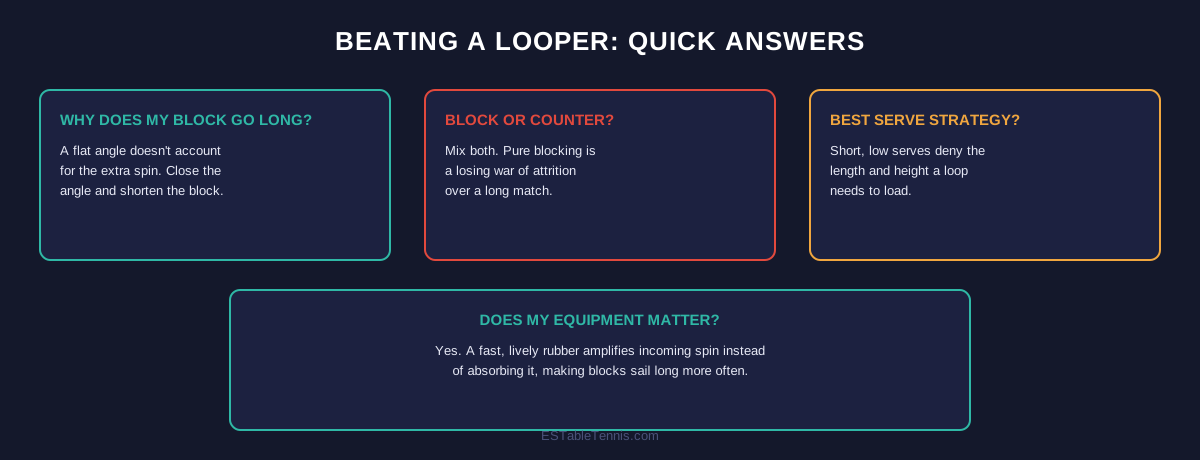
Why do my blocks fly long against a heavy topspin loop?
A flat or open racket angle does not account for the extra forward force heavy topspin adds through the Magnus effect. Closing your racket angle slightly and shortening the block compensates for that added spin.
Should I always block a strong looper, or try to counter-attack?
Mix both. Pure blocking against every loop is a losing war of attrition over a long match. Counter-looping, especially on a shorter or weaker loop, turns pure defense into a genuine contest.
What serve strategy works best against a looper?
Short, low serves deny a looper the length and height their swing depends on, forcing a more compact, less comfortable shot instead of their full loading loop.
Does my own equipment affect how well I can block loops?
Yes. A fast, lively rubber built for attacking can amplify incoming spin rather than absorb it, making blocks that would otherwise work fine sail long against heavy topspin.
This is the same lesson that shows up against every specialist style in the sport, whether it is a pusher exploiting patience or a looper exploiting power. The style looks unbeatable from the outside only because the specific, mechanical answer to it is not obvious until someone points it out.
Once it is pointed out, the problem shrinks from “this player is just better than me” to a short, concrete list of adjustments, which is a far more useful place to stand before your next match.
What Should You Drill Before Your Next Match Against a Looper?
Practice the closed-angle, short block specifically against real, heavy loops, not just a gentle feed, and drill taking the ball earlier than feels natural so counter-looping stops being a theoretical option and becomes a shot you actually trust under pressure.
A strong looper is not unbeatable. They are a specific mechanical problem with specific mechanical answers: closed angle, shorter block, earlier contact, denied setup. None of it requires you to out-power a shot built entirely around power in the first place.
A looper who wins a long, even trade of big shots with you has usually already won the psychological half of the exchange too, which is worth naming honestly. Beating a strong looper is rarely about hitting a single spectacular counter-shot.
It is about surviving enough of the ordinary exchanges, cleanly and without panic, that the looper eventually has to take a bigger risk than they wanted to, on a table where every rushed decision costs them exactly as much as it costs you.
For the opposite matchup, see how to deal with a pusher in table tennis. Two very different problems, one net between them. And if you suspect your rubber is working against you specifically in blocking exchanges, PingPath’s quiz matches your setup to your actual playing style in a couple of minutes.
Leave a Reply