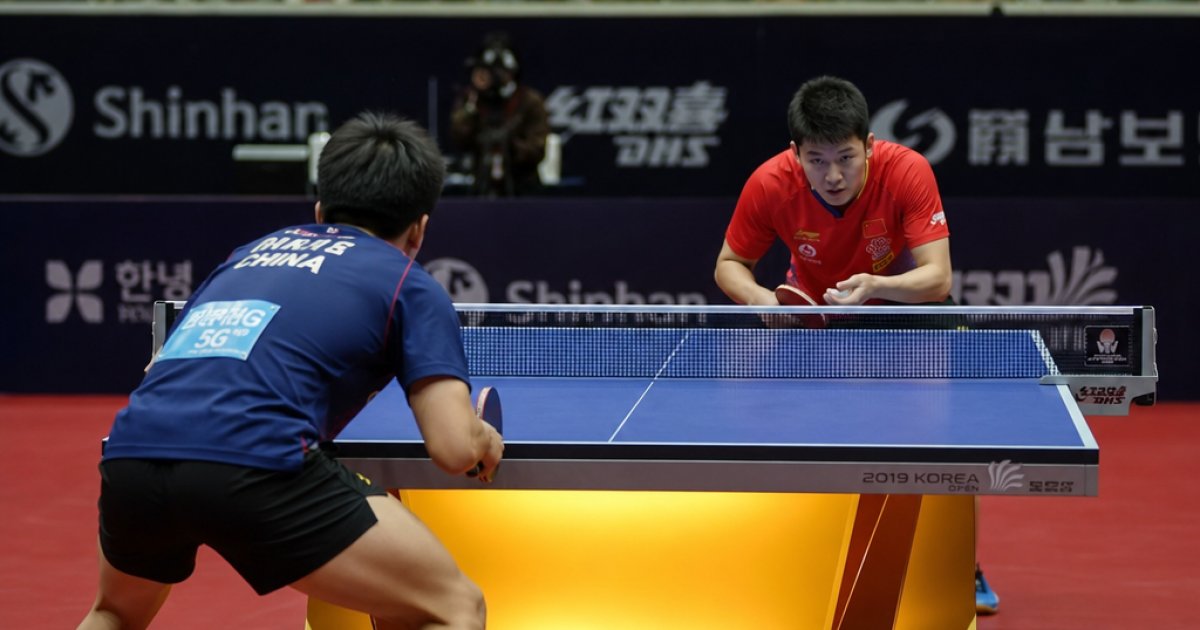
Most club players walk to the table with a plan that amounts to “play my normal game and see what happens.” That is not a strategy. That is just playing, and it is why so many matches between two similarly skilled players come down to whoever happened to have the better day rather than whoever actually out-thought the other. A specific plan you could say out loud in ten seconds, not a vague feeling about how the match should go.
A real match strategy is decided before the first point, adjusted during the match based on evidence, and specific enough that you could explain it to someone else in a sentence.
It also explains why two players of genuinely similar skill so often produce lopsided scorelines. The gap was rarely technical on the day. It was one player executing a specific, pre-decided plan and the other reacting shot by shot with no plan at all, discovering the correct target somewhere around game three, by which point the early games were already gone.
Table tennis match strategy that actually wins points comes down to targeting your opponent’s weaker side relentlessly, building your serve and receive around a specific plan rather than habit, adjusting within the first game based on what you actually see rather than what you expected, and using your time-out at the moment momentum turns against you, not as a last resort.
What’s the Single Biggest Strategic Mistake Amateur Players Make?
The biggest mistake is playing to your own comfort shot instead of your opponent’s actual weakness, rallying forehand to forehand because it feels good rather than sending the ball where the point is genuinely easiest to win.
This happens because comfort shots feel like progress in the moment, even when they are not producing results. A player with a strong forehand will often keep feeding an opponent’s strong forehand out of habit, because the rally feels familiar and controlled, while the actual data, the score, says the softer backhand target would end the point three shots sooner.
How Do You Build a Game Plan Before You Ever Serve?
Build it from whatever real information you have about your opponent, watched play, a previous match, even a warm-up, rather than starting blank and improvising your entire strategy live.
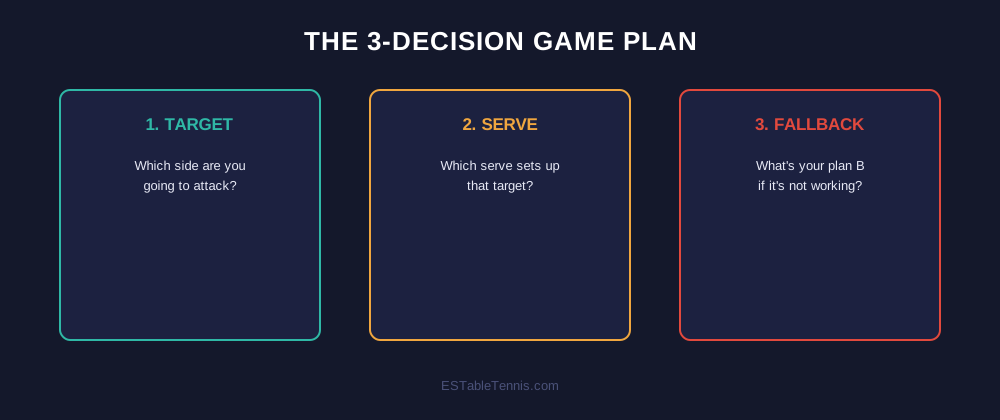
Identify one thing before the match starts: which side you plan to target more, which of your serves you expect to cause the most trouble, and what your fallback plan is if the first two do not work. This does not need to be complicated. Three decisions, made calmly beforehand, beat ten decisions improvised under pressure once the score gets close.
How Do You Scout an Opponent You’ve Never Played Before?
Use the warm-up itself as your scouting report, since a proper warm-up gives you several minutes of real information about an unfamiliar opponent before a single competitive point is played.
Watch which side they favor when given a neutral ball, whether their backhand or forehand looks less comfortable, and how they respond to faster versus slower feeds. None of this requires you to look like you are studying them, which most players find awkward to do openly.
It requires you to actually pay attention during the five minutes most players spend on autopilot, thinking about their own strokes instead of their opponent’s. Real information beats a comfortable guess every time.
If you have zero information at all, not even a warm-up, spend the first two or three points of the actual game as deliberate information-gathering rather than pure point-scoring. A slightly cautious opening that tells you clearly which side is weaker is worth more than an aggressive opening that wins two points blind and tells you nothing.
What’s the Right Strategy for Different Points in the Game?
Use the early points of a game to gather real information, not just to score, since the first few exchanges tell you more about what is actually working than any amount of pre-match planning could.
In the early game, test your planned serve and target, and watch the specific response, not just whether you won the point. A missed serve return that still produces a weak, high ball tells you the plan is working even though you did not win that exact point.
By the middle of the game, commit harder to whatever is actually producing results, and abandon whatever clearly is not, regardless of how good it looked in practice. Late in a close game, simplify. This is not the moment to introduce a brand-new tactic you have not tested; it is the moment to lean fully into the one or two things you have already confirmed work against this specific opponent today.
Should Your Strategy Change Between Singles Formats and Best-of-Five vs. Best-of-Seven?
Yes, since a shorter match rewards a strategy that pays off quickly, while a longer match gives a slower, more patient plan time to actually work.
In a best-of-three, there is less room to spend a whole game testing a theory before committing to it, so lean toward your most confident, pre-scouted read from the start. In a best-of-seven, you have more room to spend the first game gathering information even if it costs you that game, since a strategy confirmed in game one and executed cleanly across the remaining four often outperforms a strategy guessed correctly from the first point but never actually tested.
How Much Should You Change Your Strategy Against a Specific Playing Style?
Significantly, the same general strategy- target the weak side, control the point structure- does not translate the same way against every style, and applying a generic plan against a specialist style is one of the most common ways a good general strategy fails.
Against a defensive chopper, the target is often not a side at all, but forcing enough variation in your own spin and placement that their return eventually sits up. Against a heavy looper, the strategy often becomes about denying the specific setup they need rather than trying to out-loop them directly.
Generic match strategy answers the question of how to think. The specific opponent in front of you answers the question of what to actually do with that thinking, which is why a plan built purely from a general framework, without accounting for the specific style across the table, tends to underperform against specialists.
How Do You Use Time-Outs Strategically, Not Just Emotionally?
Use your time-out the moment your opponent goes on a run of four or more points against you, not as a last resort you save for a genuine emergency, and never call it during your own winning run.
This is one of the more counterintuitive findings from Den Hartigh and Gernigon’s 2018 table tennis momentum study, covered in full in how to stop a momentum shift in table tennis: a time-out called while you are winning tends to break your own rhythm and hand the pause to your opponent, while the same time-out called during a losing run genuinely interrupts it. Treat the time-out as a tactical tool tied to the run of play, not an emotional release valve you reach for only once things feel desperate.
How Do You Adjust Strategy Mid-Match When Your Plan Isn’t Working?
Change one specific variable at a time- target, serve, or pace- rather than abandoning your entire plan out of frustration after a few lost points.
If your plan to target the backhand is not producing results, ask specifically why before scrapping it. Is the opponent simply strong on that side, meaning the target itself was wrong, or are you serving into it in a way that is easy to read, meaning the target was right but the execution needs a different serve? These are different problems with different fixes, and reacting to both the same way, by abandoning the whole plan, throws away a target that might still be correct.
This is a strange thing to have to say out loud, but it needs saying: a strategy is not a superstition. Sticking to a plan because it is “your game plan” after it has clearly stopped working is not discipline; it is stubbornness wearing discipline’s clothes. Good strategy is confident until proven wrong, then genuinely willing to change.
How Do You Use Your Serve as a Strategic Weapon, Not Just a Way to Start the Point?
Treat every serve as the first move in a planned two- or three-shot sequence, not an isolated action, since the real strategic value of a serve is what it sets up, not whether it wins the point outright.
A short serve to the middle that produces a predictable, high return sets up a specific third-ball attack you should already have decided on before you ever toss the ball. Most amateur players serve reactively, picking whatever feels comfortable that moment, rather than serving toward a planned sequence.
Decide your serve-and-attack pairings in practice, not live, so the decision is already made by the time you are standing at the table under real pressure.
Doubles complicates this further, since your strategy now has to account for a partner’s positioning and rotation, not just an opponent’s weak side. Doubles strategy generally leans more heavily on serve placement and third-ball setup than singles, because the rotation rules limit how freely either side can move to cover the table, making the serve-and-attack sequence discussed above even more central to the plan than it already is in singles.
Vary your serve deliberately across a game rather than defaulting to your single most comfortable one repeatedly. A serve read three times in a row stops being a weapon and becomes a pattern your opponent has already solved, regardless of how well you actually execute it technically.
How Important Is Physical Conditioning to Executing a Strategy?
Very, since even the correct strategy fails if you are too fatigued to execute the footwork or shot selection it requires by the fourth or fifth game.
A strategy that depends on covering the full width of the table to defend both wings, or on repeated explosive movement to attack a specific target, quietly falls apart late in a physically demanding match if your conditioning cannot sustain it.
This is a common, under-discussed reason a correct strategy stops working in the final game: not because the read was wrong, but because the body executing it is no longer capable of the movement the plan requires. This is a genuinely common gap late in a season: technique work continues on schedule while conditioning quietly falls behind, and the first place it shows up is not the legs. It is the strategy those legs were supposed to carry out.
Does Your Equipment Limit Which Strategies You Can Actually Execute?
Yes, directly. A strategy built around heavy serve spin variation needs a rubber that actually generates and holds that spin, and a strategy built around a fast, flat attack needs a setup that supports pace over spin, so the tactics you can genuinely execute are partly decided by the gear you brought to the table, not just your game plan.
Know this about your own setup before you build a strategy around a shot your equipment cannot reliably deliver. A plan that depends on a shot you cannot execute consistently is not a strategy. It is a wish with extra steps. A serve you cannot generate real spin on is not a strategic weapon. It is a shot you are hoping works, which is a different thing entirely from a shot you know works.
Should You Have a Different Strategy Against a Player You’ve Beaten Before?
Assume your previous plan is only a starting point, not a guarantee, since a player you have beaten before has almost certainly adjusted something specific since your last match, and a strategy that worked once can fail precisely because your opponent remembers it too.
Open with the plan that worked previously, since it is still your best available information, but treat the first few points as a fresh test rather than an assumption.
If the same target that worked last time is suddenly producing strong returns instead of weak ones, that is real information that your opponent has specifically trained against the exact thing that beat them before, and continuing to force it out of loyalty to the old plan rather than the current evidence is a common, avoidable mistake. Not out of romance for the old plan. Out of habit, which is a worse reason to lose a match than almost any other.
Frequently Asked Questions
What is the most important table tennis strategy for beginners?
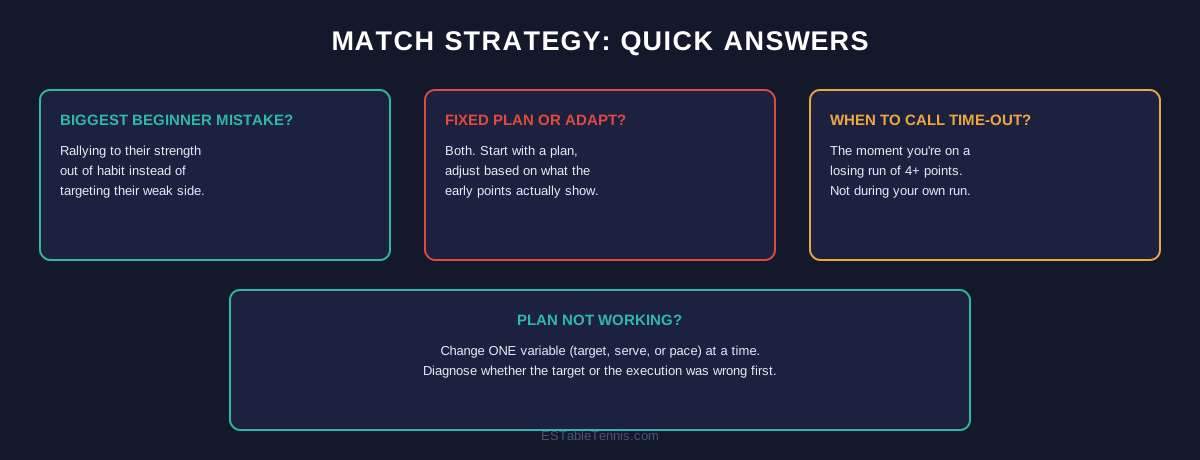
Targeting your opponent’s weaker side consistently, rather than rallying to their strength out of habit. This single adjustment produces more won points than most technical improvements at the beginner level.
Should I have a fixed strategy or adapt during the match?
Both. Start with a specific plan based on any real information you have, then adjust based on what actually happens in the early points, rather than sticking rigidly to a plan the match itself is disproving.
When is the best time to call a time-out for tactical reasons?
The moment your opponent goes on a run of four or more points against you. Calling it during your own winning run tends to break your own momentum instead of helping.
What should I do if my game plan isn’t working?
Change one specific variable, your target, your serve, or your pace, rather than abandoning the entire plan. Diagnose whether the target was wrong or the execution was wrong before deciding what to change.
None of this is complicated in the abstract. Target the weak side. Serve toward a plan, not a habit. Adjust based on evidence, not frustration. Use the time-out on offense, not as an emergency brake. What makes it hard is doing all four consistently while your heart rate is up and the score is close, which is exactly why writing the plan down beforehand, rather than trusting yourself to invent it live, matters as much as the plan’s actual content.
What Should You Write Down Before Your Next Match?
One target, one serve, one fallback. That is the whole plan, and it is more than most players bring to a match that actually matters to them.
A useful habit worth adopting from tomorrow: after every competitive match, win or lose, write down one line on what your strategy actually was and whether it held up. Most players can describe their opponent’s game in detail an hour after a match. Very few can describe their own plan with the same precision, which is a strange gap once you notice it, since your own strategy is the one thing in the match you actually had full control over.
Strategy does not need to be complicated to work. Three decisions made before the match, executed with intent, beat a hundred clever adjustments invented under pressure.For more on reading your opponent to sharpen that plan mid-match, see how to read your opponent in table tennis. And for the mental side of executing a strategy under pressure once you have one, the MentalEdge Course covers the full system.
Leave a Reply