How do you hit a proper table tennis backhand?
The backhand suffers from a reputation problem it doesn’t entirely deserve: dismissed as the weaker, secondary shot by players who never gave it the same deliberate attention their forehand received by default.
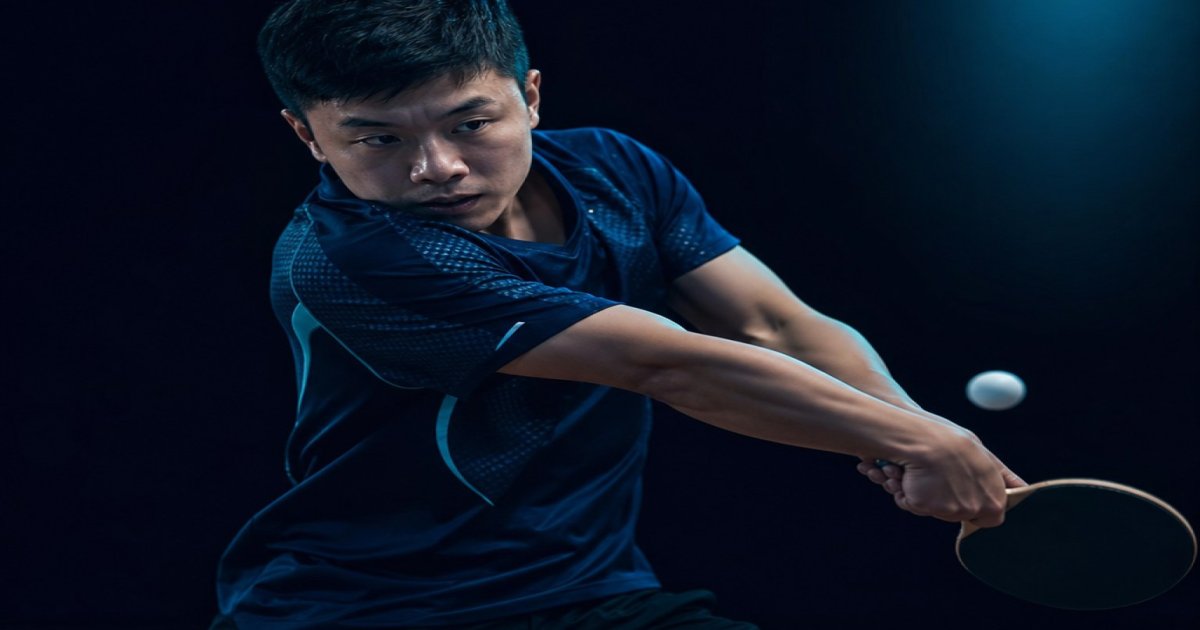
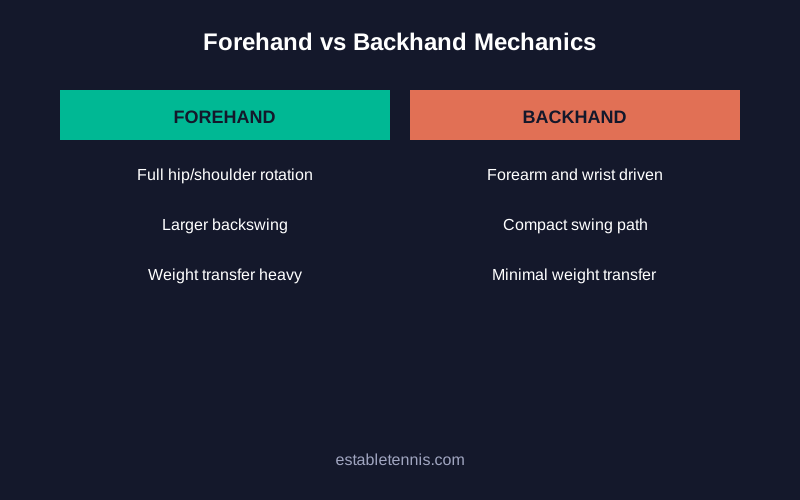
Keep the swing compact, using forearm and wrist rotation more than the full-body rotation of a forehand, with contact happening slightly closer to the body. Brush upward through the ball for topspin, and let elbow and wrist snap generate racket-head speed rather than a large backswing.
Why is the backhand mechanically different from the forehand?
What’s the correct stance for a backhand shot?
A slightly more squared stance than a forehand ready position, with the playing elbow positioned away from the body enough to allow a full, uncramped swing path. Too little space between the elbow and torso restricts the swing before it even starts, forcing compensating movements elsewhere that reduce both power and consistency.How does weight transfer work on a backhand, compared to a forehand?
Less dramatically than on a forehand, since the compact nature of the swing limits how much weight transfer is mechanically useful. Some players do incorporate a subtle forward weight shift, but the emphasis stays on forearm and wrist mechanics rather than the larger, torso-driven weight transfer central to a forehand drive.What’s the difference between a backhand block and a backhand drive?
A block is a minimal, largely passive shot that redirects an opponent’s pace and spin back across the table with very little independent swing, commonly used against fast, aggressive shots when there’s no time for a full stroke. A drive involves a genuine, if compact, swing that generates the player’s own pace and topspin, used more as an attacking or rallying shot rather than a purely defensive one.Why do so many players neglect their backhand in practice?
Because the forehand feels more natural and rewarding earlier in development, and players instinctively gravitate toward practicing what already feels good rather than what needs the most work. This creates a compounding gap: the forehand keeps improving through preferential practice while the backhand stagnates, until an opponent specifically targets that weaker side and exposes just how underdeveloped it’s become.How does a weak backhand affect tactical decision-making mid-match?
A player who doesn’t trust their backhand often runs around the ball to use a forehand instead, even when that footwork costs court position and creates an obvious opening on the other side of the table. Opponents who notice this pattern will deliberately target the backhand corner repeatedly, since it’s both the technically weaker shot and the one that forces costly, avoidance-driven footwork.What’s a good drill specifically for building backhand confidence?
Backhand-only rallies, where both players commit to hitting exclusively backhand shots for an extended period, force the deliberate repetition most players naturally avoid when given the choice to run around for a forehand instead. This kind of constrained practice, similar in spirit to the cone-blocking story above, removes the escape route and builds the shot through necessity rather than preference.How does the backhand connect to overall two-wing balance in a player’s game?
A player with a genuinely reliable backhand becomes considerably harder to attack tactically, since an opponent loses the simple strategy of just targeting the weaker side repeatedly. Two-wing balance, where both forehand and backhand can attack and defend competently, is one of the clearest markers separating an intermediate player from one who’s plateaued on a single dominant shot.How does grip affect backhand technique differently than forehand technique?
Shakehand grip generally allows a more natural backhand than penhold, since the wrist and forearm rotation required comes more easily from that grip’s neutral hand position. Penhold players historically developed alternative backhand techniques, including the reverse penhold backhand that’s become common in modern competitive play, specifically to compensate for the traditional penhold grip’s more limited natural backhand range. This is one of the clearest examples of grip choice directly shaping a player’s stroke development over years of practice.What’s the role of the wrist in generating backhand power and spin?
Considerably more central than in a forehand, where body rotation does most of the power-generation work. A backhand’s compact swing path relies heavily on a quick, snapping wrist motion through contact to generate both pace and topspin, which is why backhand technique often takes longer to develop fully: wrist timing is a more delicate, harder-to-groove skill than the larger, more visually obvious rotational mechanics of a forehand.How does equipment choice affect backhand performance specifically?
Some players deliberately choose a different rubber for their backhand side than their forehand, often a more control-oriented or even a pimples-out rubber, covered in our guide on inverted rubber vs pimples out, specifically because the backhand’s more compact swing benefits from a rubber that doesn’t demand the same aggressive brushing motion a forehand loop relies on. This asymmetric setup is common enough that it’s worth considering deliberately rather than defaulting to identical rubber on both sides.Why does the backhand often improve faster once a player commits to fixing it?
Because the underlying mechanical requirements (a compact swing, forearm and wrist rotation, a stable elbow position) are actually simpler to isolate and drill than the fuller-body coordination a forehand requires. Once a player stops avoiding the shot and commits to focused practice, backhand improvement often happens faster than forehand improvement did, precisely because there are fewer moving parts to coordinate simultaneously.How should a player balance forehand and backhand practice time?
Roughly equal time, or even slightly more time on the backhand for a player whose forehand already outpaces it significantly, rather than defaulting to whatever feels more enjoyable in the moment. This deliberate imbalance in practice time, favoring the weaker shot, is one of the more reliable ways to close a two-wing skill gap that preferential, enjoyment-driven practice naturally widens over time.What’s the mental pattern behind backhand avoidance, and how do you break it?
Avoidance is usually rooted in a specific, felt sense that the backhand is less reliable under pressure, which becomes a self-fulfilling cycle: less practice leads to less confidence, which leads to more avoidance, which leads to even less practice. Breaking this cycle requires deliberately removing the escape route, whether through backhand-only drills, a coach physically blocking the forehand running lane, or simply a conscious commitment to using the backhand in situations where running around for a forehand would normally be the instinctive choice.How does footwork interact with backhand technique specifically?
Because the backhand’s swing is more compact and less able to compensate for poor positioning than a forehand’s larger rotational motion, precise footwork matters even more on the backhand side: a player slightly out of position has far less margin to adjust mid-swing than they would with a forehand’s larger, more forgiving motion. This is covered in more detail in our guide on how to improve table tennis footwork, but it’s worth emphasizing specifically here: backhand footwork errors are less forgiving than forehand footwork errors.What’s the connection between backhand development and overall confidence in a match?
A player with a genuinely reliable backhand experiences a specific kind of tactical freedom that a backhand-avoidant player never does: the ability to simply hit the ball where it arrives, rather than constantly calculating whether there’s time to run around for a forehand instead. That calculation itself is a mental tax that compounds across a match, adding fatigue and hesitation that a two-wing balanced player never has to pay.How does the modern reverse penhold backhand change the traditional penhold disadvantage?
The reverse penhold backhand technique, where a penhold player flips the racket to use the reverse side of the blade for backhand shots, largely closed the historical gap between penhold and shakehand backhand capability at the highest levels of competitive play. This technique required considerable innovation and dedicated practice to develop, and it’s a useful reminder that even a grip’s inherent limitations can be substantially overcome through deliberate technical development rather than accepted as permanent.Does backhand technique change against topspin versus backspin?
Yes, meaningfully. Against incoming topspin, a backhand needs a slightly more closed racket angle and controlled swing to avoid overhitting, since the incoming spin adds to the ball’s forward momentum. Against backspin, the racket needs a more open angle and a more pronounced upward brushing motion to lift the ball over the net, since backspin works against the ball’s natural trajectory. Players who only practice their backhand against one spin type often find their technique breaks down when facing the other in an actual match.What role does the shoulder play in an otherwise forearm-dominant backhand?
While the backhand relies less on full shoulder rotation than a forehand, the shoulder still provides a stable anchor point that the forearm and wrist rotate around: a shoulder that drifts or moves excessively during the swing undermines the precision the compact backhand motion depends on. Keeping the shoulder relatively stable while the forearm and wrist do the active work is a subtle but important distinction from a forehand’s more fully engaged shoulder rotation.How long should a dedicated backhand-improvement focus typically last?
Most players see meaningful improvement within four to six weeks of genuinely dedicated, focused backhand practice, assuming that practice replaces rather than supplements an already busy training schedule. Because the backhand’s mechanical requirements are relatively contained compared to a forehand’s fuller-body coordination, focused effort tends to produce visible results faster than many players expect once they finally commit to the work instead of continuing to avoid it.Is a two-wing balanced game always better than a dominant-forehand style?
Not universally: some highly successful competitive players build their entire tactical identity around an exceptional forehand and a merely adequate, supporting backhand, using footwork to maximize forehand opportunities rather than trying to make both wings equally dominant. But this is a deliberate strategic choice made from a position of genuine forehand excellence, not the same thing as a backhand that’s weak purely from neglect and avoidance. The distinction matters: a chosen style is different from an unaddressed gap. According to ITTF equipment regulations, both sides of a legal racket must carry approved rubber regardless of which side a player favors, a small reminder that the sport’s own rules assume a functioning two-wing setup, even when a player’s practice habits don’t. Cones blocking a running lane look almost comedic from the outside, a coach’s small, deliberate act of forcing a player into discomfort they’d otherwise spend years avoiding. It rarely feels clever in the moment. It only looks clever in hindsight, roughly six months later, when the avoided shot quietly becomes the one nobody wants to test anymore. What actually changed in those six months was never mysterious. It was the same shot, hit badly at first and then hit thousands of times more, until badly stopped being the accurate description and nobody had noticed exactly when the shift happened. Most players never get pushed into that uncomfortable stretch on their own initiative. That’s the entire reason a coach, a training partner, or a deliberately constrained drill matters more for the backhand specifically than for almost any other shot in the sport. Complaining the entire time turned out to be a fairly reliable sign that something real was actually happening underneath the frustration: comfortable practice rarely produces the kind of change that later becomes a genuine weapon. If your own backhand still feels like the shot you’d rather avoid than trust, that discomfort is data, not a verdict. It’s the exact same discomfort every player who eventually built a real backhand had to sit through first. The cone gets moved eventually, one way or another. Better to move it yourself, on purpose, than to wait for an opponent to find and exploit the gap for you first. Every avoided shot in this sport eventually gets found. The only real choice is whether you’re the one who finds it first, on your own terms, in practice where the cost of discomfort is cheap. Simple as that. Move your own cone before somebody else moves it for you mid-match. That’s the whole lesson, cone and all. Nothing complicated. Just uncomfortable, for a while, on purpose. Six months from now, someone will be avoiding your backhand instead. End of story. Worth it. Every time. Now go find your own cone.Quick Recap: Table Tennis Backhand
A reliable table tennis backhand comes from compact mechanics, wrist and forearm rotation, and deliberate practice that most players naturally avoid in favor of their more comfortable forehand. Removing the escape route, whether through a blocked running lane or a committed backhand-only drill, is often the fastest way to finally close that gap.Frequently Asked Questions
Why is the backhand usually weaker than the forehand for most players?
Mostly due to preferential practice: players naturally practice what already feels comfortable, which widens the gap between a well-practiced forehand and a neglected backhand over time.
What’s the biggest technical difference between a forehand and backhand?
The backhand relies more on forearm and wrist rotation with a compact swing, while the forehand generates power through larger hip and shoulder rotation and weight transfer.
Should I use different rubber on my forehand and backhand?
Many players do, often a more control-oriented rubber on the backhand, since its compact swing doesn’t demand the same aggressive brushing motion a forehand loop relies on.
How do you fix a habit of avoiding backhand shots?
Deliberately remove the escape route through backhand-only drills or constrained practice that forces the shot, rather than continuing to run around for a forehand whenever possible.
Does grip style affect backhand development?
Yes. Shakehand grip generally allows a more naturally comfortable backhand than traditional penhold, which historically required alternative techniques to compensate.
Leave a Reply