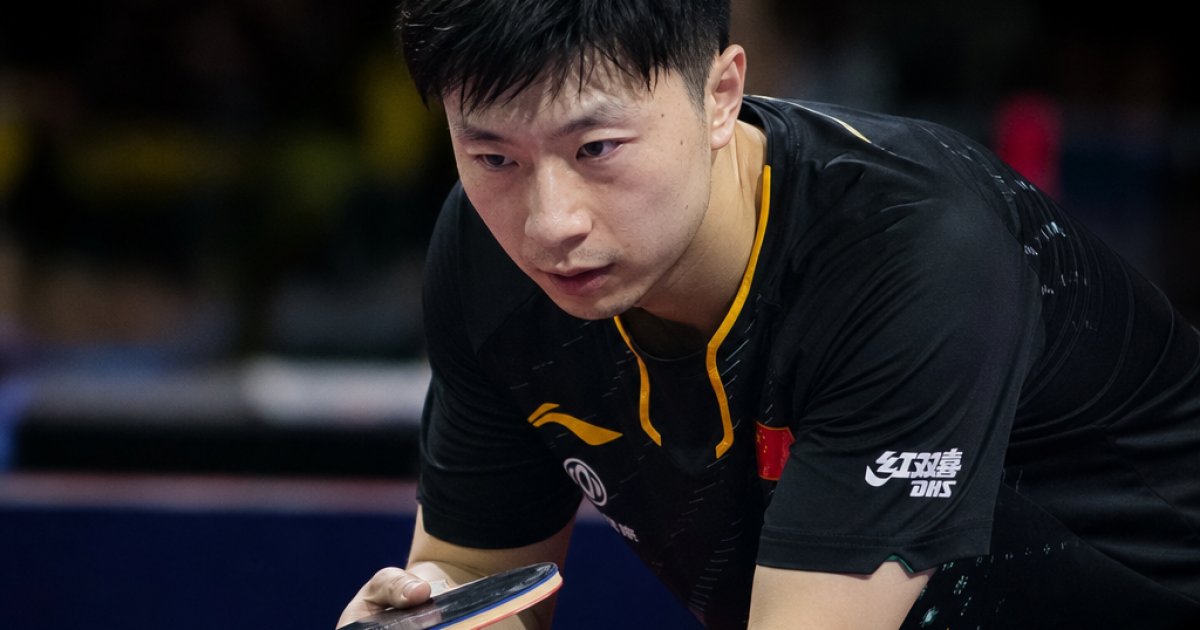
One missed smash on an easy ball. That is all it takes for some players to spend the next four points playing as if they have never held a paddle before. The shot itself cost one point. What happened after it cost the game. The score never asks whether you deserve to still feel good about yourself. That question only ever comes from inside your own head.
Learning to stay confident after a bad shot is not about pretending the miss never happened. Confidence is not a reservoir that empties once and stays empty. It is closer to a mood, something that moves, and moving it back after a bad moment is a specific, learnable skill, not a hope you sit around waiting on. Something to move on purpose, not something to sit and wait on.
To stay confident after a bad shot or a bad call, treat the moment as a single, isolated event rather than a verdict on your whole game, use a specific factual phrase instead of a global judgment, and give yourself one small, achievable target on the very next point to rebuild proof of competence immediately, rather than waiting for confidence to return on its own.
Why Does One Bad Shot Sometimes Wreck Your Whole Game?
One bad shot wrecks a whole game when you let it become evidence about your overall ability rather than treating it as one specific, isolated event, and this matters because confidence in the moment functions less like a fixed trait and more like a belief that responds to whatever evidence you feed it next.
Research on self-efficacy, the specific belief that you can execute a given task, treats it as something built and rebuilt continuously from your own recent evidence, not a fixed quantity you either have or run out of. A missed smash is one data point.
The player who spirals after it has usually, without meaning to, generalized that single data point into a much bigger claim: “I can’t finish easy points today,” and then plays the rest of the game according to that invented rule instead of the actual, much smaller fact. A rule invented in about half a second, and believed instantly, the way only the worst kind of rule ever is.
What’s the Right Way to Respond to Yourself Right After a Miss?
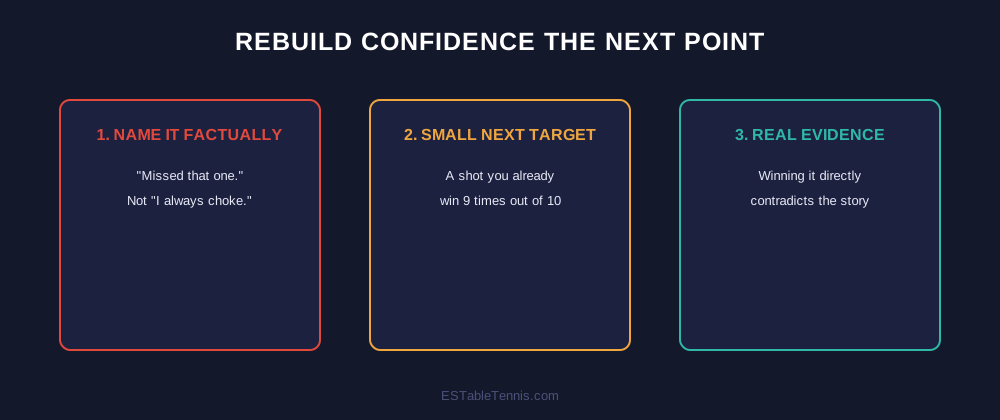
Use a short, factual phrase that names exactly what happened, without a global judgment attached, “missed that one,” not “I always choke on easy balls,” since the second version invents a permanent pattern out of a single event. Say the small one out loud instead. It costs nothing, and it happens to be true.
This connects directly to the phrase-bank approach in table tennis self-talk between points. The specific danger after a missed easy shot is the jump from a factual account to a character verdict, and that jump happens fast, often without you noticing it happened at all. Catching it in the moment, even just internally correcting “I always” to “that time,” changes what your own head is telling the rest of you to expect on the next point. No dramatic edit, just an honest one.
How Do You Stay Confident After a Bad Shot Within the Same Game?
Give yourself one small, genuinely achievable target on the very next point, not a demand to immediately prove yourself with something spectacular, since a realistic quick win rebuilds real evidence fast, while an attempt to force a big statement shot usually just produces a second miss on top of the first.
After the missed smash, the target for the next point should be something specific and modest: a clean serve, a controlled push, a shot you already execute reliably nine times out of ten. Small, specific, boring even. That is exactly why it works. Winning that easier point is a small, real piece of evidence that directly contradicts the “I can’t finish points” story from a moment ago.
Trying to immediately win the next point with an even bigger shot, chasing a statement rather than a rebuild, is a common and understandable instinct, and it is also the instinct most likely to hand you two bad points in a row instead of one. Nobody wins two points by trying to win one enormous one instead.
Does This Work the Same Way for a String of Small Mistakes, Not Just One Big One?
Yes, and arguably it matters more here, since a string of small, easy-to-dismiss errors- a slightly long push, a serve that clips the net, a routine ball sent wide- rarely triggers the same obvious alarm a big miss does, which means the story-building happens quietly, without you noticing it accumulating.
A single dramatic miss at least announces itself clearly enough that you can catch and correct the spiral in the moment. Three or four small, unremarkable errors spread across a game tend to erode confidence just as effectively, but more quietly, since no single one of them feels significant enough to address on its own. Notice quietly is still noticing.
It still counts. By the time the accumulated effect shows up as hesitation on an easy shot, the actual cause is several games back, not the shot you are currently missing. Treat small errors with the same factual, non-judgmental phrase you would use for a big one, rather than letting them slide by unaddressed simply because none of them individually seemed worth the attention.
What’s the Difference Between a Bad Shot and a Bad Call?
A bad shot is something you did. A bad call is something that happened to you, and confusing the two, treating an umpire’s mistake as evidence about your own ability, is a specific and avoidable error that costs players points they should never have been at risk of losing.
A missed smash is genuinely useful information about your execution. A missed edge call is not information about you at all. The emotional response to both can feel identical in the moment, but the correct next step is different: a bad shot might warrant a specific technical thought for the next similar ball, while a bad call warrants nothing except the reset covered in how to control your emotions in table tennis, since there is no genuine lesson to extract from someone else’s mistake. No lesson to extract. Only a breath to take and a point to move on to.
Should You Talk to Your Coach or Teammates About It Mid-Match?
A brief, factual exchange at a change of ends can help, but a long conversation about how badly things are going usually reinforces the exact narrative you are trying to escape, since describing a spiral out loud in detail tends to solidify it rather than dissolve it.
If your coach or a teammate offers a single, specific, forward-looking adjustment, “stay a little further back on the return,” that is useful and worth taking. A longer exchange rehashing every missed shot from the last three games, even when it is sympathetic, keeps your attention anchored on the story rather than the next point.
The best support in this moment is usually short, specific, and aimed at what happens next, not a recap of what already happened. A shorter version, said sooner, beats a longer version said too late.
Does Confidence Carry Over Between Matches, or Does Each Match Start Fresh?
Some carries over, but far less than most players assume, which is actually good news: a bad result yesterday does not have to define today’s match if you treat each one as its own fresh evidence set rather than a continuation of the last one. Just a fresh set of points to actually play.
Players who lost their previous match sometimes walk into the next one already bracing for the same outcome, treating yesterday’s result as a prediction rather than a separate, closed event. Bracing for a repeat is its own way of helping one arrive. The same principle that applies within a single game- one miss is not proof of a pattern- applies across matches too.
A loss yesterday is one data point about one specific match, against one specific opponent, under one specific set of conditions. It is not a verdict on today. A one-shot memory with nothing else feeding it either way.
How Do You Know if It’s One Bad Shot or a Real Pattern?
Check honestly whether the same specific shot has actually broken down more than once or twice this game, rather than assuming a single miss proves a pattern that a genuine, repeated look at the evidence would not actually support.
This is the same audit principle covered in more depth in how to handle a losing streak in table tennis, scaled down to a single match: one miss is noise. Three misses on the same shot in the same game is a real signal worth a specific adjustment.
The mistake most players make is treating the first data point with the same weight as the third, which either overreacts to noise or, just as often, ignores a real pattern because addressing it feels like admitting something is wrong. A first miss deserves a shrug. A third deserves a real look.
How Do You Build a Confidence Reserve Before You Even Need It?
Keep a running, factual record of specific things that went right in practice, not a vague sense that training has been “going okay,” so that when a bad moment does arrive mid-match, you are drawing on dated, concrete evidence rather than trying to manufacture belief out of nothing under pressure.
A short nightly note, one specific thing, a serve that landed well, a return you handled cleanly against a tricky spin, does more for match-day resilience than it sounds like it should. A short note beats a vague feeling every single time it actually gets tested.
The player who has thirty small, factual entries from the past month has a real ledger to draw on the instant a spiral starts. The player with no such record is left improvising confidence from scratch in the moment it is hardest to generate, which is a much harder task than simply retrieving something you already wrote down. A retrieved fact costs almost nothing under pressure. An invented one costs exactly the composure you were trying to protect.
What If the Bad Shot Happens on a Genuinely Important Point?
Treat a missed game point or match point exactly the same way you would treat a miss at 3-3, since the shot itself does not become technically harder because of the number attached to it, only your interpretation of what it means does. Nothing about the ball changed. Only the number attached to it did.
This is genuinely difficult in practice, because a missed match point carries obvious extra weight, and pretending it does not would be dishonest. What helps is separating the stakes of the moment from the mechanics of the next shot: the stakes are real, but the actual physical task- watch the ball, execute the stroke- has not changed at all because of where it fell in the scoreline.
Run the same factual phrase and the same small, achievable next target you would use after any other miss, rather than assuming a bigger moment requires a fundamentally different mental response.
Junior and newer players often need this pointed out explicitly, since the instinct to treat a big moment as requiring a completely different mental approach is strong and largely unhelpful. A coach who simply says “just relax” before a match point, without explaining what that actually means mechanically, is naming a goal without giving a method.
The method is this: the same factual phrase, the same next-point target, applied to a bigger number on the scoreboard. Nothing else about the process should change just because the stakes did.
Can Equipment Doubt Make This Worse?
Yes, since a miss that could plausibly be blamed on unfamiliar or unsettled equipment gives your confidence spiral an extra, harder-to-resolve angle: not just “did I play that badly” but “is something wrong with my gear too,” which is a second open question competing for the same attention the next point actually needs. Two open questions where one would have been plenty.
Settling your equipment fit before a tournament removes this specific complication. A player who trusts their setup completely has only one variable to manage after a miss: their own execution.
A player who has never resolved whether their rubber is actually right for them is managing two, and the second one has no clean answer available mid-match, which is exactly the kind of open loop that keeps a small miss feeling bigger than it actually was.
This also cuts the other way, worth saying plainly: a genuinely great shot right before a bad one does not mean you are suddenly a different, better player either. Confidence built entirely on your best moment is just as fragile as confidence destroyed by your worst one, since both treat a single data point as bigger evidence than it actually is.
The steadier version sits somewhere in the middle, built from a whole pattern of evidence rather than whichever single shot happened most recently. Quiet, unglamorous, and considerably more reliable than either extreme.
Frequently Asked Questions
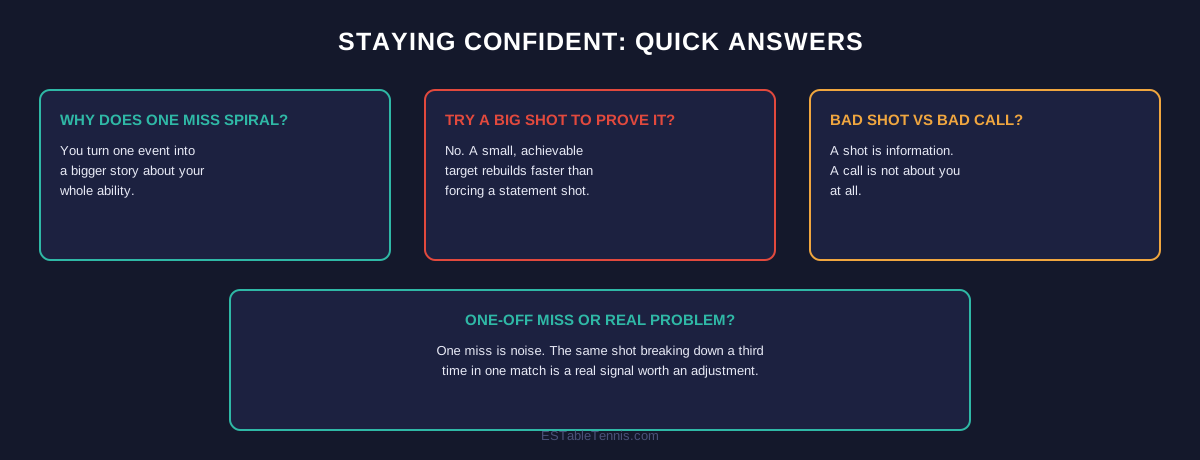
Why does missing one easy shot sometimes ruin my whole game?
Confidence responds to the story you build from recent evidence. Treating one missed shot as proof of a bigger pattern, rather than a single isolated event, is what actually causes the spiral, not the missed shot itself. Not something you fell short of. Not evidence of anything at all, except how the rally happened to end that one time.
Should I try a big shot to prove myself right after a miss?
No. A small, genuinely achievable target rebuilds real confidence faster than forcing a spectacular shot, which is more likely to produce a second miss on top of the first.
How should I react differently to a bad call versus a bad shot?
A bad shot is information about your execution and may warrant a small technical adjustment. A bad call is not information about you at all and warrants only an emotional reset, not a technical response.
How do I know if a miss is one-off or a real problem?
Check honestly whether the same specific shot has broken down more than once or twice in the same match. One miss is noise. A third miss on the identical shot is a real signal worth a specific adjustment.
What Should You Do the Next Time You Miss an Easy One?
Name it factually. Pick one small, achievable target for the very next point. Save the technical adjustment for a real pattern, not a single miss dressed up as one.
The smash you missed cost exactly one point. Everything after that is a story you get to choose, and most players choose the wrong one purely out of habit, never having been shown there was another option available.
For the full mental framework this fits into, download the free ebook, How to Remain Calm When It’s Crunch Time.
Leave a Reply