
I lost eleven matches in a row once. Not close ones. The kind where you can feel people at the club starting to be gentle with you, which is worse than losing.
I am not telling you this because it makes a tidy coaching story with a bow on it. I am telling you because most articles about losing streaks are written by people pretending it never really happened to them, and that is a strange way to build trust with someone who is currently living through one.
How to handle a losing streak in table tennis: separate your identity from your recent results (a bad run is data, not a verdict), audit whether the losses share a real, fixable cause or are just variance, and change one specific thing at a time instead of overhauling your whole game out of panic.
What Actually Happens to Your Head During a Losing Streak?
A losing streak quietly rewrites your identity if you let it, turning “I lost some matches” into “I am someone who loses now,” and that second sentence is the actual damage, not the results themselves.
By match seven of my eleven, I was not just losing. I was playing like a man auditioning for the role of someone who loses. Tighter grip. Smaller swings. I stopped going for the shot I actually wanted to play, because some part of me had started treating every match as more evidence for a case I had already convicted myself in.
This lines up with what Carol Dweck’s research on mindset describes: people who treat setbacks as fixed judgments on their ability tend to protect themselves by avoiding risk, which in table tennis looks exactly like playing not to lose instead of playing to win. People who treat the same setbacks as information they can act on keep taking the shot.
Is Your Losing Streak a Real Pattern or Just Variance?
Find out by actually looking, not guessing. Write down your last ten matches: who you played, how you lost each game, and whether the same specific thing kept breaking down. Most losing streaks are a mix of genuine, fixable patterns and ordinary variance, and treating the whole streak as one giant crisis, when half of it is just normal bad luck, makes the fix harder than it needs to be.
When I actually wrote mine down, seven of the eleven losses were to players rated close to or above me, the kind of match you lose plenty of times in a normal season without it meaning anything.
The real pattern was in the other four: I was getting broken down by the same short, heavy backspin serve every single time, and instead of adjusting my receive, I kept playing the same failing response and hoping the eighth attempt would land differently than the first seven.

Should You Overhaul Your Game or Change One Thing?
Change one specific thing at a time. A losing streak creates a powerful urge to fix everything at once, new grip, new stance, new mentality, all in the same week, and that urge is almost always wrong.
I know because I tried it. Somewhere around loss nine, panicking, I changed my serve, my ready position, and started second-guessing a backhand I had trusted for three years, all in the same practice session. I lost the tenth match worse than any of the previous nine, because now I was not playing my game badly. I was playing three half-remembered versions of somebody else’s game at once.
There is also a specific trap worth naming: the temptation to skip tournaments entirely until you “feel ready” again. I considered it around loss eight. What actually helped was the opposite, staying in the schedule, playing the practice matches I already had booked, and letting the fix happen inside real competition rather than waiting for some future version of myself who had already solved it in private.
What actually ended the streak was smaller and much less satisfying to talk about. I drilled one specific receive against short backspin for two weeks, changed nothing else, and won my next match against a player I had lost to twice already that season.
What Do You Tell People Who Ask What’s Wrong?
Answer honestly, briefly, and without turning it into a longer conversation than it needs to be, since the version of you that over-explains a losing streak to every well-meaning clubmate is usually the same version rehearsing the story rather than fixing it.
By match six, people had started asking with that specific tone, half concern, half curiosity, and I noticed I had two versions of an answer ready: a long one about everything that felt wrong, and a short one, “working on my receive against short serves, should be better soon.” The short version was true. It was also the only one that did not leave me standing there re-living the whole streak out loud every time someone asked.
How Do You Protect Your Confidence While You Fix the Problem?
Protect it by deliberately banking evidence from practice, not by waiting for a match win to feel better, since a losing streak can run for weeks before a genuine result shows up to reward you.
Every night during my run of eleven, I wrote down one specific thing that actually went right that day in training. Not “I felt okay.” Something specific: the receive landed short three times in a row, my footwork recovered fast enough on a wide ball I usually miss.
By the time the streak ended, I had two weeks of dated, factual proof that something was working, which mattered more than it sounds, because match results alone were telling me nothing but bad news for most of that stretch.
This also connects to equipment, in a way I did not expect at the time. Partway through the streak I genuinely wondered if my rubber had lost its grip, and spent a session testing it against a partner instead of just assuming. It was fine. The problem was never the gear. But I needed to rule it out on purpose, rather than let a quiet, unexamined doubt about my equipment sit alongside everything else I was already doubting.
Does a Losing Streak Mean You Should Change Coaches or Equipment?
Not automatically, and definitely not mid-streak out of panic. A losing streak is a genuinely bad time to make a big, hard-to-reverse decision, because everything in your judgment is currently colored by the run of results, not by a clear-eyed read of what actually needs to change.
I thought about switching coaches around loss seven. In hindsight, I am glad I did not, because the actual problem, my receive against short backspin, was something my coach had already flagged twice before the streak even started. I had just not prioritized fixing it. The streak did not reveal a new problem. It made an old, known one impossible to keep ignoring.
If you are genuinely considering a change, whether that is a coach, a club, or your main rubber, give yourself a rule: no permanent decision until at least two weeks after the streak ends, once you can see your game clearly again instead of through the lens of eleven straight losses.
Frequently Asked Questions
How many losses in a row counts as a real losing streak?
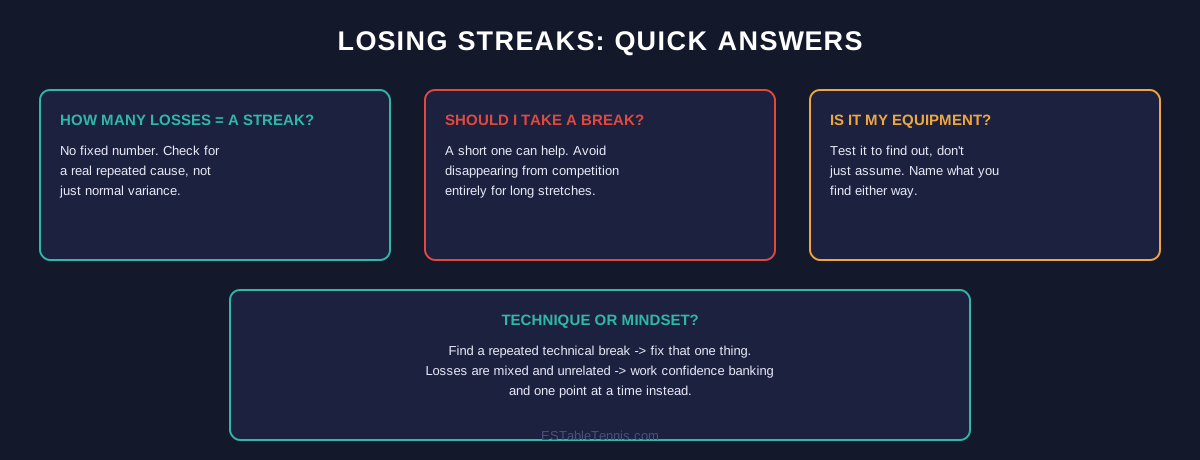
There is no fixed number. What matters more is whether you can identify a real, repeated cause across those losses, or whether you are treating ordinary variance (losing to players near or above your level) as a crisis.
Should I take a break from competing during a losing streak?
A short break can help if you are exhausted or if every match is reinforcing panic, but avoid disappearing from competition entirely for long stretches, since consistent play under real conditions is usually what actually breaks the pattern.
Is it normal to lose confidence in my equipment during a losing streak?
Yes, and it is worth actually testing rather than just assuming. If your gear checks out fine, name that clearly to yourself so the doubt does not sit unexamined alongside everything else.
How do I know if I should change my technique or just my mindset?
Write down your recent losses and look for a specific, repeated technical breakdown. If one exists, fix that one thing. If the losses are mixed and unrelated, the more useful fix is usually mental (confidence banking, one point at a time) rather than a technical overhaul.
What Happened After the Streak Ended?
Nothing dramatic. I won a match, then lost the next one to someone genuinely better than me, which felt completely different from losing during the streak. It felt like a normal Tuesday instead of a verdict.
That is really the whole marker of coming out the other side. Not an unbeaten run. Just a loss that goes back to being a loss, instead of evidence in a case against yourself.
If you are in the middle of one right now, start with the audit, not the overhaul. Write the ten matches down tonight. For the mental side of staying in one piece while you do the actual work, see how to stop choking in table tennis, and download the free ebook, How to Remain Calm When It’s Crunch Time, for the fuller system behind staying composed through a stretch like this.
Leave a Reply