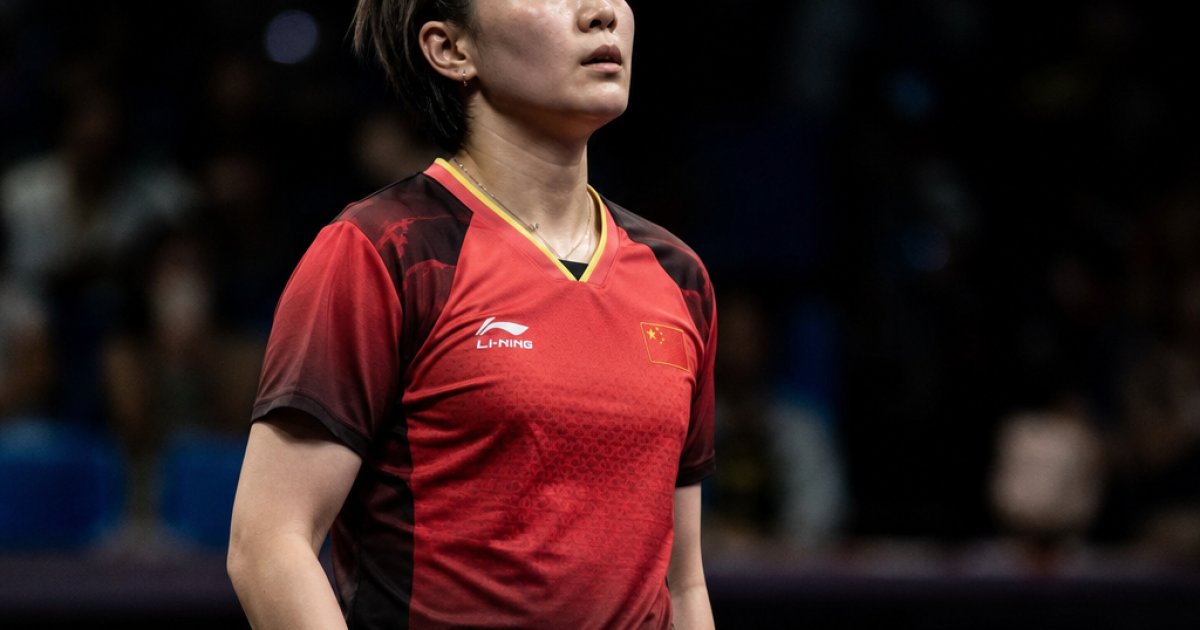
Somewhere in every club there is a player who slams the ball into the barrier after a bad point, argues every close call, and looks, by the fourth game, like someone fighting a different opponent entirely, himself. Practiced, most likely, not immune. He is usually not a bad player. He is a player who has never learned that the emotion itself was never the problem. Learning to control your emotions in table tennis does not start with the emotion. It starts with what you do in the six seconds after it arrives.
The score never asked him to prove anything about who he is. He decided that part on his own, somewhere around the second slammed paddle. What he does in the six seconds after it shows up is. Nobody ever taught him the difference.
Controlling your emotions in table tennis does not mean feeling nothing. A trained response, not a suppressed one. It means reappraising the frustration or anger in the moment it appears, rather than suppressing it, since research on emotion regulation consistently finds suppression leaks into performance while reframing does not.
Not a personality upgrade. A specific habit, run consistently, at the exact moment it matters most.
What’s Actually Happening When You Lose Your Temper Mid-Match?
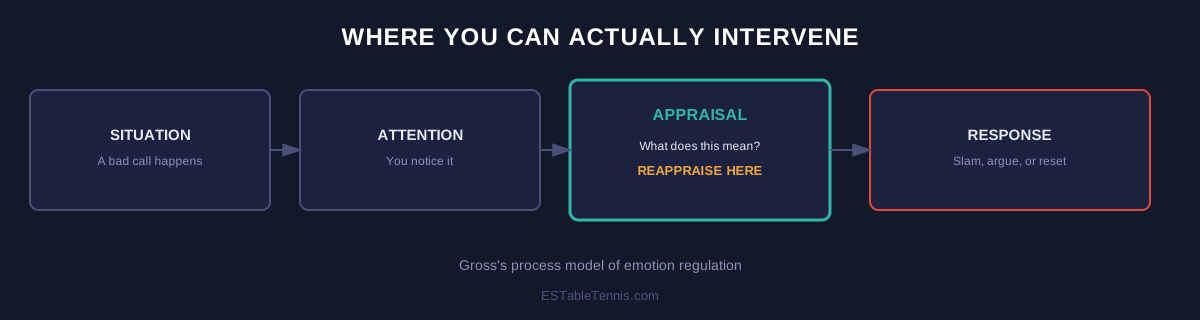
Losing your temper is not a random loss of control. It follows a specific, well-mapped sequence: a situation happens (a bad call, a missed easy shot), you attend to it, you appraise what it means, and your response, the slammed paddle, the muttered complaint- follows from that appraisal, not from the situation itself.
Psychologist James Gross’s process model of emotion regulation maps exactly this sequence, and the useful part for a table tennis player is where the model says you can actually intervene. You cannot un-happen the bad call. You can change the appraisal, the meaning you assign to it, before the response fires. Most players never touch this step at all.
They experience the situation, skip straight to the reaction, and call the whole thing an involuntary loss of control, when in fact there was a specific moment in between where a different meaning was available and simply was not chosen. Most players never even notice the gap between those two steps exists.
Should You Suppress Your Anger or Reframe It?
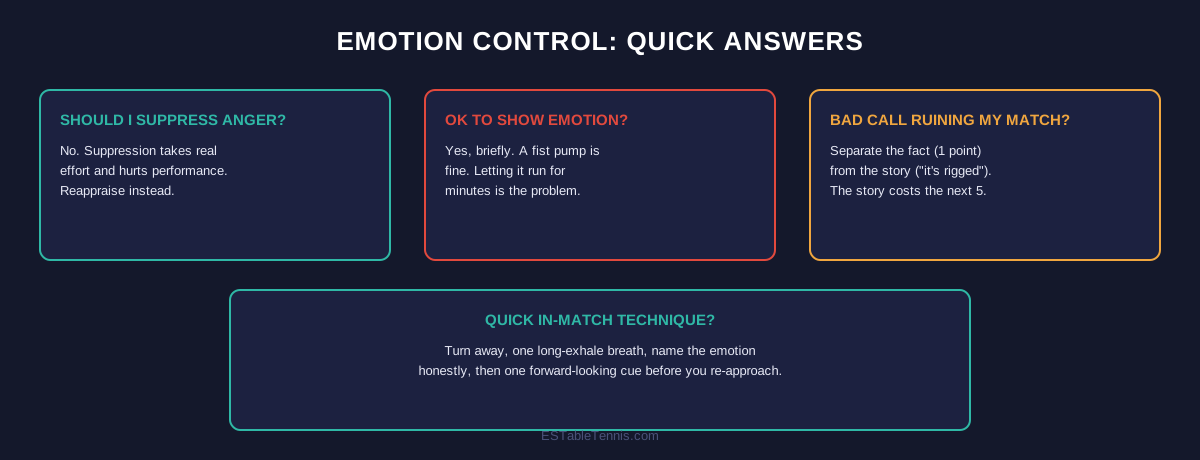
Reframe it. Suppressing an emotion, forcing your face and body still while the frustration keeps running underneath, is consistently linked to worse outcomes than reappraising it, changing what the moment actually means to you before you respond.
This matters directly on a table tennis table because suppression takes real cognitive effort, the exact resource you need for reading spin and making the next shot decision. A player working hard to look calm while still seething underneath is spending attention on the performance of calm, not on the actual next point.
Reappraisal, changing the story from “this is unjust, and it’s ruining my match” to something more like “this point is over, the next one is a fresh start,” costs far less and does not compete with the attention your shot actually needs.
Why Do Some Players Seem Naturally Calm While Others Struggle With This?
Some players do seem to regulate more easily, but the research is clear that reappraisal is a learnable skill, not a fixed personality trait, which means the calm-looking player across the table is very likely practiced, not simply wired differently from you.
This distinction matters because it changes what you do about it. If you believe calm is a personality trait you either have or don’t, there is nothing to train, only something to envy in other players.
If you understand it as a skill built through repeated, deliberate practice, catching the appraisal moment, choosing a different story, running the physical reset, then your own hot temper becomes a training gap rather than a permanent character flaw.
What’s a Practical In-Match Technique for Controlling Anger?
Use a fixed physical reset the instant you notice the anger rising, turn away from the table, take one longer exhale than inhale, and give yourself a single forward-looking cue before you re-approach, the same sequence covered in full in how to stop a momentum shift in table tennis.
The specific addition for anger, rather than ordinary nerves, is naming the emotion honestly in that pause, even just internally: “that’s frustration,” not “I’m fine.” Naming an emotion accurately is itself a form of reappraisal, since it moves the feeling from a vague, overwhelming fog into a specific, bounded thing you can set down before the next point.
Pretending you are not angry when you clearly are skips the actual regulation step and quietly becomes suppression instead. Naming it costs almost nothing. Pretending it is not there costs the entire next few points.
Does Anger Ever Actually Help Performance?
A small, controlled amount of activation can sharpen focus and effort, but the useful version of this is closer to determination than genuine anger, and the line between the two is easy to cross without noticing until the errors start piling up.
Some players describe playing their best tennis “a little annoyed,” and there is a real mechanism behind that: mild arousal sharpens attention up to a point. The problem is that this useful zone is narrow and easy to overshoot, and once genuine anger takes over, the same arousal that was sharpening your focus starts narrowing it too much, or redirecting it toward the umpire and the unfairness of it all instead of the ball.
Once genuine anger takes over, the same sharpening effect reverses, and attention narrows onto the wrong thing entirely: the injustice of it, not the ball. Treat the feeling as useful information about your current arousal level, not as permission to let it grow unchecked because it “worked” once.
How Do You Handle an Opponent Who Is Deliberately Trying to Provoke You?
Recognize provocation as a tactic aimed specifically at your emotional regulation, not a personal attack that deserves an emotional response, since responding with visible anger is often exactly the outcome a gamesmanship-heavy opponent is trying to produce.
Slow play, needling comments, theatrical reactions to their own good shots, are sometimes just competitive habits and sometimes a deliberate attempt to pull your attention away from the game and onto them.
Either way, the correct response is identical: run your reset, keep your reappraisal focused on the next point, and decline the invitation to make the match about the other player’s behavior instead of your own game plan. A gamesmanship opponent who never gets a reaction usually stops bothering by the second game, because the tactic only works when it works.
How Do You Stop a Bad Call From Derailing Your Whole Match?
Separate the fact of the bad call from the story you are telling yourself about what it means, since the call itself costs you one point, but the story, “this umpire is against me,” “this is happening because I don’t deserve to win,” is what actually costs you the next five.
This is covered from the tactical and gamesmanship side in how to deal with a cheating opponent in table tennis, but the emotional mechanism underneath it is the same reappraisal principle. A bad call is a fact. “This match is rigged against me” is a story, usually an inaccurate one, and it is the story, not the fact, that your emotion regulation actually needs to target.
There is a specific, common escalation pattern worth naming: one bad call, followed by a slightly harder slam on the next winner, followed by a sarcastic comment to your own side of the table, followed by a full argument with the umpire two points later.
Nobody plans this sequence. It happens because each small, unregulated moment lowers the bar for the next one, and by the third step the player has usually forgotten the whole thing started with a single bad call worth exactly one point. Catching it at step one, the very first slam, is far easier than catching it at step three.
How Do You Practice Emotion Regulation Before It’s Tested in a Real Match?
Deliberately create frustrating conditions in practice, close scored games with real consequences, a partner who plays slightly annoyingly on purpose, and rehearse the reset and reappraisal there, since the skill needs real, checked repetitions the same way a stroke does.
Most players only encounter genuine, match-level frustration in matches that count, which means the first live rep of this specific skill happens under the worst possible conditions, with real stakes attached. Ask a training partner to occasionally make a borderline call go against you on purpose, purely as a drill, and practice the whole sequence, naming the emotion, running the reset, reappraising the story, in a setting where the outcome does not actually matter.
The discomfort is the point. It is far cheaper to feel it for the first time in a practice game than in the final of something you have been building toward for months. It is far cheaper to lose a meaningless practice point to a bad drill call than to lose a real one to a habit you never got around to training.
What Should You Do if You Genuinely Lose Control Mid-Match?
If a reset has clearly failed and you are still visibly rattled several points later, use the next natural break, the end of a game, a legitimate time-out, as a harder reset rather than trying to fix it between two rapid points.
Not every emotional spiral resolves in the ten seconds a between-points routine allows for. This is not a failure of the technique; it is simply a bigger spike than the standard tool was built for.
A full game break gives you enough time for a slower version of the same process: physically walking away, naming what actually happened without the emotional charge, deciding on one specific adjustment for the next game, rather than trying to force a ten-second fix onto a problem that needed sixty. Sixty seconds spent well beats ten seconds spent rushed, every time this specific problem shows up.
Is It Ever Okay to Show Emotion on the Table?
Yes, and this is not an argument for looking robotic. A clenched fist after a big point, a released breath after a tense rally, are healthy, brief expressions of a genuine feeling, not the problem this piece is about.
The problem is not feeling something. It is letting the feeling run the show for the next thirty seconds, or the next three points, instead of the ten seconds it actually deserves. A quick fist pump followed immediately by your reset routine is emotional expression, not dysregulation.
A slammed paddle followed by five more minutes of visible sulking is a different thing entirely, and it is the second one, not the first, that actually costs matches. A clenched fist costs one second. A slammed paddle followed by an argument can cost the rest of the set.
Junior players deserve a specific note here. A young player who slams a paddle or shouts after a bad call is often not badly behaved. They are simply at the very start of learning a skill most adults in the room have had decades longer to practice.
Coaching this well means teaching the actual mechanism, appraisal, reset, and reappraisal, rather than only telling a junior to “calm down,” which names the desired outcome without teaching any of the steps that actually produce it. A borrowed script, not a personality trait they were simply born without.
Does Equipment Frustration Fit Into This Too?
Yes, and it is worth naming directly. Blaming your rubber or blade in the heat of a bad game (“this thing has no grip today”) is a specific, common form of the same appraisal problem, assigning a story to a situation rather than dealing with the situation itself. A rubber cannot argue back. Blaming it feels safer than blaming yourself, which is exactly why it is such an easy habit to fall into without noticing.
If your equipment genuinely is the issue, that is worth knowing calmly, ideally settled before the tournament, not shouted at mid-match. If it is not the issue, and it usually is not mid-match, blaming it anyway is just another version of the story that costs you the next few points while changing nothing about your actual gear. It rarely is, and shouting at it mid-game has never once fixed a sponge.
Frequently Asked Questions
This also explains why two players with identical talent can have wildly different tournament careers. The one who never learned to regulate spends a portion of every close match fighting a battle that has nothing to do with the person across the table.
The one who has, even if their raw shot-making is no better, gets to spend that same energy entirely on the actual game. Over a season, that difference compounds into results that look like a talent gap but were never really about talent at all. Not more talent. Fewer battles that were never actually about table tennis in the first place.
How Do You Control Your Emotions in Table Tennis in Your Next Match?
Pick one honest phrase to name your anger with, “that’s frustration,” and one physical reset: the turn, the breath, the cue. Use them the very next time you feel the temperature rising, not the next time you feel calm enough to remember.
The player slamming his paddle into the barrier is not a worse competitor than the one standing quietly two tables over. He has just never been shown that the six seconds after the feeling arrives are the only six seconds that were ever actually his to control. Ask him now what actually changed, and he will not describe a personality transplant. He will describe a very specific six-second habit he finally learned to run consistently, which is a far smaller and far more achievable thing than becoming a different kind of person.
For the full system this fits into, the MentalEdge Course covers emotional regulation alongside confidence, focus, and momentum in one structured program.
Leave a Reply