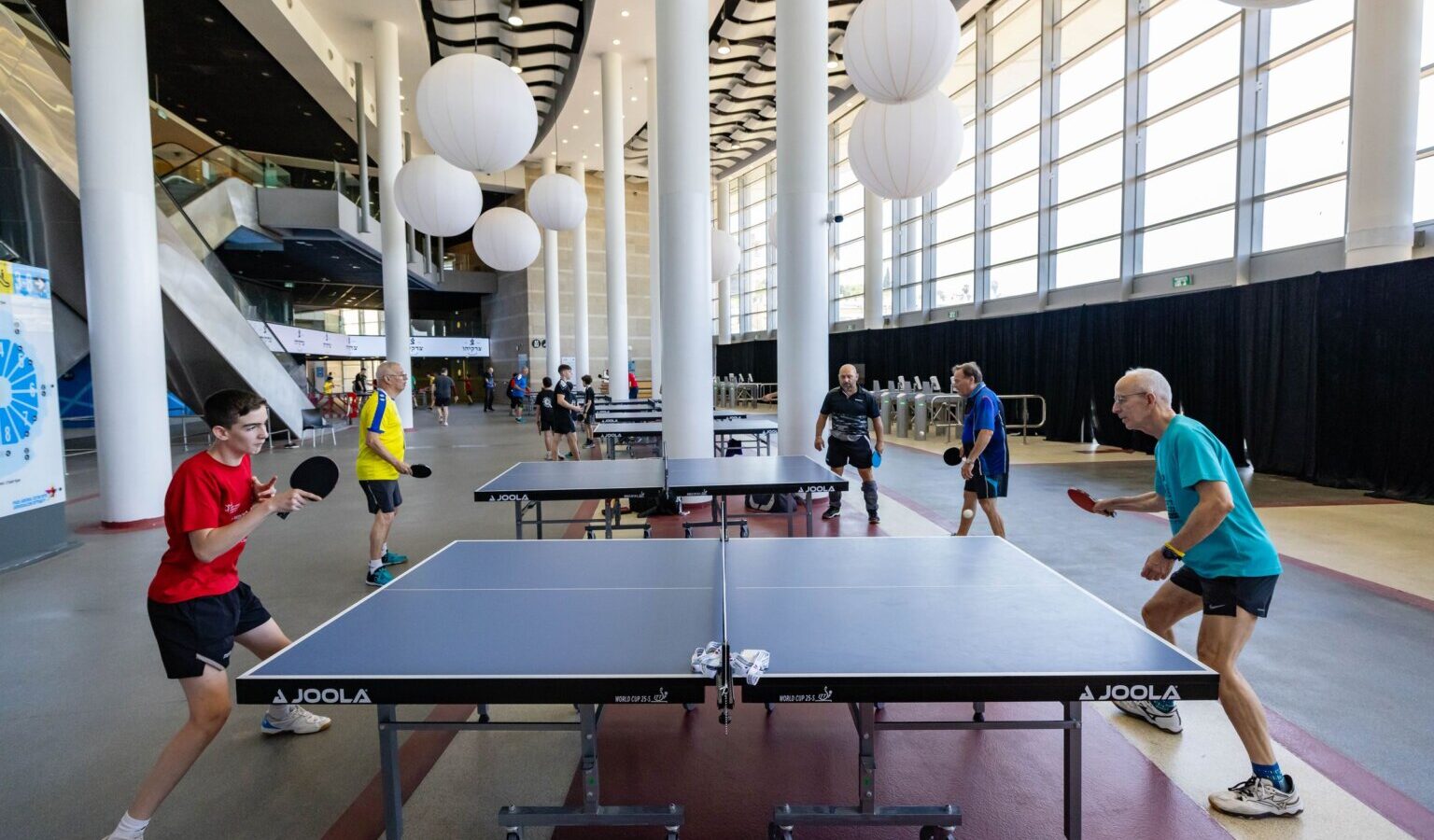
Picture a club session in a school hall, with folded benches against the wall and a slow clock above the exit. A new player packs their bat while someone across the table makes a backhand block look effortless. They have practised regularly and started arriving early. They ask how long their partner has been playing, hoping the answer comes with a date for their own diary.
It is an understandable question. How long does it take to get good at table tennis sounds like a request for information, but it can carry something heavier: tell me whether the effort I am making is enough, and tell me when it will stop feeling like this.
A calendar can organise your practice. It cannot certify your arrival.
There is no reliable single number. It depends on your starting point, what you mean by good, access to practice and the feedback you receive. Keeping a comfortable rally going and competing successfully at a club are different goals. Use skills you can demonstrate, first in practice and then against changing balls, to judge progress rather than treating a date as a promise.
How Long Does It Take to Get Good at Table Tennis?
There is no honest deadline that fits everyone, and I do not have a reliable study that supplies an average time for an adult beginner to become a good club player. Giving you a neat range would make this article easier to write and your next difficult session harder to bear.
The missing detail is the destination. Being able to rally with a friend, holding your own at a club night and competing successfully in a local league ask different things of you. Even the last of those changes with the strength of the league.
Your available practice matters too. Someone with regular table access, willing partners and clear feedback has different opportunities from someone who borrows a table when the hall is free. That is a difference in circumstances, not a character assessment.
The useful answer is therefore a route: define the standard you want, find the next skill it requires and check whether that skill is becoming more dependable. Keep asking about time, but give the question something specific to measure.
What Does Being Good at Table Tennis Actually Mean?
It means being able to do the things your chosen level requires with enough reliability to use them against another player. A beautiful forehand in a cooperative rally is one part of that. Reading the serve that starts the point is another.
Here are three possible destinations, offered as coaching descriptions rather than official grades:
- Comfortable recreational play: you can serve, keep a controlled rally going and enjoy games without every point ending on the first contact.
- Comfortable club participation: you can rally on both wings, recognise some common spin situations and play games with a basic plan.
- Competitive club play: you can cope with different serves, choose useful returns, recover after your shots and make opponents work for points.
None requires every stroke in the sport. None means beating everyone in the room. A player can have an awkward backhand and still be difficult to beat because they serve thoughtfully and place the next ball well.
Write your destination in plain language. “I want to play a league match without feeling lost on receive” gives a coach something to work with. “I want to be good” gives both of you a long evening.
Which Milestones Should a Beginner Work Towards?
Start with control, then add recognition and choice. The milestones below are a practical coaching sequence, not a timed pathway or a test you must pass before being allowed to play matches.
Can You Send a Predictable Ball Back With Control?
First learn to meet an ordinary ball with a balanced stance and a manageable swing. Work on forehand and backhand drives at a pace where you can see what happened, finish the stroke and prepare again.
Ask a partner for a comfortable placement. Notice whether your contact and finish stay similar across several attempts. A long rally is enjoyable, but do not rescue the rally by stretching further and further away from your ready position. The aim is a stroke you can repeat, including the recovery after it.
The table tennis beginners guide provides a starting point for those foundations. Use it to identify what to learn next, rather than trying to collect every shot at once.
Can You Begin the Point With a Purpose?
Build a serve you can place deliberately and practise getting ready for the return. At first, the purpose might simply be a controlled serve towards a chosen area, followed by a balanced ready position.
Then learn to recognise a basic backspin ball and return it with a controlled push. Ask a partner to tell you what they are serving while you learn the response. Later they can mix familiar serves so that you have to read the ball yourself.
A serve that goes in is useful. Understanding the ball it may bring back makes it part of a game.
Can You Choose a Response When the Ball Changes?
The next milestone is adapting to a ball you did not arrange in advance. Your partner might choose between two placements, or between a familiar backspin serve and a familiar topspin serve.
Keep the choice small enough to understand. If you cannot tell whether you missed because of spin, position or an unfamiliar stroke, the exercise may be asking too many questions at once. Reduce the choice, get feedback and rebuild it.
You are developing a connection between seeing a ball and doing something useful with it. That connection is what a practice game will keep asking for.
Why Do Two Players Who Started Together Improve Differently?
Because a shared starting date does not mean shared practice, feedback or experience. Their calendars may match while the contents of their sessions are quite different.
One player might spend a session receiving serves from someone who explains the spin. Another might play games against the same opponent without understanding why each return goes long. Both have spent an evening at the club. They have not had the same learning opportunity.
Other differences can include previous playing experience, coordination, confidence trying unfamiliar movements and the practical freedom to attend regularly. These are possible influences, not a formula for predicting anyone’s future level.
Be careful with the player who says they have “only been playing a year”. You may not know whether that includes school games, coaching, a table at home or several sessions each week. Their answer is a conversation, not a controlled comparison.
Ask what they practise and who helps them. Those details may be useful to you. Their start date usually is not.
How Often Should You Practise If You Want to Improve?
Choose a repeatable pattern that gives you chances to learn, revisit and use a skill. There is no universal weekly session count that guarantees club competence.
As a coaching starting point, look at the sessions you can actually protect in your diary. If you can attend twice, you might give one session a clear learning focus and use the other to revisit it in games. That is an example of organising available time, not a minimum dose established by research.
If you can attend only once, make the session legible. Arrive knowing what you want to work on, agree a short practice block with a partner and leave with one observation about it. An imperfect routine that happens is more useful than an ambitious one that exists mainly in a notebook.
You can use the table tennis training plan for beginners to give those sessions a shape. Adapt it to your access and energy rather than treating somebody else’s schedule as a condition of progress.
Leave room to enjoy games too. A training plan must fit a life if it is going to stay in that life.
What Should You Do With a Single Club Session?
Give it a purpose, a practice block and a chance to use the work in play. The following is a coaching example for a player learning to receive a familiar long backspin serve, not a researched programme.
Begin with an ordinary warm-up and easy rallies. Then ask a willing partner to serve the same backspin ball to a manageable placement while you work on a controlled push. Agree what they should watch: perhaps whether you reach the ball comfortably and recover after contact.
Once that becomes manageable, ask them to mix it with one other familiar serve. Keep the exercise focused on recognising which response is needed. If you lose control of both returns, make the choice simpler again.
Finish with practice games and a single observation: did you recognise the target serve, and what happened when you tried your return? You do not need a special scoring rule or a perfect success rate. You need to know whether the work appeared when the serve was no longer announced.
Afterwards, record the next useful question. “I returned it in the drill but rushed when it came wide” tells you more than “receive still bad”. One gives the next session a starting point. The other gives it a mood.
How Can You Tell Whether Practice Is Becoming Learning?
Check what you can do later and when the conditions change, rather than judging only your best rally at the end of a drill.
Kantak and Winstein’s review of motor learning distinguishes immediate practice performance from learning: delayed retention and transfer tests give a better indication of learning, and difficult practice conditions can sometimes reduce immediate performance while benefiting later retention. This is a general motor learning review, not evidence for a table tennis timeline or a guarantee that harder drills are better.
At the table, make the check modest. At your next session, revisit the skill before a long rehearsal. Can you still find the contact? Then introduce a familiar change, such as another placement. Can you adjust without rebuilding the whole stroke?
Do not turn this into an examination every evening. You are looking for a skill that survives beyond its favourite conditions, not finding another reason to mark yourself down. A dependable ordinary return is a more useful sign than the extraordinary winner everyone happened to see.
What Should You Record Without Turning Your Hobby Into Homework?
Keep a brief note of the skill, the conditions and the next question. Three clear lines can be enough.
For example, this is an invented practice note, not a reported result:
- Skill: controlled backhand receive against a familiar long backspin serve.
- Conditions: comfortable when the placement was known; late when the serve moved wider.
- Next question: ask a partner to watch my first movement towards the wider ball.
Keep the game result alongside the note if results matter to you. Neither record needs to replace the other. Winning tells you who won that game; the skill note helps you decide what to practise.
Use the same question across several sessions so that comparisons mean something. If the serve, partner and placement change every time, write that down too. It prevents a harder task from masquerading as proof that you have become worse.
There is no need to count every ball. The record should make the next session clearer, not require an unpaid assistant with a clipboard.
When Should You Review Your Plan Instead of Waiting Longer?
Review it when the same difficulty keeps returning and you cannot explain what your practice is changing. Patience is useful; unexplained repetition is less informative.
Ask a coach or an experienced player to observe a specific situation. “Please watch my receive against this serve” is easier to answer than “why am I still not good?” Let them see enough attempts to notice a pattern, and ask for one adjustment you can understand.
The cause may be a basic contact issue. It may be that the drill is too predictable, or too difficult, or that you have not had enough chances to revisit it. Those possibilities call for different changes. They do not all call for more hours.
This is where the timeline question becomes practical. Instead of asking whether you should have arrived by now, ask what evidence would show that the next stretch of practice is working. Agree that with the person helping you. Review the method while keeping the destination in view.
What Should You Ask Before Trusting a Fast Improvement Promise?
Ask what improvement means, where the player starts and how the result will be checked. A useful promise describes the work clearly enough for you to inspect it.
A coach can reasonably offer help with your push or a plan for your next block of practice. A promise that you will beat a particular standard of opponent by a fixed date needs much more explanation, including what happens when circumstances change.
Look for answers to these questions:
- Which skill will we work on first, and why?
- How much table access and partner practice does the plan assume?
- How will we check the skill outside the teaching drill?
- What will change if I struggle or miss sessions?
Paid coaching is not suspect because it has a timetable. A timetable can be useful. The issue is whether the date is a review point or a guarantee about results nobody fully controls.
Certainty is attractive after a frustrating evening. Check that you are being offered guidance rather than a countdown.
What Should You Do This Week?
Define one playable goal, arrange one suitable practice opportunity and decide how you will recognise a useful change. Keep the task small enough to describe to a partner before you start.
If you are new, the goal might be returning a predictable ball with a balanced finish. If rallies feel comfortable but games do not, choose one serve you currently struggle to receive. Ask for help that fits that situation.
Put a review point in your diary if it helps you stay organised. At that point, review what you attempted, what changed and what you need next. You are setting a date for a conversation with the evidence, not a deadline for becoming a different player.
Frequently Asked Questions
How long does it take to get good at table tennis as an adult?
There is no reliable single timeline for adult beginners. Your starting point, practice opportunities, feedback and definition of good all matter. Use milestones such as controlled rallies, purposeful serves and usable returns to judge the next stage.
Can I get good at table tennis by playing once a week?
A weekly session can give you opportunities to improve, but it cannot guarantee a particular level or arrival date. Give the session a clear focus and revisit the work when you return. Adjust expectations to the practice you can sustain.
Does winning more matches mean I am improving?
It can be a useful sign, but results also depend on who you play and the conditions. Keep a brief record of a skill you are developing alongside your scores. That helps you see whether the work is becoming usable even when an opponent remains stronger.
Will coaching make me good faster?
Coaching can help identify a specific problem and suggest practice suited to it, but there is no honest guarantee about how much time it saves. Ask for a clear explanation and a way to check the change. You still need opportunities to practise and use the skill.
How do I know when I am ready to play at a club?
Ask the club what sessions suit beginners rather than waiting until you feel good enough. Some sessions offer teaching or mixed abilities, while others expect established competitive play. Finding a suitable session is a practical step, not a judgement on your potential.
Back to the school hall and the clock above the exit. The newcomer can ask their partner to show them that block, try it against a comfortable ball and come back with a better question next time. The clock will still be slow. It was never qualified to judge their progress. Give your practice a direction before you give yourself a deadline.
Build your next practice focus with the guide to getting better at table tennis.
Leave a Reply