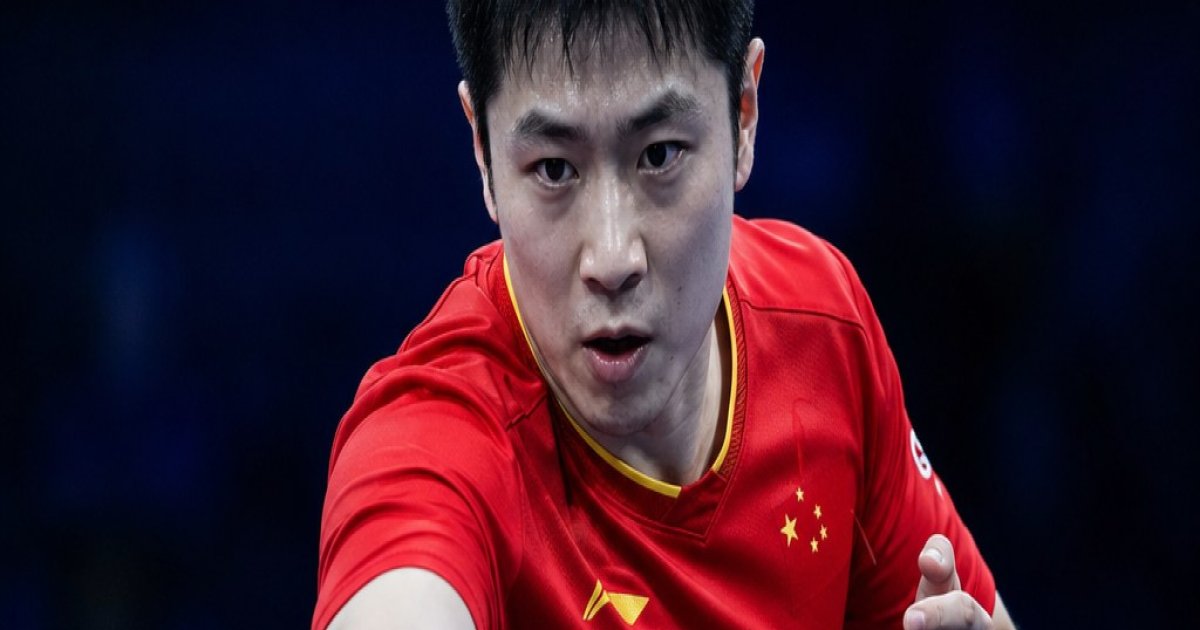
A junior coach in San Fernando used to show his students a single clip of Fan Zhendong on repeat, not to study a shot or a footwork pattern, but to point out the exact moment his expression changed after losing a critical point, which was almost imperceptible.
Blink and it was gone, replaced immediately by the same composed focus that had been there before. That single frame, the coach insisted, taught more about competing at the highest level than an entire session of technical drilling.
Fan Zhendong is distinguished by his powerful, aggressive offensive game combined with remarkable emotional control under pressure.
His ability to maintain composure and tactical clarity in high-stakes moments, alongside genuine technical dominance, has made him one of the most consistently successful players of his generation.
His career offers a specific, useful lesson about the relationship between raw offensive power and the composure required to actually deploy it when a match is on the line.
What defines Fan Zhendong’s playing style tactically?
An aggressive, power-forward offensive approach, covered in principle in our guide on offensive vs defensive style, built around exceptionally strong forehand loops and a willingness to initiate attacks early in a rally rather than waiting patiently for a setup.
This contrasts somewhat with more all-round, patient styles, representing a genuinely different, equally valid path to elite success.
How does his emotional composure show up specifically during matches?
A notable consistency in body language and apparent emotional state regardless of whether a point was won or lost, which is a specific, trainable skill rather than a fixed personality trait, the kind of composure covered across this site’s mental game content, developed deliberately rather than simply inherited by fortunate temperament.
Does an aggressive playing style require different mental preparation than a more patient, defensive one?
In some ways, yes. An aggressive style inherently accepts more unforced errors in exchange for more decisive winners, which means managing the psychological weight of repeated risk-taking becomes a more central mental skill than it might be for a more conservative, patient style that takes on less inherent risk per point.
What can a developing offensive player specifically learn from studying his approach?
That raw power alone doesn’t guarantee elite success: the composure to deploy that power consistently, without letting a missed attempt cascade into hesitation on the next opportunity, is what actually separates a merely powerful player from a genuinely dominant one.
This mirrors a pattern covered in our guide on table tennis smash: a missed aggressive shot carries real psychological weight that has to be managed deliberately.
That restraint, more than any single shot, is what makes Fan Zhendong worth studying.
How does his story challenge a common assumption about aggressive players?
The assumption that aggressive, high-risk players are inherently more emotionally volatile, prone to visible frustration when an attacking approach doesn’t pay off immediately.
His sustained success suggests genuine composure and an aggressive offensive style aren’t in tension: they’re fully compatible, provided the mental discipline is developed with the same seriousness as the technical power.
What’s the broader lesson for players who feel like their natural temperament doesn’t match their preferred playing style?
Temperament and style aren’t as rigidly linked as they might initially seem. A naturally intense, aggressive player can still develop genuine composure through deliberate mental training, just as a naturally patient player can develop the willingness to attack when a genuine opportunity arises.
Neither trait is fixed, and elite examples across different combinations demonstrate real flexibility is possible.
How does his approach to equipment reflect the same power-plus-control balance visible in his playing style?
Elite equipment at his level, fitted meticulously by dedicated support staff, is tuned to support maximum power without sacrificing the control needed to place that power precisely rather than just hitting hard indiscriminately.
This mirrors the same equipment-fit principle covered throughout our guides, just applied at a level of precision most club players never need to reach.
What’s the actual risk of a developing player trying to copy an aggressive style like his without the underlying composure work?
A high-risk, high-error game without the composure to manage repeated misses tends to produce exactly the kind of visible frustration and tilt this style is specifically vulnerable to if the mental side isn’t developed alongside the technical side.
Copying the aggression without the composure is copying only half the actual formula.
According to ITTF equipment regulations, every player at every level competes under the same approved equipment standards, meaning the power visible in his game was never a function of unavailable technology: it was built entirely from technique and composure developed within rules every single competitor plays under equally.
That imperceptible frame of composure after a lost point wasn’t luck, and it wasn’t a fixed personality trait either.
It was a specific, repeatable skill, practiced with exactly the same seriousness as the forehand loop that made him famous in the first place.
Most young players who watch that clip focus entirely on the loop itself, replaying the power and the follow-through, and miss the actual lesson sitting one frame later: the composed reset after a missed one, which is considerably harder to copy and considerably more valuable in the long run.
A powerful shot missed is just a missed shot. A powerful shot missed and immediately followed by the exact same composed confidence on the next attempt is the actual pattern worth studying, frame by frame, more closely than any single winner ever deserves.
That coach eventually stopped explaining the clip out loud entirely, trusting the students to catch it eventually on their own, the way most of them actually did once their own careers gave them a reason to look closer.
Rewatch your own recent match footage the same way, if you have it. Look past the winners and losses to the single frame right after each one, and see what your own face is doing there.
Most players are honestly surprised, the first time they actually look, at how much of that specific frame is available to change with deliberate practice rather than accepted as a fixed part of their own temperament.
Power gets all the highlight-reel attention. Composure quietly decides who actually keeps winning once the highlight reel stops rolling.
That’s the entire lesson, boiled down to one frame, replayed on a loop in a San Fernando classroom for reasons most of the students only understood years later.
Pause your own next match footage right after your worst miss. Study that frame closely, the same way that coach made his students study Fan Zhendong’s.
What you find there might explain more about your own game than any single technical drill ever could.
Simple as that, one frame at a time.
Fan Zhendong never had to explain his own frame either. He just kept producing it, match after match, year after year, until it simply became the expectation.
Yours can become an expectation too, given the same patient, repeated practice.
End of story.
Patience, repeated enough times, has a way of eventually looking like talent from the outside.
Nobody starts out looking talented. They just keep practicing the same frame until it stops looking like effort at all.
Start with your next missed shot. Watch the frame right after it.
Worth the honest look, this time and every time after it.
That’s the whole exercise, and it costs nothing but a rewind.
Try it tonight, if you can.
Then again after your very next match.
Consistency, more than anything, is what actually builds the frame worth studying.
Watch Fan Zhendong lose a big point, then watch the next serve. The composure is the skill. Fan Zhendong rebuilds it in a blink; most players never rebuild it at all.
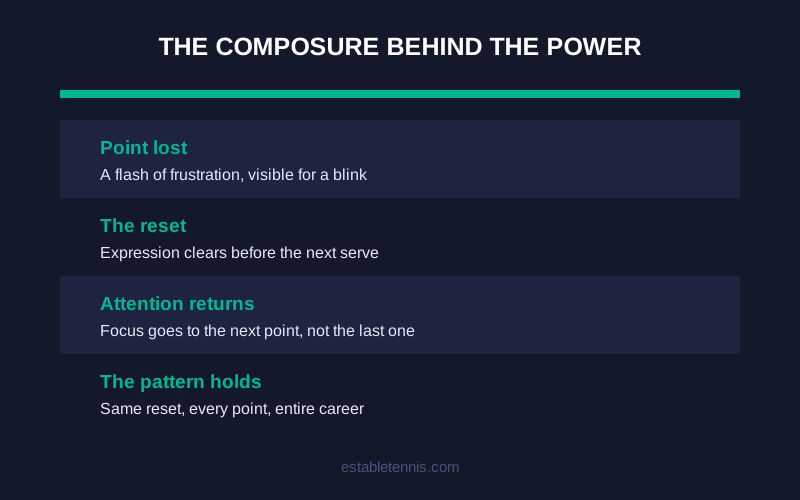
Quick Recap: Fan Zhendong
Fan Zhendong’s career demonstrates that raw offensive power and genuine emotional composure aren’t in tension: they’re fully compatible, provided the mental discipline gets the same deliberate attention as the technical game.
That single, almost imperceptible frame of composure after a lost point taught that San Fernando coach’s students more than any technical drill session ever could.
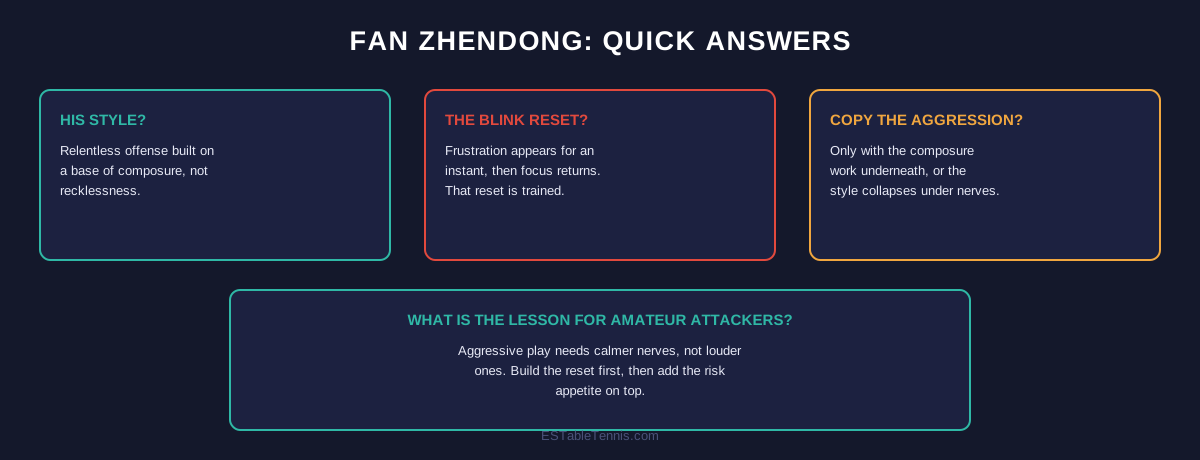
Frequently Asked Questions
What’s distinctive about Fan Zhendong’s playing style?
An aggressive, power-forward offensive approach built around exceptionally strong forehand loops, willing to initiate attacks early rather than waiting patiently for a setup.
Does an aggressive style require different mental preparation than a patient one?
Somewhat. An aggressive style accepts more unforced errors for more decisive winners, making managing repeated risk-taking a more central mental skill.
Can a naturally intense player develop real composure, or is temperament fixed?
Temperament and style aren’t as rigidly linked as they seem. Genuine composure can be developed deliberately, regardless of natural intensity.
What’s the main lesson for developing offensive players?
Raw power alone doesn’t guarantee success. The composure to deploy that power consistently, without a missed attempt cascading into hesitation, is what separates powerful from dominant.
That coach never explained exactly why the clip mattered so much, beyond insisting his students watch it again. Most of them eventually understood on their own, usually right after their own first missed smash in a match that actually counted.
Want to build the same composure into your own game under pressure? Check out the MentalEdge Course.
Leave a Reply