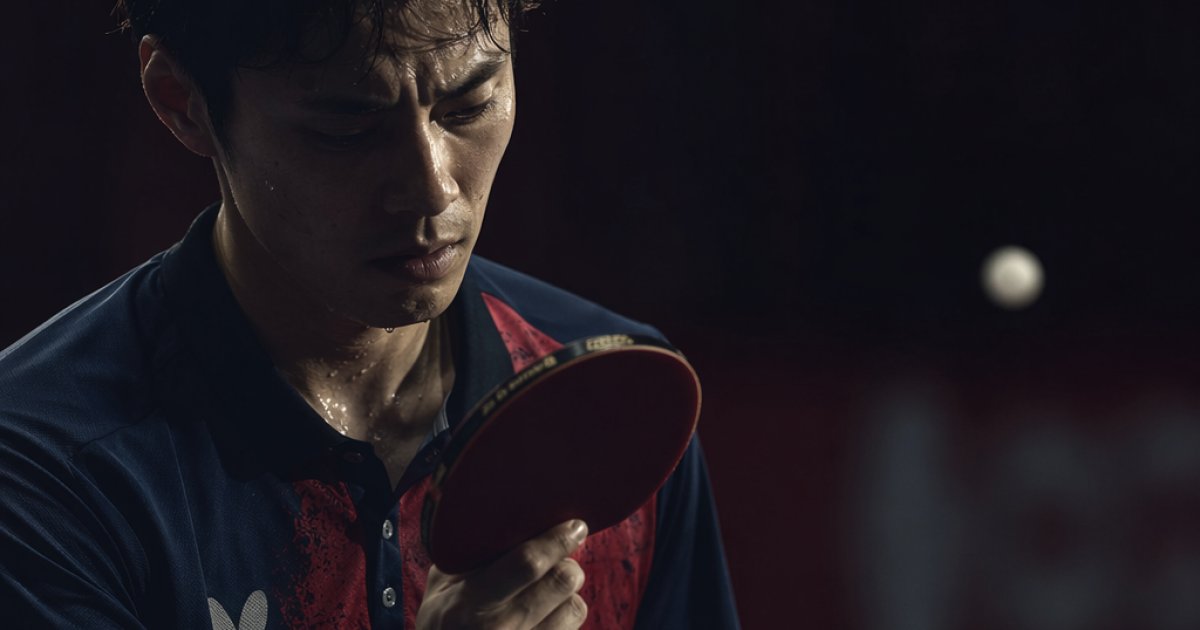
Every table tennis equipment forum has the same thread, some version of “best beginner paddle,” answered by twelve strangers linking the same three Amazon listings, none of whom have ever seen the person asking hold a paddle, seen their swing, or heard a single word about how they actually play. The advice gets followed anyway, because it’s free and it’s right there. Six months later that same player is in a different thread, this one about why their forehand falls apart under pressure, convinced the problem is entirely in their head.
It usually isn’t. Or rather, it is in their head, but it started in their hands.
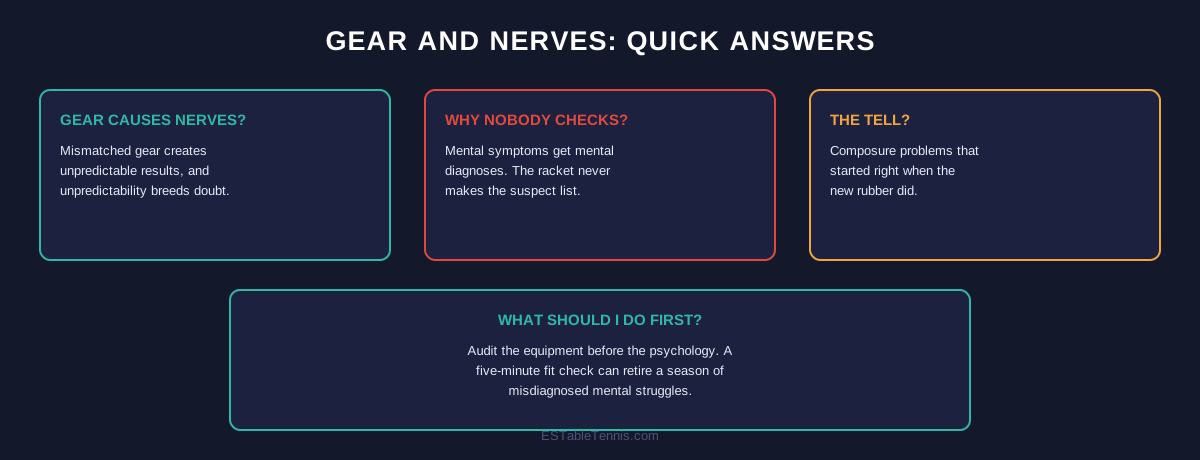
Equipment bought from a generic “best of” list, fitted to nobody’s actual playing style, quietly pre-loads a player’s mental game to fail. Inconsistent gear produces inconsistent results, and a player’s nervous system reads that inconsistency as unreliability, exactly the state that shows up later as choking, hesitation, and a mental game that gets blamed for a problem equipment created first.
The Mental Game Everyone Talks About Starts Somewhere Nobody Checks
Sports psychology content, including a lot of what’s published on this site, treats the mental game as its own separate system: breathing, routines, self-talk, confidence, all trainable in isolation from the equipment in your hand. That’s not wrong, exactly. It’s incomplete in a way that quietly wastes a lot of players’ time. A player drilling breathing techniques for months while playing on a rubber too fast for their timing is training the regulation system while ignoring the thing generating half the dysregulation in the first place.
How Table Tennis Equipment Quietly Produces Mental Symptoms
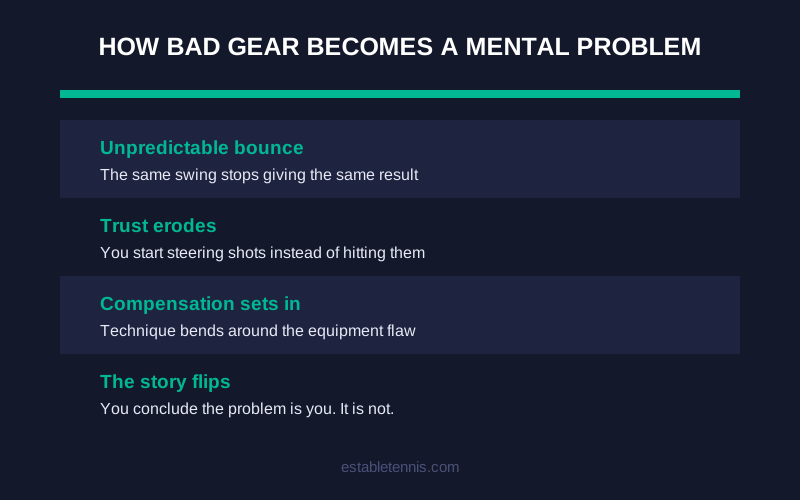
Because confidence, at its core, is built from repeatable evidence: I did this before, and it worked. Research on self-efficacy backs this up directly: belief in your own ability to execute a specific task is built from exactly this kind of repeatable, trustworthy feedback, which table tennis equipment either supplies or quietly undermines.
Equipment that doesn’t fit your swing speed, grip strength, or playing style breaks that repeatability at the source. A rubber too fast for a developing stroke turns the same shot into a coin flip, in the net some days, off the end of the table on others, for reasons that have nothing to do with the player’s nerve and everything to do with the sponge under their fingers.
The player doesn’t experience it as an equipment problem. They experience it as inconsistency they can’t explain, which is exactly the raw material anxiety and hesitation are built from. By the time it shows up as a missed easy shot at match point, it looks purely psychological. It was seeded months earlier by a purchase decision made off a stranger’s generic list.
The Compensation Pattern Nobody Notices Happening
Here’s the part that makes this genuinely sneaky rather than just a minor inconvenience. Players don’t usually notice equipment mismatch directly. They notice their shots aren’t working, and they compensate, technically, by altering their stroke to fight the equipment instead of swinging naturally through it.
A rubber too hard for their grip strength gets met with more force. A blade too stiff for their timing gets met with an early, tentative contact instead of a full, committed stroke. These compensations get drilled in as habits, hundreds of repetitions deep, technique patches built to survive equipment that never should have needed patching in the first place.
Then a real match arrives, the patch cracks under pressure exactly the way choking always does, and the player walks away believing they have a mental toughness problem. What they actually have is a technique built to route around bad gear, finally meeting a moment with no room left to compensate.
This Isn’t an Argument Against Mental Training
Worth being clear about what this piece is and isn’t claiming, since it would be easy to read it as dismissing everything else this site publishes. Breathing, routines, self-talk, arousal reframing, the same tools covered in how to build real confidence, all genuinely work, and none of that is undone by fixing equipment fit.
The claim about table tennis equipment is narrower and, honestly, more useful: mental training applied on top of badly fitted equipment is working uphill against a problem it was never designed to solve, and a lot of players spend months on the mental side before ever ruling out the much simpler, much cheaper fix sitting in their own hand. Check the foundation before assuming the whole building is structurally unsound.
Isn’t This Just an Argument for Buying More Equipment?
Fair question, and worth answering honestly rather than dodging. The argument here isn’t buy more; it’s buy once, correctly, based on your own game rather than a stranger’s generic list. A properly fitted forty-dollar paddle beats a poorly fitted hundred-dollar one every time, which is the opposite of a sales pitch for spending more.
The actual claim is narrower and cheaper than it sounds: before assuming a slump is purely psychological, rule out the twenty-minute, no-cost step of honestly checking whether your gear fits your own swing, grip, and style. Sometimes your table tennis equipment does fit, and the problem really is mental. Sometimes it doesn’t, and no amount of breathing work fixes a rubber that’s simply wrong for your hands.
How Do You Actually Know If This Is Your Problem?
One honest test: does the same shot, hit the same way, produce different results often enough that you can’t explain the pattern through your own technique alone? If a clean, well-timed topspin sails long one point and dies into the net the next, with nothing different in the swing that you can identify, that’s the signature of equipment feeding you unreliable information, not a mental lapse.
Compare that to a shot that consistently fails under a specific kind of pressure, a break point, a big lead, a rival you’ve lost to before, which points toward the mental side this site spends most of its time on. Both patterns are real. They’re not the same problem, and they don’t have the same fix, which is exactly why so much generic advice, mental or equipment, misses so often. It’s aimed at a target nobody bothered to actually identify first.
Table tennis equipment problems and mental toughness problems look identical from the outside. A generic list can’t tell you which one you have. When it comes to table tennis equipment, it was never built to ask.
Bad table tennis equipment does not just cost points. Bad table tennis equipment teaches your brain that your shots cannot be trusted.
 If you suspect your equipment is quietly working against you, PingPath asks the questions a forum thread never will. And if the pattern above sounds more like the mental side- breathing, routines, composure- the free ebook is the honest place to start there instead.
Leave a Reply