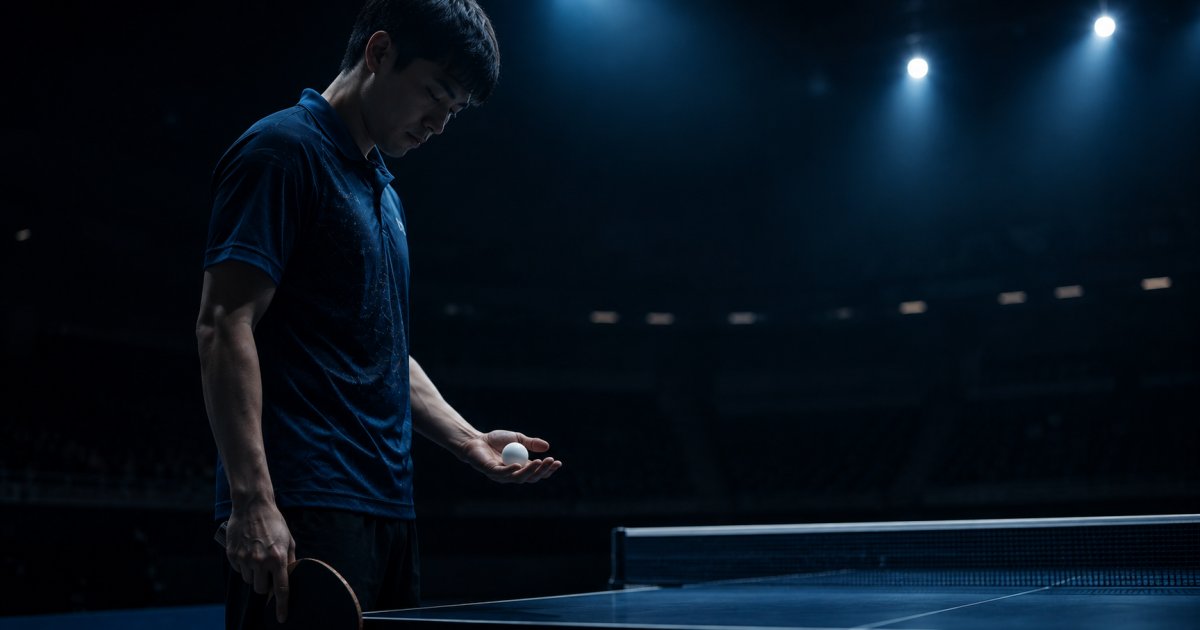
There was a match at the TTTTA senior championships a few years back, late in the evening, when the hall had thinned out, and only the diehards remained. A player I had been watching all day was in the fifth game against someone he should have beaten two hours earlier. He was down 7-9, serving at what everyone in the building understood was probably his last chance.
He walked to the end line. Picked up the ball. Bounced it once. Then he stopped, closed his eyes for two seconds, and did something I had only seen better players do: he took a long, slow breath through his nose before settling into his serving stance.
He won that point. Then the next. Then the one after that, and the one after that.
Nobody mentioned the breath afterward. They talked about his last serve, his footwork, and his composure. But I had watched enough matches by then to know the breath came first. Everything else followed from it.
Most players treat breathing like digestion, something the body handles automatically while the mind gets on with the real work. The problem is that under competitive pressure, the body stops handling it automatically. It starts handling it badly. That is why table tennis breathing techniques are one of the most overlooked performance tools in the game, and why the players who use them tend to look mysteriously calm when the score is tight.
What Does Pressure Do to Your Breathing?
Pressure shortens and speeds up your breathing, which drops blood CO2 levels, triggers more anxiety, and constricts blood vessels, degrading exactly the fine motor skills your shots depend on. When you are down 9-10 in the fifth, your nervous system does not know the difference between that and a car crash. The amygdala, the part of your brain that processes threat, fires the same alarm signal regardless of whether the danger is a physical attack or a lost match point. What follows is a cascade you have felt even if you could not name it: your heart rate climbs, your shoulders tighten, and your breathing shortens and speeds up.
That last part is what kills your game.
Shallow, fast breathing lowers carbon dioxide levels in your blood faster than your body can compensate. That drop in CO2 triggers further anxiety, more shallow breathing, and a tightening of blood vessels that reduces oxygen delivery to your muscles and brain. Research from the American Psychological Association confirms this feedback loop: anxiety disrupts breathing, and disrupted breathing deepens anxiety. Once you are in it, no amount of telling yourself to relax breaks it.
Your fine motor skills go first. The precise wrist snap on a forehand loop. The soft touch on a short push. The micro-adjustment on a fast-paced exchange. All of it degrades under the sympathetic nervous system response that panic breathing triggers.
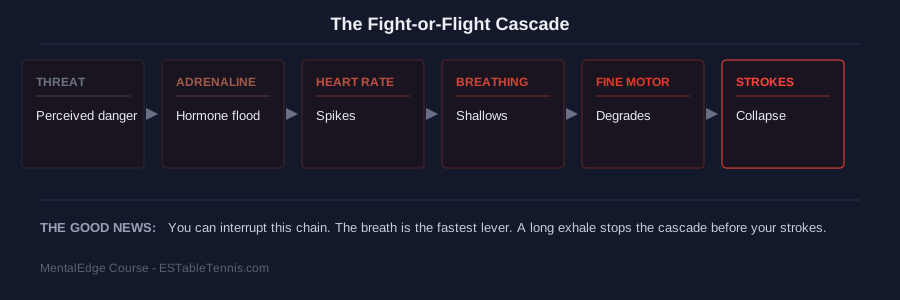
The good news is that the reverse is also true. Controlled breathing activates your parasympathetic nervous system, the rest-and-digest counterpart to fight-or-flight. A study published in Frontiers in Human Neuroscience found that slow, controlled breathing directly reduces heart rate and increases heart rate variability, both markers of a calmer, more controlled state. You can use table tennis breathing techniques to physically interrupt a panic spiral, not just mentally manage it.
This distinction matters. Mental management is telling yourself to calm down. Physical intervention is breathing in a way that changes what your nervous system is actually doing. One of those approaches works reliably at 9-10 in the fifth. The other does not.
What Are 7 Table Tennis Breathing Techniques That Actually Work?
These techniques are ranked in order of how quickly you can deploy them during a match, from the simplest single-breath reset to the full pre-match sequence. Start with the ones at the top. They work immediately. The ones lower on the list take a few minutes but produce deeper shifts in your baseline state before competition.
1. The Intentional Breath Before Serving
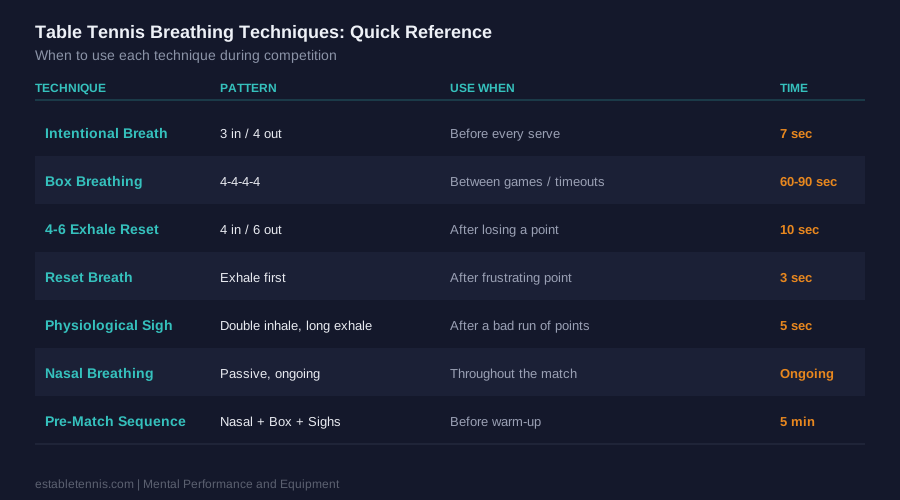
This is the entry point. Before you place the ball on your palm to serve, take one deliberate breath: in through the nose for three counts, out through the mouth for four. That is it. The whole technique takes about seven seconds and disrupts the shallow-breathing pattern that builds between points.
The reason it works is not complicated. You are slowing your breathing rate from the 15 to 25 breaths per minute of an anxious person to something closer to 10, which is enough to shift your nervous system toward a calmer state before the next point begins. The player I watched at that TTTTA match was doing a version of this. He had not read any research on it. He had learned through trial and error that the pause helped.
Add this to your pre-serve routine. If you are working on building that routine, the pre-serve routine guide on this site covers the full sequence, and the intentional breath fits naturally as the first element of everything that follows.
2. Box Breathing (4-4-4-4)
Box breathing is one of the most well-documented table tennis breathing techniques in sports psychology, used by military personnel, surgeons, and competitive athletes across every discipline. The pattern is simple: inhale for 4 counts, hold for 4, exhale for 4, hold for 4. One full cycle takes about 16 seconds. Three cycles take under a minute.
This technique belongs between games, not between points. When you sit down during a changeover or a mid-game timeout, you have 60 to 90 seconds. Three cycles of box breathing are enough to measurably lower heart rate and reduce the cortisol response that has been building since the first serve. The Cleveland Clinic documents the physiological mechanism: slow, deep breathing activates the vagus nerve, which is the direct pathway to parasympathetic activation.
Do not try to box breathe during fast point exchanges. You need all your attention for the game. Use it in the gaps, where you have time to sit, close your eyes briefly, and cycle through the pattern without losing track of the score or your tactical plan.
3. The 4-6 Exhale Reset
If box breathing is the full recalibration, the 4-6 exhale reset is the quick patch for in-match moments. Inhale for 4 counts, exhale slowly for 6. The longer exhale is the active element. It is the exhale, not the inhale, that most strongly activates the parasympathetic nervous system. A short in, longer out is the fastest way to shift your body toward calm without stopping the game or drawing attention to what you are doing.
Use this between points when you are rattled. You just lost three in a row. Your opponent is serving fast. You have about 10 seconds between points. Four counts in, six counts out, and you are back at the table with at least some of your nervous system working for you rather than against you.

4. The Reset Breath After Losing a Point
This one is different from the 4-6 technique in one important way: it is not about the counting. It is about the conscious decision to breathe at all. Most players, after losing a frustrating point, hold their breath. They clench their jaw. Their shoulders come up. The physical tension locks in before any technique can address it.
The reset breath technique is this: the moment a point ends against you, before you do anything else, exhale. Let the air out. Not dramatically. Just release. You are interrupting the tension reflex before it sets. Everything else, the 4-6 pattern, the box breathing, can follow. But the first thing is always the exhale.
This is exactly what composed players are doing when they look unfazed after losing a big point. They are not emotionally flat. They are physically interrupting the anxiety reflex at the breath level before it has a chance to compound.
5. The Physiological Sigh
This one sounds clinical, but it is simple. A double inhale through the nose, a short sniff followed immediately by a longer inhale until the lungs are full, followed by a long, slow exhale through the mouth. The double inhale fully inflates the alveoli, the tiny air sacs in the lungs that can partially collapse during sustained shallow breathing under stress. The long exhale delivers a stronger parasympathetic activation than a single-cycle breath.
Research published in Cell Reports Medicine found that the physiological sigh was more effective than mindfulness meditation at reducing anxiety in real-time stress situations. One cycle. One breath. About five seconds. It is the fastest reset available among all known table tennis breathing techniques, and most opponents will not even notice you doing it.
Use it right after losing a particularly frustrating point, before you even start moving to the end line. The five seconds it takes will do more for your next point than any tactical thought you could produce in that same window.
6. Nasal Breathing During Play
This is not a technique you deploy in a specific moment. It is a baseline habit. Most players under pressure mouth-breathe throughout a match without noticing. Mouth breathing is less efficient, more activating of the sympathetic nervous system, and produces a drier, tighter physical state that compounds over the course of a long match.
Nasal breathing slows the breath rate automatically, filters and warms the air, and produces nitric oxide in the sinuses that helps dilate blood vessels and improve oxygen delivery. You do not have to count anything. You just breathe through your nose between points, during rallies when intensity allows, and especially during changeovers.
The discipline is catching yourself when you switch to mouth breathing under pressure. That switch is a signal that your arousal level has jumped, and one of the active techniques above should follow intentionally.
7. The Pre-Match Breathing Sequence
The best time to use table tennis breathing techniques is before you need them under pressure. A five-minute pre-match breathing sequence sets your baseline nervous system state before the first ball is hit. Do it in the changing room, in a quiet corner before warm-up, or in your car before you walk in.
The sequence: two minutes of slow nasal breathing at about six breaths per minute, five seconds in and five seconds out. One minute of box breathing. One minute of physiological sighs at a relaxed pace, roughly one per 10 seconds. The final minute: normal breathing while you mentally walk through your tactical plan for the match.
Players who use this consistently report that the first game feels calmer, their decision-making is sharper in the early points, and they recover faster from early setbacks. You are not managing your psychology in those five minutes. You are setting your physiology in the right place before the psychology even enters the picture.
Why Do Breathing Techniques Fail in Real Matches?
Breathing techniques fail in matches because a skill practiced calmly at home is a different skill from the same technique executed while your stress response is active, so it needs to be trained under arousal, not just in a quiet room. Here is the problem every experienced coach knows, and almost nobody says out loud: a breathing technique you have only practiced in a quiet room at home will not work reliably in a match. The skill of controlled breathing under arousal is a separate skill from controlled breathing while calm.
The reason is straightforward. Your prefrontal cortex, the part of the brain that executes learned techniques, gets partially taken offline when your stress response fires at full strength. You have practiced the 4-6 exhale a hundred times on your couch. Under match pressure at 9-all in the third, the pathway to that technique has friction. It is still there. But stress creates interference.
The fix is practicing under arousal. In your regular training sessions, create pressure situations and use breathing techniques there. Serve-receive drills where you must win two points in a row before you rotate. Practice matches where you start every game at 0-6 down. Competitive situations that feel slightly unfair or stressful are exactly the right context for building these habits. Situations that feel genuinely uncomfortable, like the ones described in the guide to handling a cheating opponent, are actually useful training environments because they produce real arousal.
The more you use these techniques when your nervous system is activated, the more automatic they become in a real match. That automaticity is the whole point. You do not want to have to think about whether to use the physiological sigh. You want your hand to start moving to the end line, and the breath to happen because that is just what you do.
How Does Bad Equipment Fight Your Breathing Under Pressure?
Equipment you do not trust keeps your nervous system under low-grade load for the entire match, so by the time you hit a pressure point, no ten-second breathing technique can undo forty minutes of accumulated friction. This is the part nobody writes about.
I have watched players come to the table with a rubber that does not suit their game, or a blade that is slightly wrong for their style, and spend the entire match compensating at a level below conscious awareness. The grip pressure is off. The timing of their forehand is slightly late. Every serve feels unreliable in a way they cannot quite articulate.
When you are fighting your equipment, your nervous system is already under load before the match reaches a pressure situation. By the time you hit 8-all in the fourth, the stress has been building for 40 minutes. No breathing technique fixes 40 minutes of accumulated equipment friction in 10 seconds at the end line.
Equipment trust removes one variable from your mental load before the breathing even becomes relevant. It is not about expensive gear. It is about gearing your body to understand at a level below conscious thought, so your attention stays on the game instead of the tool in your hand. If you are not sure whether your current setup is suited to your style, that is worth checking before you put all your energy into breathing practice.
Which Breathing Technique Should You Use, and When?
There is no point memorizing all seven techniques and then blanking on which one to use at 9-10 in the fifth. Here is the practical map.
Before the match: Pre-match breathing sequence (technique 7), five minutes, somewhere quiet before warm-up.
Between games or during timeouts: Box breathing (technique 2), three cycles, 60 to 90 seconds while seated.
Before serving: Intentional breath (technique 1), one cycle, seven seconds.
Immediately after losing a frustrating point: Reset breath (technique 4), exhale first, then follow with the 4-6 pattern (technique 3).
After a bad run of three or more points: Physiological sigh (technique 5), one to two cycles, five to ten seconds before the next serve.
Throughout the match, as a baseline: Nasal breathing (technique 6), passive, ongoing, interrupted only by active rally demands.
You do not need all seven in every match. Most players find that two or three of these techniques, practiced enough to be automatic, handle most of what competition throws at them. Start with technique 1 and technique 4. Build from there as they become natural.
What Is Match Composure, Really?
Composure is a specific nervous system state, heart rate variability within a range that keeps fine motor skills and decision-making functioning, not the absence of emotion. Every coach talks about staying calm. Very few explain what calm actually is at a physiological level. It is not the absence of emotion. It is not indifferent to the score. Calm is a specific nervous system state where your heart rate variability stays within a range that allows fine motor skills and clear decision-making to function correctly under pressure.
You reach that state through physical means, not through willpower. Table tennis breathing techniques are the most accessible physical means available to a player standing at a table during a match. They require no equipment change, no timeout, no coach intervention. They are already in your body. You just have to train yourself to use them when it counts.
That player at the TTTTA championship who won four points from 7-9 in the fifth did not win them because he was mentally tougher than his opponent. He won them because he spent six seconds doing something his opponent did not think to do.
A breath. A decision. Everything else followed.
If you want to take this further and work on the full mental performance picture, the MentalEdge Course covers breathing, focus, and mental reset techniques as part of a structured six-week program built specifically for competitive table tennis players. Or start with the free ebook on staying calm under pressure, which covers the fundamentals you can apply before your next match.
Frequently Asked Questions
What’s the fastest breathing technique to use during a table tennis match?
The physiological sigh: a double inhale through the nose followed by a long exhale through the mouth, done in about five seconds, right after a frustrating point.
Why doesn’t my breathing technique work when I’m actually under pressure?
Because a technique practiced only when calm hasn’t been trained for when your stress response is active. Practice it under manufactured pressure in training, not just at home.
Should I breathe through my nose or mouth during a table tennis match?
Nose, as your baseline. Nasal breathing slows your rate automatically and produces nitric oxide that improves oxygen delivery. Switching to mouth breathing is itself a signal your arousal has spiked.
How long should I do box breathing between games?
About three cycles, roughly 60 to 90 seconds, using the 4-4-4-4 pattern during a changeover or timeout.
Can breathing techniques really improve my table tennis performance?
Yes. Controlled breathing activates your parasympathetic nervous system, directly lowering heart rate and increasing heart rate variability, both of which support the fine motor control competitive play demands.
Leave a Reply