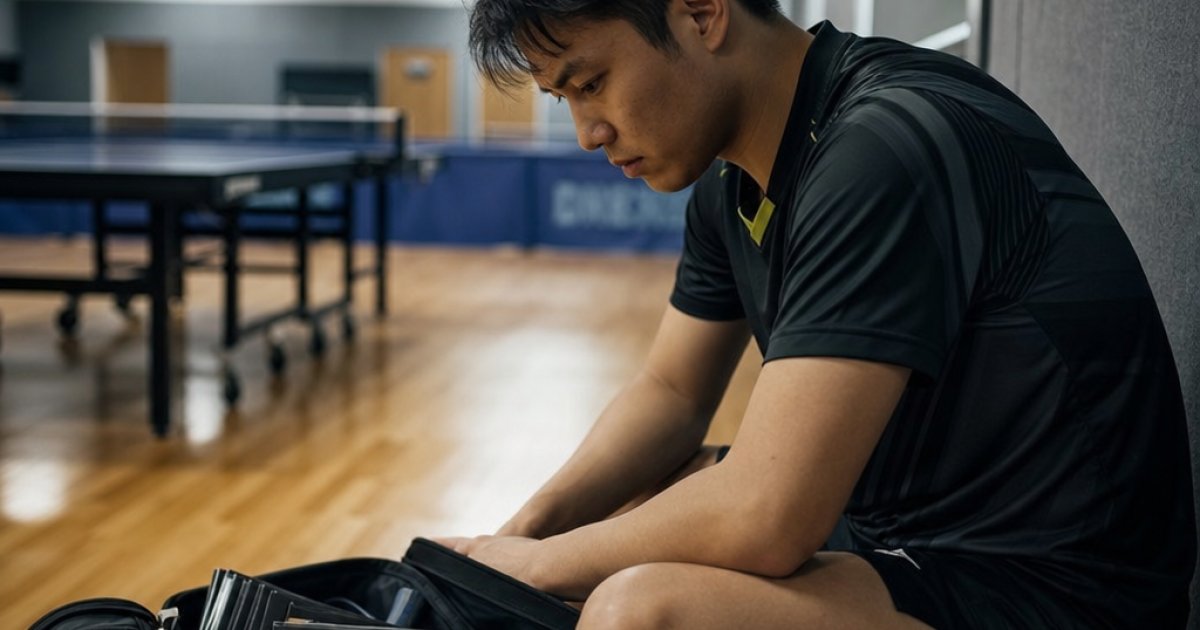
Stop working on your mental game.
Not forever. Just long enough to read this, because I think most of you are polishing the wrong part of the machine, and I would rather annoy you into agreeing with me than watch another season of good players lose to a problem they misdiagnosed. I would rather you disagree with me having actually checked than nod along and change nothing.
Your mental game is not upstream of your equipment. It is downstream of it. A racket you do not fully trust puts your nervous system into a threat state before the first point is even served, and no amount of breathing exercises fixes a threat that started at the bag, not at the table.
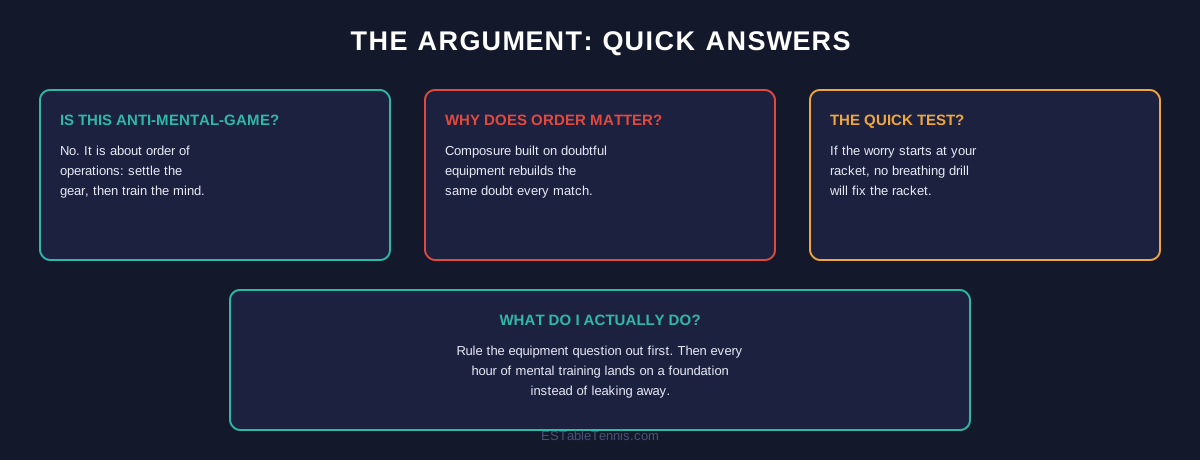
Why Am I Saying This on a Site Built Around the Mental Game?
Because the order matters, and almost nobody talks about the order. Everyone, including me on every other page of this site, talks about breathing techniques, reset routines, confidence banking, as if the mind is a machine you can tune in isolation, sitting quietly on a bench somewhere separate from the bag of gear you brought to the tournament.
It is not separate. Your nervous system does not know the difference between “I am nervous because the score is close” and “I am nervous because I am not sure this rubber will do what I need it to do at 9-9.” Both register as the same thing: a threat. And research on challenge and threat states that once your body has registered a threat rather than a challenge, your blood flow, your decision-making, and your fine motor control all shift in a worse direction, regardless of what actually caused the alarm.
So What’s the Actual Argument Here?
The argument is this: you cannot breathe your way out of a threat state that your equipment caused in the first place. You are treating the symptom while the actual source, a setup you have never fully settled, sits quietly in your bag, undiagnosed, waiting to produce the same anxious flinch at 9-9 next week that it produced last week.
Think about the last time you genuinely doubted a piece of your own gear mid-match. Maybe your rubber felt a step slower than it did in practice. Maybe you were playing with a backup blade because your usual one cracked. A club, a coach, a well-meaning parent buying “the good one” without asking whether it matches the player holding it.
That doubt did not sit quietly in a corner of your mind while the rest of you focused on the ball. It bled into everything. Every miss became slightly ambiguous: was that me or the equipment, and that ambiguity is its own tax on your attention, one that no reset routine was ever designed to pay off, because the routine assumes the threat came from the score, not from the bag.
Isn’t This Just an Excuse to Sell Equipment Quizzes?
Fair question, and I would ask it too. Here is the honest answer: yes, this site sells a fit quiz, and no, that does not make the underlying claim wrong.
The claim is not “buy new gear, and your mental game fixes itself.” It is narrower and less convenient than that: settle the question of whether your equipment fits your game before the tournament, not during it, so that specific source of threat is no longer available to your nervous system when the score gets close. That is a one-time diagnostic problem, not a recurring purchase.
Most players never actually settle it. They upgrade reactively after a bad result, then wonder why the same anxious flinch shows up again with the new rubber, because the flinch was never really about the rubber’s speed rating. It was about never having resolved, with any confidence, whether the gear in their hand was actually right for them.
The bag never got a hearing. The mind took the whole blame instead, every single time, because it is the part of the story that sounds like it belongs on a sports psychology page.
The mental game is real. The mental game is also the second question, not the first.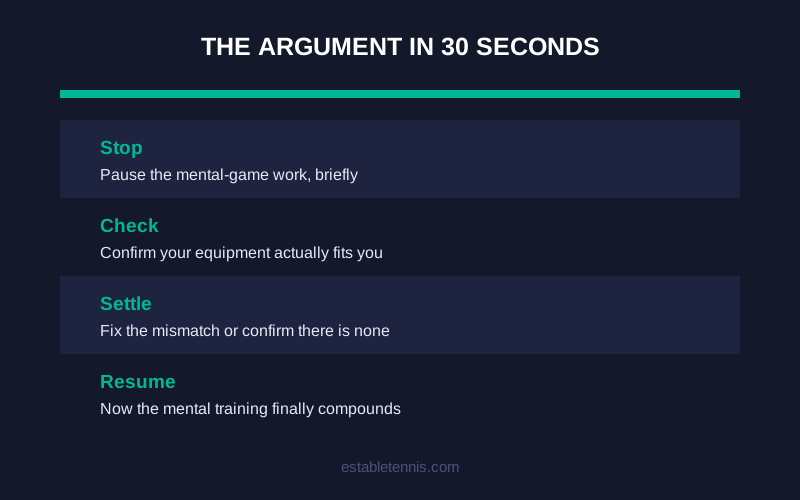
What About Players Who Have Great Mental Training and Still Choke?
This is the pattern that convinced me to write this in the first place. I have watched players who can recite every breathing technique in the book, who genuinely know the reset routine cold, still fall apart at 9-9, and it took me longer than it should have to notice the common thread: most of them were carrying at least one piece of equipment they had never actually resolved their feelings about.
A borrowed blade. A rubber a coach recommended that never quite felt right. A grip they adjusted last month and have not fully trusted since. The mental training was not failing. It was being asked to regulate a threat signal with a source the training was never built to address, since it assumes the alarm is about the score, not the racket.
A player I know spent four months on visualization, box breathing, the whole system, chasing a specific problem: missing routine forehands at 8-8. Nothing moved. Then, almost by accident, he switched back to a rubber he had played with two seasons earlier, before a coach talked him into something “better.” The misses at 8-8 mostly disappeared within a month.
Not because the visualization suddenly started working. Because the actual source of the flinch had been sitting in his bag the entire time, and the mental training had been faithfully managing a threat it was never going to be able to resolve.
I expect some of you to push back on this, and I want to be specific about where I think the pushback is right. If your mechanics are genuinely broken, no equipment change fixes that, and no amount of gear-trust resolves a stroke that was never grooved correctly in the first place. This is not an argument that equipment explains everything.
It is an argument that equipment sits underneath a specific category of problem, the anxious, ambiguous, half-second doubt at the moment of contact, that most players have wrongly filed under “mental toughness” and tried to fix with willpower instead of a diagnosis.
Here is the uncomfortable part: the players who most need to hear this are the ones who have invested the most in mental training. Nobody wants to hear that the composure they have been carefully building sits on a wobbling foundation. I get it. Sunk cost is its own opponent. But investment in the wrong diagnosis does not make the diagnosis right, it just makes it expensive, and the table does not care how much you spent.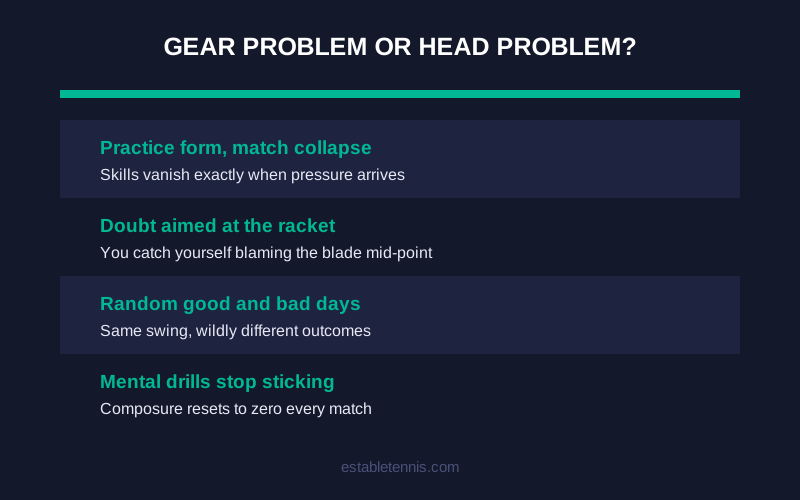
How Would You Even Know If This Is Your Actual Problem?
Ask yourself one honest question tonight: if I lost with this exact setup tomorrow, would any part of me quietly wonder if the gear was part of it? If the answer is yes, even a little, you already have your answer, and no amount of additional mental training is going to make that quiet doubt go away on its own.
That is the actual diagnostic. Not whether your equipment is objectively good. Whether you, specifically, trust it completely, without reservation, under real pressure. Plenty of players compete perfectly well with mediocre gear they trust completely, and plenty of players fall apart with excellent gear they have never fully settled into. The trust is the variable that matters, not the spec sheet.
Fine. What Do I Actually Do With This?
Settle the equipment question first, before you spend another month drilling reset routines on top of a setup you have never fully trusted. Ask yourself honestly whether there is a piece of gear in your bag you are quietly unsure about, and if there is, resolve it, test it properly, replace it, or commit to it, before your next tournament, not during it.
Then, and only then, go back to the breathing and the routines and the confidence banking, because those tools work extremely well on a threat that is actually about the score. They were never going to work on a threat that was actually about the bag the whole time.
I still believe in the mental game. I would not have built an entire course around it otherwise. I just think most players are trying to fix the second problem while the first one sits untouched, and I would rather say that plainly than keep selling breathing techniques to someone whose actual issue is sitting in their bag.
Disagree with me in the comments. I mean that. But settle your gear first, then argue.
For the full mental system, once your equipment is actually settled, the MentalEdge Course covers it end to end.
Leave a Reply