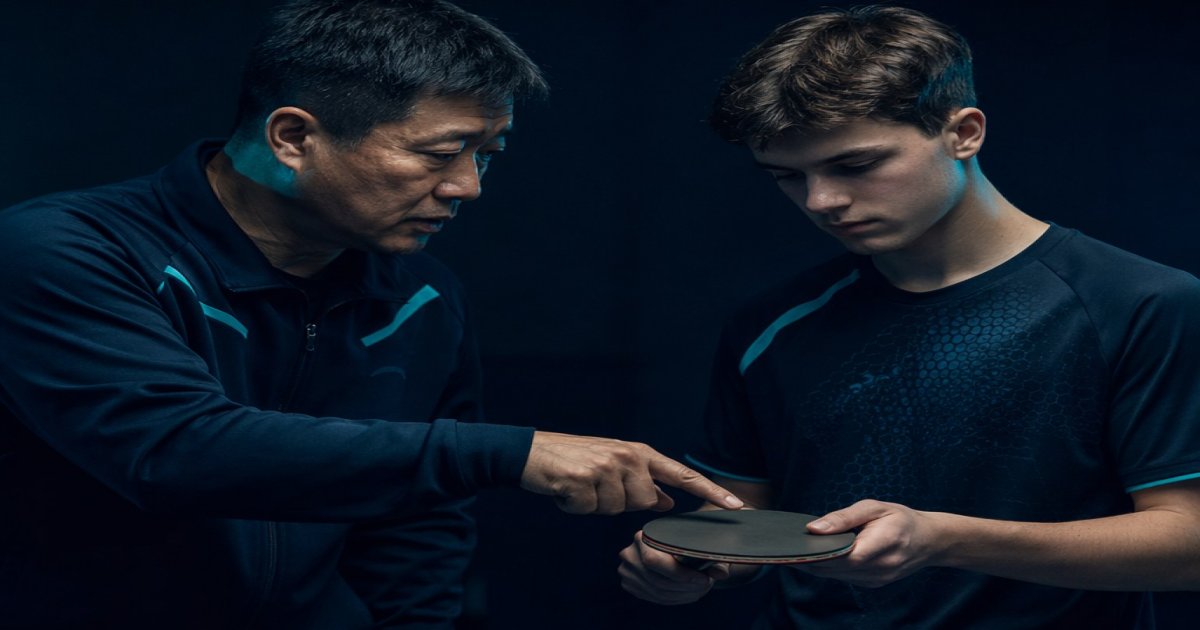
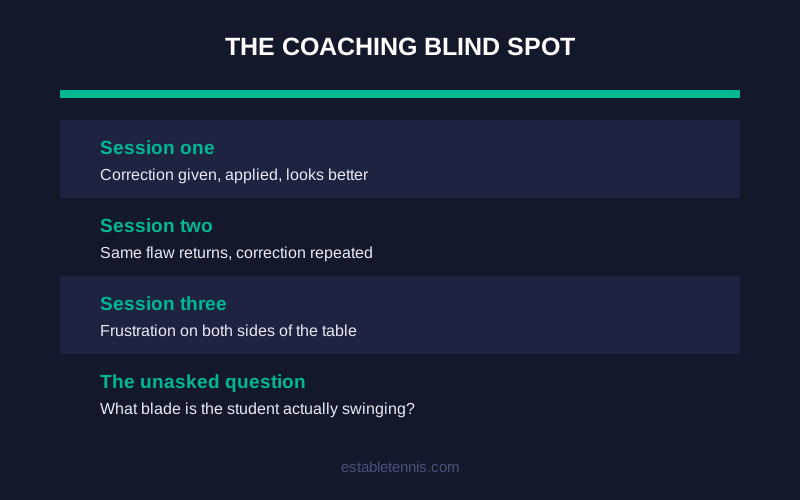
Somewhere right now, a coach is correcting a student’s forehand for the third session in a row, patiently walking through the same weight-transfer cue, genuinely trying to help, while never once asking what blade that student is swinging.
The technique advice is sound. It’s also being applied to a piece of equipment actively working against every correction being offered, which means the coach is fixing a symptom while the actual cause sits quietly in the student’s hand, unexamined and unmentioned.
Most table tennis technique coaching is working against you, not because the coaching itself is wrong, but because it assumes a neutral, cooperative racket that most developing players simply aren’t holding.
Why table tennis technique coaching skips equipment entirely
Why does technique coaching so rarely mention equipment at all?
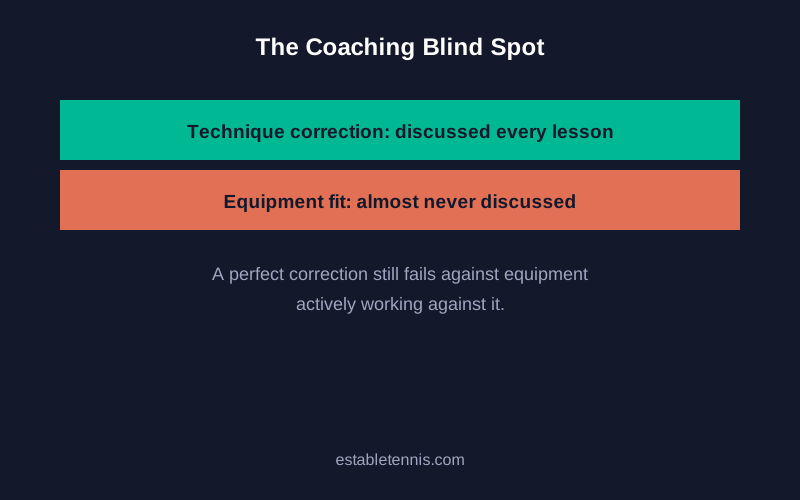
Because coaching culture in this sport, like in most sports, treats technique and equipment as separate conversations: one belongs in a lesson, the other belongs in a pro shop, and the two rarely get discussed together despite being deeply, mechanically entangled.
A coach correcting a forehand assumes the blade and rubber in the student’s hand are a neutral canvas, when in reality that equipment is actively shaping which corrections are even possible to execute successfully.
What does it actually look like when equipment fights a correction?
A coach tells a student to trust a fuller, more committed swing, and the student’s carbon blade (too stiff, too fast, too unforgiving for their current consistency) punishes exactly the commitment being asked for, sending mishits flying past the table. The student reads this as a personal failure to execute the correction.
The coach reads it as the correction not yet being internalized. Neither considers that the equipment itself is actively working against the very adjustment being taught.
How does this pattern quietly compound over months of lessons?
Every session spent correcting technique that equipment is simultaneously undermining produces slower, more frustrating progress than the same correction would on properly matched gear, and neither coach nor student typically identifies equipment as the reason improvement feels harder than it should.
Months of this compounding friction can look, from the outside, exactly like a student simply lacking natural talent or sufficient dedication, when the actual bottleneck was sitting in their hand the entire time.
Why don’t more coaches simply ask about equipment before diagnosing technique?
Partly because equipment fit is a less glamorous, less immediately visible diagnosis than a swing correction, and partly because many coaches themselves were trained in a tradition that treats technique and equipment as separate domains taught by separate experts.
A genuinely equipment-aware coaching approach requires crossing a line most coaching culture has never asked anyone to cross, even though the actual mechanics of the sport don’t respect that artificial separation at all.
What should a player actually do about this gap?
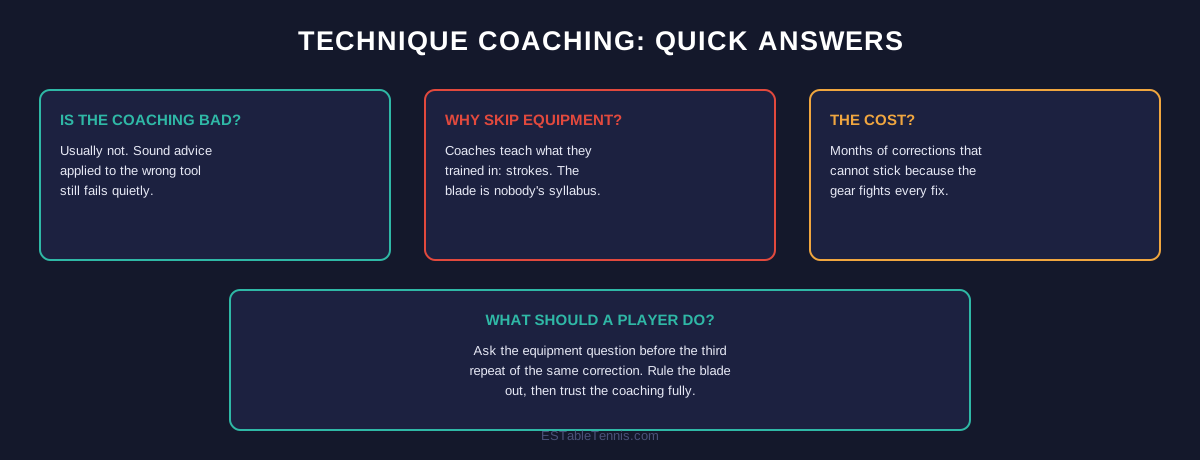
Bring equipment into the conversation explicitly, rather than assuming a coach will raise it unprompted.
Before accepting months of technical correction on a specific shot, it’s worth asking directly whether the current blade and rubber setup, covered across our equipment guides on this site, are actually suited to the technique being taught, rather than quietly fighting it the entire time.
Equipment doesn’t give you confidence. It removes the excuses that were already eating it, or it hands you a fresh one every single session, depending entirely on whether anyone in the room bothered to ask the right question before the lesson began.
Want a fitted equipment recommendation that actually supports the technique you’re working on, rather than fighting it? PingPath gives you a specific match in under three minutes.
Good technique coaching asks about the tool first. Most technique coaching never does.
Isn’t this just an excuse for bad technique?
No, and that objection actually proves the point. Equipment awareness isn’t a substitute for genuine technical correction: it’s a prerequisite for that correction to actually land.
A perfectly diagnosed swing flaw, corrected against equipment that punishes the very adjustment being made, produces exactly the frustrating non-progress this piece describes.
The technique advice was never wrong. It just never had a fair chance to work.
How would a coach actually integrate equipment awareness without becoming an equipment salesperson?
A simple, five-minute conversation before a technical correction begins (what blade, what rubber, how long has the current setup been in use) costs nothing and takes almost no time away from the actual lesson.
This isn’t about recommending specific purchases mid-session. It’s about ruling out an obvious, common variable before spending months correcting a swing that equipment is quietly sabotaging the entire time.
The fix is not more technique coaching. It is technique coaching that starts with the blade.
What’s the actual cost of this blind spot, multiplied across an entire coaching career?
Considerable, if rarely tallied honestly. A coach who never once asks about equipment across hundreds of students has, statistically, spent real hours correcting technique for players whose actual limiting factor was sitting in their hand rather than their swing.
None of those hours were wasted exactly (the technique correction still mattered), but a meaningful fraction of that frustration, on both sides, was entirely avoidable with one different question asked early.
Why does this pattern hit self-taught and casually coached players hardest?
Because a player without regular, dedicated coaching has nobody even attempting the technique half of this equation, let alone the equipment half: they’re often working purely from equipment marketing, buying whatever a store recommends or whatever a favorite professional uses, with zero technical correction to reveal whether that equipment actually fits their developing swing.
The gap this piece describes, between technique coaching and equipment awareness, is actually smaller than the gap facing players with no coaching input at all.
Does this problem exist at the professional and elite coaching level too?
Considerably less, and that gap is itself revealing. Elite coaching programs typically integrate equipment fitting as a standard part of athlete development, precisely because the margins at that level are thin enough that an equipment mismatch costing even a few percentage points of performance is worth identifying and correcting immediately.
The blind spot this piece describes is overwhelmingly a club-level and recreational-coaching phenomenon, not a structural feature of coaching itself at every level.
According to ITTF equipment regulations, every legal racket meets the same baseline approval standard, which means the mismatch described throughout this piece was never about legality or quality: it was always, simply, about fit between a specific piece of gear and the specific hand and swing holding it.
None of this requires blaming any individual coach. Most are doing exactly what their own training taught them to do, correcting the visible, technical half of a problem that has always had two halves.
What would it look like if the two conversations, technique and equipment, actually merged into one?
A first lesson that includes a genuine equipment check, not just a technique assessment. A coach who asks what blade a student is swinging with the same seriousness they ask about grip and stance.
A student who feels comfortable raising equipment as a legitimate question rather than a separate, secondary concern to sort out later on their own.
None of this requires new science or new technique: it requires treating a mechanically obvious connection as the standard conversation it should have always been.
Every equipment guide on this site exists because that merged conversation so rarely happens on its own.
Someone has to raise the question explicitly, and it might as well be the player sitting across from a coach who’s three sessions deep into a correction that isn’t landing the way either of them expected.
The forehand correction, three sessions in, was never actually wrong. It just never had the fair chance a five-minute question about a blade would have given it from the very first session.
Ask the question next lesson, whichever side of the racket you happen to be standing on.
It costs nothing, and it might quietly explain a plateau that’s had nothing to do with talent, effort, or the quality of the coaching all along.
Most coaches, once asked, are genuinely relieved someone finally brought it up first.
Nobody wants to be the coach still correcting a swing that was never going to work on that particular blade.
One question, asked early, saves months later.
Frequently Asked Questions
Should I ask my coach about my equipment directly?
Does this mean technique doesn’t matter as much as equipment?
How do I know if my equipment is fighting my technique?
That coach, three sessions deep into the same forehand correction, will eventually ask about the blade too. Most good ones eventually do. The only real question is how many frustrating sessions happen first.
Leave a Reply